"Catfish Blues is one of the most important songs in the entire blues canon — a simple, hypnotic groove that became the seed of rock and roll itself."
Overview
| Field | Detail |
|---|---|
| Song Title | Catfish Blues |
| Artist | Robert Petway |
| Recording Date | March 28, 1941 |
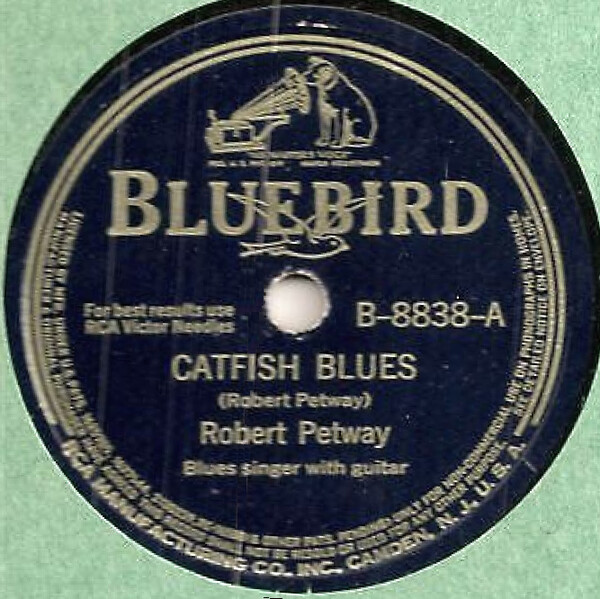
| Label | Bluebird Records (RCA Victor subsidiary) |
| Catalog Number | Bluebird B-8838 |
| B-Side | "Let Me Be Your Boss" |
| Producer | Lester Melrose (A&R / field producer) |
| Recording Location | Chicago, Illinois |
| Genre | Delta Blues |
| Songwriter | Robert Petway (credited); traditionally derived |
| Blues Hall of Fame | Inducted 2014 (Classic of Blues Recording) |
Robert Petway — Biographical Context
Robert Petway (c. 1907–1978) remains one of the most enigmatic figures in Delta blues history. Despite recording only 16 songs across two sessions — all for Bluebird Records in Chicago in 1941 and 1942 — his influence on subsequent generations of musicians has been immeasurable, largely through the enduring power of "Catfish Blues."
Origins
Petway was born around 1907, most likely in Mississippi, though his precise birthplace remains disputed among researchers. The Mt. Zion Memorial Fund and American Blues Scene have both noted that he was almost certainly from the Mississippi Delta region, likely from or around the Greenwood / Durant area of central Mississippi. Some sources have suggested Holmes County or Carroll County as possible origins.
Early Life & Musical Environment
Like many Delta bluesmen of his era, Petway's early musical life was shaped by the rich oral and folk traditions of the Mississippi Delta — a culture of juke joints, house parties, roadhouses, and traveling musicians. He was closely associated with fellow Mississippi bluesman Tommy McClennan, with whom he often traveled and performed. The two shared a strikingly similar vocal and guitar style — raw, percussive, and deeply rooted in the Delta tradition.
According to the Smithsonian Folkways liner notes for Classic Delta and Deep South Blues (SFW40222), Muddy Waters (McKinley Morganfield) later stated that he had learned "Catfish Blues" directly from his Greenwood associations with both Petway and McClennan, confirming that the song was circulating as a shared piece among Delta musicians before it was ever committed to tape.
Migration to Chicago
Petway eventually made his way to Chicago, following the great northward migration of African American musicians and workers in the 1930s and early 1940s. In Chicago, he fell in with the network of musicians surrounding Big Bill Broonzy and Tampa Red, who were central figures in the city's blues scene. Broonzy and Tampa Red introduced Petway to Lester Melrose, the powerful talent scout and independent producer who controlled access to Bluebird Records' blues roster. This introduction led directly to Petway's recording sessions.
After 1942
After his second Bluebird session in February 1942, Robert Petway essentially vanished from the historical record. He made no further commercial recordings. Researchers have long struggled to account for his whereabouts after this point. The American Blues Scene published a 2011 article titled "The Disappearance of Robert Petway: A New Theory," which attempted to trace his movements but reached no definitive conclusions. It is now generally accepted, based on later genealogical research, that Petway lived until approximately 1978, but the details of his post-recording life remain largely unknown.
Song Origins & Authorship
Traditional Roots
"Catfish Blues" is officially credited to Robert Petway on the original Bluebird release, and Petway is widely recognized as the artist who gave the song its definitive recorded form. However, the song's origins are almost certainly older than Petway's 1941 recording.
The website Early Blues (earlyblues.com) notes that scholars have pointed out that "Catfish Blues" was "evidently already traditional when Petway recorded it." The song belongs to a broader family of Delta blues pieces built on a similar lyrical and melodic framework — a floating, modular set of verses about desire, freedom, and the natural world, expressed through the metaphor of the catfish (a creature associated with the deep, muddy waters of the Mississippi Delta).
The Floating Verse Tradition
"Catfish Blues" draws on the same deep reservoir of floating verses that fed dozens of Delta blues songs. Its central lyrical image — the wish to be a catfish swimming in the deep blue sea, so that the singer's lover would have to "fish" for him — is a variation on themes found in earlier country blues, field hollers, and work songs. These images of water, fish, and the deep blue sea were common currency in the Delta oral tradition.
Tommy McClennan, Petway's close associate, recorded his own version of the song. Muddy Waters later adapted it as "Rollin' Stone" (Chess Records, 1950), transforming the Delta acoustic template into an electrified Chicago blues arrangement. The song's core melodic and rhythmic DNA can also be heard in pieces attributed to other artists of the era.
Petway's Specific Contribution
While the song's roots are traditional, Petway's particular arrangement — his specific guitar tuning, his rhythmic attack, his verse sequence, and his vocal phrasing — constitutes the definitive version that all subsequent recordings have drawn from. His is the recording that Muddy Waters, the Rolling Stones, Jimi Hendrix, and countless others heard and absorbed.
The Primary Recording — Session 1 (March 28, 1941)
Session Details
| Field | Detail |
|---|---|
| Date | March 28, 1941 |
| Location | Chicago, Illinois |
| Label | Bluebird Records (RCA Victor) |
| Catalog Number | Bluebird B-8838 |
| Matrix Number | BS-064840 |
| A-Side | "Catfish Blues" |
| B-Side | "Let Me Be Your Boss" |
| Producer / A&R | Lester Melrose |
| Format | 78 rpm single |
Context of the Session
The March 1941 session was Petway's recording debut. He had been brought to Chicago by the network surrounding Big Bill Broonzy and Tampa Red, who introduced him to Lester Melrose. Melrose operated as the de facto A&R gatekeeper for Bluebird's blues catalog, scouting talent, arranging sessions, and controlling the flow of Mississippi and Southern blues artists into the Chicago recording infrastructure.
Bluebird Records was a budget subsidiary of RCA Victor, launched in 1932, that became the dominant label for pre-war blues and country music. By 1941, Bluebird's blues roster included Big Bill Broonzy, Tampa Red, Sonny Boy Williamson I, Memphis Minnie, and Arthur "Big Boy" Crudup, among many others. Petway entered this world as a relative unknown, a raw Delta guitarist whose stark, unadorned style stood in contrast to the more polished, band-backed "Bluebird beat" that Melrose was simultaneously developing with other artists.
Recording Format
"Catfish Blues" was recorded as a solo performance — Robert Petway alone with his guitar. There are no documented backing musicians on this track. This solo format was typical for raw Delta artists brought to Chicago by Melrose, who often recorded them in their most stripped-down form before (or instead of) adding accompaniment. The recording captures Petway's voice and guitar in a relatively close-miked, direct manner consistent with Bluebird's Chicago studio practice of the early 1940s.
The recording was made directly to lacquer disc, the standard method of the era, before magnetic tape recording became widespread in the late 1940s.
The Recording Studio
Bluebird's Chicago sessions in this period were typically recorded at RCA Victor's Chicago studio, located in the Wrigley Building area of downtown Chicago, or at independent facilities used by Melrose. The precise studio location for Petway's March 1941 session has not been definitively documented in publicly available sources, but it falls within the established pattern of Melrose's Chicago recording operations.
The Second Session (February 1942)
Session Details
| Field | Detail |
|---|---|
| Date | February 1942 (exact date unconfirmed) |
| Location | Chicago, Illinois |
| Label | Bluebird Records (RCA Victor) |
| Producer / A&R | Lester Melrose |
| Format | 78 rpm singles |
Overview
Petway returned to Chicago for a second and final session in February 1942, approximately eleven months after his debut session. This session produced additional sides for Bluebird, completing his total recorded output of 16 songs. "Catfish Blues" was not re-recorded at this session; it had already been captured and released from the March 1941 date.
The February 1942 session took place against the backdrop of the United States' entry into World War II following the attack on Pearl Harbor in December 1941. The war would soon disrupt the recording industry significantly — shellac shortages, travel restrictions, and the American Federation of Musicians recording ban (which began in August 1942) would curtail blues recording activity for several years. Petway's February 1942 session was thus among the last pre-ban blues sessions recorded in Chicago.
Post-Session Disappearance
After this second session, Petway made no further recordings. Whether this was due to personal choice, the disruptions of wartime, health, or other circumstances remains unknown. He simply ceased to appear in the documented historical record of the blues world.
Producer: Lester Melrose
Biography
Lester Melrose (1891–1968) was one of the most powerful and controversial figures in pre-war and early post-war blues. A white Chicago music entrepreneur, Melrose functioned as an independent A&R man and talent broker for both Bluebird Records (RCA Victor) and Columbia Records, effectively controlling access to recording opportunities for a large swath of the Chicago and Delta blues world from the mid-1930s through the late 1940s.
Role in the Blues Industry
Melrose's operation was vertically integrated in ways that were highly advantageous to himself and often disadvantageous to the artists he recorded. He:
- Scouted talent from the Mississippi Delta and the Chicago blues circuit
- Arranged recording sessions with RCA Victor (Bluebird) and Columbia
- Controlled publishing rights for many of the songs recorded under his supervision, often claiming co-writing credits or publishing ownership
- Managed the "Bluebird beat" — a streamlined, commercially oriented approach to blues recording that emphasized a consistent rhythmic groove and accessible arrangements
- Acted as a gatekeeper, meaning that artists who wanted to record for the major labels typically had to go through Melrose
Relationship with Petway
Melrose's relationship with Petway followed the standard pattern: Big Bill Broonzy and Tampa Red served as intermediaries, introducing Petway to Melrose, who then arranged the Bluebird sessions. Melrose's role was primarily organizational and commercial rather than creative — he did not direct the music in the modern sense of a producer, but rather facilitated access to the studio, oversaw the sessions, and handled the business arrangements with RCA Victor.
Legacy & Criticism
Melrose has been criticized by blues historians for the exploitative nature of his arrangements with Black artists, many of whom received minimal compensation and lost control of their publishing rights. However, his role in documenting the pre-war blues tradition — by bringing artists like Petway, McClennan, Tampa Red, Big Bill Broonzy, and many others into the studio — is also acknowledged as historically significant.
Musicians
Robert Petway — Vocalist & Guitarist
| Field | Detail |
|---|---|
| Instrument | Guitar (steel-string acoustic) |
| Vocal Style | Raw, gruff, percussive Delta style |
| Guitar Tuning | Open tuning (likely open G or open D, consistent with Delta tradition) |
| Technique | Bottleneck/slide guitar; rhythmic thumb-bass drive |
| Influences | Tommy McClennan, Mississippi Delta oral tradition |
Petway performed "Catfish Blues" as a solo artist — voice and guitar only. His guitar style is characterized by:
- A driving, percussive rhythmic attack in which the thumb maintains a steady bass line while the fingers or a slide handle the melodic content
- Bottleneck/slide technique, producing the characteristic moaning, gliding tones associated with Delta blues
- Open tuning, which allows the slide to produce full chord voicings across the strings
- A hypnotic, repetitive groove that creates a trance-like quality — the song does not develop harmonically so much as it deepens through repetition and variation
His vocal style is raw and unpolished by the standards of the more commercial "Bluebird beat" artists. It is closer to the field holler tradition — direct, unadorned, and emotionally immediate.
Tommy McClennan — Associated Musician (Not on Petway's Recording)
Tommy McClennan (1908–c.1962) was Petway's closest musical associate and fellow Mississippi Delta bluesman. The two traveled together extensively and shared a remarkably similar style. McClennan also recorded his own version of "Catfish Blues" for Bluebird. While McClennan did not play on Petway's recording, his relationship with Petway is central to understanding the song's origins and transmission. McClennan was also recorded by Lester Melrose for Bluebird, and the two artists' careers ran in close parallel.
Musical Analysis
Structure
"Catfish Blues" is built on a one-chord or drone-based Delta blues framework, typical of the deepest, most archaic stratum of Delta blues. Unlike the more structured 12-bar blues that would come to dominate Chicago blues, Petway's "Catfish Blues" operates in a more fluid, less metrically rigid space — closer to the field holler and work song tradition from which it ultimately derives.
| Element | Description |
|---|---|
| Form | Loose verse structure; not strict 12-bar |
| Harmony | Predominantly one-chord / drone; minimal movement |
| Rhythm | Driving, hypnotic thumb-bass pattern |
| Technique | Bottleneck slide guitar |
| Tempo | Moderate; steady and relentless |
| Key | E (or open tuning equivalent) |
| Vocal delivery | Call-and-response between voice and guitar |
Lyrical Content
The central lyrical image of "Catfish Blues" is the singer's wish to be a catfish swimming in the deep blue sea — a creature that the singer's lover would have to pursue through the water. This image functions on multiple levels:
- Erotic metaphor: The pursuit of the catfish represents the lover's pursuit of the singer; the deep water is a space of desire and danger.
- Freedom fantasy: The catfish is free, uncontrolled, moving through a vast and unknowable medium — a fantasy of escape from the constraints of sharecropper life, poverty, and racial oppression.
- Delta landscape: The catfish is a specific, concrete creature of the Mississippi Delta environment — a bottom-feeder in the muddy rivers and bayous that defined the physical world of the Delta. Its use grounds the song in a specific place and ecology.
The floating verse structure means that different performers could and did adapt the lyrics, adding, removing, or rearranging verses as suited their performance context.
Guitar Technique in Detail
Petway's guitar work on "Catfish Blues" is a masterclass in Delta minimalism. The recording demonstrates:
- Slide/bottleneck work producing sustained, vocal-like tones that mirror and respond to the sung melody
- A steady alternating bass that anchors the rhythm without a drummer or bassist
- Rhythmic chord stabs that punctuate the groove
- Microtonal inflections — the slide allows Petway to bend notes and hit pitches between the standard Western chromatic scale, giving the music its characteristic "blue" quality
Notable Cover Versions & Derivative Recordings
"Catfish Blues" is one of the most covered and adapted songs in the blues tradition. The following are the most significant recordings derived from or directly covering Petway's original:
1. Tommy McClennan — "Catfish Blues" (Bluebird, c. 1940–1941)
| Field | Detail |
|---|---|
| Artist | Tommy McClennan |
| Label | Bluebird Records |
| Period | c. 1940–1941 |
| Relationship to Petway | Close musical associate; shared the song in the Delta |
McClennan's version predates or is roughly contemporaneous with Petway's recording. The two versions are strikingly similar in style and arrangement, reflecting their shared musical background. McClennan's vocal delivery is equally raw and percussive.
2. Muddy Waters — "Rollin' Stone" (Chess Records, 1950)
| Field | Detail |
|---|---|
| Artist | Muddy Waters (McKinley Morganfield) |
| Label | Chess Records (Aristocrat/Chess) |
| Catalog Number | Chess 1426 |
| Recording Date | 1950 |
| Producer | Leonard Chess / Phil Chess |
| Musicians | Muddy Waters (guitar, vocals); Little Walter (harmonica); Jimmy Rogers (guitar); Leroy Foster (drums) |
Muddy Waters' "Rollin' Stone" is the most historically consequential adaptation of "Catfish Blues." Waters stated that he had learned the song from his Greenwood, Mississippi associations with Petway and McClennan. He transformed the Delta acoustic template into an electrified Chicago blues arrangement, adding harmonica (Little Walter), second guitar (Jimmy Rogers), and drums (Leroy Foster).
"Rollin' Stone" reached #1 on the R&B charts and became one of the foundational recordings of Chicago electric blues. Its title directly inspired the name of The Rolling Stones, formed in London in 1962, and also inspired Bob Dylan's 1965 song "Like a Rolling Stone" and the founding of Rolling Stone magazine in 1967.
3. Jimi Hendrix — "Catfish Blues" (BBC Radio 1, August 24, 1967)
| Field | Detail |
|---|---|
| Artist | The Jimi Hendrix Experience |
| Recorded | August 24, 1967 |
| Session | BBC Radio 1 session (later broadcast) |
| Released | Radio One (1988); BBC Sessions (1998) |
| Musicians | Jimi Hendrix (guitar, vocals); Noel Redding (bass); Mitch Mitchell (drums) |
| Duration | Approximately 7:48 (extended version) |
The Jimi Hendrix Experience recorded "Catfish Blues" during a BBC Radio 1 session on August 24, 1967. The recording was initially broadcast on the BBC and later officially released on the 1988 compilation Radio One and the 1998 double album BBC Sessions.
Hendrix's version is a stunning transformation of the Delta original into psychedelic electric blues. He extends the song to nearly eight minutes, using the one-chord drone structure as a platform for extended improvisation. His guitar work draws directly on Petway's slide technique but translates it into the language of the electric guitar — whammy bar, feedback, and sustained single-note lines replace the bottleneck, but the hypnotic, trance-like quality of the original is preserved and intensified.
Hendrix frequently performed "Catfish Blues" live as an homage to Muddy Waters, whom he cited as a primary influence. The song appears in multiple live recordings from the Hendrix catalog.
4. The Rolling Stones — "Rollin' Stone" (Various live performances)
The Rolling Stones, who took their name from Muddy Waters' adaptation of "Catfish Blues," performed the song in various forms during their early career. Their early sets drew heavily on the Chicago electric blues tradition, and "Rollin' Stone" / "Catfish Blues" was part of their foundational repertoire as they developed their style in London in 1962–1963.
5. Other Notable Recordings
| Artist | Version Title | Year | Notes |
|---|---|---|---|
| Muddy Waters | "Still a Fool" | 1951 | Further adaptation of the same melodic/lyrical matrix |
| Honeyboy Edwards | Various | 1940s+ | Shared the Delta tradition directly with Petway |
| Various artists | "Catfish Blues" | Multiple | Covered by blues, rock, and folk artists worldwide |
Release History & Discography
Original 78 rpm Release
| Format | Label | Catalog # | Year | Notes |
|---|---|---|---|---|
| 78 rpm single | Bluebird Records | B-8838 | 1941 | A-side: "Catfish Blues"; B-side: "Let Me Be Your Boss" |
Compilation Appearances
"Catfish Blues" has been reissued on numerous compilation albums documenting pre-war Delta blues. Key reissue appearances include:
| Compilation | Label | Year | Notes |
|---|---|---|---|
| Martin Scorsese Presents the Blues | Various | 2003 | Major documentary series compilation |
| Classic Delta and Deep South Blues | Smithsonian Folkways (SFW40222) | Various | With detailed liner notes discussing the song's origins |
| Various Bluebird/RCA reissue series | RCA / BMG | Various | Part of pre-war blues archival reissues |
Digital Availability
"Catfish Blues" is available on major digital streaming and download platforms as part of various pre-war blues compilations and archival collections.
Blues Hall of Fame Induction (2014)
In February 2014, the Blues Foundation announced the induction of "Catfish Blues" by Robert Petway into the Blues Hall of Fame in the category of Classic of Blues Recording. The citation specifically referenced the original Bluebird B-8838 recording from 1941 and noted the song's extraordinary influence on subsequent generations of blues and rock musicians.
This recognition, coming more than seven decades after the original recording, acknowledged what blues scholars and musicians had long understood: that Petway's "Catfish Blues" was not merely a historical artifact but a living, generative force in American music.
Legacy & Cultural Impact
The Seed of Rock and Roll
"Catfish Blues" occupies a unique position in music history as one of the clearest traceable lines connecting the deepest pre-war Delta blues tradition to the mainstream of global popular music. The chain of transmission is unusually well-documented:
Robert Petway — "Catfish Blues" (1941, Bluebird)
        ↓
Muddy Waters — "Rollin' Stone" (1950, Chess)
        ↓
The Rolling Stones — Band name (1962)
        ↓
Bob Dylan — "Like a Rolling Stone" (1965)
        ↓
Rolling Stone Magazine — Founded (1967)
        ↓
Jimi Hendrix — "Catfish Blues" BBC (1967)
This chain — from a solo Delta guitarist in a Chicago studio in 1941 to the naming of one of the most famous rock bands in history — represents one of the most remarkable lines of cultural transmission in 20th-century music.
Influence on Guitar Technique
Petway's guitar style on "Catfish Blues" — particularly its use of the drone-based, one-chord framework as a platform for slide improvisation — established a template that influenced electric blues and rock guitar playing for decades. The approach of using a static harmonic base to create rhythmic and melodic tension, rather than relying on chord changes, is fundamental to the psychedelic blues of Hendrix, the heavy blues-rock of Cream and Led Zeppelin, and the minimalist approach of artists like Junior Kimbrough and R.L. Burnside in the North Mississippi Hill Country tradition.
The Unrecognized Originator
One of the persistent ironies of "Catfish Blues"'s legacy is that its originator — Robert Petway — remained almost entirely unknown to the mass audiences who were profoundly influenced by his work through Muddy Waters and Hendrix. While Waters and Hendrix achieved global fame, Petway recorded 16 songs, vanished from the historical record, and died in approximately 1978 without any significant public recognition of his contribution.
The 2014 Blues Hall of Fame induction represents a belated but meaningful acknowledgment of Petway's foundational role. Blues researchers, historians, and the Mt. Zion Memorial Fund have worked to restore his name to its rightful place in the history of American music.
Scholarly Recognition
Researchers associated with the Smithsonian Folkways documentation project, the Mt. Zion Memorial Fund, and publications including Living Blues magazine and the Encyclopedia of the Blues have all contributed to the scholarly recovery of Petway's story. The American Blues Scene's 2011 investigation into "The Disappearance of Robert Petway" represents the most sustained attempt to reconstruct his biography.
Selected Discography
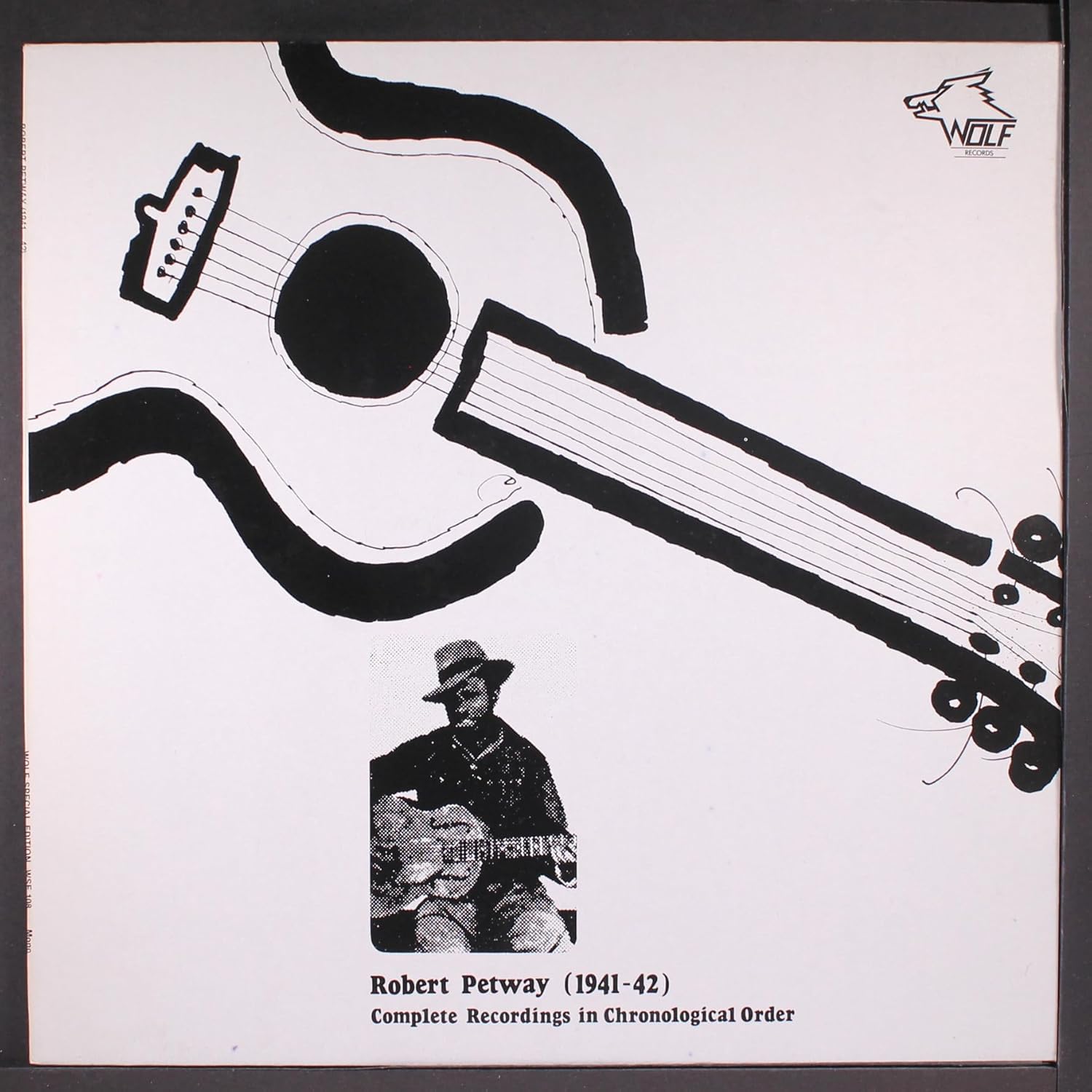
Robert Petway Complete Recordings
Sources & Further Reading
- Smithsonian Folkways, Classic Delta and Deep South Blues liner notes (SFW40222)
- American Blues Scene — "A Brief Musical History of 'Catfish Blues'" (2011)
- American Blues Scene — "The Disappearance of Robert Petway: A New Theory" (2011)
- American Blues Scene — "The Blues Foundation Announces 2014 Blues Hall of Fame Inductees" (2014)
- Early Blues (earlyblues.com) — "Catfish Blues" essay
- Mt. Zion Memorial Fund — Robert Petway research (October 2017)
- KNKX Public Radio — "Obscure Origins of a Blues Classic: 'Catfish Blues'" (2013)
- Songfacts — Robert Petway / Catfish Blues entry
- Wikipedia — Robert Petway; BBC Sessions (The Jimi Hendrix Experience album)
- Encyclopedia of the Blues (Routledge, 2006)
- Blind Dog Radio — Robert Petway biography
- MojoHand — Robert Petway biography
All data reflects the best available public historical record. Some details of Petway's biography and session specifics remain uncertain due to the limited documentation of pre-war Delta blues recording activity.