Introduction: The Label That Did Everything
Most independent record labels are defined by what they do: Prestige documented bebop and hard bop jazz; Arhoolie documented blues, Cajun, and norteño; Delmark documented Chicago blues and AACM avant-garde. Adelphi Records, the Silver Spring, Maryland operation that Gene Rosenthal founded in 1968 and ran for more than four decades, is defined — somewhat unusually, and somewhat paradoxically — by its refusal to be defined. Its catalogue of approximately one hundred and twenty releases encompasses acoustic blues from the Mississippi Delta, Chicago electric blues, blues-rock, folk, bluegrass, contemporary jazz, reggae, psychedelic folk, and funk-rock, with significant recordings in nearly every category and a claim to historical significance that its relatively modest size might obscure.
The specific combination of activities that Adelphi pursued across its forty-plus years of operation — field recordings of blues masters from the 1920s and 1930s, contemporary sessions with blues-rock artists on the Washington, D.C., and Virginia club circuit, live reggae recordings from the Sunsplash festivals in Jamaica, jazz sessions with nationally recognised players, film documentation projects that extended the label's blues documentation into a visual dimension — gives it a profile unlike any other independent label in American music history. It was simultaneously a preservation project, a commercial enterprise, a regional booster, and a cross-cultural documentary operation, and the combination was held together by one man's restless musical curiosity and his refusal to let any single aesthetic or commercial imperative determine what Adelphi would be.
The Washington City Paper assessment of Rosenthal's enterprise, quoted in the Google Groups tribute account, identified the label's essential character: "But early on, we decided to be a broad-based label," Rosenthal explained, and the resulting back catalogue of one hundred and twenty releases demonstrated the reality of that decision. From Roy Buchanan's first recording, packaged in a burlap bag and released on a sublabel named BIOYA (Blow It Out Your Ass), to the field recordings of Skip James and Mississippi John Hurt that Rosenthal had made as a young folklorist before Adelphi was even formally incorporated, to the reggae recordings from the 1982 Sunsplash festival, to the New Orleans sessions of Ken Swartz and the Palace of Sin in the early 2000s, Adelphi was many things simultaneously, and the breadth was its character rather than its limitation.
The Founder: Gene Rosenthal Before Adelphi
The biography of Adelphi Records begins not in 1968, when the label was formally founded, but in the early 1960s, when a young man from the Washington, D.C., area began developing the musical enthusiasms and the practical recording skills that would eventually find their fullest expression through the label he created.
Gene Rosenthal was a student at George Washington University between 1960 and 1962, where he co-founded the GW Folk Music Club — an organisation that was subsequently incorporated as the Folklore Society of Greater Washington and that reflected the specific intersection of academic interest and musical passion that characterised Rosenthal's approach to music throughout his life. The early 1960s folk revival was at its most intense in precisely these university and college club contexts, and Rosenthal's involvement in the GWU folk club placed him at the centre of a community that was simultaneously discovering the acoustic blues tradition through records and field recordings and developing the performance circuits that would bring rediscovered blues artists to new audiences.
Between 1962 and 1964, Rosenthal worked for Project Hope — the humanitarian medical ship programme that sent the SS Hope to developing countries — in a communications capacity, an experience that gave him both international perspective and the organisational skills that running a record label would require. When he returned to the Washington area, he found his way back to music through a combination of record distribution work and active field recording.
The record distribution activity that preceded Adelphi's founding was itself significant. As the Washington City Paper account notes: "In 1964, Gene Rosenthal began distributing small West Coast folk labels like Arhoolie and Takoma (which owner John Fahey named after his hometown of Takoma Park)." The Takoma connection is worth dwelling on: John Fahey's Takoma Records was named for Takoma Park, Maryland, the Washington suburb in which Fahey had grown up, and the label's catalogue of acoustic guitar music — Fahey's own Americana-inflected compositions alongside blues and folk recordings — represented exactly the kind of non-commercial but artistically serious music that Rosenthal was also pursuing. The distribution relationship connected Rosenthal to two of the most important roots music labels of the era and gave him insight into how such labels operated commercially.
His hands-on field recording career began in 1964, when he recorded Mississippi John Hurt at the Ontario Place Coffee House for Dick Spottswood's Piedmont label. Hurt had been one of the most celebrated rediscoveries of the folk blues revival — found in Mississippi in early 1963, brought to Washington, D.C., and to Newport, embraced by a folk revival audience that responded to his gentle, melodically sophisticated guitar style and his warm, unhurried vocal approach. Recording him at a Washington coffee house was an act of documentary preservation in a tradition that Lomax and Charters and McCormick had established, and Rosenthal's participation in it — while he was still a student, before Adelphi existed — placed him in the chain of that tradition.
The Zero to 180 history of Adelphi adds a further important detail: at approximately the same time as the Hurt recording, Rosenthal "would also record blues guitarists Archie Edwards and Frank Mizell, at Adelphi Studios" — using the name "Adelphi Studios" for his Silver Spring recording facility before the label itself was formally established, demonstrating that the studio infrastructure preceded the commercial label by several years.
After completing further studies in St. Louis between 1966 and 1967, Rosenthal returned to the Washington area and committed himself fully to the project that would become Adelphi Records. The label name was, by Rosenthal's own account, a triple reference: to the Greek oracle (adelphi, suggesting wisdom, prophecy, and the communication of hidden knowledge), to nearby Adelphi, Maryland, the suburban community adjacent to the University of Maryland campus, and to John Fahey's song "The Downfall of the Adelphi Rolling Grist Mill" — acknowledging, with characteristic Rosenthal wit, the Takoma connection that had been part of his commercial education.
The First Release and the Founding Aesthetic
Adelphi Records' first commercial release — True Blues and Gospel by "Backwards Sam Firk" (Adelphi AD 4001, 1968) — announced the label's founding aesthetic with a combination of documentary seriousness and playful irreverence that would characterise its output across the following decades. "Backwards Sam Firk" was a pseudonym for Stefan Grossman, the Brooklyn-born guitarist and blues scholar who had studied with Reverend Gary Davis and who would go on to become one of the most influential figures in the transmission of the acoustic blues tradition to post-war white audiences. His decision to record under a pseudonym for this early release reflected a certain modesty about his own standing relative to the tradition he was documenting, and the album's focus on "true blues and gospel" — the traditions he had absorbed through direct apprenticeship with Davis — established the reverence for tradition that would run through Adelphi's blues catalogue.
The Washington City Paper account identifies the initial focus: "its initial focus was on contemporary folk (Patrick Sky, Holy Modal Rounders) and blues (Rev. Gary Davis, Furry Lewis)." This combination — the contemporary avant-folk acts represented by Patrick Sky and the Holy Modal Rounders alongside the acoustic blues masters represented by Davis and Lewis — captured the specific intersection of revival-era folk and blues documentation that defined Adelphi's first period.
Patrick Sky was a Georgia-born folk singer and songwriter whose acerbic political and social commentary was a significant presence in the early 1960s folk revival. His connections to the Greenwich Village folk scene and his friendship with Mississippi John Hurt gave him a specific position at the intersection of the revival's two major concerns: contemporary songwriting and historical documentation. His Adelphi recordings placed him alongside the blues masters in a catalogue context that gave both dimensions mutual reinforcement.
The Holy Modal Rounders — the psychedelic folk duo of Peter Stampfel and Steve Weber, whose avant-folk approach had connected them to the off-Broadway performance world of Ken Weaver and the Fugs — brought a deliberately eccentric perspective to traditional folk and blues material. Their Adelphi recordings represented the revival's more adventurous wing, the musicians who absorbed traditional material and then subjected it to the distortions and transformations of their own aesthetic sensibility.
Reverend Gary Davis — the blind gospel guitarist and street evangelist from the Piedmont tradition whose technical command of the acoustic guitar was one of the great wonders of American folk music — appeared on Adelphi in the context of the documentation project that Rosenthal had been pursuing since his 1964 recording of Hurt. Davis's guitar technique, which encompassed ragtime, gospel, blues, and country dance music in a synthesis that no subsequent player has fully replicated, was a primary subject of Rosenthal's documentary impulse. His earlier work with Stefan Grossman — who had studied with Davis directly — gave the Adelphi connection a personal dimension that was consistent with Rosenthal's approach throughout his career.
Furry Lewis — the Memphis bluesman and street entertainer whose pre-war recordings for Victor and Vocalion had documented one of the more original voices in the acoustic blues tradition — was another subject of the documentation project. Lewis had been rediscovered in 1959 by Charters, who included him in The Country Blues, and his subsequent recording career had given the folk revival some of its most engaging documents of the older Memphis tradition.
The Field Recording Project: Delta, Chicago, and Film
The most historically significant aspect of Adelphi's early operation was not the commercial album releases but the field recording and film documentation project that Rosenthal had begun before the label was formally incorporated and that expanded significantly through 1969. The Wikipedia account confirms: "Extensive field recordings were begun in 1964 and expanded to include film documentation beginning in early/mid 1969, including sessions in Chicago, St. Louis, Memphis and the Mississippi Delta."
The specific artists documented through this field recording project are among the most historically significant in the blues tradition. The Zero to 180 history provides the key names: "Prior to his involvement with Track, Rosenthal had recorded a number of rediscovered blues artists — Skip James, Mississippi John Hurt, R.L. Burnside, Houston Stackhouse, and a number of others — both at his own Silver Spring recording facility, Adelphi Studios, and on the road."
Skip James was one of the most extraordinary figures in pre-war blues, his Paramount recordings of 1931 documenting a modal, D-minor guitar style and a keening falsetto vocal of supernatural expressiveness. Rediscovered in a Tunica County, Mississippi hospital in June 1964 by John Fahey and Bill Barth — who had been acting on a tip from the guitarist Ishmon Bracey — James became one of the central figures of the Newport Folk Festival era. Rosenthal's recording of James gave the Adelphi project a direct connection to one of the most celebrated rediscoveries of the folk blues revival, and the Skip James recordings in the Adelphi archive are documents of considerable historical value.
Mississippi John Hurt had been the first blues master Rosenthal recorded professionally, at the Ontario Place Coffee House in Washington in late 1964. Hurt's warm, melodically sophisticated guitar style and his gentle vocal approach had made him one of the most beloved figures of the folk revival, and the recordings that Rosenthal made of him — both at the coffee house session and subsequently — gave the Adelphi archive some of its most accessible and emotionally direct blues documentation.
R.L. Burnside — the north Mississippi hill country blues musician whose droning, one-chord blues style would become one of the most celebrated sounds of the 1990s blues revival through his Fat Possum Records recordings — was encountered by Rosenthal when Burnside was a relatively unknown local musician in Lafayette County, Mississippi. The fact that Rosenthal was recording him in this early period, before Burnside's international celebrity, speaks to the field recording project's genuinely documentary quality: Rosenthal was documenting music he valued for its intrinsic quality rather than its commercial standing.
Houston Stackhouse — the Delta guitarist who had been Robert Nighthawk's musical associate and who represented a specific strand of the Delta blues tradition connecting the guitar style of the 1930s to the post-war electric amplified sound — was another artist whose early Adelphi documentation predated commercial recognition. Stackhouse's significance as a link between the pre-war and post-war traditions gave his Adelphi recordings a specific historical value.
The film documentation project that Rosenthal initiated in 1969 extended the audio field recording work into a visual dimension, creating moving-image documents of blues performances that had a different character from both the audio recordings and the photographic documentation that other folklorists were producing. Film captured the physicality of performance — the relationship between the guitarist's hands and the instrument, the movement of the body while playing, the interaction between performers in an ensemble — in ways that audio recording could not.
The 1969 sessions in Chicago were particularly significant, coinciding with a moment when the Chicago blues world was in a productive intersection with the folk revival and the rock audience. Willie Dixon, whom Rosenthal had photographed and documented at WNTH-FM in Northfield, Illinois, in 1970 — an encounter so personally significant that Rosenthal named his subsequent business Conqueroo after a recurrent word in Dixon's lyrics — was part of the Chicago documentation project's broader context.
Roy Buchanan: The Guitarist the World Didn't Know
The artist whose Adelphi recording brought the label its most striking moment of commercial and cultural impact was not a blues master from the Delta but a Virginia-based guitarist of extraordinary ability who was, when Rosenthal first encountered him, playing clubs around Washington and Northern Virginia to audiences who understood they were hearing something exceptional but could not understand why the rest of the world hadn't noticed yet.
Roy Buchanan was born on September 23, 1939, in Ozark, Arkansas, and had spent his career moving between the country, rock, and blues worlds without fully belonging to any of them. He had played with Dale Hawkins, with Bob Luman, with Ronnie Hawkins and the Hawks, and with various other country rock and rockabilly acts, and had been offered a permanent position with the Rolling Stones, which he had declined. By the early 1970s, he was playing at the Crossroads, a club in Bladensburg, Maryland, with his band the Snake Stretchers, and the intensity and originality of his guitar work was generating the kind of devoted local following that, in the right circumstances, could become a national reputation.
The specific circumstances of the Adelphi recording were themselves characteristic of both Buchanan's attitude toward the commercial music industry and Rosenthal's documentary orientation. As the Adelphi Records website describes: "Roy asked Adelphi Records to issue his first recording on his own BIOYA label (Blow It Out Your Ass) to reflect his feelings about the industry." The acronym was not subtle, but the sentiment was genuine: Buchanan had been overlooked and undervalued by the commercial music industry for years, and his first official recording was a simultaneous act of self-assertion and institutional defiance.
The packaging he chose reinforced the message. Buch and the Snake Stretchers (1972) was packaged in a plain white sleeve enclosed in a burlap bag with the title spray-painted through a stencil — a package so deliberately anti-commercial that many early purchasers assumed it was a bootleg recording. The Adelphi website notes: "Vinyl originals fetch huge prices at auctions today because fans of this incredibly talented guitarist were suspicious of the release." The suspicion, once the music was actually heard, gave way to something like astonishment. Here was a guitarist of genuinely extraordinary ability — his Fender Telecaster producing tones that no one had produced from that instrument before, his ability to move between country, blues, and rock vocabularies without losing the thread of his own identity giving the recordings a coherence that the eclectic content might have prevented — and here was his first official release, in a burlap bag, from a Maryland independent label.
The Washington Post's PBS special The Best Guitar Player in the World? — aired in 1971, just before the Adelphi recording, and the event that first brought Buchanan to national attention — had asked the question that Buchanan's local following had already answered in the affirmative. Lenny Breau, the jazz guitarist whose Adelphi recordings documented another extraordinary but commercially underappreciated talent, had specifically requested to hear Buchanan when he visited Washington. The word among guitarists was clear and consistent: Buchanan was operating at a level that demanded a different kind of commercial attention than he was receiving.
The tracks that appear on Buch and the Snake Stretchers, recorded live at the Crossroads in 1971, demonstrate exactly what the fuss was about. "Sweet Dreams" — Don Gibson's country classic, recorded by Patsy Cline and by Buchanan's hero Roy Orbison — shows the country dimension of his vocabulary; "Down by the River" demonstrates his ability to extend a Neil Young composition into something that sounds entirely like himself; "The Messiah Will Come Again" — an original composition of towering ambition — remains, in the assessment of many guitarists who have encountered it, the single greatest piece of guitar playing on a live recording, a sustained exploration of tonal and emotional possibility that few electric guitarists have approached in the subsequent fifty years.
Buchanan's subsequent move to Polydor — and then to Atlantic — gave him larger audiences and more professional production contexts than Adelphi could provide, but the Adelphi recording remains the most direct and authentic document of what he was doing in the early 1970s. The commercial music industry's inability to channel his talent into consistent commercial success was one of the sadder wastes in American music history, and his death in 1988 in a Virginia jail cell — an apparent suicide, though the circumstances were disputed — closed a career that had never quite been given the platform it deserved.
The Nighthawks and the Washington Blues-Rock Scene
While Roy Buchanan's Adelphi recording placed the label in the national consciousness, its more sustained commercial foundation in the mid-1970s came from the Nighthawks — the Washington-area blues-rock band that became, through their Adelphi recordings and their relentless club touring, one of the most celebrated live acts on the East Coast blues-rock circuit.
The Nighthawks had formed in 1971 from the wreckage of various Washington-area blues and rock bands, their core lineup centred on guitarist Jim Thackery, vocalist and harmonica player Mark Wenner, bassist Jan Zukowski, and drummer Pete Ragusa. Their music was a direct engagement with the Chicago blues and the blues-rock synthesis that the 1960s British Invasion had made commercially viable, filtered through the specific sensibility of musicians who had grown up with the music in the Washington, D.C., area and who brought to it a combination of scholarly knowledge and genuine performing passion.
The Wikipedia account of Adelphi identifies the Nighthawks as one of the label's "biggest selling artists" in the mid-1970s, alongside the Rosslyn Mountain Boys — a local bluegrass and old-time music ensemble whose presence in the Adelphi catalogue reflected Rosenthal's consistent interest in the full spectrum of American vernacular music rather than just the blues and blues-rock traditions that were the label's primary commercial product. The Rosslyn Mountain Boys' name referenced Rosslyn, Virginia, a Northern Virginia community across the Potomac from Georgetown that was home to a lively folk and bluegrass performance circuit.
The Nighthawks' Adelphi recordings — Rock and Roll (1974), Open All Nite (1976), and subsequent releases — documented a live band of considerable energy and technical proficiency, their performances capturing the specific excitement of a group that had honed its craft through years of club work in venues where audiences demanded authentic engagement rather than commercial calculation. Their success, both in the Washington area and increasingly in European markets where American blues-rock had a devoted following, gave Adelphi a sustained commercial foundation through the mid-to-late 1970s.
The Jazz Dimension: Lenny Breau, Reuben Brown, and Richie Cole
The jazz catalogue that Adelphi developed alongside its blues and roots music work demonstrated the breadth of Rosenthal's musical interests and his ability to document significant musicians who were operating at the margins of the commercial jazz market.
Lenny Breau was one of the most extraordinary jazz guitarists of the twentieth century — a player whose synthesis of jazz chord melody, flamenco technique, and country fingerpicking produced a style of such complete individuality that it remains essentially inimitable. His Adelphi recordings, made in the mid-1970s at Rosenthal's Silver Spring facility, gave him a commercial documentation context that his modest commercial standing in the North American jazz market had not otherwise provided. His ability to produce three independent voices on the guitar simultaneously — bass lines, chord voicings, and melody — was captured in the Adelphi recordings with a directness that the intimate studio environment made possible.
Breau's request, when visiting Washington, to hear Roy Buchanan play was a detail that demonstrated the interconnection of Adelphi's various musical worlds: here were two of the most extraordinary guitarists in American music, each largely unrecognised by the commercial music industry, finding each other through the network of musical curiosity and genuine expertise that Rosenthal's operation had helped to create.
Reuben Brown — the Washington, D.C.-area jazz pianist whose extensive knowledge of the stride, bebop, and post-bop piano traditions was documented through his Adelphi recordings — gave the label a jazz piano presence that complemented the guitar-focused jazz documentation represented by Breau. Brown's fluency across multiple piano jazz traditions, from the Harlem stride of the 1920s through the post-bop language of the 1960s, made his Adelphi recordings valuable both as documents of an individual talent and as surveys of the jazz piano vocabulary's development.
Richie Cole — the alto saxophonist whose bebop-rooted approach and his association with vocalist Eddie Jefferson made him one of the more commercially engaged of the post-bop jazz saxophone voices — brought a different dimension to the Adelphi jazz catalogue. Cole's "Alto Madness" concept — an explicitly jokey engagement with the bebop tradition that acknowledged the music's serious content while refusing its earnestness — gave his Adelphi recordings a character that distinguished them from the more straightforwardly documentary approach of the other jazz releases.
The Reggae Dimension: Sunsplash Records and the Jamaican Documentation
The most unexpected chapter in Adelphi's history was the creation of Sunsplash Records — a wholly owned subsidiary established specifically to release recordings from the 1982 Reggae Sunsplash festival in Jamaica. The move into reggae documentation was, in retrospect, entirely consistent with Rosenthal's approach throughout his career: here was music of genuine quality and cultural significance that deserved documentation, and Adelphi was in a position to provide that documentation.
The Reggae Sunsplash festival, which had been running since 1978 at the Jarrett Park venue in Montego Bay, was one of the major showcases for the Jamaican reggae tradition. By 1982, it had evolved into an international event that attracted major Jamaican artists and significant international audiences, and Rosenthal's decision to record the festival gave Adelphi access to performances by artists who were central to the reggae tradition.
The Wikipedia list of Adelphi artists in the reggae category includes Yellowman, Big Youth, and Toots and the Maytals — three of the most significant figures in the reggae world of the early 1980s. Yellowman — whose explicit, comedic dancehall style made him one of the most commercially successful and most controversial reggae acts of the period — was documented at Sunsplash alongside Big Youth, whose deejay toasting style was a foundational element of the sound system tradition from which dancehall and eventually hip-hop would develop. Toots and the Maytals — Frederick "Toots" Hibbert's vocal group, whose rock-steady and reggae recordings had made them one of the most internationally beloved Jamaican acts — brought a different quality to the Sunsplash documentation, their gospel-influenced harmonies and their jubilant approach to the reggae rhythm connecting the music to its deepest roots.
The Sunsplash recordings demonstrated both Adelphi's commercial opportunism — this was music that was commercially significant in ways that early 1980s record labels were paying close attention to — and Rosenthal's genuine cross-cultural curiosity. The label that had recorded Skip James in a Mississippi hospital and Roy Buchanan in a Maryland burlap bag was equally capable of documenting Yellowman at a Jamaican music festival, and the breadth of the resulting catalogue was its own kind of cultural statement.
Catfish Hodge and the Blues-Rock Synthesis
Among the local Washington-area artists who passed through Adelphi's catalogue, Catfish Hodge — the blues-rock guitarist and singer whose multiple Adelphi albums documented his development across the 1970s and early 1980s — exemplified the specific contribution that the label made to the regional music scene of the mid-Atlantic states. Hodge was not a nationally known artist, but his Adelphi recordings gave his music a professional documentation and commercial distribution that the local club circuit could not have provided.
His 1979 album Eyewitness Blues — produced by Freebo, mastered by Bob Ludwig, and augmented by James Cotton's harmonica work on two tracks — demonstrated the quality of musicianship and production resources that Adelphi brought to its regional artists. Ludwig, whose mastering credits included some of the most commercially successful albums in rock history, gave the Hodge recording a professional finish that challenged the assumption that independent labels from Silver Spring, Maryland, were operating at a disadvantage relative to major label productions. Cotton's harmonica — the harmonica player who had replaced Little Walter in the Muddy Waters band and who was one of the most celebrated blues instrumentalists of his generation — gave the album a connection to the Chicago tradition that validated Hodge's blues-rock approach.
The Zero to 180 history of Adelphi specifically identifies the album's notable quality: "Catfish Hodge promoting his latest Adelphi long-playing release, Eyewitness Blues — an album produced by Freebo, mastered by Bob Ludwig, and augmented by James Cotton's harmonica work on two tracks, including 'Record Executive Blues.'" The "Record Executive Blues" title was itself characteristically Adelphi: a blues complaint directed at the institutional mechanisms of the commercial music industry, performed on a record released by an independent label that existed precisely because those mechanisms had failed to recognise so much of the music it was worth documenting.
The Blues Documentation Legacy
The field recordings and studio sessions that Rosenthal conducted with older blues artists through the 1960s and 1970s constitute the most historically significant component of Adelphi's archive and the most enduring aspect of its legacy. The documentation of Skip James, Mississippi John Hurt, R.L. Burnside, Houston Stackhouse, and others — made in a variety of contexts, from Silver Spring studio sessions to Mississippi field recordings — preserves performances that had no other comparable commercial documentation.
The specific connection to the Skip James rediscovery story is worth preserving in detail. The Adelphi Records website account, written by Rosenthal himself, describes: "Skip [James] was found in the Tunica County, Mississippi, hospital by John Fahey and Bill Barth, young guitarists who were acting on a tip from Ishmon Bracey." This was the June 1964 rediscovery that made Skip James one of the central figures of the folk blues revival, and Rosenthal's documentation of James — through recordings made at both his Silver Spring studio and at festival and club performances — gave the Adelphi archive a direct connection to one of the most consequential events in the history of the folk blues revival.
The Houston Stackhouse documentation was equally significant in its specific way: Stackhouse represented a specific lineage within the Delta blues tradition — his connection to Robert Nighthawk, his role as an intermediary between the older acoustic tradition and the post-war electric sound — and Rosenthal's recordings of him gave that lineage a commercial document that might otherwise not have existed. The broader point applies to the entire Adelphi blues documentation project: this was music being recorded not because it was commercially fashionable but because it was historically significant and musically valuable, and the recordings' permanent availability in the Adelphi archive ensures that the tradition they document remains accessible.
The Washington, D.C., Music Ecosystem
A dimension of Adelphi's significance that is sometimes obscured by attention to its individual recordings is its role in the Washington, D.C., and Northern Virginia music ecosystem. Rosenthal's label was not just a documentation operation but a commercial infrastructure — a record company, a recording studio, a distribution network — that gave the region's musicians access to professional production and commercial release on terms that acknowledged their value.
The artists who "passed through Adelphi" included Bill Holland, the Nighthawks, the Rosslyn Mountain Boys, Catfish Hodge, Coup de Grass, John Gurnsey and the Mystery Band, Richmond's Bill Blue Band, and the Charlottesville Allstars — a roster that reflected the breadth and depth of the mid-Atlantic states' music scene across multiple genres and multiple decades. For artists working in a region that was geographically and commercially positioned between the major music industry centres of New York and Nashville, Adelphi offered something that neither city could easily provide: a label that knew the local scene, understood its specific character, and was committed to documenting it on its own terms.
Rosenthal's own Silver Spring recording facility — Adelphi Studios — was the technical infrastructure that made this regional documentation possible. Having a studio in the Washington area that was capable of producing professionally competitive recordings allowed local artists to record without the expense and dislocation of travelling to New York or Nashville, and Rosenthal's role as both producer and label owner gave local artists a unified point of contact for the full recording and release process.
International Recognition and the Late Career
Towards the end of the 1970s, the Wikipedia account notes, "the label found that its output was more popular in foreign countries than in the United States." This was a pattern familiar to many American blues and roots music labels of the period: the European market for American roots music was, by the late 1970s, more enthusiastic and more commercially significant than the domestic American market for comparable material. Sales growth "was particularly marked in 1980" — a moment when Adelphi was simultaneously beginning its Sunsplash reggae documentation and continuing the blues-rock and folk releases that had defined its domestic commercial presence.
The European market's specific enthusiasm for the Washington blues-rock scene — the Nighthawks and Catfish Hodge both had significant European followings — reflected the broader pattern in which American artists who were too regional or too rooted in tradition for the domestic commercial mainstream found appreciative audiences across the Atlantic. Rosenthal navigated this international dimension with the same practical intelligence he brought to all aspects of his operation, developing the distribution relationships that gave Adelphi products access to European retail channels.
The label continued operating into the 2000s, with Rosenthal bringing his characteristic eclecticism to new artist signings: New Orleans sessions with Ken Swartz and the Palace of Sin demonstrated that his interest in documenting American regional music had not diminished with the passing decades, and Silver Spring sessions with the Rose Sheehan Group — featuring vocals by Lisa Null — showed his continuing engagement with the Washington area's musical scene.
Conclusion: The Oracle's Legacy
Gene Rosenthal named his label after the Greek oracle — the source of wisdom and prophecy — alongside the Maryland suburb and the John Fahey song. The oracular ambition implicit in the name was not grandiose but humble: an oracle communicates what is already true, and Adelphi's mission throughout its history was to document and communicate the truth of the music it encountered rather than to create commercial constructions around that truth.
The legacy of Adelphi Records is the legacy of a man who began recording blues artists in Washington coffee houses in 1964, before most Americans had heard the names Skip James or Mississippi John Hurt, and who kept recording across four decades — Delta blues, Chicago electric blues, blues-rock, folk, bluegrass, jazz, reggae, and more — because the music continued to have value that deserved documentation, commercial attention or not.
The Roy Buchanan recordings — the burlap-bagged debut that many purchasers thought was a bootleg, the recordings of "The Messiah Will Come Again" that guitarists have been studying since their release — are the best-known single documents of what Adelphi achieved. But the full scope of the achievement extends well beyond Buchanan: the Skip James recordings in the Adelphi archive, the Mississippi John Hurt coffee house sessions, the R.L. Burnside documentation before his international fame, the Houston Stackhouse Delta blues, the Lenny Breau jazz guitar, the Nighthawks live recordings that gave Washington blues-rock its most sustained commercial documentation — together these constitute a body of work of genuine historical significance.
"But early on, we decided to be a broad-based label," Rosenthal told the Washington City Paper. The breadth turned out to be the point. In a commercial music landscape defined by specialisation — each label occupying its own carefully delimited niche — Adelphi's refusal to specialise was its most radical act and its most enduring contribution.
Selected Discography
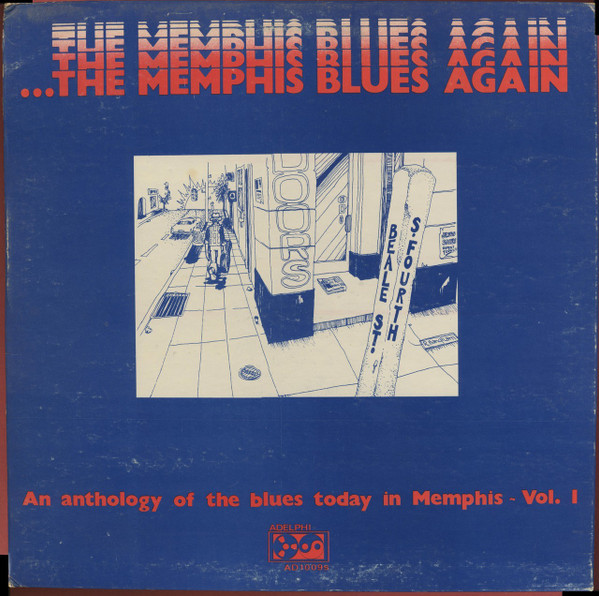
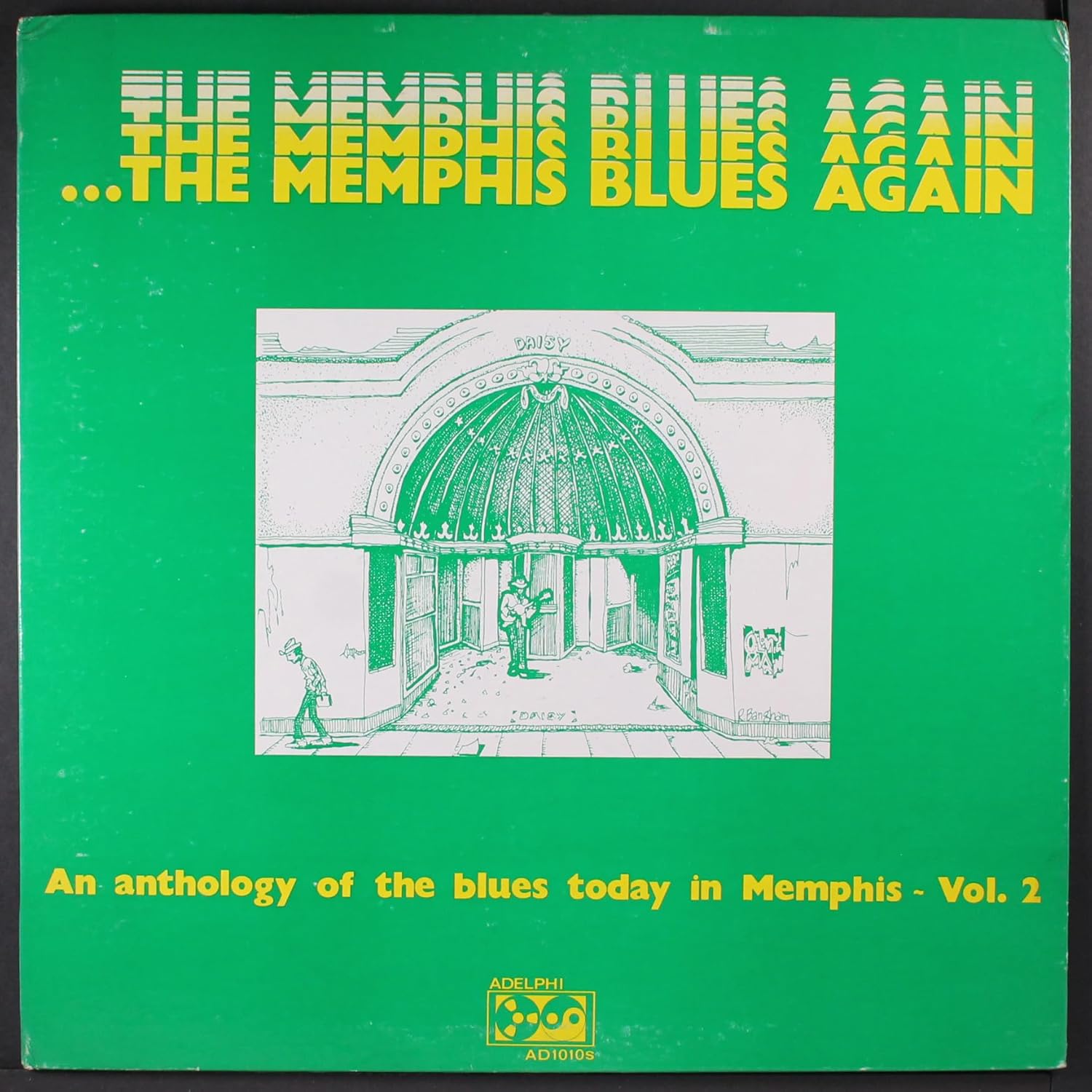
The Memphis Blues Again Volume 2
Adelphi Records was founded in 1968 and incorporated in 1970 by Gene Rosenthal in Silver Spring, Maryland. The label name references the Greek oracle, the community of Adelphi, Maryland, and John Fahey's song "The Downfall of the Adelphi Rolling Grist Mill." Field recordings began in 1964 and expanded to include film documentation in 1969, with sessions in Chicago, St. Louis, Memphis, and the Mississippi Delta. Principal subsidiary: Sunsplash Records (established early 1980s for Jamaican reggae documentation). The label's recording facility, Adelphi Studios, was located in Silver Spring, Maryland. Principal artists: Roy Buchanan (blues-rock); The Nighthawks (blues-rock); Catfish Hodge (blues-rock); Lenny Breau (jazz guitar); Reuben Brown (jazz piano); Richie Cole (jazz saxophone); the Rosslyn Mountain Boys (bluegrass); Reverend Gary Davis (acoustic blues); Furry Lewis (acoustic blues); Patrick Sky (folk); Holy Modal Rounders (psychedelic folk); Yellowman, Big Youth, and Toots and the Maytals (reggae); Skip James, Mississippi John Hurt, R.L. Burnside, and Houston Stackhouse (Delta blues field recordings).