Introduction: Nashville's Great Secret
When casual observers of American music history think about Nashville, Tennessee, in the 1950s and 1960s, they think about the Grand Ole Opry, about the emergence of the countrypolitan sound, about the Music Row infrastructure that would come to dominate commercial country music for the next half-century. What they do not typically think about is swamp blues from the Louisiana bayous, jump blues from the South Side black clubs, the originals of songs that would help define the British Invasion, or the groundbreaking R&B recordings that introduced the Rolling Stones to the musical tradition they would spend their career celebrating.
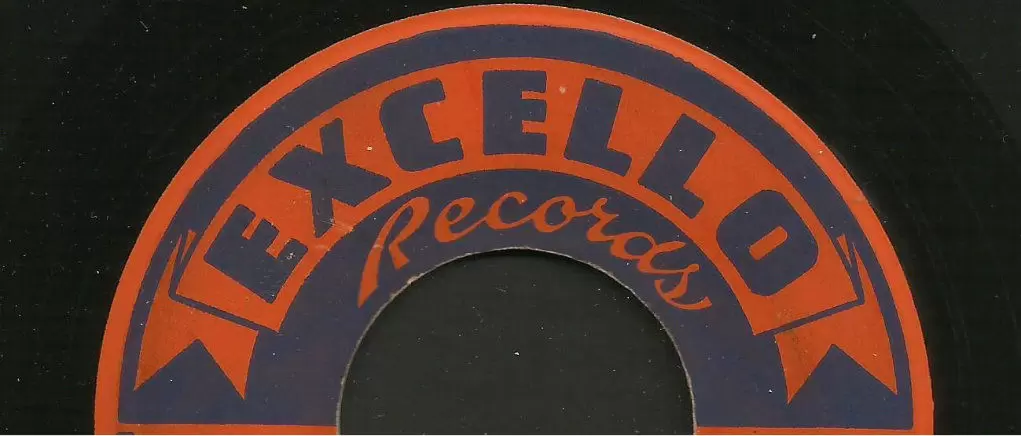
They should. Between 1952 and 1966, Ernie Young's Excello Records — operating out of his record store and mail-order operation on Third Avenue North in Nashville — produced one of the most distinctive bodies of music in the history of American independent labels. Its Nashville recordings of local jump blues and R&B artists documented a dimension of Music City that the country music industry preferred to pretend did not exist. Its Louisiana recordings — made by producer J.D. Miller in his Crowley studio and licensed to Excello for national distribution — defined the swamp blues genre and introduced Lightnin' Slim, Slim Harpo, Lazy Lester, Lonesome Sundown, and Silas Hogan to national and eventually international audiences. And its distribution through the fifty-thousand-watt beacon of WLAC radio reached every corner of the country where there was someone willing to listen late at night to the sound that the mainstream music industry wasn't broadcasting.
The uDiscover account of the label captures its legacy with characteristic precision: it was "a home for jump blues, southern-fried early rock 'n' roll, swampy R&B and black gospel." The American Blues Scene assessment adds the cultural weight: it was "early inspiration for Stones, Clapton." Ernie Young was described by author Randy Fox as "probably the only example — maybe ever, certainly of that time — who was actually honest with his artists" — a claim that, if sustainable, would place him as a genuine outlier in the commercial history of the independent label world.
This is the story of Excello Records: the label, its owner, its partners, its artists, and the music they made in Nashville, Crowley, Baton Rouge, and all the Delta towns between.
The Founder: Ernie Young and the Record Mart
Ernest Lafayette Young was born on December 2, 1892, in Giles County, Tennessee — a fact that makes him, at the time of Excello's founding, already a man of sixty. His path to the record business ran through the jukebox industry and the retail record trade, and his business model, when he arrived at it, was one of elegant simplicity: sell records to the people who wanted them, by whatever mechanism reached them most efficiently.
Young had entered the music industry through jukebox operations — the route that the Chess brothers and the Bihari brothers and numerous other independent label founders had also taken — and had moved from jukebox supply into record retail with the opening of Ernie's Record Mart on Third Avenue North in Nashville. The store described itself as "the record centre of the south!" — an advertising claim that was not as far from the truth as such claims usually are.
The specific commercial innovation that made the Record Mart extraordinary was its mail-order operation, built on the promotional platform that WLAC provided. The Grokipedia account confirms the infrastructure: "The store's mail-order model targeted Southern Black audiences and teenagers, generating strong sales via late-night R&B broadcasts on WLAC, which helped fund his label ventures." The mechanism was: Young advertised on WLAC, listeners called or wrote in with orders, the Record Mart filled those orders by mail, and the revenue from mail-order record sales subsidised the label operations that in turn generated the product that WLAC was promoting.
WLAC — the fifty-thousand-watt clear channel AM station in Nashville whose signal reached thirty-eight states after dark — was the technological foundation on which the entire Excello commercial model rested. The Nashville Scene account describes it: "In the 1950s and '60s, through the mail-order service of Ernie's Record Mart on Third Avenue North and the powerful signal of WLAC radio, Ernie Young sent the music of his Excello and Nashboro labels to every dark corner of a sleeping America." The image is both vivid and accurate: after midnight, when the other stations had signed off and the AM signal travelled further, WLAC's DJs — Randy Wood, Bill "Hoss" Allen, John "R" Richbourg — were playing blues and R&B and gospel to audiences who had no other source for this music, and the Record Mart was the commercial mechanism through which those audiences could obtain the records they were hearing.
The BBC documentary on WLAC confirmed the radio station's significance for younger British listeners as well: "The teenagers of England," the documentary noted, were listening to WLAC through the static, absorbing the same music that American teenagers in the rural South were absorbing through the clearer signals of closer reception. The Rolling Stones, in their early interviews, spoke of hearing American blues on radio in ways that suggest some of those signals were reaching across the Atlantic; WLAC's programming was among the specific material being heard.
Young's approach to artist relations was, as Fox's book documents, unusually ethical by the standards of the era. The My Spilt Milk account preserves the central assessment: "Ernie is probably the only example — maybe ever, certainly of that time — who was actually honest with his artists." In a commercial landscape in which independent label owners routinely paid flat session fees, signed away royalty rights, and used various accounting mechanisms to ensure that artists saw minimal returns from commercial success, Young's honesty was both practically unusual and commercially rational — honest artists were more likely to keep recording for you than artists who felt cheated, and the long-term commercial value of a productive artist relationship outweighed the short-term gain from exploitation.
He founded Nashboro Records in 1951 specifically for gospel music — his own personal preference as well as a commercially significant market — and Excello the following year as a vehicle for secular music, primarily R&B and blues. The two-label structure gave him the ability to separate the sacred from the secular in ways that mattered to both gospel artists who would not have wanted their music associated with the blues and to some commercial distribution channels that maintained formal distinctions between the two categories.
Young retired in 1966 at age seventy-three — the sale of his interests in the labels reflecting both his age and the changing commercial landscape — and died on June 8, 1977, in Nashville, at the age of eighty-four.
The Early Nashville Years: Jump Blues and the Local Scene
Before J.D. Miller's Louisiana connection transformed Excello into a nationally significant swamp blues label, the label's primary commercial foundation was the Nashville jump blues and R&B scene — the "brash and sassy R&B of uptown blues and small jump groups" that the American Blues Scene describes as dominating "Nashville's swankier black nightclubs."
The Nashville Scene account of the early Excello period gives the most vivid picture of what was being recorded: "The sound here is decidedly urban — rollicking jelly-roll piano, hip-swinging bass lines, and jazzy full-band charts that butt in and blare like car horns. The groups themselves weren't meant to last. As Daniel Cooper explains in his superb liner notes, Ernie Young nurtured a 'here today/gone tomorrow outlook on artist development,' and brilliant acts like the Blue Flamers, Little Maxie Bailey, and Sherman Johnson sometimes cut only a couple of sides for Young before splitting Excello forever."
The "here today/gone tomorrow outlook" was a commercial reality rather than a philosophical position: in the rapidly evolving R&B market of the early 1950s, acts had short commercial half-lives, and the independent label's job was to document and release what it found rather than to develop long-term artist relationships. The music that resulted from this approach was, as the Nashville Scene account notes, of genuine quality: "their music has an exuberance and vitality that lingers" decades after the acts themselves dissolved.
Arthur Gunter was the Nashville-area artist whose early Excello recording would prove the most historically consequential. His "Baby Let's Play House" (Excello 2047, 1954) — originally a blues with a light rockabilly tinge — reached number twelve on the R&B chart early in 1955 and then attracted the attention of Sam Phillips at Sun Records in Memphis, who had his new signing Elvis Presley record a version of the song. As the uDiscover account confirms: "Arthur Gunter, who wrote and recorded the original 'Baby, Let's Play House,' soon to be covered by the young Elvis Presley. Gunter's version on Excello reached No. 12 on the R&B chart early in 1955." The specific trajectory — from Excello's Nashville studios to Elvis Presley's Sun Records debut — made Gunter's recording one of the earliest documented instances of the commercial and artistic exchange between the Black and white music traditions that would define rock and roll.
Kid King's Combo and Louis Brooks and His Hi-Toppers were among the jump blues ensembles that anchored the early Excello commercial identity. The Big Road Blues account identifies them as representative of the label's initial focus: "Most of Excello's success through 1954 in the R&B field centered on the brash and sassy R&B of uptown blues and small jump groups like Kid King's Combo and Louis Brooks & His Hi-Toppers." Their recordings captured a specific moment in Nashville's African American music scene that the city's subsequent identification with country music has completely obscured.
Ted Jarrett — the songwriter, musician, and industry figure who worked closely with Excello — was one of the key creative presences in the label's Nashville operation. The American Blues Scene account and the Country Music Hall of Fame's documentation both preserve his centrality to the label's early commercial identity, and the photograph of Young, Jarrett, and Ted Adams at Ernie's Record Mart in 1955 is one of the most vivid surviving images of the label's Nashville world.
Roscoe Shelton was one of the Nashville artists whose Excello recordings documented a vocal talent of genuine individual quality. His Gospel-inflected soul voice and his ability to move between the sacred and secular dimensions of the Southern African American vocal tradition gave his recordings a depth that distinguished them from the more formula-driven jump blues of the early catalogue. The Nashville Scene account singles him out as one of the "unsung local heroes" whose Excello work deserved broader recognition than it received.
The Louisiana Connection: J.D. Miller and the Swamp Blues Revolution
The event that transformed Excello from a commercially significant Nashville regional label into one of the most historically important independent blues labels in American music history was the formation of the distribution and licensing relationship with Jay Miller of Crowley, Louisiana, in 1956. This single commercial arrangement — Miller recording in his Crowley studio and licensing the masters to Excello for national distribution — produced the body of work that the label is now primarily known for and that established the swamp blues genre as a distinct and historically significant tradition.
J.D. Miller's path to the Excello arrangement is documented in the Big Road Blues account with specific detail. Miller had been recording regional Cajun and country music in the early 1950s when he first heard Lightnin' Slim at WXOK in Baton Rouge. "Miller has said that Lightnin's music 'did something to me'" — the specific phrase capturing the quality of genuine musical discovery that preceded the commercial arrangement. Miller recorded Lightnin' Slim's "Bad Luck" in the spring of 1954, pressed a few copies on his own Feature label, and sent them to both Ernie's Record Mart and Randy's Record Shop to sell. When WLAC began playing the record, the commercial response was immediate and overwhelming: "the phones lit up, and before he knew it, they were ordering 500 copies at a time."
The commercial logic of the arrangement was straightforward. Miller had access to music of genuine quality and commercial appeal, but he lacked the pressing capacity, the distribution network, and the promotional infrastructure to take it to the national market. Excello had all three, plus the WLAC connection that was demonstrably capable of generating commercial demand for this specific kind of music. "There was no way J.D. could keep up with the demand, and he decided to travel to Nashville for a record convention." The meeting that resulted established the partnership that would produce the swamp blues catalogue.
The swamp blues sound that Miller developed was, as the Last.fm description captures, characterised by "eerie echo, shuffle beats, tremolo guitars, searing harmonica and sparse percussion." The specific production techniques — the echo that Miller applied to give recordings their atmospheric quality, the minimal arrangements that gave the guitar and harmonica space to breathe, the drum and percussion treatments — were developed by Miller in his Crowley studio over years of experimentation and refined through the commercial feedback loop of WLAC airplay and mail-order sales.
Lightnin' Slim: The Foundation of the Swamp Blues Catalogue
The artist whose recordings established the swamp blues template and gave the Miller-Excello relationship its commercial foundation was Otis Vernon Hicks, who recorded as Lightnin' Slim — a name Miller had coined by analogy with Lightnin' Hopkins and Slim Harpo, combining two existing blues performer names to create a new one.
Lightnin' Slim's "Bad Luck," recorded for Feature in 1954 before the Excello deal, was the proof of concept. His subsequent Excello recordings — beginning with the transition of the Feature material to the Excello catalogue and continuing through a series of original sessions in Crowley — documented a blues guitar and vocal approach of considerable originality. His guitar style, which combined the sparse single-note lines of the Delta tradition with the atmospheric quality that Miller's studio echo produced, was the defining instrumental sound of the Baton Rouge blues scene.
His 1959 Excello hit "Rooster Blues" was the commercial peak of his Excello career. The uDiscover account is precise: "Lightnin' Slim was especially known for his 1959 Excello hit 'Rooster Blues.'" The song's combination of Slim's deep, gravelly vocal and Miller's characteristic production — the tremolo guitar, the snapping percussion, the spacious echo — gave it the quality of recordings that sounded simultaneously ancient and immediate, rooted in a tradition that predated commercial recording yet captured with a sonic freshness that made it feel contemporary in 1959 and still feels contemporary today.
The broader Lightnin' Slim catalogue for Excello — collected most comprehensively on Ace Records' various compilations and on Rhino's Sound of the Swamp: Best of Excello Records series — documented a musician of consistent quality across multiple albums' worth of material. His Excello career extended from the mid-1950s through the mid-1960s, and the corpus of recordings he produced in that decade gives him a claim to being the most fully documented of all the swamp blues artists despite the fact that, like most of them, he was a part-time musician working day jobs between recording sessions and performances.
Slim Harpo: The Commercial Crown
While Lightnin' Slim established the swamp blues template and gave the Miller-Excello relationship its commercial foundation, Slim Harpo was the artist who brought the label its greatest commercial success and its most enduring international influence. James Isaac Moore — whose professional name was "Slim Harpo," a playful condensation of "slim harp-o" (the harmonica) — recorded for Miller and Excello from 1957 until his death in 1970, producing a body of work that the Last.fm assessment describes with appropriate superlatives: "Harpo was the point man of the 1950s Louisiana Swamp/Blues movement."
His debut single — "I'm a King Bee" backed with "I Got Love If You Want It" (Excello 2113, 1957) — was the opening statement of one of the most consistently achieved careers in the swamp blues tradition. The uDiscover account documents both songs' influence: "I'm a King Bee" was "later recorded by the Rolling Stones" and "I Got Love If You Want It" was covered by the Kinks. The two sides of a single debut 45 becoming foundational recordings for two of the most important British Invasion bands was a commercial achievement of extraordinary proportions, and it was achieved before either the Rolling Stones or the Kinks had formed their first lineups.
"Rainin' in My Heart" (Excello 2194, 1961) was Harpo's first major chart success, reaching the upper reaches of the R&B charts and crossing over to the pop market in ways that demonstrated the song's specific quality of cross-demographic appeal. The Last.fm description of the Miller production approach for this period captures what made the recordings so accessible: "Slim Harpo brought a good bit of the Louisiana swamp vibe with him when he recorded these immortal singles for Jay Miller's Nashville-based Excello Records in the early '60s, and the rustic, laconic way these recordings unfold, aided and abetted by Miller's trademark echo-laden production, makes them singular even inside the Excello stable."
"Baby Scratch My Back" (Excello 2273, 1965-66) was the commercial pinnacle of the entire Excello Records history. The Wikipedia account of the recording is precise: "Although it had some success with rock audiences (reaching number 16 on Billboard's Hot 100 chart), 'Baby Scratch My Back' was a number one hit in 1966 on the magazine's Hot Rhythm & Blues Singles chart." The Billboard chart confirms it: in the week of February 19, 1966, "Baby Scratch My Back" was sitting at number two on the R&B chart — just below Stevie Wonder's "Uptight (Everything's Alright)" — after reaching number one the previous month. It was, as the Wikipedia article states, "Harpo's most commercially successful single."
The song itself was described in contemporary reviews as featuring "a laconic, loping beat with tremolo laden guitar, wood block maracas, and snapping snare drum sound" — the specific combination of production elements that Miller had been refining for a decade and that here achieved their most commercially effective realisation. Harpo himself called it "an attempt at rock and roll for me" — the description capturing both the conscious commercial strategy of aiming at the broader market and the way in which the swamp blues tradition could be stretched in that direction without losing its essential character.
"Shake Your Hips," recorded in February 1966 as a follow-up to "Baby Scratch My Back," extended the run. The Wikipedia article on the song notes its contributions from Lazy Lester on percussion and Katie Webster on organ — the wider Excello-connected musician community making itself heard on the recording — and its subsequent career took it to international audiences when the Rolling Stones included their version on Exile on Main Street in 1972. The ZZ Top hit "La Grange" borrowed the riff from "Shake Your Hips," creating another link in the chain of influence that runs from Miller's Crowley studio to some of the most celebrated recordings in 1970s rock.
Harpo "never a full-time musician" — the Last.fm account notes that "he had his own trucking business during the 1960s" — was in the final years of his life achieving the recognition that his long Excello career deserved. He played the Electric Circus, the Fillmore East, and other venues of the late-1960s blues revival circuit, bringing the Excello sound to audiences that had previously known it only through records. His death from a heart attack on January 31, 1970, at forty-six, ended a career whose international dimensions were still expanding.
Lazy Lester: The Percussive Eccentric
Leslie Johnson — who recorded as Lazy Lester — was the most improbable and most delightful of the regular Excello swamp blues artists: a multi-instrumentalist, harmonica player, and occasional vocalist whose specific contribution to the Miller productions was the improvised percussion work that gave so many of the recordings their distinctive rhythmic character.
The connection to Slim Harpo that runs through multiple Excello recordings — Lester playing percussion on "Shake Your Hips" and various other sessions, Harpo having been a significant influence on Lester's own musical development — gave the two artists a complementary relationship within the Excello catalogue. Lester's own Excello recordings — including "I Hear You Knockin'" (included on the Sound of the Swamp compilation) and "Sugar Coated Love" — showed a musical personality of considerable individual charm, his harmonica playing and his slightly comic vocal approach giving the recordings a warmth that distinguished them from the more austere emotional register of Lightnin' Slim.
The percussion instruments that Lester used in the Miller studio sessions — woodblocks, bongos, various improvised noisemakers — became one of the distinguishing features of the Excello swamp blues sound, and Miller's recognition of their value and his decision to use them prominently in his productions was one of his more consequential production choices. The specific quality of the percussion on recordings like "Baby Scratch My Back" — the "wood block maracas and snapping snare drum sound" of the Wikipedia description — owed much to Lester's creative involvement.
Lonesome Sundown and Silas Hogan: The Deeper Blues
While Slim Harpo and Lightnin' Slim were the commercially successful and internationally influential artists of the Excello swamp blues roster, two other musicians — Lonesome Sundown and Silas Hogan — represented a deeper, more austere dimension of the tradition that gave the label's blues catalogue its full depth.
Lonesome Sundown — Cornelius Green, born December 12, 1928, in Donaldsonville, Louisiana — was one of the most emotionally intense voices in the swamp blues tradition, his guitar playing and his vocal delivery carrying a quality of desolation that went beyond the more accessible emotional range of the more commercially successful Excello artists. "My Home Is a Prison" — included on the Sound of the Swamp compilation — was his most celebrated recording, the title phrase and the emotional reality it described giving the song an existential weight that distinguished it from the dance-floor-oriented material of Slim Harpo and Lazy Lester.
Silas Hogan — Silas T. Hogan, born September 15, 1911, in Westover, Louisiana — was one of the oldest of the Baton Rouge swamp blues musicians and one of whose recordings most directly connected the tradition to its Delta origins. His guitar style was spare and economical, his vocal approach direct and undemonstrative, and the combination gave his Excello recordings the quality of field recordings rather than commercial productions — the sense of music being captured rather than constructed.
The Sound of the Swamp compilation track "Everybody Needs Somebody" represented Hogan's specific quality within the Excello catalogue: a slow, deliberate blues of genuine emotional depth, the simple title phrase carrying the weight of a lifetime's observation about human need and connection. Miller's production approach was at its most restrained on the Hogan recordings, the echo and tremolo pulled back to let the guitar and vocal occupy the sonic space without competing for attention.
Guitar Gable and the Musical Kings
The presence on the Sound of the Swamp compilation of both "This Should Go On Forever" and "Congo Mombo" by Guitar Gable — Gabriel "Guitar Gable" Perrodin — pointed to a dimension of the Excello/Miller catalogue that complicated the simple "swamp blues" categorisation. Perrodin and his Musical Kings brought a more pop-oriented, commercially sophisticated approach to the recordings that Mill and Excello released, their sound pointing toward the swamp pop style that was simultaneously developing in Louisiana and that would produce a series of significant commercial recordings through the late 1950s and early 1960s.
"This Should Go On Forever" — which the Sound of the Swamp compilation includes — had been a significant commercial recording that crossed over between the swamp pop and mainstream pop markets in ways that neither Lightnin' Slim nor Slim Harpo were capable of. The commercial story of its release and the legal complications that followed — involving questions about who had recorded the song first and who had the right to release it — was one of the more colourful episodes in the Miller-Excello relationship, and the subsequent dispute between Miller and Guitar Gable over royalties from the song's success demonstrated that even Young's honesty with artists could not insulate the Excello ecosystem from the commercial conflicts that plagued the independent label world generally.
The Vocal Groups and R&B: Gladiolas, Crescendos, and the Pop Dimension
Alongside the blues and swamp blues catalogue, Excello maintained a significant presence in the vocal group and pop R&B markets of the 1950s through the recordings of groups that the Grove Music account identifies as among the label's notable artists: the Crescendos and the Gladiolas.
The Gladiolas — the Nashville-based group fronted by Maurice Williams — recorded "Little Darlin'" for Excello in 1957. The song was immediately covered by the Diamonds for Mercury Records, and the Diamonds' version became a huge pop hit while the Gladiolas' original became a footnote — another instance of the pattern in which Excello recordings served as the originals for covers that achieved the mainstream commercial success that the originals could not reach through the label's primarily African American distribution channels.
Williams subsequently reformed the group as the Zodiacs and recorded "Stay" — a recording that would be covered dozens of times and become one of the most covered songs of the rock and roll era. The "Stay" story connected Excello, through its artist relationships, to one of the canonical recordings of early rock and roll.
The Crescendos had their own commercial moment with "Oh Julie" — one of the handful of rock and roll recordings in the Excello catalogue that crossed over to significant pop chart success. The label's forays into the pop market were always secondary to its primary blues and gospel identity, but they demonstrated Young's awareness that commercial opportunity existed across a broader spectrum than his core specialisation.
Arthur Gunter, Carol Fran, and Warren Storm
Several other Excello artists deserve individual attention for their specific contributions to the label's commercial and artistic identity.
Arthur Gunter's historical significance has been discussed above in the context of "Baby Let's Play House," but his broader Excello catalogue — spanning multiple singles across the 1950s — documented a blues and early rock and roll approach of genuine originality. His singing combined the deep blues tradition with the lighter, more rhythmically assertive quality of the early rock and roll sound in ways that anticipated developments that other, more celebrated artists would subsequently make famous.
Carol Fran — the Louisiana-born blues and R&B singer — brought a female perspective to the Excello blues catalogue that was unusual in the label's production context. Her "One More Chance," included on the Sound of the Swamp compilation, demonstrated a vocal approach influenced by both the blues queens of the pre-war era and the more contemporary soul vocal style that was developing simultaneously. Her association with organist Clarence Hollimon gave the Carol Fran recordings a keyboard-centered sound that distinguished them from the guitar-and-harmonica dominated swamp blues catalogue.
Warren Storm — William Warren Godbold, born September 10, 1937, in Abbeville, Louisiana — was a drummer, vocalist, and singer-songwriter who brought the swamp pop sensibility most directly into the Excello catalogue. "Prisoner's Song" — included on the Sound of the Swamp compilation — was his most celebrated Excello recording, his powerful tenor voice and the production's combination of blues feeling and pop accessibility giving it the character of a record that could appeal simultaneously to blues, country, and pop audiences.
The Martin Luther King Recording
Among the more unexpected items in the Excello catalogue is a spoken word sermon by Martin Luther King Jr. — the Wikipedia account of the label's artists lists him alongside the blues, gospel, and R&B acts that defined the label's commercial identity. Young's willingness to document King's preaching was consistent with his Nashboro gospel orientation, and the resulting recording gave the Excello catalogue an historical document of a completely different kind from its commercial music output: here was the voice of the civil rights movement, preserved on the same label that had recorded "I'm a King Bee" and "Rooster Blues."
The juxtaposition was not incidental. The music that Young had been recording and distributing since 1952 was the music of African American life in the South and the border states — the blues and gospel and R&B that expressed the full range of that life's emotional content. Martin Luther King's preaching came from the same community that had produced Lightnin' Slim and Slim Harpo, and Young's recognition that it deserved documentation alongside them was, in its own way, as culturally significant as any commercial recording decision he made.
The Sale, the Legacy, and the Ownership Question
Young retired in 1966 at age seventy-three, selling his interests in Excello and Nashboro to Nashville Sounds Inc., which maintained the labels' operations until the late 1960s and early 1970s. The subsequent corporate history of the catalogue followed the pattern familiar from other significant independent label archives: multiple acquisitions, reissue programmes, and eventually consolidation into major corporate hands.
The Nashville Scene account documents the most recent major ownership transaction: "In a deal earlier this year, the Universal Music Group — part of Seagram's global entertainment octopus and parent company of MCA Nashville, Death Row Records, and other labels — snapped up the holdings of AVI Entertainment Group, which owned the masters of Excello and its related labels." The price, estimated by a source as "a couple of million dollars at least," placed the Excello catalogue in the hands of the world's largest music corporation — a transition that had both benefits (wider distribution, better-resourced reissue programmes) and limitations (the catalogue's specific character was now managed by people with no personal connection to its origins).
The reissue programme that various labels had conducted before the Universal acquisition had already given the Excello catalogue significant commercial availability. The Sound of the Swamp: The Best of Excello Records double-CD on Rhino Records — with its two volumes drawing on the full breadth of the catalogue from "Baby Scratch My Back" through "I Hear You Knockin'" and "Congo Mombo" — had given collectors and general listeners their most comprehensive single-volume overview of the label's achievement.
BMG's more recent attention to the Excello legacy — the book Shake Your Hips: The Excello Records Story by Randy Fox, published as the first entry in BMG's series on famous record labels — gave the story its fullest available narrative treatment and confirmed the label's standing as one of the most historically significant independent operations in American music history.
The Legacy: What Excello Left to the World
The legacy of Excello Records operates at multiple levels. At the most immediate, it is the specific recordings — the forty songs that formed Slim Harpo's Excello catalogue, the Lightnin' Slim body of work, the Lazy Lester recordings, the Arthur Gunter sessions — that documented the swamp blues tradition at its creative peak and gave subsequent musicians across multiple generations and multiple genres the material they would absorb and transform.
At the level of specific influence, the Rolling Stones' relationship with the Excello catalogue was the most culturally consequential single connection. The Stones covered "I'm a King Bee" on their debut album, "Shake Your Hips" on Exile on Main Street, and drew from the broader Excello aesthetic in ways that shaped their entire approach to the blues throughout their career. Their compilation Confessin' the Blues, assembled to accompany a world tour, included both Slim Harpo's "I'm a King Bee" and Lightnin' Slim's "Hoodoo Blues" — a specific acknowledgement, six decades after the original recordings, that the Excello catalogue remained the foundation of their musical identity.
Eric Clapton's acknowledgement of the Excello influence — documented in the uDiscover headline "New Book Celebrates Excello Records, Early Inspiration For Stones, Clapton" — placed the label at the centre of the British blues revival's American sources. The specific combination of Lightnin' Slim's guitar style, Slim Harpo's harmonica approach, and the distinctive Miller production sound gave the British musicians who absorbed Excello recordings a specific aesthetic template that was simultaneously rooted in tradition and immediately accessible.
The label's commercial model — the WLAC/mail-order nexus that reached African American audiences across thirty-eight states — was itself a commercial innovation of significance. Young had built, before the internet and before anything resembling national cable radio, a national distribution system for music that the mainstream commercial channels excluded. The WLAC late-night broadcast was a predecessor to the specific kind of music recommendation system that the digital age has since built in vastly more sophisticated forms, and its role in creating the audience for the music Excello was releasing cannot be overstated.
Young's personal integrity in his artist relationships — the honesty that Fox identifies as historically unique — gave the label a specific character that musicians responded to with a loyalty unusual in the independent label world. Slim Harpo recorded for Excello for his entire career; Lightnin' Slim recorded for them for more than a decade; the Louisiana swamp blues community that coalesced around the Miller-Excello relationship was a self-reinforcing creative ecosystem precisely because the commercial relationship at its centre was one of unusual fairness.
"Nashville was ground zero for Excello Records," the American Blues Scene account concludes, "which brought the electrifying sounds of groovin' jump blues, Southern-fried rock 'n' roll, fervent black gospel, and the simmering sounds of the Louisiana swamp to record buyers and listeners to WLAC radio." The description is accurate, and the word "electrifying" is the right one: the records that Ernie Young released from his store on Third Avenue North and that J.D. Miller produced in his Crowley studio sent electrical currents through American popular music that are still felt today, in every recording that draws from the swamp blues tradition, and in every Rolling Stones concert at which Mick Jagger begins to sing "Shake Your Hips."
Suggested Reading
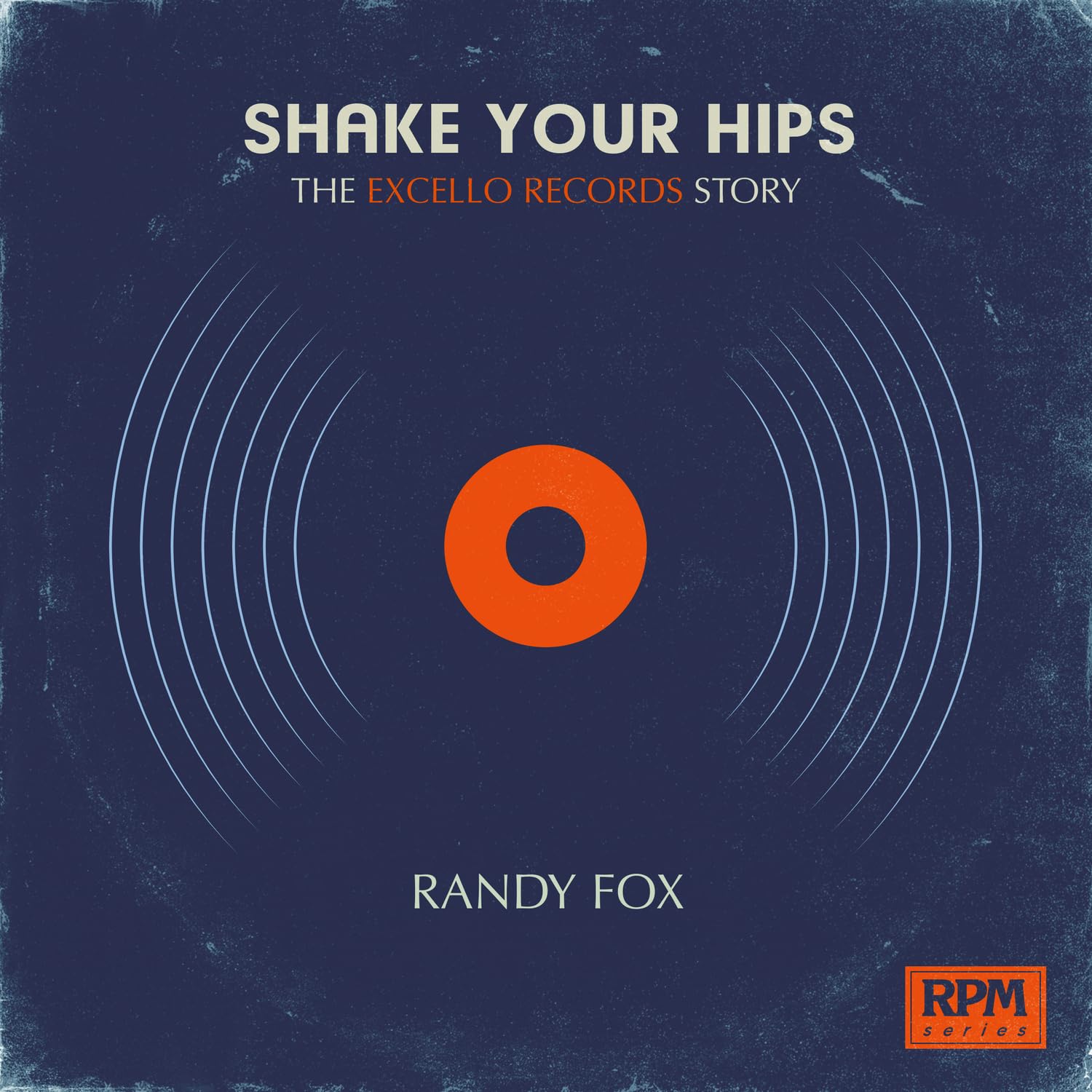
Shake Your Hips: The Excello Records Story
Selected Discography
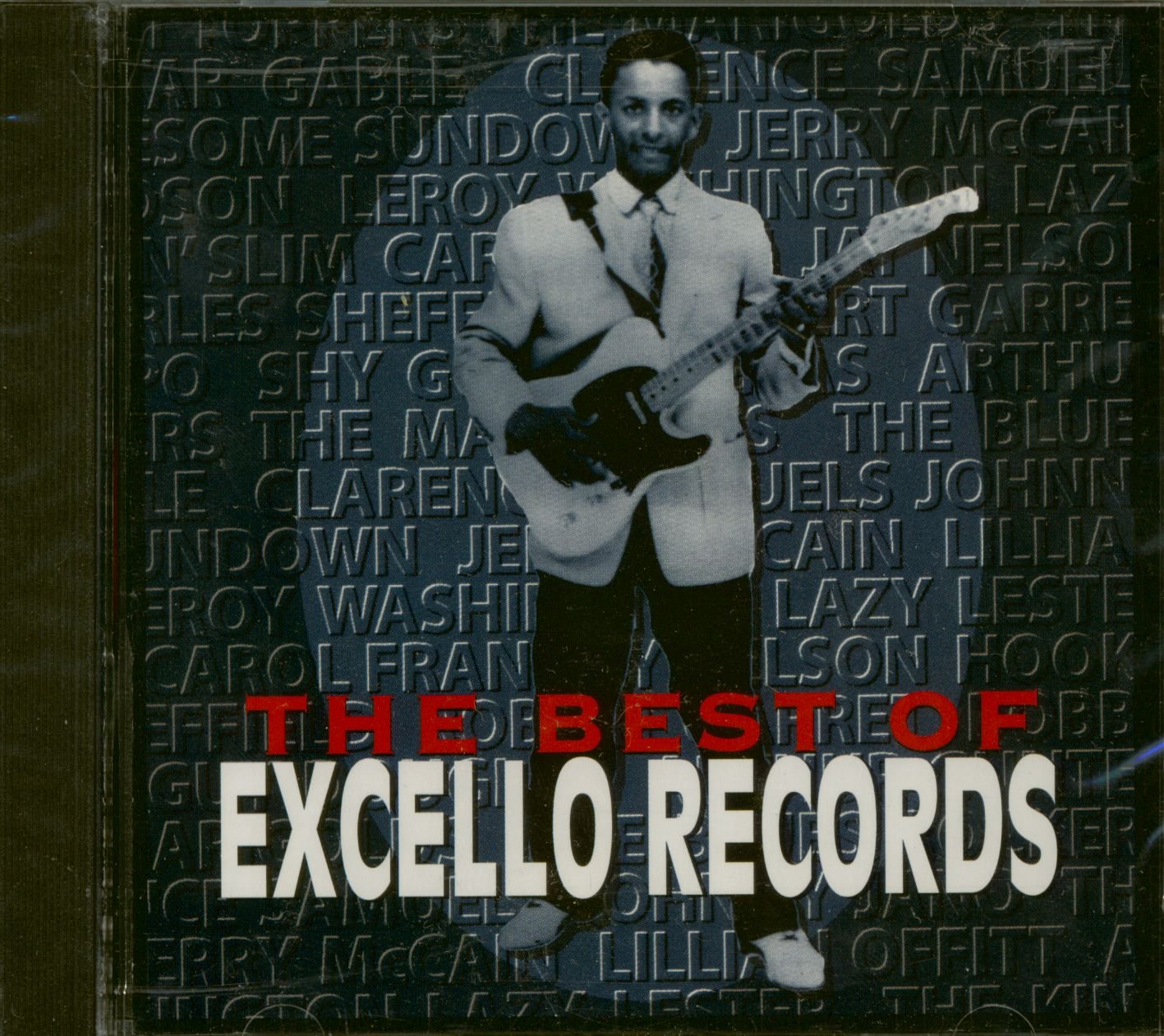
Excello Records was founded in 1952 by Ernie Lafayette Young (December 2, 1892 – June 8, 1977) in Nashville, Tennessee, as a subsidiary of Nashboro Records. Young operated the label from his retail and mail-order record store, Ernie's Record Mart, on Third Avenue North, Nashville. The label's national distribution was substantially enabled by advertising and airplay on WLAC, Nashville, a fifty-thousand-watt clear channel AM station. Principal Louisiana producer: J.D. "Jay" Miller (Crowley, Louisiana), who began producing for Excello in 1956. Young retired in 1966 and sold his interests in the labels. The Excello catalogue subsequently passed through Nashville Sounds Inc., and AVI Entertainment Group before acquisition by Universal Music Group. Principal artists: Slim Harpo (1957-1970); Lightnin' Slim (1954-1965); Lazy Lester; Lonesome Sundown; Silas Hogan; Guitar Gable; Arthur Gunter; Carol Fran; Warren Storm; The Gladiolas; The Crescendos; Roscoe Shelton; Earl Gaines; and others. Greatest commercial success: "Baby Scratch My Back" by Slim Harpo, number one R&B chart, January 1966; number 16 pop chart, 1966.