History
Bluebird Records was founded in 1932 as a lower-priced subsidiary (budget imprint) of RCA Victor by Eli Oberstein, an executive at the company. It was positioned as an affordable alternative to premium labels during the Great Depression era, with records initially selling for around 35 cents (or 3 for $1). This made high-quality music accessible to a broader audience.
The label began with 8-inch discs in 1932 (series starting around 1800), quickly transitioning to standard 10-inch 78 rpm records. Early issues overlapped with other short-lived RCA budget experiments like Electradisk (for Woolworth's) and Sunrise. By 1933–1934, Bluebird became RCA Victor's primary budget line with the distinctive "buff" label (blue-on-beige).
Bluebird is particularly noted for developing the "Bluebird sound" or "Bluebird Beat"—a consistent, tight small-band arrangement style often featuring piano, bass, drums, and sometimes horns like clarinet or saxophone. This sound, shaped by producer Lester Melrose's Chicago sessions, influenced later rhythm and blues and early rock and roll. Records were produced quickly and economically, sometimes using house/session musicians.
The label thrived through the 1930s and into World War II, recording and reissuing jazz, blues, swing, country, and children's music. After WWII, the original Bluebird imprint was largely retired, with catalogs reissued on RCA Victor. It saw revivals in the 1950s (for budget, jazz, children's, and classics reissues), the mid-1970s (2-LP big band/swing sets), and continues today primarily for CD reissues of vintage RCA material under Sony Music Entertainment.
Ownership
- Founder/Initial Owner: Eli Oberstein (under RCA Victor).
- Parent Company: RCA Victor (part of RCA).
- Current Ownership: Owned by Sony Music Entertainment (via RCA Records). Bluebird operates as a reissue/catalog imprint distributed by Sony Masterworks.
RCA Victor used Bluebird alongside other imprints and store-exclusive deals (e.g., Montgomery Ward). Control remained with RCA through mergers and acquisitions until Sony's involvement with the Bertelsmann Music Group era and full ownership transitions.
Key Artists and Recordings
Bluebird's roster was diverse, spanning genres, with a strong emphasis on blues, jazz/swing, and country. Many sessions were helmed by Lester Melrose in Chicago, creating a signature house sound.
Blues / Chicago Blues
Bluebird became a powerhouse for pre-war and early Chicago blues:
- Big Bill Broonzy: Major figure; many sides.
- Sonny Boy Williamson I (John Lee Williamson): Iconic harmonica player; tracks like "Blue Bird Blues."
- Tampa Red: Prolific; recordings from 1934–1936 and beyond.
- Washboard Sam, Roosevelt Sykes, Arthur "Big Boy" Crudup, Tommy McClennan, Lil Green, Merline Johnson.
- Others: Bo Carter, Washboard Sam, Big Maceo Merriweather.
These recordings often featured tight ensembles and helped define urban blues transitioning toward postwar styles.
Jazz and Big Band / Swing
- Glenn Miller: Early recordings before his major success.
- Artie Shaw.
- Earl Hines, Charlie Barnet, Shep Fields, Ted Weems, Joe Haymes, Rudy Vallée.
- Reissues during WWII: Duke Ellington, Jelly Roll Morton, Bennie Moten.
Bluebird captured the swing era's danceable, accessible side.
Country / Folk
- Monroe Brothers, Delmore Brothers, Bradley Kincaid.
- Reissues of Jimmie Rodgers and the Carter Family.
Other
- Children's music (a notable later focus).
- Regional recordings, including Texas/Mexican-American artists like Lydia Mendoza in San Antonio sessions.
Discographies are extensive; comprehensive efforts exist (e.g., books by John R. Bolig listing thousands of 78s by catalog number, matrix, and date). Popular series ran B-5000 and up. Many titles were also issued on subsidiary/store labels.
Bluebird Beat/ Melrose Sound
Under the direction of producer and talent scout Lester Melrose, Bluebird Records became the dominant force in recording Chicago blues during the 1930s and 1940s. Melrose effectively controlled much of the market, recording approximately 90% of RCA Victor and Columbia's African American blues artists between 1934 and 1951. He cultivated a signature "Bluebird Beat" or "Melrose sound": tight, danceable small-group ensembles featuring piano, guitar, upright bass, drums, and often harmonica or horns. This polished yet energetic style bridged rural Delta blues with emerging urban sounds and laid groundwork for postwar electric Chicago blues.
Sessions were typically efficient and economical, often using a core group of session musicians including Big Bill Broonzy (who acted as Melrose's informal lieutenant), pianists like Black Bob or Roosevelt Sykes, and others.
Key Artists and Notable Recordings
Sonny Boy Williamson I (John Lee Williamson, 1914–1948)
- The harmonica pioneer and one of the most important figures in defining the Bluebird sound.
- Made his recording debut in a marathon Chicago session on May 5, 1937, alongside Robert Nighthawk, Big Joe Williams, and Walter Davis.
- Recorded over 120 sides for RCA/Bluebird from 1937 to 1947.
- Signature Hits:
- "Good Morning, Little School Girl" (1937) – His breakthrough; covered by countless artists across genres.
- "Blue Bird Blues" (1937) – Title track that helped popularize the label's name in blues circles.
- "Sugar Mama Blues"
- "Elevator Woman" (1945)
- Other notables: "Honey Bee Blues," "Whiskey Headed Blues," "Worried Me Blues," "Jackson Blues."
- His amplified harmonica style and tight band arrangements were hugely influential on later players like Little Walter and Sonny Boy Williamson II.
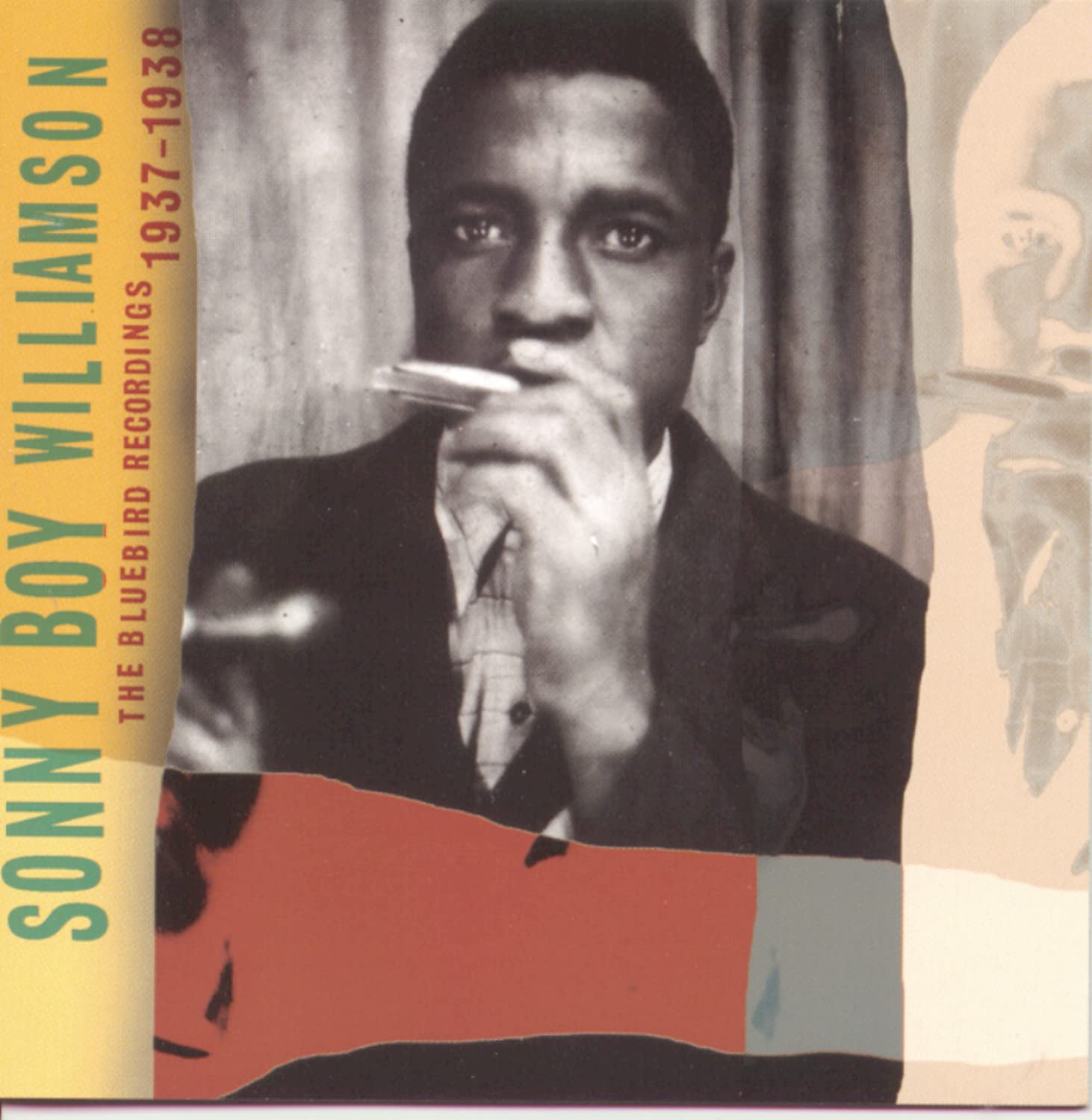 Buy from Amazon The Bluebird Recordings 1937–1938
Big Bill Broonzy (1893–1958)
- Prolific guitarist, singer, songwriter, and session leader who appeared on hundreds of Bluebird sides.
- Joined Bluebird in 1934 and quickly became central to Melrose's operation — auditioning talent, organizing sessions, and providing guitar on many recordings.
- Helped shape the Bluebird Beat by incorporating trap drums and string bass.
- Solo highlights include strong vocal performances blending folk, ragtime, and blues.
- Key session work: Backing Sonny Boy Williamson I, Washboard Sam (his half-brother), Jazz Gillum, Memphis Slim, Tampa Red, and many others.
- Notable compositions/sides: "Key to the Highway" (popularized via his version and Gillum's).
- Broonzy later transitioned to folk-blues revival in the 1950s, but his Bluebird era defined Chicago's pre-war sound.
Tampa Red (Hudson Whittaker, 1901–1981)
- Nicknamed "The Guitar Wizard" for his bottleneck/slide technique and sophisticated urban blues style.
- Extremely prolific on Bluebird, especially in the mid-1930s.
- Recorded extensively with pianist Georgia Tom Dorsey earlier, but his Bluebird period (1934 onward) featured hokum, party blues, and more serious material.
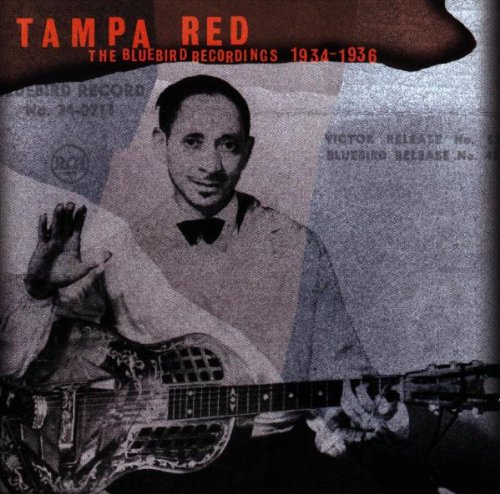 Buy from Amazon The Bluebird Recordings 1934–1936 (multi-volume CD sets document dozens of tracks).
- Standout tracks: "Sweet Little Angel," "It Hurts Me Too" (later hits for others), "Mean Old Tom Cat Blues," "Don't Dog Your Woman."
- His recordings often featured tight ensembles and influenced the smoother side of Chicago blues.
Washboard Sam (Robert Brown, 1910–1966)
- Half-brother of Big Bill Broonzy; master of the washboard percussion.
- One of the most popular and commercially successful Bluebird artists of the late 1930s.
- Recorded numerous upbeat, rhythmic sides perfect for dancing and jukeboxes.
- Frequently backed by Broonzy on guitar.
Big Maceo Merriweather (1901–1953)
- Powerful pianist known for his thundering boogie-woogie style.
- Key recording: "Worried Life Blues" (1941) — a massive hit that became a blues standard.
- His work added depth and drive to the Bluebird piano sound.
Arthur "Big Boy" Crudup (1905–1974)
- Delta-style guitarist and singer discovered by Melrose.
- Famous for "That's All Right" (1946 on Bluebird), later covered by Elvis Presley — a foundational rock & roll track.
- Other sides like "My Baby Left Me."
Additional Notable Artists
- Robert Nighthawk (as Robert Lee McCoy): Early sides in the 1937 marathon session; "Prowling With the Nighthawk" material.
- Big Joe Williams: Delta-rooted nine-string guitarist; early Bluebird sides collected on Document Records.
- Roosevelt Sykes: "The Honeydripper" — boogie pianist with many Bluebird releases.
- Jazz Gillum: Harmonica player; "Look on Yonder Wall," co-writer credits on "Key to the Highway."
- Lil Green: Popular female vocalist; hits like "Romance in the Dark."
- Memphis Minnie: Legendary guitarist/vocalist with strong Bluebird presence.
- Tommy McClennan, Peetie Wheatstraw, Lonnie Johnson, Washboard Sam, and others.
These recordings captured the transition from rural to urban blues, emphasizing accessible, ensemble-driven music. Many tracks were reissued on RCA Victor and later CD compilations (e.g., The Bluebird Recordings series for individual artists). The catalog remains essential for understanding the roots of modern blues, R&B, and rock & roll. Collectible 78s from the B-5000 series and beyond are highly sought after by enthusiasts.
Lester Melrose Production Techniques: Shaping the "Bluebird Beat" / "Melrose Sound"
Lester Melrose (1891–1968) was a pioneering A&R man, talent scout, publisher, and record producer who dominated pre-WWII Chicago blues recording. Though he could not play music himself, his organizational and production approach created a distinctive, influential sound that bridged rural blues with urban, danceable small-group arrangements.
Core Production Philosophy and the "Melrose Sound"
Melrose favored acoustic ensembles over raw solo performances or early electric experiments. He aimed for polished, accessible music that appealed to urban Black record buyers in the 1930s–1940s. Key elements of the sound included:
- Full band arrangements with ensemble playing rather than solo guitar/piano blues.
- Consistent rhythm section: Guitar, piano, upright bass, and drums (sometimes washboard). Occasional additions included harmonica, saxophone, clarinet, or trumpet.
- Tight, danceable grooves blending blues with vaudeville/hokum elements and swing rhythms.
- Standardized 12-bar blues structures for commercial appeal and consistency.
Critics like Muddy Waters (rejected by Melrose) called it "sweet jazz," while others referred to it as the "Bluebird Beat" or (less kindly) the "Melrose Mess." It prefigured postwar electric Chicago blues, R&B, and rock & roll small-group formats.
Key Production Techniques
Melrose operated like an early independent producer with assembly-line efficiency:
- Stable of Session Musicians ("Musical Incest") He maintained a core group of reliable players who backed multiple artists. Big Bill Broonzy often acted as de facto session leader/organizer, with Tampa Red, Roosevelt Sykes, Black Bob (piano), and others rotating in. This created economic efficiency and sonic consistency—artists essentially played on each other’s records and sometimes recorded one another’s songs.
- Efficient, High-Volume Sessions
- Marathon recording days: Artists cut multiple sides quickly (e.g., Tampa Red’s 1937 sessions at the Leland Hotel in Aurora, Illinois, where several musicians recorded in one go).
- Simple setup: Often just a few chairs and microphones. Pre-tape era recordings were cut directly to wax masters.
- Focus on quantity: Melrose claimed to have recorded ~90% of RCA Victor/Columbia’s African American blues talent from 1934–1951.
- Rehearsal and Preparation Tampa Red’s South Side apartment served as an informal hub for lodging, rehearsing, and auditioning talent. Melrose used trusted lieutenants like Broonzy and Tampa Red to scout, audition, and prepare artists before formal sessions.
- Publishing Control Through companies like Wabash and Duchess Music, Melrose routinely took co-composer credits or full publishing rights. Artists were paid flat session fees rather than ongoing royalties. This business model maximized his control and profits but drew criticism (e.g., from Eddie Boyd and Big Bill Broonzy).
- Talent Scouting He actively searched Chicago clubs, taverns, and the South for new artists. Discoveries included Arthur "Big Boy" Crudup (found living in a packing crate) and many others funneled through his network.
Recording Locations and Logistics
- Primarily Chicago studios (RCA Victor lacked its own dedicated facility early on).
- Notable: 1937–1938 sessions at the Leland Hotel (Aurora, Illinois) — possibly to avoid union issues. Top-floor makeshift studio with basic equipment.
- Later sessions in standard Chicago facilities.
Strengths and Criticisms
Strengths:
- Democratized and urbanized blues, making it commercially viable and dance-oriented.
- Created a recognizable "house sound" that influenced Motown-style session bands and rock & roll.
- High output preserved dozens of major artists’ work (Sonny Boy Williamson I, Tampa Red, Washboard Sam, etc.).
Criticisms:
- Formulaic/"cookie-cutter" quality at times.
- Exploitation through publishing and royalty practices.
- Preference for acoustic/smoother styles may have delayed embrace of rawer electric sounds (e.g., rejecting Muddy Waters).
Melrose’s techniques established the template for modern record production: a producer shaping a cohesive sound using a house band, efficient sessions, and publishing leverage. His catalog on Bluebird Records remains foundational to blues history, with reissues highlighting the tight, swinging ensembles that defined an era.
This system was innovative for its time and directly impacted the transition from Delta blues to Chicago’s electric scene, even as postwar shifts eventually diminished his dominance.
Legacy and Impact
Bluebird democratized music access in the 1930s–1940s. Its budget model, consistent production aesthetic, and talent scouting (especially Melrose's Chicago monopoly) shaped American popular music. The "Bluebird sound" provided a template for small-group blues/jazz that echoed into rock. Today, reissues preserve swing, blues, and jazz history, with compilations like Bluebird Blues highlighting its catalog.
The label's 78s are collectible, prized for historical value and sound quality from the era.