Introduction: The Most Ferocious Blues Singer to Get Near a Microphone
Samuel Charters, whose book The Country Blues did more than any other single text to establish the pre-war blues tradition in critical consciousness, reached for an extreme description when he tried to characterise Tommy McClennan's recording style: "one of the most ferocious blues singers to get near a microphone." The adjective is not hyperbole. McClennan brought to the five recording sessions he held at RCA Studio A in Chicago between November 1939 and February 1942 a quality of raw, unmediated emotional intensity that separated him from virtually every other blues musician who recorded for Bluebird Records during that period. Where the mainstream of the Bluebird blues catalogue was moving toward the polished, urban, ensemble-based sound that Lester Melrose was developing as a commercial formula — smooth arrangements, professional rhythm sections, the sound of Chicago R&B beginning to crystallise — McClennan was producing something that sounded like the Mississippi Delta had simply walked into the recording studio and started playing, indifferent to whatever the commercial context demanded.
The forty songs he recorded in that twenty-seven-month period constitute one of the most singular bodies of work in the history of pre-war blues. They were commercially successful by the standards of the time — his debut single sold well, several subsequent releases charted, and his name was well known in the African American communities of both the Deep South and the urban North. And then, in February 1942, McClennan walked out of RCA Studio A for the last time, and whatever he did subsequently is largely lost to history. He is thought to have died in Chicago around 1961, though the date is uncertain and the circumstances unrecorded. His death certificate — discovered by researchers — gives a birth date and birthplace that contradict what he had told Big Bill Broonzy, which is itself consistent with a man who had lived his entire life outside the administrative documentation of mainstream American society.
The songs he left behind have proven more durable than the man himself was allowed to be. "Bottle It Up and Go" is a blues standard that has been recorded in countless versions and adapted across multiple genres. "Cross Cut Saw Blues" became a major R&B hit for Albert King in the late 1960s, a decade after McClennan had vanished from any documented history, and through King's recording entered the permanent repertoire of the blues tradition. "Deep Blue Sea Blues" — which McClennan himself called "the best one I've got" — was transformed by his friend and performance partner Robert Petway into "Catfish Blues," the song that Jimi Hendrix would eventually record as "Rollin' Racer." The compositional legacy of a man who died in obscurity in a Chicago slum reached, through these chains of influence, some of the most celebrated musical recordings of the twentieth century.
This is Tommy McClennan's story.
Origins: Yazoo County, the Delta, and a Plantation Education
The biographical facts of Tommy McClennan's early life resist easy summary — not because they are complex or dramatic but because they are, like the lives of most sharecroppers' children in the Mississippi Delta in the early twentieth century, largely undocumented. The Mississippi Blues Trail marker at Yazoo City, which draws on the most careful available research, captures the ambiguity at the outset: "Tommy McClennan was born in Yazoo City in April of 1908, according to Big Bill Broonzy in his book 'Big Bill Blues.' However, McClennan's death certificate cites his birthplace as Durant (Holmes County) and the date as January 4, 1905." The gap between these accounts is not incidental: it represents the systematic absence of reliable birth records for African American children born on Mississippi plantation farms in the first decade of the twentieth century, and it extends to virtually every biographical detail about his earliest years.
What is established through census records and the testimony of people who knew him is this: Tommy McClennan grew up in Carroll and Leflore Counties, moving with his family from plantation to plantation in the manner common to the sharecropping economy that bound Black Mississippi to the land through debt and economic coercion barely distinguishable from the slavery that had formally ended forty years before his birth. The 1910 census places him with his mother Cassie and his siblings in Carroll County. The 1920 census places the family on a plantation near Sidon in Leflore County. By 1930, the census places McClennan himself, listed as a teamster, in Leflore County with his wife Ophelia.
His name appears in various different spellings across these documents — McClinton, McLindon, McCleland, McClenan — a variation that reflects both the phonetic uncertainty of census takers who might not have known the subject personally and the characteristic instability of surnames in a population that had acquired family names only in the previous generation. The "McClennan" spelling that appeared consistently on all his recordings was presumably the one he presented as authoritative.
The J.F. Sligh plantation in Yazoo County — identified by Samuel Charters as McClennan's home base in the years before his Chicago recording career — was the specific address to which Lester Melrose's talent-scouting expedition eventually led. Yazoo City, nine miles from the Sligh farm, was the urban environment in which McClennan spent his weekends when the week's farm labour was done. The Mississippi Blues Trail marker records what he did there: he "liked to hang out on Water Street at the Ren Theater, an adjacent barroom, and a pool hall." It was in these establishments that he developed both the performing career and the drinking habit that would define his subsequent years.
His guitar playing began in his teenage years — "it is assumed that he started playing guitar as a teenager," the Musicianguide biography notes, the cautious language reflecting the limits of the documentary record. The influences that shaped his style were available to him from the Delta's own musical ecology: Charley Patton, whose heavy, percussive guitar style and raw vocal approach had defined the Delta blues sound since the early 1920s, was the dominant local model, and McClennan's style — the "wild, slashing guitar" and "gravel voice" that the Allaboutbluesmusic description identifies — was directly rooted in the Patton tradition. The Mississippi Blues Trail marker names Booker Miller, "a protégé of Charley Patton," as someone who knew McClennan from the Greenwood area, giving the specific connection to the Patton tradition a biographical grounding.
His performing partners in the Delta years included Robert Petway — a guitarist whose style was described as "closely similar to McClennan's" — and David "Honeyboy" Edwards, the Delta blues musician whose long life (he died in 2011 at ninety-six) gave him the opportunity to provide eyewitness testimony about the pre-war Delta blues world that would otherwise have been entirely lost. Edwards's testimony, preserved in the liner notes of the Tommy McClennan: The Bluebird Recordings compilation, is among the most valuable biographical documents available: "He was playing house parties like I was, so I was learning under Tommy."
The detail that Edwards was "learning under Tommy" is significant: it places McClennan as a figure of sufficient musical authority that a younger musician of Edwards's evident talent was studying under him. Whatever the limits of the documentary record, McClennan's reputation in the Delta blues world before his Chicago career was clearly that of a musician worth learning from.
The nicknames that attached to him in the Delta — "Sugar" in the Greenwood area, "Bottle Up" in Yazoo City — spoke to two different dimensions of his persona. "Sugar" suggested the sweet, ingratiating personality that one aspect of his character apparently displayed; "Bottle Up" connected him directly to the song that would become his most celebrated recording, "Bottle It Up and Go," indicating that the song was already part of his performing identity before it was ever committed to tape.
The Delta Performance World: Juke Joints, House Parties, and the Musical Community
Understanding McClennan's music requires understanding the performing environment in which it was developed — the specific social institutions of the Mississippi Delta that shaped what blues musicians played and how they played it. McClennan spent the 1920s and 1930s developing his performance style in the house parties, fish fries, juke joints, and street-corner performance contexts that constituted the blues musician's primary economic and social environment in rural Mississippi.
The juke joint was the central institution: a rough roadside or plantation-edge establishment where workers gathered on weekends to drink, dance, and hear music. As the Yazoo County tourism description of McClennan's world captures: "he must have really rocked in those Mississippi juke joints." The phrase "rocked" is not anachronistic: the physical energy and the rhythmic intensity that characterised McClennan's playing style were qualities developed specifically for the juke joint environment, where a musician needed to hold the attention of a noisy, drinking, dancing crowd without the benefit of a sound system, and where the music's physical impact — its ability to make bodies move — was its primary qualification for the job.
The house party was the other primary performance context — smaller, more intimate, often involving the same kind of dancing and drinking as the juke joint but in a domestic setting, typically connected to a social obligation (a birthday, a weekend gathering, a farewell for someone leaving for the North). House parties were where the face-to-face relationship between musician and audience was most directly felt, where the musician could hear the audience's specific responses to specific songs and verses, and where the repertoire of any given performer was shaped by what worked and what didn't in the most immediate possible feedback loop.
McClennan's touring of the Delta — his presence in Greenwood, Indianola, Itta Bena, Bolivar County, and other communities across the region, often in the company of Robert Petway — gave him access to a broader musical vocabulary and a wider network of musical relationships than a more sedentary performing career would have provided. The Big Road Blues account notes that Booker Miller, when he quit playing in 1937, "sold his guitar to McClennan" — a biographical detail that speaks to the tight network of material and musical exchange that connected Delta blues musicians to each other.
It was this world — the juke joint, the house party, the street corner, the plantation community — that produced McClennan's specific musical style and that the Bluebird recordings would attempt to translate into a form accessible to a wider commercial audience. The translation was, in McClennan's case, more direct than in many of his contemporaries: what you hear on the Bluebird recordings is recognisably the same music that would have been heard at a Yazoo County juke joint in the late 1930s, the Chicago commercial context having relatively little power to sand away the roughness and immediacy that were its most essential qualities.
The Discovery: Lester Melrose and the Path to Chicago
The chain of events that brought Tommy McClennan to a Chicago recording studio in November 1939 was the product of the specific talent-scouting infrastructure that the Bluebird label had developed to identify commercially viable blues talent in the Deep South. Lester Melrose — the white Chicago music store owner, music publisher, and de facto A&R director for RCA Victor's Bluebird label — was the central figure in this infrastructure, the man whose network of contacts and personal talent-scouting expeditions had assembled much of the most commercially significant pre-war blues catalogue.
The specific role of Big Bill Broonzy in directing Melrose toward McClennan is preserved in the All About Jazz account: "Sometime in the late 1930s, Big Bill Broonzy, a Mississippi bluesman then based in Chicago, told Lester Melrose about McClennan." Broonzy had come to Chicago from Mississippi himself — his journey from the Delta to the Chicago blues scene made him a natural intermediary between the two worlds — and his recommendation of McClennan to Melrose was one of the more consequential acts of musical intermediation in the pre-war blues story.
The Honeyboy Edwards testimony from the liner notes adds specific detail to Melrose's Delta expedition: "I missed Lester Melrose when he came through Greenwood looking for musicians to record. He picked up Tommy McClennan then and Tommy recorded 'Bottle It Up And Go' for him. He recorded Tommy, Robert Petway, a gang of musicians through the South." The account of Melrose "coming through Greenwood" has the quality of a passing natural phenomenon — the talent scout moving through the Delta landscape, picking up whatever he found of commercial value — that accurately reflected the extractive character of the commercial relationship between the blues recording industry and the Southern musicians it documented.
The Mississippi Blues Trail marker adds a detail about the tensions of Melrose's visit: "Broonzy recounted that Melrose had to make a hurried exit when his presence angered locals who thought he was recruiting laborers to leave Mississippi." The fear that a white stranger with money was recruiting Black workers away from Mississippi plantations — a fear with genuine historical basis, since the Great Migration northward was a constant source of anxiety for the plantation economy that depended on Black labour — created a potentially dangerous situation for Melrose. His ability to navigate it and bring McClennan back to Chicago was a feat of social navigation as well as commercial acumen.
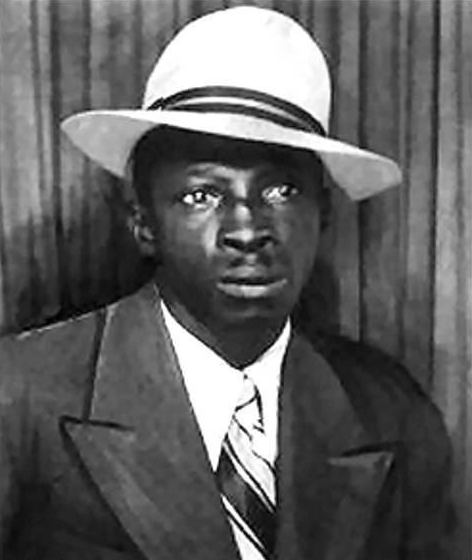
McClennan himself — "a small man with a compact frame," as the All About Jazz biography describes him, citing the one surviving photograph that shows him "dressed in a stylish suit with wide lapels, a striped silk tie, a Panama hat tilted at a jaunty angle, who peers off camera without a trace of emotion" — arrived in Chicago to find himself in a musical world dramatically different from the Delta he had come from. The city had Broonzy and Tampa Red and Memphis Minnie, professional musicians of considerable sophistication who had already made the cultural and aesthetic negotiations required to function in the urban commercial blues market. McClennan's response to this environment was characteristically unreconstructed: he did not adapt, did not urbanise, did not modify his approach to suit the commercial context. He played what he had always played, the way he had always played it, and let the commercial context adapt to him.
The Bluebird Sessions: Five Dates, Forty Songs, Twenty-Seven Months
The five recording sessions that constitute Tommy McClennan's entire recorded legacy took place at RCA Studio A in Chicago across a period of twenty-seven months: November 22, 1939; May 1940; December 1940; September 15, 1941; and February 20, 1942. At each session, McClennan recorded exactly eight tracks — a consistency that speaks to Bluebird's efficient commercial organisation as much as to any specific musical logic. Forty songs: no more, no less, the precise quantity that five sessions of eight tracks each would produce.
The accompaniment on most of these recordings was minimal. The Jazz Weekly review of the collected recordings confirms: "Most of McClennan's songs have him unaccompanied, but once in awhile he's joined by Ransom Knowling, Alfred Elkins or Joe McCoy." This minimal accompaniment structure was simultaneously a commercial decision (fewer musicians meant lower session costs), an aesthetic choice (McClennan's music did not require elaborate ensemble support), and a reflection of his specific performing style (he had developed as a solo performer in the Delta and did not need backing musicians to fill out his sound).
Session One: November 22, 1939
The debut session — McClennan's first encounter with the Chicago recording environment — produced some of the songs that would prove most commercially durable. "Whiskey Head Woman" and "New Shake 'Em On Down" — the latter closely modelled on Bukka White's celebrated "Shake 'Em On Down" — were recorded alongside the song that would become McClennan's commercial signature: "Bottle It Up and Go."
"Bottle It Up and Go" was released as the B-side of "Whiskey Headed Woman" (Bluebird B8373), recorded on November 22, 1939. The Wikipedia article on the song provides precise technical description of what makes it work: "a catchy guitar lick, a stomping danceable groove and a neat structure which divided the twelve-bar blues stanza into verse and chorus: socking home a different couplet each time." The song borrowed lyrical material from multiple traditional sources — verses similar to those found in "Hesitation Blues" and "The Duck's Yas-Yas-Yas" — but McClennan's assembly of these borrowed elements into a coherent, driving performance was entirely his own.
The guitar lick that opens and recurs throughout the recording has been analysed by blues historians as one of the more structurally elegant in the pre-war blues catalogue: a brief, rhythmically assertive figure that establishes the song's character immediately and serves as a musical punctuation mark between verses. The "stomping danceable groove" is produced by the combination of his thumb driving the bass strings and his fingers picking the melody above, the two functions creating the illusion of a fuller ensemble than a single acoustic guitar could actually provide.
The controversy surrounding the lyric is one of the more illuminating episodes in McClennan's biography. The Big Road Blues account preserves the specific verse that caused the trouble: "Now the nigger and the white man playin' seven-up / Nigger beat the white man was scared to pick it up." The Wikipedia account of the incident adds the remarkable denouement: according to Broonzy, "McClennan stubbornly refused to compromise, resulting in a hasty exit out a window during one performance with McClennan's smashed guitar around his neck." And the observation from Broonzy that McClennan himself "reflected pensively that they had indeed been forced to 'bottle it up and go'" — the song's title becoming simultaneously the narrator's punchline and the musician's lived reality.
The incident speaks to a larger cultural dynamic of the period. McClennan had developed this lyric in the Delta, where its racial content reflected a specific social reality that his Mississippi audiences understood from the inside. Brought to Chicago and placed before audiences that included both Southern migrants and Northern-born African Americans with different relationships to the language of racial identity, the same lyric created a different kind of combustion. McClennan's refusal to modify it — his insistence on performing his songs as he had always performed them — was at once an act of artistic integrity and a practical problem that would contribute to the difficulties of his Chicago years.
Sessions Two and Three: May and December 1940
The second and third sessions produced the material that sustained McClennan's commercial presence through 1940 and into 1941. "New Highway No. 51" — a title that explicitly updated the blues standard "Highway 51 Blues" with the "New" prefix that signalled the song's modernity — became one of the more frequently cited of his recordings. "Travelin' Highway Man" is, as the Big Road Blues analysis notes, "a thinly veiled reworking of his earlier 'New Highway No. 51'" — McClennan's characteristic practice of returning to successful material and developing it in slightly different directions giving his catalogue a quality of internal consistency rather than the variety that a more commercially minded recording artist might have sought.
The Big Road Blues assessment of these middle sessions is precise about their commercial character: they produced recordings of "back porch presentations" that had the quality of "live performances" — a characterisation that captures both the recording's intimacy and its lack of commercial gloss. McClennan was, in the studio as much as on the street corner, playing for an audience that was physically present with him, and the recordings retain that quality of direct address.
Session Four: September 15, 1941
The fourth session, the one that produced "Cross Cut Saw Blues," is arguably the most musically significant in McClennan's discography. The Big Road Blues account provides the specific attribution: "The 1941 session produced one of McCLennan's most enduring recordings, 'Cross Cut Saw Blues', although according to Honeyboy Edwards he got the song from Hacksaw Harney." This attribution chain — Hacksaw Harney to McClennan to the Bluebird recording — is characteristic of the pre-war blues tradition's communal approach to song ownership, in which the composer of a song was less important than the performer who found the definitive version.
"Cross Cut Saw Blues" was released as a Bluebird single (B-8879) on January 2, 1942, and its double entendre structure — the crosscut saw as a symbol of sexual prowess — placed it in the tradition of hokum blues that had been commercially prominent since the late 1920s. The Wikipedia article on the song describes it as "a hokum-style song 'that must have belonged to the general repertoire of the Delta blues'" — the quotation marks around the description acknowledging that it was community property rather than individual creation.
The song also featured, at this session, what the Big Road Blues account calls "Deep Blue Sea Blues" — the song that McClennan called "the best one I've got" and that the All About Blues Music description identifies as having been "re-worked by his friend, and possible 'alter ego' Robert Petway as 'Catfish Blues'." This attribution — McClennan's "Deep Blue Sea Blues" as the origin of Petway's "Catfish Blues" — is the most direct connection between McClennan's own recorded output and the chain of influence that would eventually lead to Jimi Hendrix's "Rollin' Racer" and similar songs.
Session Five: February 20, 1942
The final session was the last McClennan would ever make, though there is no indication in its recordings that either he or Bluebird knew this at the time. The Big Road Blues account describes the session's musical character: "For McCLennan's final session he found some more melodic material such as 'Roll Me, Baby' and the catchy 'I Love My Baby.' 'Shake It Up and Go' harks back to 'Bottle It Up And Go' but with less fire while 'Bluebird Blues' is a nice reading of Sonny Boy I's famous number."
The assessment that the final session showed "less fire" than some of its predecessors is consistent with the trajectory that McClennan's drinking was imposing on his professional capacity. The All About Jazz biography's account of the session's denouement has a specifically poignant quality: "When his session was over, Tommy joined his old friend Robert Petway who was recording in the same studio just afterwards. He took the vocal on Petway's 'Boogie Woogie Woman.' It was destined to be his last appearance on record."
The two old friends from Yazoo County, both now recording in Chicago, completing what would prove to be both their final sessions in the same studio on the same day: it is one of the more vivid images in the biography of either man, and it has the quality of an ending that neither of them would have recognised as such at the time.
The Guitar Style: Wild, Slashing, and Completely Committed
The technical analysis of Tommy McClennan's guitar style must begin with the word that recurs in virtually every description of it: "wild." His guitar playing was "wild" in the specific sense of being unconstrained by the conventions that the commercial blues recording world was beginning to establish as its aesthetic standard — the polished arrangements, the professional rhythm sections, the smooth transitions and the careful editing that Lester Melrose's studio aesthetic increasingly demanded.
McClennan played what he felt, at the volume and intensity that the feeling demanded, without apparent concern for the technical smoothness that studio recording typically required. The result was, as the Musicianguide biography describes, a "slashing guitar style" — the metaphor of violence not entirely inappropriate for an approach to the instrument that involved striking the strings with a force and directness that produced a raw, urgent sound quite different from the more measured approaches of his contemporaries.
His guitar technique was rooted in the Charley Patton tradition: the percussive, rhythmically insistent approach that used the guitar as much as a rhythm instrument as a melodic one, the bass strings providing a steady, thumping drive while the treble strings generated melody above. The Big Road Blues description of his style as "closely modelled on Charley Patton" points to this specific technical lineage, and the connection is audible in the recordings — the same heavy, rhythmic guitar attack, the same willingness to sacrifice melodic refinement for rhythmic impact.
But McClennan was not simply a Patton imitator. The specific quality of his guitar style — what the Yazoo County tourism description calls "impact and nuance" simultaneously — involved a real individual voice within the Patton tradition, a set of specific techniques and approaches that were recognisably his own. The "catchy guitar lick" that the Wikipedia description of "Bottle It Up and Go" identifies was McClennan's own creation, not borrowed from Patton or anyone else, and its specific quality — the way it announced the song's character and then recurred as a structural punctuation mark — was a compositional intelligence applied to the guitar's most immediate expressive resources.
The decision to record mostly unaccompanied — to present the guitar and voice as the entire musical statement without the cushioning of rhythm section or horns — was not an imposed limitation but a reflection of McClennan's natural performing approach. He had spent years as a solo performer in the Delta, and his guitar and voice were calibrated to fill a space without support. The Bluebird recordings' mostly unaccompanied format captured this calibration directly.
The Voice: Samuel Charters's "Ferocious" Singer
If McClennan's guitar was "wild," his voice was "ferocious" — Samuel Charters's adjective capturing the specific quality of raw, unbridled vocal power that made his recordings immediately distinctive within the Bluebird blues catalogue. Where the commercial mainstream of the period was moving toward the smoother, more controlled vocal approaches that Big Bill Broonzy and Tampa Red represented, McClennan was producing something that retained all the roughness and urgency of the juke joint performance tradition from which it came.
His voice had what the Allaboutbluesmusic account describes as a "gravel voice" — a deep, rough-edged quality that seemed to function not as a concession to vocal limitation but as a deliberate expressive choice. The roughness was not the roughness of an untrained singer struggling with material beyond his technical range but the roughness of a musician who understood that vocal smoothness would undercut the emotional force of what he was trying to communicate. The Delta blues tradition had never valued smooth singing; it valued truthfulness, and McClennan's voice was truthful to the point of discomfort.
The additional characteristic that Charters's description of "ferocious" points toward was the specifically physical quality of McClennan's vocal engagement with his material — the sense, in recording after recording, of someone who was not merely singing about an emotional state but inhabiting it completely, shouting or urging himself forward within the performance in ways that the recording technology of the period could barely contain. The Musicianguide biography refers to his "sometimes further energising the recordings with lively comments urging himself on" — the self-directed exhortation that appears in various forms across his recordings giving them a quality of improvised performance rather than careful studio presentation.
Robert Petway: The Alter Ego and the Compositions They Shared
The most significant single relationship in McClennan's musical life — more significant, even, than his connection to the Bluebird recording operation — was his lifelong partnership with Robert Petway. The two men had grown up in the same Mississippi Delta environment, developed their musical styles in parallel and in dialogue with each other, and arrived in Chicago to record for the same label within a short time of each other. The specific interplay between their recorded catalogues is one of the more interesting musicological questions in pre-war blues scholarship.
The Allaboutbluesmusic description frames the relationship in terms that the biography supports: Petway was McClennan's "friend, and possible 'alter ego.'" The "alter ego" formulation is apt in a specific technical sense: McClennan and Petway recorded the same basic melodic and lyrical material under different titles, each apparently contributing to and borrowing from the other's repertoire in ways that made individual authorship a less meaningful category than the shared vocabulary they were jointly developing. "Deep Blue Sea Blues" and "Catfish Blues" are the most celebrated instance of this sharing: McClennan recorded the former, Petway the latter, and the two songs share enough fundamental material that determining which "came first" in any meaningful creative sense is probably impossible.
The Catfish Blues / Deep Blue Sea Blues connection has proven the most consequential in terms of subsequent influence. Petway's "Catfish Blues" — built from the same melodic and structural materials as McClennan's "Deep Blue Sea Blues" — became the specific source for a chain of influence that runs through Muddy Waters's recordings to Jimi Hendrix's "Rollin' Racer" and beyond. McClennan's own recording of the material was, as the Old Time Blues account notes, one of his most personally significant songs: he called "Deep Blue Sea Blues" "the best one I've got."
The relationship between McClennan and Petway extended to direct on-record collaboration: Petway's "Boogie Woogie Woman," recorded on the same February 20, 1942 session at which McClennan completed his final Bluebird date, featured McClennan's voice in the background — a spontaneous act of musical friendship, the old partner from Yazoo County sitting in on the new partner's session. The Jazz Weekly review describes it as "the rousing juke joint blues of 'Boogie Woogie Woman' with Alfred Elkins plunking away on bass for an exhilarating performance" — capturing the collective energy of the moment, two Yazoo County musicians in a Chicago studio making the kind of music they had always made together.
"Bottle It Up and Go": A Standard in the Making
Of all the songs in McClennan's catalogue, "Bottle It Up and Go" has had the most extraordinary subsequent life — a career as a blues standard that began with its Bluebird release and has continued across more than eight decades of American music.
The song's origins are complicated by the specific attribution question that the Big Road Blues account raises: "According to Honeyboy he learned the song from Memphis Jug Band member Dewey Corley and in turn taught it to McClennan." This chain — Corley to Edwards to McClennan — makes the song's authorship genuinely collective, a folk tradition composition that passed through multiple hands before arriving at the version McClennan committed to tape. The Wikipedia article on the song confirms: "In 1932, the earliest version of 'Bottle It Up and Go'" can be traced, and the McClennan recording draws on "verses similar to those found in 'Hesitation Blues'" and "The Duck's Yas-Yas-Yas."
What McClennan contributed to this traditional material was the specific guitar lick and the specific structural arrangement that gave the song its commercial identity. The Wikipedia description of the guitar lick as producing "a stomping danceable groove and a neat structure which divided the twelve-bar blues stanza into verse and chorus" identifies the specific technical achievement that distinguished McClennan's version from whatever had preceded it: a structural clarity and a rhythmic urgency that made the song immediately usable by subsequent artists across a range of stylistic contexts.
The controversy surrounding the racial language in the lyric gives the song a specific historical complexity that most blues standards do not carry. McClennan's refusal to modify the verse — his insistence on performing it as he had always performed it, regardless of the consequences for his relationships with Chicago audiences — created the specific episode of being thrown out of a party window with his guitar smashed, an event that Broonzy preserved in his memoir and that has become one of the most cited anecdotes in the story of the early Chicago blues scene.
"Cross Cut Saw Blues": The Standard That Outlived Its Creator
"Cross Cut Saw Blues" — recorded at the September 1941 session and released as a Bluebird single in January 1942 — became the McClennan composition with the most commercially significant subsequent life, its trajectory from a pre-war Delta blues recording to a major R&B hit in the late 1960s tracing the transmission of blues tradition across three decades and multiple stylistic transformations.
Albert King — the Memphis-based guitarist whose left-handed guitar style and powerful vocal approach made him one of the most commercially significant blues artists of the late 1960s — recorded "Crosscut Saw" for the Stax label in 1966-1967, and his version reached the R&B charts and made the song "one of the necessary pieces of modern blues," in the Wikipedia account's apt phrase. King's recording transformed the original's acoustic solo blues into a full soul-blues production, with a Memphis rhythm section and a horn arrangement that gave the song a commercial polish entirely foreign to McClennan's recording but that preserved the double entendre structure and the essential musical argument that made the original work.
The credit on the Stax recording went to McClennan as the composer — a recognition that the commercial benefits of the song's success would reach at least the legal estate of its originator, even if McClennan himself was in no position to benefit. The Wikipedia analysis notes that the song was listed on McClennan's original recording with his credit, making the ownership question clearer than it was for many pre-war blues compositions whose authors were systematically dispossessed of their publishing rights.
The Decline: Alcoholism, Obscurity, and a Death Unrecorded
The collapse of McClennan's recording career after February 1942 was, by the testimony of every available source, primarily the result of alcoholism. The Musicianguide biography is direct: "Cut loose by his record company, McClennan declined deeper into alcoholism over the next decade. He performed less and less." The Bluebird label's decision to stop recording him was not a commercial judgment about the quality of his music but a practical judgment about his reliability: he had become too unpredictable, too likely to miss a session or arrive in no condition to record, to be worth the commercial investment.
Over the next decade — roughly 1942 to 1952 — McClennan performed "sporadically in clubs and on the streets," the All About Jazz biography notes, maintaining a presence in the Chicago blues world without the commercial infrastructure of a recording contract. The Encyclopedia.com account adds a specific detail about the later years: "Eventually he vanished so completely into Chicago's poor, black underclass that his death has never been confirmed." The phrase "vanished so completely" is both literally accurate and historically representative: McClennan's fate after his recording career ended is a reflection of what happened to many poor Black men in mid-century urban America when the commercial mechanisms that had given them temporary visibility withdrew.
Samuel Charters, researching for The Country Blues in the 1950s, made the journey to Yazoo City to ask about McClennan. What he found there was the testimony of local people who remembered him from before his Chicago career — the Water Street hangouts, the Cotton Club on Champlin Avenue, the pool hall near the Ren Theater. Chicago was less forthcoming: by the time Charters was looking for McClennan, the bluesman had been absorbed into the South Side's vast, poorly documented underclass.
His death certificate — discovered by subsequent researchers — gives a date of May 9, 1961, for a Tommy McClennan born January 4, 1905, in Durant, Holmes County, Mississippi. The date of birth and the birthplace both differ from what he had told Broonzy, and the discrepancy itself may speak to the systematic unreliability of documentation for someone who had lived most of his life outside official record-keeping. What the death certificate confirms is that someone named Tommy McClennan died in Chicago in 1961 — probably the same man who had recorded forty songs for Bluebird between 1939 and 1942, though the biographical ambiguity that characterised his life extends, characteristically, to its end.
The Influence: Chains of Transmission
The influence of Tommy McClennan's recordings on subsequent music is traceable through two primary channels: the songs that became standards (most importantly "Bottle It Up and Go," "Cross Cut Saw Blues," and "Deep Blue Sea Blues") and the broader aesthetic influence of his performing style on the musicians who heard his recordings.
The "Deep Blue Sea Blues" / "Catfish Blues" chain of transmission is the most consequential in terms of ultimate cultural reach. McClennan's recording fed into Petway's "Catfish Blues," which fed into Muddy Waters's "Rolling Stone" (and subsequent Waters recordings), which fed into the Rolling Stones' name and aesthetic identity, which fed into the British blues revival's entire relationship to Delta blues, which is to say it fed into a substantial proportion of post-war popular music's harmonic and aesthetic vocabulary. The specific thread from "Deep Blue Sea Blues" to Jimi Hendrix's "Rollin' Racer" is traceable through Muddy Waters's recordings, demonstrating that a song McClennan recorded in 1941 in a Chicago studio eventually reached a guitarist who would be born two years later in Seattle, Washington.
"Cross Cut Saw Blues" — through Albert King's Stax recording — became one of the most widely known blues songs of the late 1960s and early 1970s, as the blues-rock revival created new audiences for the tradition that McClennan represented. Eric Clapton's connection to King's work, and the broader British blues revival's engagement with the King catalogue, gave "Cross Cut Saw" an international commercial reach that the original recording could never have anticipated.
"Bottle It Up and Go" has had the most sustained career as a standard, its multiple subsequent recordings spanning musical contexts from traditional folk-blues (Leadbelly's version) through country (the various recordings under the title "Step It Up and Go") to rock and roll. The song's specific structural qualities — the catchy guitar lick, the verse-and-chorus division of the twelve-bar blues stanza — made it adaptable across stylistic contexts in ways that less structurally clear songs could not match.
The Assessment: Underrated, Overlooked, Essential
The Visit Yazoo assessment, attributed to a commentator identified as "Big Tony," captures a widely shared critical view of McClennan's historical position: "There's been a lot of negative writing about McClennan in the past, but Big Tony is telling you: this is one of the great Delta artists. He's a powerful and convincing vocalist, and his playing has both impact and nuance; this is one of the Big Guys."
The "negative writing" that Big Tony references includes a critical tradition that has sometimes characterised McClennan's music as limited, unsophisticated, or simply a rougher version of what more celebrated Delta bluesmen did more completely. This characterisation mistakes the specific qualities of his art — its rawness, its lack of polish, its refusal of commercial mediation — for defects rather than for the deliberate expressive choices that they were. McClennan did not produce rough music because he was incapable of producing polished music; he produced rough music because rough music was honest music, honest to the juke joint tradition he came from and honest to the emotions he was trying to communicate.
The forty songs he left behind are not, individually, all of equal quality. The final sessions show the effects of the alcoholism that was closing down his professional career. Some of the recordings are closely related to each other — "Travelin' Highway Man" and "New Highway No. 51," "Shake It Up and Go" and "Bottle It Up and Go" — in ways that suggest a compositional vocabulary being worked and reworked rather than constantly refreshed. But the best of them — "Bottle It Up and Go," "Cross Cut Saw Blues," "Deep Blue Sea Blues," "Whiskey Head Woman," "New Highway No. 51" — are genuinely great recordings, blues performances of complete commitment and irreducible authenticity.
He was, as Samuel Charters wrote, "one of the most ferocious blues singers to get near a microphone." The ferocity was not a limitation but a gift — the gift of someone who had nothing to prove and nothing to conceal, who played what he felt with everything he had, and who left forty songs to prove it.
Selected Discography
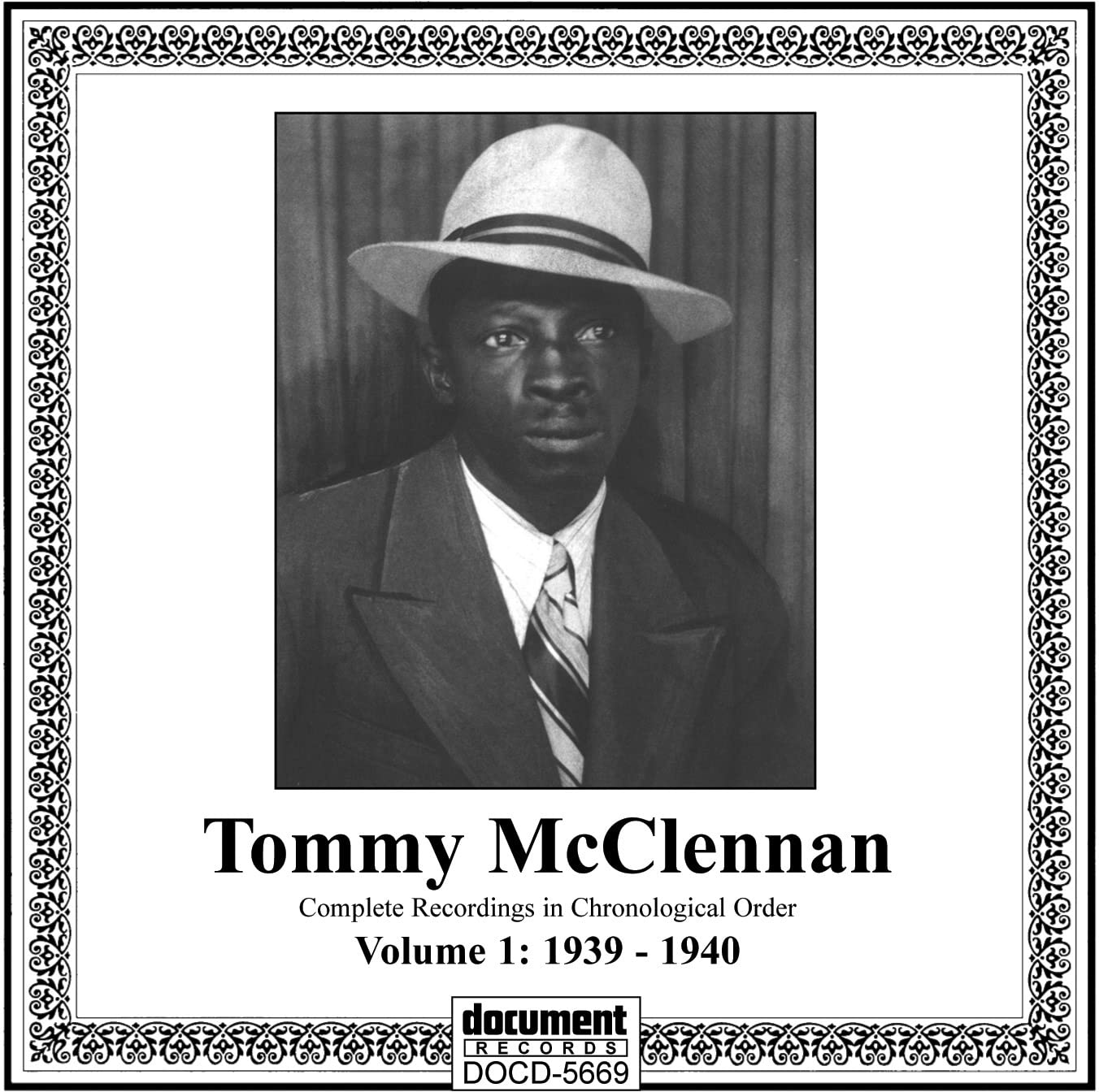
Whiskey Head Woman 1939-1940 Vol.1
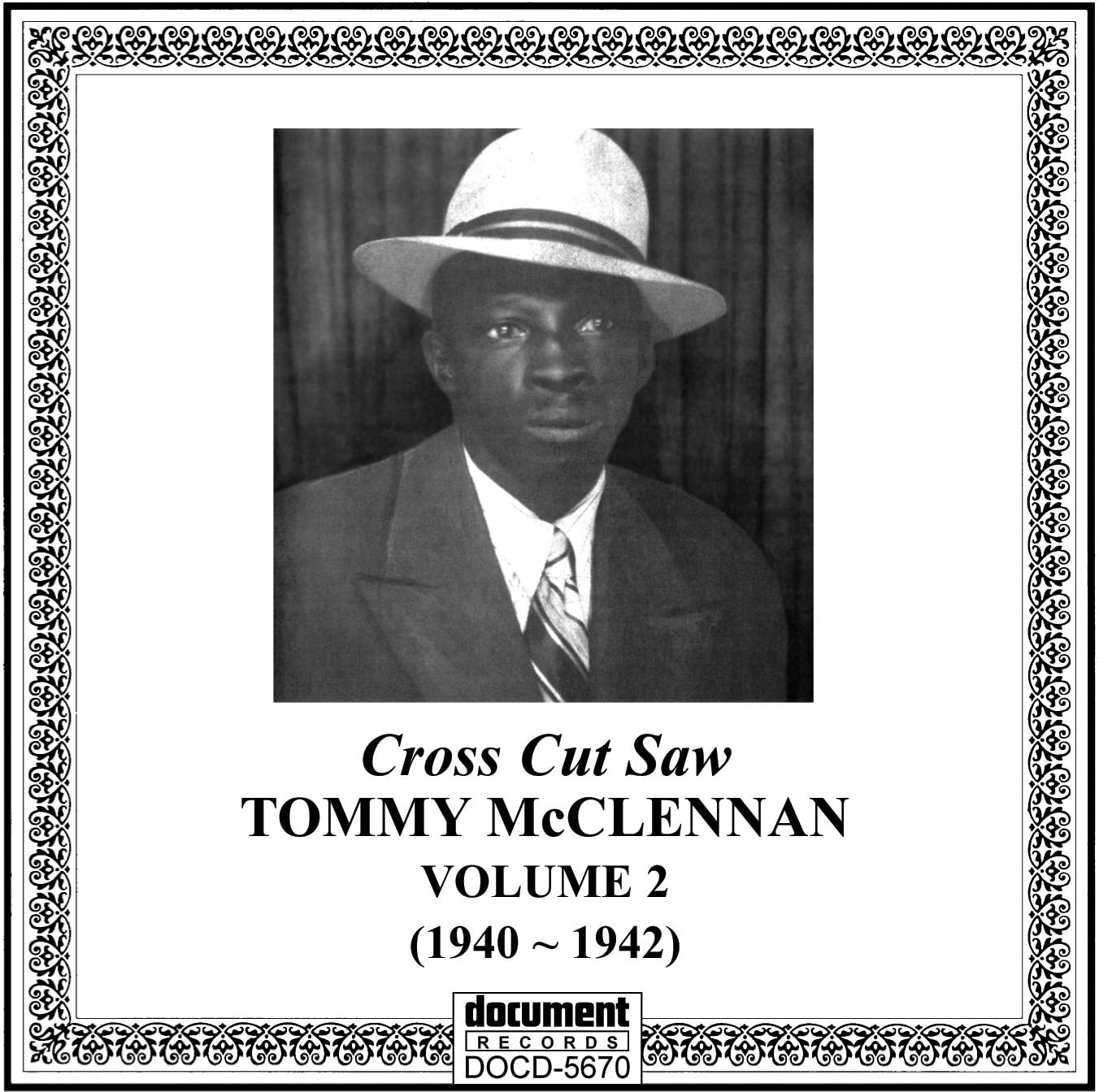
Cross Cut Saw Blues 1940 - 42 Vol.2
Tommy McClennan (born approximately April 1908, Yazoo County, Mississippi; died approximately May 9, 1961, Chicago, Illinois). Five recording sessions for Bluebird Records (RCA Victor): November 22, 1939; May 1940; December 1940; September 15, 1941; February 20, 1942; all at RCA Studio A, Chicago. Forty tracks recorded; forty released on twenty 78-rpm singles. Producer: Lester Melrose. Principal session accompanists: Ransom Knowling (bass); Alfred Elkins (bass); Joe McCoy (guitar). All other tracks unaccompanied. Mississippi Blues Trail marker erected 2012 at Yazoo City, Mississippi. Principal recordings: "Bottle It Up and Go" / "Whiskey Headed Woman" (Bluebird B8373, 1939); "New Highway No. 51" (1940); "Cross Cut Saw Blues" / "You Can't Read My Mind" (Bluebird B8879, 1942, recorded September 15, 1941); "Deep Blue Sea Blues" (1941). "Cross Cut Saw Blues" later recorded by Albert King (Stax, 1967); "Bottle It Up and Go" recorded by numerous artists including Leadbelly.