Introduction: The Most Recorded Bluesman Nobody Remembers
There is an uncomfortable paradox at the heart of Tampa Red's historical position: the man who recorded more 78-rpm sides than any other blues artist in American history — 335 by the Encyclopedia.com count, though various tallies place the number between 230 and 340 depending on how you count alternate takes and pseudonymous releases — is one of the least discussed figures in blues scholarship and the least likely to appear on the canonical lists that shape popular awareness of the tradition. Robert Johnson recorded twenty-nine songs and is the most mythologised figure in blues history. Tampa Red recorded more than ten times that quantity and is, as the Encyclopedia.com biography observes, "a blues artist ripe for rediscovery."
The disparity tells us something important about how blues mythology works — about its preference for the tragic, the brief, and the mysterious over the sustained, the productive, and the commercially successful. Tampa Red's career spanned thirty-two years of commercial recording, from his debut Vocalion session in 1928 to his final RCA Victor sessions in 1960. He was, across the most commercially productive portion of that career, one of the most popular and commercially successful blues artists in the country. His records sold by the hundreds of thousands. His apartment on South State Street in Chicago was the unofficial salon and refuge of the Chicago blues community for two decades, a place where musicians came to learn from him, to be fed and housed by him and his wife Frances, and to absorb the musical intelligence of the man they called "The Guitar Wizard."
And yet his influence on subsequent music — through the specific songs that became standards, through the musicians who learned at his knee, through the guitar technique that was transmitted from him to Robert Nighthawk to Muddy Waters to Elmore James and through those men to the entire lineage of electric Chicago blues — is as deep and as broad as any figure in the tradition's history. "His songwriting and his silky, polished 'bottleneck' technique influenced other leading Chicago blues guitarists, such as Big Bill Broonzy and Robert Nighthawk, as well as Muddy Waters, Elmore James, Mose Allison and many others," the Music Hub summary states, and the list is accurate as far as it goes — but it captures only a portion of a legacy that extends from the hokum blues of the late 1920s through the foundational vocabulary of Chicago electric blues to the rock era's engagement with the tradition that Tampa Red's slide guitar helped to create.
This is his story.
Origins: Smithville, Tampa, and the Education of a Guitar Wizard
Hudson Woodbridge was born in Smithville, Georgia, in the south-central part of the state, on January 8, 1904 — though the Blues Foundation notes the uncertainty: "The year has been cited as 1900, 1903, 1904, or 1908; the headstone on his grave lists Jan. 8, 1904, the date used in his state medical records." The ambiguity is consistent with the lives of children born to poor African American families in the Deep South at the turn of the twentieth century, where official record-keeping was neither universal nor reliable.
Both of his parents died when he was still a child, and the orphaned Hudson and his older brother Eddie were sent to live with their maternal grandmother, Annie Whittaker, in Tampa, Florida. The move from Georgia to Florida gave him the first component of the name he would carry for the rest of his life: Tampa. The second component — "Red" — came from his distinctive appearance, the reddish tinge to his complexion and hair that set him apart from most of his African American contemporaries and that would mark him visually throughout his career. As Samuel Charters noted in The Country Blues: "Tampa came to Chicago as an inexperienced but talented guitarist and young singer, playing the guitar with a bottle neck on his little finger and playing superbly."
His musical education in Tampa was shaped by two principal figures. His brother Eddie played guitar and was the young Hudson's first model — the proximity of an older sibling who played being, in the blues world, one of the most reliable pathways into the tradition. The second figure was an unnamed street musician known as Piccolo Pete, who taught the boy his first guitar licks and whose street-corner performances gave Hudson his introduction to the guitar as a professional tool — something you played for an audience and for tips, not just for personal pleasure.
The Hawaiian guitar sound that was fashionable in the 1920s — the sweet, gliding tones of the steel guitar that the Hawaiian music craze had made popular — was the specific influence that shaped Tampa Red's approach to the slide technique. He improvised a bottleneck on his little finger — "playing the guitar with a bottle neck on his little finger," as Charters noted — and developed the smooth, singing, voice-like quality of his slide work by emulating the Hawaiian sound that he heard on phonograph records and radio broadcasts. This specific aesthetic ambition — to make the guitar sing like a voice, to produce smooth, sustained tones rather than the rough, aggressive slides of the Delta bottleneck tradition — gave his mature style its specific character and distinguished it sharply from the approaches of his contemporaries.
By his early twenties, Tampa Red was already performing professionally on the Southern theater circuit, and it was through this professional engagement that he acquired the reputation and the connections that would eventually bring him to Chicago. The New Georgia Encyclopedia account confirms: "He was already known as Tampa Red when he arrived in Chicago in the mid-1920s, fresh from the southern theater circuit." The theater circuit — the TOBA (Theatre Owners Booking Association) network of African American entertainment venues — had given him both performance experience and professional visibility, and his arrival in Chicago was not the tentative debut of an unknown but the arrival of someone who already had credentials.
Chicago: Street Corners, Ma Rainey, and the Meeting with Georgia Tom
Chicago in the mid-1920s was the most musically productive city in America for the specific traditions that Tampa Red had come to develop. The Great Migration had brought hundreds of thousands of African Americans from the South to Chicago's South Side, creating a concentrated market for the blues, jazz, and gospel that these communities had brought with them. The recording industry, recognising the commercial opportunity, had established its own documentation infrastructure — Paramount Records, with its recording studio and pressing plant in the Milwaukee suburb of Grafton, Wisconsin; Vocalion and OKeh Records with their own Chicago operations — and the specific condition of an eager audience and an active recording industry made the city simultaneously the best possible place to develop a blues career and the most competitive environment in which to do so.
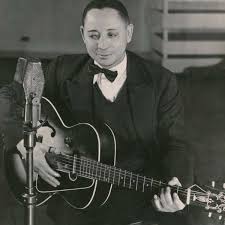
Tampa Red's early Chicago years were spent in the city's most fundamental performance context: the street corner and the rent party. The music hub account of his first years in the city is vivid: "Playing his steel guitar and blowing a kazoo on a streetcorner in Chicago in 1928, this small neat young man was encountered by fellow Georgian Tom Dorsey." The physical image — the small, neat young man with the reddish hair, playing slide guitar with a kazoo at the same time, performing for whoever would stop and listen — captured both the economic precarity and the performing versatility of the street musician's life.
His "big break," as the AAREGISTRY account puts it, "came when he was hired to accompany Ma Rainey" — the Empress of the Blues, whose command of both the classic blues tradition and the commercial entertainment world made her simultaneously one of the most artistically significant and one of the most commercially connected figures in American music. Playing with Rainey gave Tampa Red professional credibility of the highest order and, crucially, placed him in the same professional orbit as Thomas A. Dorsey, the pianist who would prove his most important early collaborator.
Georgia Tom Dorsey — the Thomas Dorsey who was simultaneously building the career as a gospel music pioneer that would eventually earn him the title "Father of Gospel Music" — was, in 1928, still primarily a barrelhouse piano player and blues accompanist working the same South Side circuit as Tampa Red. The encounter between them on the street corner, followed by their introduction through the Rainey connection, set up the creative partnership that would produce the first great hit of Tampa Red's career.
"It's Tight Like That": The Hokum Sensation
The recording session that produced "It's Tight Like That" in 1928 was arranged by J. Mayo "Ink" Williams — the Black A&R man at Vocalion who had an extraordinary talent for identifying commercially viable blues material and an equally extraordinary talent for acquiring financial advantages from the arrangements he negotiated. Williams heard Tampa Red and Georgia Tom performing and immediately recognised the commercial potential of their specific combination: Red's smooth, precise guitar playing paired with Dorsey's rolling, good-humoured barrelhouse piano, the two of them trading verses in a style that borrowed from vaudeville, hokum, and the emerging blues idiom simultaneously.
"It's Tight Like That" was, as Tampa himself described it in an interview quoted in The Bluebird Recordings 1934-1936: "It was just a little old song but they really went for it." Dorsey confirmed the song's somewhat accidental quality: "'Tight Like That' wasn't no original tune. It was just something that popped up at the right time to make some money." The song's origins were in an existing catch phrase that was circulating in the African American entertainment world, built around a blues structure that owed something to Blind Blake's "Too Tight" and Papa Charlie Jackson's "Shake That Thing." Williams heard them playing with the tune and insisted they record it immediately.
The commercial result was, for the period, extraordinary. "It's Tight Like That" was a national hit on the Vocalion label — the Encyclopedia.com account of the success is precise: it was "one of the biggest 'race' hits of the era." The song's double entendre structure — the "tight" of the title meaning simultaneously a state of physical closeness, a state of intoxication, and a sexual reference — was not subtle, but its specific deployment was witty enough that it could pass as innocent to anyone who wanted to hear it that way. The half-spoken, conversational delivery that Tampa Red and Georgia Tom used — trading verses, commenting on each other, playing with the material — gave the recording a quality of improvised social entertainment that drew directly from the African American performance tradition of the street corner and the house party.
Samuel Charters called "It's Tight Like That" "the most over-recorded song of its time" — a description that speaks to both its immediate commercial success and the consequent wave of imitations and sequels that it inspired. The success of the recording prompted the duo to record additional versions for Paramount and to produce a series of follow-up hokum recordings that continued through the early 1930s. The "hokum" style — the specific combination of comic double entendre, conversational delivery, ragtime-influenced music, and vaudeville presentation — became a Depression-era fad that Tampa Red and Georgia Tom had effectively created.
The Hokum Boys and the Early Career
The years between the "Tight Like That" hit and Tampa Red's transition to the more serious Chicago blues style of the mid-1930s were years of prolific commercial recording and considerable artistic variety. He and Georgia Tom — billing themselves variously as the Hokum Boys, the Hokum Jug Band, Tampa Red and Georgia Tom, and various other pseudonymous configurations — produced dozens of recordings that populated the "race records" catalogues of Vocalion, Brunswick, and other labels.
The specific quality of the hokum recordings — their wit, their musical sophistication, their ability to entertain without descending into mere formula — demonstrated that Tampa Red was more than the novelty artist that the word "hokum" might suggest. His guitar playing on these recordings was already demonstrating the "silky, polished 'bottleneck' technique" that Music Hub identifies as his most significant artistic contribution. The smooth, singing quality of his slide work — the voice-like tonal character that he had developed from the Hawaiian guitar influence of his Tampa youth — was audible even in the light material of the hokum recordings, giving them a musical quality that distinguished them from the cruder efforts of lesser performers working in the same style.
The encyclopedia.com biography identifies another historically significant achievement from this early period: Tampa Red "was the first African-American musician to record using a resonator-type Hawaiian steel guitar, introducing a new musical vocabulary to blues instrumental work." The National or Dobro resonator guitar — whose metallic, amplified sound was produced by the vibration of a spun aluminum resonator cone inside the guitar body — gave the blues a tonal character quite different from the conventional acoustic guitar, and Tampa Red's early adoption of this instrument was one of the more significant technical innovations in the development of the blues guitar vocabulary.
His sideman work during this period was equally significant in terms of the musical connections it established. He accompanied Ma Rainey, as noted, and he worked as a session guitarist for an extraordinary range of artists, including Big Bill Broonzy, who was himself one of the most commercially prolific blues guitarists of the era. The specific professional relationship between Tampa Red and Broonzy — the ways in which each absorbed something from the other, the extent to which their guitar styles influenced each other during the years when both were central figures in the Chicago recording world — is one of the more complex questions in pre-war blues scholarship.
The Bluebird Years: The Guitar Wizard in Full Flower
The transition from the Vocalion and Brunswick hokum recordings to the Bluebird label sessions beginning in 1934 marked the beginning of Tampa Red's most artistically significant and commercially sustained period. The Bluebird label — RCA Victor's budget subsidiary, priced at 35 cents rather than the standard 75-cent price of the Victor label, and aimed specifically at the African American market that Lester Melrose was systematically developing as a commercial enterprise — became the primary documentation context for Tampa Red's mature style.
The specific musical transformation that these years document was multifaceted. First, the move away from hokum toward the more serious blues idiom that the Bluebird context demanded and that Tampa Red's own musical evolution was pursuing. The New Georgia Encyclopedia account captures the transition: "His wife's death in 1953 was a blow from which Tampa Red never recovered. He had always been a heavy drinker, and his alcoholism became acute" — but this anticipates the narrative. In the mid-1930s, he was at his most productive and most assured.
Second, the ensemble expansion that the Bluebird period brought. As Paul Oliver noted in The New Grove: Gospel, Blues and Jazz: "By the mid-1930s the customary Chicago group of guitar, piano, and often string bass had expanded into a five piece band. Tampa Red seems to have pioneered these larger groups." The "Chicago Five" and similar ensemble configurations that Tampa Red used through the late 1930s and into the 1940s gave his recordings a fullness and a commercial polish that the solo and duo recordings of the earlier period had not achieved.
Third, and most importantly, the development of the compositional and guitar-playing approach that would prove his most enduring legacy. The songs he wrote and recorded during the Bluebird years — "Anna Lou Blues," "Black Angel Blues," "Crying Won't Help You," "It Hurts Me Too," and "Love Her with a Feeling" — were, as Music Hub's essential description notes, "classic compositions" that would enter the permanent blues repertoire and be recorded by successive generations of artists. These were not hokum novelties but genuine blues of emotional depth and structural integrity, built on Tampa Red's increasingly assured slide guitar approach and his developing understanding of how to construct a blues song that would sustain both immediate entertainment value and lasting emotional resonance.
The piano accompaniment during the Bluebird period shifted from Georgia Tom (who had by this point largely withdrawn from secular music to focus on his gospel career) to "Blind" John Davis — the Chicago pianist who had been born in 1913 and who had developed a piano style of considerable versatility and warmth. Davis worked with Tampa Red through the late 1930s and into the 1940s, and the specific quality of their musical partnership — Davis's rolling, slightly swinging piano providing the harmonic foundation for Tampa Red's soaring slide guitar — was one of the defining sounds of the Chicago blues in the years immediately preceding its post-war electrification.
The Bluebird sessions were held at a variety of Chicago and Aurora, Illinois locations, with the Aurora sessions in the Leland Hotel during 1937 being among the most productive. The Aurora recording location gave Lester Melrose access to a hotel ballroom with excellent acoustics, and the recordings made there have a slightly more spacious quality than those made in the tighter Chicago studio environments.
The Apartment on State Street: Tampa Red's Open House
Any account of Tampa Red's place in the Chicago blues world that restricts itself to his recordings misses the dimension of his influence that may have been most important: the specific social and cultural role of his apartment on South State Street, which served for two decades as the unofficial community centre, hospitality house, and musical workshop of the Chicago blues scene.
Frances Whittaker — Tampa Red's wife — was the practical and emotional centre of this operation. Frances ran what was effectively a boarding house and community centre, providing food, shelter, and hospitality to the musicians who came through Chicago's South Side, and her specific warmth and generosity gave the State Street apartment its character. Tampa Red himself described the function of the house in terms that explained its significance for the community: musicians coming up from the South for the first time found housing, food, and musical connections; established musicians came by to play, to discuss music, and to learn from the Guitar Wizard.
The list of musicians who passed through the State Street apartment reads like the History of Chicago Blues: Big Bill Broonzy, Muddy Waters, Little Walter, Sonny Boy Williamson (both of them), Memphis Minnie, Jazz Gillum, Lil' Green, Memphis Slim, Robert Nighthawk, Elmore James — essentially everyone who was anyone in the Chicago blues world of the 1930s and 1940s had a personal connection to Tampa Red's house. Some of them recorded with him. Some of them lived there temporarily. All of them absorbed something from the man who was simultaneously the most commercially successful blues guitarist in Chicago and the most generous host in the community.
The specific musical lessons that were transmitted in this context are difficult to document with precision — they were not classroom sessions but the informal transmission of knowledge through shared performance, observation, and the kind of musical conversation that happens when skilled musicians play together over time. But the guitar technique that Muddy Waters would describe as the foundation of his own slide approach, the specific quality of the bottleneck style that Robert Nighthawk developed and that Elmore James subsequently absorbed and electrified — these technical transmissions have a traceable genealogy that runs through the State Street apartment.
Muddy Waters was the most consequential single beneficiary of the Tampa Red connection in terms of subsequent historical impact. Waters arrived in Chicago from Clarksdale, Mississippi, in 1943, and his introduction to the Chicago blues community ran largely through the network of relationships centred on Tampa Red's apartment. The specific qualities of Tampa Red's slide guitar technique — the smooth, voice-like tonal character, the precise intonation, the melodic intelligence — influenced Waters's own approach to the instrument, and through Waters, those qualities were transmitted to the electrified Chicago blues that would define the post-war sound.
The Guitar Technique: What Made It Exceptional
The specific qualities of Tampa Red's guitar playing that made it so influential and so admired by fellow musicians deserve extended analysis, because the technical dimensions of his achievement were what made the musical transmission possible.
He used a glass or metal slide (various accounts give different specifics about the type) on his little finger — the pinky, rather than the ring finger that many subsequent slide players prefer — and played a National resonator guitar rather than a conventional acoustic. The National's metallic, amplified sound gave his slide lines a sustain and a tonal warmth that conventional acoustic guitars could not produce, and the specific acoustic quality of the resonator amplified the voice-like character of his slide work.
The "voice-like tonal quality" that Encyclopedia.com identifies as the defining characteristic of his technique was the product of multiple specific technical choices working together. His vibrato — the slight pitch modulation that gave sustained notes their singing quality — was produced by a small, controlled movement of the slide hand along the string, and its specific character was smooth and measured rather than wide and dramatic. This gave his guitar lines the quality of a trained singer's voice rather than the rougher, more dramatic quality of the Delta bottleneck tradition.
His intonation was exceptional — remarkable enough that fellow musicians specifically commented on it, and distinguishing enough from the rougher intonation of most slide players that it was immediately identifiable. The ability to place the slide precisely on the correct pitch, to produce a clean note rather than the approximate pitch that characterises less precise slide technique, was a product of both his unusual playing angle (the little finger approach gave him specific leverage on the string) and the years of practice that had developed his ear.
The single-note runs that characterised his melodic approach — as opposed to the chord-based approach of many other slide guitarists — gave his guitar work a linear quality that connected it more closely to the jazz guitar tradition than to the Delta blues style. He was, in this sense, a bridge figure: rooted in the blues tradition but incorporating the melodic vocabulary of jazz in ways that pointed toward the more sophisticated approaches that the post-war period would develop.
His kazoo playing — a dimension of his technique that appeared primarily in the hokum recordings and that some later critics dismissed as novelty — was actually a skilled deployment of an instrument that required genuine breath control and rhythmic precision to use effectively. The simultaneous guitar and kazoo performances that appear in his early recordings were technically demanding in ways that the perceived simplicity of the kazoo tends to obscure.
The Key Recordings: Songs That Became Standards
The specific recordings that constitute Tampa Red's most enduring legacy — the compositions that entered the permanent blues repertoire and were recorded by successive generations of artists — reveal both his compositional intelligence and the specific emotional registers that his music occupied most effectively.
"It Hurts Me Too" is arguably the single most influential recording in Tampa Red's entire catalogue, not because of its immediate commercial success but because of the extraordinary richness of its subsequent career as a cover song. Elmore James's electrified version — which transformed Tampa Red's relatively restrained original into one of the defining documents of Chicago electric blues, the volume and intensity turned up to the point that each note felt like a physical assault — introduced the song to a generation of musicians who did not know Tampa Red's name. Through James, "It Hurts Me Too" reached Jimmy Page, who used it as the foundation of various early Led Zeppelin performances. Through James and through the broader transmission of his influence, the song became one of the most frequently performed pieces in the blues repertoire.
The specific emotional content of "It Hurts Me Too" — the narrator telling a woman who has moved in with another man that the situation hurts the narrator, not her, despite her apparent distress — had a moral complexity that most blues lyrics of the period avoided. This was not simple complaint or simple desire; it was a psychologically precise observation about the dynamics of a specific kind of romantic betrayal, and its emotional intelligence gave it the quality that makes blues standards: the ability to remain true across different performances and different eras because the emotion it described was genuinely universal.
"Black Angel Blues" — later covered by Muddy Waters as "Sweet Little Angel" and B.B. King as "Sweet Sixteen" in various derivative forms — demonstrated Tampa Red's ability to work in the slow blues tradition with the sustained emotional gravity that the style demanded. The guitar work on "Black Angel Blues" was particularly celebrated: his slide lines had a quality of genuine lyricism, each phrase completed and resolved before the next arrived, the overall effect of the guitar solo being that of a composed melody rather than an improvised run.
"Love Her with a Feeling" — covered by Muddy Waters as "Love Her with a Feeling" and by various other artists — showed the warmth that Tampa Red could bring to romantic blues, the emotional register more celebratory and less anguished than the majority of the tradition's most celebrated recordings. His ability to inhabit joy as fully as pain was one of the less-noted qualities of his art, but it gave his catalogue a breadth that the more uniformly dark approaches of some contemporaries lacked.
"Anna Lou Blues" was one of the Bluebird recordings that best demonstrated the fully mature Tampa Red style: the slide guitar at its most voice-like and expressive, the piano accompaniment providing harmonic context without competing for the melodic foreground, the vocal delivery direct and emotionally appropriate without theatrical exaggeration.
"Crying Won't Help You" — which would be covered and transformed by various artists in the post-war period — had the structural clarity and the emotional directness that made it immediately accessible as a performance vehicle for other musicians. The simple, declarative title phrase served as both a lyrical hook and a philosophical statement, and Tampa Red's delivery gave it the quality of hard-earned wisdom rather than easy observation.
Lester Melrose and the Commercial World
The producer who organised most of Tampa Red's Bluebird recordings was Lester Melrose — the Chicago-based music entrepreneur whose role in the pre-war and wartime Chicago blues world was as central as any single individual in the commercial history of the tradition. Melrose's relationship with Tampa Red was longstanding and mutually productive, even if the financial terms of that relationship — standard for the period, inequitable by any later standard — gave Tampa Red far less return on his commercial success than his output warranted.
Melrose operated, in effect, as an intermediary between the musicians of the Chicago South Side and the commercial recording apparatus of the major labels — specifically RCA Victor's Bluebird subsidiary through the late 1930s and into the 1940s. He identified talent, organised sessions, arranged the musicians, collected the fees, and served as the de facto A&R director for the Bluebird blues operation. His fees for this service came partly from the artists (through below-market session rates and publishing rights) and partly from the label (through recording fees and arrangement fees).
Tampa Red was, during the Bluebird years, Melrose's most commercially significant blues artist — the man whose consistent record sales gave Melrose the commercial leverage with RCA Victor that he needed to continue bringing other artists to the table. The specific commercial relationship was not straightforward: Tampa Red was on retainer, receiving a weekly payment from Melrose in exchange for recording when Melrose organised sessions, and the retainer arrangement meant that his recording activity was shaped by Melrose's commercial calculations rather than his own creative schedule.
This arrangement produced both the extraordinary quantity of recordings and the somewhat uneven quality of the catalogue: some sessions were planned and prepared, the material carefully selected and the musicians well-rehearsed; others were more hastily assembled, using whatever musicians were available and recording whatever material could be quickly prepared. The variability in quality across the Bluebird catalogue — the difference between the best recordings and the more routine ones — reflects this commercial reality as much as any inconsistency in Tampa Red's own abilities.
The Depression, the War, and the Golden Years
Through the Depression years and the Second World War, Tampa Red's music served specific social functions in the African American communities of Chicago and the broader country. His popularity was not merely commercial; it was a specific response to the music's ability to address the conditions of those communities' lives.
The Depression-era hokum recordings — whatever one thinks of the genre's artistic aspirations — provided entertainment and humour at a moment when both were in short supply. The ability to laugh, to share a joke, to find the comic dimension of difficult situations was a genuine social service, and the hokum tradition that Tampa Red and Georgia Tom had established was one of the vehicles through which African American communities laughed at themselves and at their circumstances with the specific dignity of those who refuse to be entirely defeated by their conditions.
The more serious blues of the Bluebird period addressed different emotional needs: the blues of loss and longing, the blues of romantic betrayal and resilience, the blues that acknowledged difficulty without surrendering to it. These were the recordings that sustained the South Side's cultural life through the war years, when the specific conditions of wartime migration — men leaving for military service, women finding work in war industries, family structures disrupted and community ties strained — created new emotional demands that the blues was positioned to address.
Tampa Red's personal situation during these years was defined by the stability that Frances provided. Their apartment on State Street was a genuine home, and the domestic grounding it gave him distinguished his life from the more itinerant circumstances of many of his contemporaries. He did not travel as extensively as some musicians; he had a base, a community, and the specific responsibilities of hosting that gave his life structure and purpose alongside the commercial recording activity.
The Death of Frances and the Decline
The event that destroyed Tampa Red — as surely as Robert Johnson's poisoning or Tommy Johnson's drinking — was the death of his wife Frances in 1953. The New Georgia Encyclopedia account is direct about the consequences: "His wife's death in 1953 was a blow from which Tampa Red never recovered. He had always been a heavy drinker, and his alcoholism became acute."
The specific nature of his dependence on Frances was not merely emotional but practical: she had been the manager of the State Street operation, the person who ensured that the household functioned, who managed his business affairs to the extent that they were managed, who provided the domestic stability on which his creative and commercial productivity had depended. Without her, the apartment lost its character as the centre of the community, and Tampa Red's own ability to maintain the professional discipline that commercial recording required was severely compromised.
His final RCA Victor sessions, held in 1960, produced recordings that the New Georgia Encyclopedia describes as "undistinguished" — a judgment that most careful listeners have confirmed. The specific qualities of his playing that had made the Bluebird recordings so distinctive — the precise intonation, the smooth vibrato, the lyrical melodic intelligence — had been compromised by years of heavy drinking, and the man who had been the Guitar Wizard was audibly diminished on the final recordings.
The years between Frances's death in 1953 and his own death in 1981 were marked by the poverty and isolation that alcoholism typically produces. He was "rediscovered" by a new audience in the late 1950s — as the New Georgia Encyclopedia notes, "Like many of his contemporaries, he was 'rediscovered' by a new audience in the late 1950s" — but the rediscovery came too late and found him too diminished to produce the kind of recordings that would have rehabilitated his commercial reputation.
He died on March 19, 1981, in Chicago, having lived to the age of seventy-seven — a full life by any measure, but a life whose final three decades were marked by the desolation of alcoholism, poverty, and obscurity. He was buried in Glenwood, Illinois, and inducted posthumously into the Blues Foundation's Hall of Fame the same year he died.
The Influence: Nighthawk, Waters, James, and the Electric Lineage
The specific channels through which Tampa Red's influence flowed into the subsequent history of Chicago electric blues are traceable with some precision, even where the exact nature of the transmission is less clear.
Robert Nighthawk — born Robert Lee McCollum in Helena, Arkansas, in 1909 — was one of the most direct inheritors of the Tampa Red slide guitar tradition. Nighthawk had absorbed the Hawaiian-influenced, voice-like slide approach that Tampa Red had pioneered, and his own slide guitar work carried this approach into the electric blues context of the post-war period. The specific qualities of Nighthawk's slide technique — the smooth intonation, the voice-like quality, the single-note melodic approach — were the Tampa Red qualities filtered through Nighthawk's own personality and his post-war electric context. His influence on Muddy Waters was direct and acknowledged, giving Tampa Red a two-step transmission path to the most influential of the electric Chicago blues musicians.
Muddy Waters arrived in Chicago with the Alan Lomax field recordings as his most recent documentation and with the Delta bottleneck tradition as his primary guitar influence. His encounter with the Chicago blues world — and specifically with Tampa Red's circle through the State Street apartment — gave him a new model for how the slide guitar could work in an urban, commercial context. The smoothness and the melodic intelligence of the Tampa Red approach complemented rather than replaced the raw intensity of the Delta style, and the synthesis that Waters developed across his first Chicago recordings drew from both traditions. The specific guitar lines on Waters's early Chess recordings show the Tampa Red influence in the precision of the slide work and the melodic intelligence of the solo approach, even as the overall emotional register was distinctly Waters's own.
Elmore James — who had learned from Nighthawk and through Nighthawk from Tampa Red — translated the smooth slide tradition into something that existed at the opposite end of the dynamic spectrum from Tampa Red's restrained elegance. Where Tampa Red's slide was voice-like in its smoothness, James's was thunderous in its power. But the specific melodic vocabulary — the way single-note slide lines could carry the emotional weight of a blues without the rhythmic complexity of a chord-based approach — was transmitted from Tampa Red through Nighthawk to James, and through James to every subsequent electric slide guitarist who absorbed the Chicago tradition.
Ry Cooder — the Los Angeles guitarist whose engagement with American roots music has produced some of the most thoughtful cross-cultural guitar recordings in the rock era — specifically cited Tampa Red as a primary influence, his own bottleneck technique drawing explicitly from the voice-like quality that Tampa Red had pioneered. Cooder's film soundtracks, his cross-cultural collaborations, and his solo recordings all carry traces of the Tampa Red aesthetic, and his specific acknowledgement of the influence gives the chain of transmission a documented endpoint in the rock era.
The Recordings: A Discographical Survey
The scale of Tampa Red's recorded output — 335 sides across thirty-two years — makes any comprehensive survey impossible in this context. But certain recordings stand as essential documents of his achievement.
The Vocalion recordings of 1928-1932 — available on various compilations including the Document Records Complete Recorded Works series — document the early hokum period at its most productively amusing and most musically sophisticated. "It's Tight Like That" and its sequels are the commercial core, but the slower blues and the instrumental recordings scattered through these years show the technical groundwork being laid.
The Bluebird recordings of 1934-1942 — available on The Bluebird Recordings 1934-1936 and subsequent volumes — are the essential Tampa Red documents. These recordings show the mature style in full flower: "Black Angel Blues," "Anna Lou Blues," "Crying Won't Help You," "It Hurts Me Too," and "Love Her with a Feeling" are the canonical pieces, but the recordings surrounding them have consistent quality.
The complete Bluebird catalogue, recently compiled on Catfish and Document releases, gives listeners access to the full breadth of the Bluebird output, including the ensemble recordings with Blind John Davis and the five-piece Chicago group that showed Tampa Red's commercial sophistication alongside his artistic depth.
Conclusion: Ripe for Rediscovery
The phrase from Encyclopedia.com — "a blues artist ripe for rediscovery" — remains, thirty-plus years after it was written, the most accurate description of Tampa Red's historical position. The specific combination of factors that has kept him at the margins of blues mythology — the commercial success that makes the tragic narrative impossible, the decades of productive recording that prevent the mystique of brevity, the hospitality and generosity of spirit that resist the romantic associations of the suffering artist — are precisely the qualities that make him the most humane and in some ways the most representative figure in the pre-war Chicago blues tradition.
He was the Guitar Wizard of State Street — the man who played the most recordings, hosted the most musicians, transmitted the most direct technical influence, and provided the most sustained commercial foundation for a tradition that would eventually change the world. He deserves to stand alongside the more mythologised figures of that tradition — not instead of them, but alongside them, as a reminder that the blues was not only about tragedy and brevity but about generosity, community, and the sustained application of extraordinary musical intelligence to the lives of ordinary people.
"Tampa came to Chicago as an inexperienced but talented guitarist and young singer, playing the guitar with a bottle neck on his little finger and playing superbly," Samuel Charters wrote. The full career arc — from inexperienced talent to Guitar Wizard, from street corner to State Street salon, from "Tight Like That" to "It Hurts Me Too," from thirty-two years of recording to Blues Foundation Hall of Fame induction on the day he died — was one of the most complete and most consequential in the entire history of American music.
Selected Discography
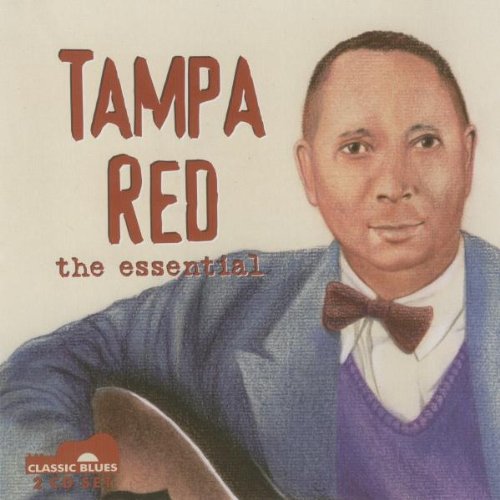 Buy from Amazon The Essential Tampa Red
Tampa Red (Hudson Woodbridge/Hudson Whittaker), born January 8, 1904, Smithville, Georgia; died March 19, 1981, Chicago, Illinois. Inducted into the Blues Foundation Hall of Fame, 1981. Recorded 335 sides for Vocalion, Brunswick, Paramount, Bluebird (RCA Victor), and RCA Victor between 1928 and 1960. Principal recordings: "It's Tight Like That" with Georgia Tom (Vocalion, 1928); "Black Angel Blues" (Bluebird, 1938); "It Hurts Me Too" (Bluebird, 1940); "Anna Lou Blues" (Bluebird); "Love Her with a Feeling" (Bluebird); "Crying Won't Help You" (Bluebird). Key collaborators: Georgia Tom Dorsey (piano, 1928-1934); Blind John Davis (piano, c.1937-1945); Big Bill Broonzy (guitar, various sessions). Key influenced artists: Robert Nighthawk; Muddy Waters; Elmore James; Ry Cooder. Member of the Blues Hall of Fame.