Introduction: The Subsidiary That Outgrew the Parent
There is a paradox at the heart of Federal Records' historical significance that no careful account of the label can avoid: this was a subsidiary operation — created by the parent King Records to extend its commercial reach, named for the federal government of the United States in a somewhat opaque gesture toward authority and legitimacy — that generated recordings of greater historical importance than the parent label itself. James Brown recorded "Please, Please, Please" on Federal, not on King. Hank Ballard and the Midnighters recorded "Work with Me Annie" on Federal. Billy Ward and the Dominoes recorded "Sixty Minute Man" on Federal. These were not commercially minor recordings on a historically obscure subsidiary; they were among the most consequential recordings in the development of American popular music, documents of the transition between rhythm and blues and rock and roll that made subsequent music possible.
Federal Records was founded in 1950 as a subsidiary of Syd Nathan's King Records in Cincinnati, Ohio, with Ralph Bass serving as the primary A&R man and producer. It operated for approximately a decade as a distinct imprint before being folded back into the King operation, during which time it produced a body of work that the bsnpubs Federal Album Discography describes as among the most sought-after by collectors — a status reflecting both the scarcity of surviving copies of its rarest releases and the musical quality of its best recordings.
The label's history is the history of an extraordinary creative period in American music — the five years between 1951 and 1956 when R&B was simultaneously at its commercial peak and in the process of transforming into something new. Federal was there for every stage of this transformation: the crossover success of "Sixty Minute Man" that demonstrated Black music could reach white pop audiences; the sexual frankness of the Midnighters' "Annie" series that challenged the censorship conventions of the era and established a new template for the explicit treatment of adult themes in popular music; and the incandescent debut of James Brown, the single artist whose Federal recordings laid the foundation for everything that would follow in soul, funk, and hip-hop.
This is the story of the label, its owners, its producers, its artists, and the music they made in Cincinnati, Ohio, during one of the most consequential decades in American popular music history.
The Parent: Syd Nathan and King Records
Federal Records cannot be understood in isolation from the institution that created it. King Records — the label that Syd Nathan had founded in Cincinnati in 1943 — was, by 1950, one of the largest and most commercially significant independent record companies in the United States. Its approach to the music business was distinctive in multiple ways that would directly shape the character of its Federal subsidiary.
Sydney Nathan was born on April 27, 1904, in Cincinnati, Ohio — a city that sat at the precise geographic and cultural intersection of the American South and the American Midwest, the place where the Ohio River divided the South from the North and where the musical cultures of both regions mingled in ways that would prove commercially fertile. As the Ohio Magazine account captures it: from his Cincinnati headquarters — "not contaminated by New York, Los Angeles or Chicago," as Nathan himself boasted — he built a label that was unlike anything in the commercial landscape of American music.
Nathan was, by universal account, one of the more colourful figures in the history of the American music industry. The Ohio Magazine description is vivid: "a roly-poly, cigar-chomping founder" whose poor eyesight — glasses "thick as the bottoms of soft drink bottles," as the Bluegrass Hall of Fame biography notes — and volcanic temperament were legendary throughout the industry. He was simultaneously visionary and abrasive, musically astute and commercially ruthless, progressive in his racial attitudes (King was a non-segregated company before such things were legally mandated) and exploitative in his contractual practices (the long legal battles with James Brown over contract violations becoming one of the more dramatic episodes in the history of the music industry).
King Records' foundational innovation — the vertical integration of the record-making process — was what made it commercially viable and operationally distinctive. Unlike its competitors, King recorded, manufactured, and distributed its own records, controlling every stage of the process from the initial session to the product on the record shop shelf. The facility at 1540 Brewster Avenue in Cincinnati's Evanston neighbourhood contained recording studios, pressing plants, and business offices under one roof, capable of pressing a million records per month and moving product from session to finished physical release in a matter of days. This vertical integration gave King a competitive advantage that the Chess brothers in Chicago and the Bihari brothers in Los Angeles, who relied on external pressing plants and distribution networks, could not match in terms of speed and cost control.
Nathan's approach to the music market was similarly distinctive in its refusal to specialise. Where most independent labels of the era focused on a single demographic or genre — Chess on Chicago blues and R&B, Sun on Southern rockabilly, Imperial on West Coast R&B — King covered everything: country music, bluegrass, rhythm and blues, gospel, pop, and eventually rock and roll. The Cincinnati site notes that "King Records recorded in the genres of hillbilly/Appalachian folk, bluegrass, country, jazz, doo-wop, R&B, funk, and soul," and this eclecticism was not lack of focus but strategic breadth. Nathan understood that the African American music market and the rural white music market had both commercial significance and potential for cross-pollination — his "musically integrationist policies," as author Peter Guralnick called them, involved having Black artists record country songs and white artists record R&B, betting correctly that the audiences for these genres were more permeable than the music industry's conventional segmentation assumed.
The creation of Federal in 1950 was, on its surface, a commercial strategy rather than an artistic one. As the bsnpubs King/Federal story explains: "the Federal subsidiary was formed in late 1950" and "at first, the label was used for West Coast black artists, but soon it was used as a vehicle for Billy Ward and the Dominoes, Hank Ballard and the Midnighters, and James Brown and His Famous Flames." The label gave Nathan the ability to route specific artists and specific styles through a separate imprint without diluting the King brand, and it gave him the ability to target R&B demographics more specifically than the multi-genre King imprint could.
The radio station airplay strategy that had motivated the Chess brothers to create Checker was equally relevant to Nathan's creation of Federal: by having two labels simultaneously, the same radio station could play a King record and a Federal record in the same hour, effectively doubling Nathan's airplay ceiling. The commercial logic was sound and would prove commercially consequential.
The Producer: Ralph Bass
The man most directly responsible for the specific character of Federal Records' recordings was Ralph Bass — the A&R executive and producer whom Nathan hired to run the subsidiary's creative operations. Bass's background and temperament made him an ideal match for Federal's specific mission, and the recordings he produced between 1950 and the early 1960s constitute one of the most significant bodies of work in the history of American R&B.
Ralph Bass was born in New York City in 1911 and had worked in the music industry since the 1940s, developing expertise in jazz and rhythm and blues that made him one of the more knowledgeable talent scouts and producers in the independent label world. His talent-spotting ability was exceptional — the range of artists he identified and brought to Federal, from Billy Ward to Hank Ballard to James Brown, represents one of the most impressive single-producer records of talent discovery in post-war American music.
His approach to production was influenced by his specific relationship to the music he was recording. Unlike Syd Nathan — who famously hated "Please, Please, Please" when he first heard it, jumping up mid-recording to protest what he considered noise — Bass had an instinctive sympathy with the emotional directness and the physical energy of R&B that gave him the patience and the confidence to let artists pursue their visions even when those visions confounded conventional commercial expectations. It was Bass who argued for releasing "Please, Please, Please" over Nathan's explicit objections, and it was Bass's persistence that gave James Brown the commercial debut that launched his career.
The story of the "Please, Please, Please" session is perhaps the most celebrated episode in Federal Records' history, and it is worth examining in detail. The famous snowstorm that prevented Leonard Chess from flying to Georgia — "in a lucky break for King, a snowstorm prevented Leonard Chess from flying to Georgia, and Bass was able to sign Brown" — placed Brown and the Famous Flames in Bass's hands rather than in the Chess brothers' operation. Bass brought James Brown and His Famous Flames to Cincinnati on February 4, 1956, for their first recording session.
What happened at the session has been documented in multiple accounts. Syd Nathan, sitting in the control room, listened to the first recording of "Please, Please, Please" and responded with unambiguous disapproval: "What's that? What in hell are they doing?" he reportedly demanded, jumping up halfway through the song. The specific qualities of the recording that outraged Nathan — Brown's emotional intensity, the repetitive pleading structure of the lyric, the raw gospel-derived urgency of the performance — were precisely the qualities that Bass recognised as extraordinary and commercially significant. After "an angry argument with producer Ralph Bass," as the Richland Source account describes, Nathan allowed the song to be released. "The song went on to be a hit when it was released in March, but Nathan remained unconvinced of Brown's potential."
This anecdote is not merely a good story; it is a window into the fundamental tension at the heart of Federal Records' operation. Nathan was a commercial animal whose instincts were primarily shaped by the country and pop music markets he had been serving since 1943; Bass was a R&B specialist whose instincts were shaped by the specific qualities of post-war African American music. Their disagreement about "Please, Please, Please" was not a disagreement about production values or technical quality but a disagreement about what the music market wanted and what audiences would respond to. Bass was right, and the history of Federal Records is largely the history of Bass being right in cases where Nathan was wrong.
Bass also produced the Billy Ward and Dominoes recordings and guided the development of the Royals/Midnighters, though his specific production contribution is harder to disentangle from the artists' own creative decisions in those earlier recordings. The bsnpubs account confirms that "the producers for Federal were Johnny Otis and Ralph Bass" — with Johnny Otis playing a significant early role in recommending and producing West Coast-originated talent before Bass became the label's primary creative force.
The First Great Commercial Breakthrough: Billy Ward and the Dominoes
The recording that established Federal Records as a commercially significant operation was not a blues recording or a soul recording but a group R&B vocal number that crossed over into the pop charts — the first time an R&B record had achieved that breakthrough in the label's history. Billy Ward and the Dominoes' "Sixty Minute Man" (Federal 12022, May 1951) reached number seventeen on the Billboard pop chart and number one on the R&B chart, demonstrating that Black music could reach white pop audiences when the song was good enough and the production sophisticated enough.
"Sixty Minute Man" was a commercial breakthrough of historical significance. As the King Records Wikipedia article confirms: "In 1951, Federal Records made the crossover of an R&B record into the white pop music charts with Billy Ward and the Dominoes' 'Sixty Minute Man' (Federal 12022). It reached number 17 on the Billboard pop chart and number 1 in the R&B chart." The song's explicitly sexual lyric — the narrator's claim to sustained, multi-method sexual prowess across a sixty-minute performance — was not ambiguous or coded; it was frontal and unapologetic, and its pop chart success suggested that white audiences were capable of responding to Black music even when that music addressed subjects that the pop mainstream's conventions would have required it to handle more discreetly.
Billy Ward had been a classically trained musician and bandleader who assembled the Dominoes as a vehicle for his compositional and commercial ambitions. His partnership with lead vocalist Clyde McPhatter — one of the most extraordinary voices in American popular music, a high tenor of supernatural expressiveness whose gospel-rooted intensity gave the Dominoes their specific quality — produced "Sixty Minute Man" and the subsequent series of Federal releases that made the group one of the most commercially successful R&B acts of the early 1950s.
McPhatter's lead vocal on "Sixty Minute Man" was the commercial product; his work on the subsequent Federal releases — "Have Mercy Baby" (Federal 12068, 1952), which reached number one on the R&B chart for ten non-consecutive weeks and "is still considered one of the best recordings of the era," and "The Bells" (Federal 12114, December 1952), which reached number three — confirmed that he was one of the most commercially gifted vocalists in the history of post-war American R&B.
The Clyde McPhatter story at Federal was both triumphant and temporary. His departure from the Dominoes in 1953 — he left to form the Drifters and signed with Atlantic Records, where he would continue building one of the great careers in American music — marked a significant transition for the group. Ward replaced him with the young Jackie Wilson, a Detroit singer who had won the Golden Gloves at sixteen and who brought his own extraordinary vocal gifts to the Dominoes. Wilson's Federal recordings with the Dominoes — including sessions that captured his spectacular range and his theatrical physical performance style — documented a talent that would go on, after his own departure from the group and his subsequent signing with Brunswick Records, to become one of the defining voices of soul music.
As the Last.fm Dominoes account documents, Wilson joined the group "on September 17" 1952, "which turned out to be the last one for Clyde McPhatter." The continuity of the Dominoes across this personnel change — from McPhatter to Wilson, two of the most individually gifted vocalists in R&B history, both in the same group within the same twelve-month period — gave Federal an embarrassment of vocal riches that no other label could match.
The Royals to the Midnighters: The Birth of Explicit R&B
The second major artistic story of Federal Records' history was the development of the group that began as the Royals, became the Midnighters, and produced the most commercially successful and most morally controversial series of recordings in the label's history. The story of Hank Ballard and the Midnighters is simultaneously a story about the commercial power of African American popular music in the early 1950s, about the specific ways in which that music's sexual directness challenged mainstream American cultural conventions, and about the particular role that Federal Records played in giving that challenge a commercial platform.
The Royals — organised in Detroit in late 1950 or early 1951 by Henry Booth and Charles Sutton — came to Federal's attention through one of the more consequential moments of talent scouting in post-war American music history. The history-of-rock.com account documents it precisely: "By 1952, when bandleader Johnny Otis discovered the group at the Paradise Theater in Detroit and recommended it to Federal Records producer Ralph Bass, the personnel comprised of lead singers Booth and Sutton, harmony vocalists Lawson Smith and Sonny Woods, and guitarist Alonzo Tucker."
Johnny Otis — the bandleader, producer, and talent scout who was simultaneously one of the most commercially successful African American entertainers in America and one of the most culturally white musicians in the country (he was, by birth, Greek American, but had grown up embedded in Black California culture and considered himself Black) — was Federal's most important early talent scout alongside Bass. His recommendation of the Royals was one of the label's most commercially consequential single acts.
The Royals' initial recording career at Federal was distinguished but not extraordinary — "Moonrise," "The Shrine of St. Cecilia," and other early releases showed a group with genuine vocal ability working in the smooth doo-wop tradition established by Sonny Til and the Orioles. The transformation came with the arrival of Hank Ballard — the Bessemer, Alabama-born singer who had grown up in church in Alabama, worked at a Ford assembly plant in Detroit, and was, by the Goldmine magazine account, inspired specifically by Clyde McPhatter's work with the Dominoes to pursue the harder, more gospel-influenced approach that would define the Midnighters.
Ballard joined the Royals in 1953, replacing Lawson Smith in the lineup. His specific qualities — "a hard gospel edge," as the history-of-rock.com account describes — transformed the group's musical character. Working with guitarist and arranger Alonzo Tucker, Ballard developed a style that took the group away from the smooth doo-wop tradition and toward the driving, sexually charged R&B that would make them controversial and commercially irresistible simultaneously.
"Get It" (1953) was the first Ballard-led Royals recording to chart nationally, reaching number six on the Billboard R&B chart. The Goldmine account describes it as "the blueprint for the group's successful style" — Ballard's gospel-intensity vocals, Tucker's guitar arrangements, and the rhythm section's driving shuffle producing the specific formula that "Work with Me Annie" would deploy, in more explicit form, to achieve number one status in 1954.
"Work with Me Annie" (Federal 12169, April 1954) was one of the most commercially successful and culturally significant recordings in Federal Records' history — and one of the most controversial recordings in the history of American popular music to that point. The song's lyric — a request to a woman to engage in sexual activity, expressed with minimal metaphorical mediation — was explicit enough that the Federal Communications Commission "opposed immediately" its radio airplay, as the Wikipedia Federal Records account notes. Radio stations across the country refused to play it. And it went to number one on the R&B charts anyway, demonstrating that the FCC and the radio programmers could not prevent the jukebox from carrying songs that audiences wanted to hear.
The bsnpubs account of the label's approach to the explicit content is direct: "The ability of Nathan to get the R&B he was recording to cross over into the popular record charts was hampered by the lyrics, which were considered too risqué to be accepted by the general pop audience. Songs like the 'Annie trilogy' by Hank Ballard and the Midnighters ('Work With Me Annie', 'Annie Had a Baby' and 'Annie's Aunt Fanny') were big sellers on the R&B charts, but never appeared on the popular charts."
The "Annie" series — three sequential number-one R&B records that told the story of a sexual relationship and its consequences — was the most sustained and commercially successful exercise in narrative sexual blues in the history of American popular recording. As the Midnighters became the Midnighters (renaming themselves to avoid confusion with the Five Royals in early 1954, just as "Annie" was becoming a hit), they also became Federal's biggest commercial act, the group whose recordings most directly expressed the label's distinctive commercial position: music that the white mainstream would not embrace but that African American audiences found irresistible.
The longer-term consequence of "Work with Me Annie" was almost as significant as its immediate commercial impact. Pat Boone, the white pop vocalist whose sanitised covers of Black R&B records were a commercial formula of the mid-1950s, recorded a cover of "Tutti Frutti" and other Little Richard songs; "Work with Me Annie" was covered, in a sanitised version called "Dance with Me Henry," by Georgia Gibbs. Etta James, who had written "The Wallflower (Dance with Me Henry)" as a response to the original "Annie," was signed by Modern Records and had her own top ten R&B hit. The commercial ecosystem that "Work with Me Annie" generated — original, cover, response — demonstrated both the song's commercial power and the specific dynamics of the mid-1950s R&B market, where Black originals consistently fed white covers that captured the mainstream pop sales while the Black originals dominated the R&B chart.
Hank Ballard also wrote, but Federal never released, a song called "The Twist" — a dance-oriented number that he had developed for a subsequent Federal recording. The story of how "The Twist" eventually became commercially significant is one of the more ironic in American popular music history: Chubby Checker covered it in 1960 for the Parkway label, with a performance modelled closely on Ballard's original, and Checker's version became one of the biggest hits of the rock and roll era. Ballard received his writer's royalties, but the commercial and cultural credit for the Twist went entirely to Checker. Federal's failure to release the song, at whatever stage of its development Ballard had brought it to the label, was one of the more consequential missed opportunities in the label's history.
James Brown: The Recording That Defined an Era
The James Brown story at Federal Records is the most historically consequential chapter in the label's history and one of the most dramatic personal narratives in American popular music. Brown and the Famous Flames signed to Federal in January 1956; the session of February 4, 1956, produced "Please, Please, Please"; the subsequent career it launched transformed American music so completely that its influence is still felt in virtually every genre of popular music produced in the subsequent sixty years.
Brown had been born on May 3, 1933, in Barnwell, South Carolina, and had grown up in conditions of extraordinary poverty in Augusta, Georgia. His early performing career had been shaped by the gospel tradition, by the R&B performers he had absorbed through radio and live performance, and by the specific example of Little Richard, a fellow Augustan whom Brown knew personally and from whom he had absorbed an approach to performance that combined gospel intensity with secular content.
The Famous Flames — the vocal group centred around Bobby Byrd, Johnny Terry, Sylvester Keels, and Nafloyd Scott, with Brown as the most dramatically expressive voice — had been developing their performing style in the Georgia and South Carolina club circuit when Ralph Bass heard their demonstration recording of "Please, Please, Please." Bass recognised immediately what he was hearing: a performance of genuinely extraordinary emotional intensity, built on the gospel tradition but applied to secular themes of romantic desperation, with a physical commitment in the vocal that went well beyond what most R&B singers of the period were capable of.
The snowstorm that kept Leonard Chess in Chicago while Bass flew south to sign Brown was, in retrospect, one of the decisive weather events in American cultural history. If Chess had reached Brown first, the subsequent development of his career would have been filtered through the specific aesthetic and commercial judgements of the Chess operation — the label that had shaped Muddy Waters, Howlin' Wolf, and Chuck Berry, and whose documentary approach to Chicago blues and R&B might have given Brown a very different commercial context. Federal gave him something else: a label whose primary producer understood his specific quality and was willing to fight for it even against his own boss's explicit objections.
The recording of "Please, Please, Please" proceeded despite Syd Nathan's mid-song eruption of disgust. The Richland Source account of the session is vivid: "Syd Nathan jumped up. 'What's that? What in hell are they doing?'" Nathan's objection was not to the song's lyric — a simple, repeated plea for romantic forgiveness — but to its emotional structure: the repetitive nature of the performance, Brown's pleading intensity reaching for an emotional register that Nathan did not recognise as commercially viable, the entire approach seeming to Nathan too raw and too undisciplined for the market he knew.
"The song went on to be a hit when it was released in March, but Nathan remained unconvinced of Brown's potential. It wasn't until 1958 when Brown had his next hit with the ballad 'Try Me' that he would begin to earn Nathan's respect." The two-year gap between "Please, Please, Please" and "Try Me" was commercially frustrating for Brown and the Famous Flames, but it gave Brown time to develop his performing style and to understand his commercial position in ways that would prove essential to the sustained success of his subsequent career. "Please, Please, Please" sold three million copies — a commercial performance that eventually vindicated Bass's confidence and demonstrated Nathan's error in judgment.
The subsequent Federal recordings of James Brown — "Try Me" (Federal 12337, 1958), which reached number one on the R&B chart and fully earned Nathan's commercial respect; "I'll Go Crazy" (1960); "Think" (1960); "I Don't Mind" (1961) — documented the development of an artist who was simultaneously refining his approach to the live performance that would eventually make him the most dynamic entertainer in American music and building a commercial catalogue of sustained quality. The Live at the Apollo album — recorded at the Apollo Theater in Harlem in October 1962 and released on King Records (not Federal, by this point, as the two imprints were being merged into the parent operation) — was the document that fully demonstrated what Brown had become and what the Federal years had helped to create.
The Broader Roster: West Coast Artists and Blues
While the Dominoes, the Midnighters, and James Brown were Federal's most commercially and historically significant artists, the label's roster was considerably broader, encompassing West Coast R&B, Texas blues, jazz-influenced R&B, and various other traditions that the bsnpubs label history identifies as characteristic of the Federal approach.
Johnny "Guitar" Watson — the Texan guitarist and singer whose career would span multiple decades and multiple musical styles — made some of his earliest recordings for Federal, his guitar work already demonstrating the specific combination of technical facility and emotional directness that would make him one of the more individual voices in post-war electric guitar blues.
Roy Brown — the New Orleans blues shouter whose "Good Rocking Tonight" had been covered by both Wynonie Harris and Elvis Presley — recorded for Federal, adding the New Orleans dimension to the label's geographic and stylistic range.
Champion Jack Dupree — the New Orleans-born barrelhouse pianist who had recorded since the early 1940s — appeared on the Federal roster, his rolling piano blues connecting the label to the older tradition of Gulf Coast blues piano.
Little Esther (Esther Phillips) — the young California vocalist who had been one of the most commercially successful R&B artists of the early 1950s through her recordings with the Johnny Otis Show — appeared on Federal with "Ring-A-Ding-Doo" (Federal 12055, December 1951), her powerful voice and emotional directness making her a natural Federal artist even at a relatively early stage of her career.
Ivory Joe Hunter — the Texas-born pianist and songwriter who occupied a unique commercial position at the intersection of R&B and country music — appeared on Federal, his smooth, jazz-inflected approach to both genres giving the label a dimension of sophisticated pop craft that the harder R&B of the Midnighters did not provide.
Billy Gayles with Ike Turner's Rhythm Rockers recorded "I'm Tore Up" (Federal 12265, April 1956) — a recording that connected the label to Ike Turner's touring band, one of the most consistently employed backing ensembles in the mid-South and Gulf Coast touring circuit.
Otis Williams and the Charms provided the label with a vocal group presence that extended beyond the Dominoes' specific approach, their 1954 recording "Hearts of Stone" (which was a number one R&B hit and subsequently covered by the Fontane Sisters for a major pop chart success) demonstrating Federal's ability to produce chart-topping vocal group recordings across multiple stylistic approaches.
Joe Tex — the Texan singer and entertainer who would go on to major soul hits in the 1960s with Dial Records — made some of his earliest recordings for Federal, his playful, confident approach to soul and R&B already evident in the Federal-era material.
The gospel dimension of the Federal catalogue — largely housed within the broader King Records operation, including the Glory Records subsidiary that Nathan purchased in 1953 specifically to obtain artist contracts — gave the label a sacred music presence that complemented its secular R&B work and reflected the continuity between the gospel tradition and the R&B that was developing alongside it.
The Cincinnati Machine: Production, Manufacturing, and Distribution
The specific quality of Federal Records' recordings was shaped not just by its artists and producers but by the specific capabilities and limitations of the King Records infrastructure at 1540 Brewster Avenue in Cincinnati. The vertical integration that Nathan had built gave Federal a production capacity that no comparable independent label could match, and the specific acoustic characteristics of the Brewster Avenue studio shaped the sonic character of every recording made there.
The studio itself was not, by professional standards, a state-of-the-art facility. It was a converted space in an industrial building, with the acoustic characteristics of its original commercial purpose still somewhat audible in the recordings — a slight hardness, a directness, a lack of the cushioning absorption that purpose-built recording studios typically provided. The Federal recordings have a specific sonic quality that collectors and audiophiles have consistently identified: a dry, direct, slightly raw quality that suits the music perfectly and that gives the recordings an energy and immediacy that more polished studio environments might have diluted.
The pressing plant that occupied the same building could turn around a recording from session to pressed record in days — a commercial advantage that Nathan exploited consistently. When "Please, Please, Please" was completed on February 4, 1956, it could be on the market by early March. This speed gave Federal and King a specific commercial advantage in the fast-moving R&B market, where a song that was generating jukebox plays could be in retail distribution before competitors had time to commission cover versions.
The distribution network that Nathan had built — initially regional, covering the Midwest, and eventually national — gave Federal's releases commercial reach that exceeded what most independent labels could achieve. The specific demographics of the Midwest, where large African American urban populations in Cincinnati, Columbus, Cleveland, Detroit, and Chicago provided a concentrated market for R&B, gave Federal a home market of considerable commercial depth before its records reached the national distribution channels.
The Transition: Federal Merges with King
The specific history of when and how Federal Records ceased to exist as a distinct operating imprint is somewhat complex. The bsnpubs account indicates the label "was operated until the early '60s" — a dating that is confirmed by the album discography, which shows the final distinctive Federal album releases occurring in 1958-1961. The practical dissolution of Federal as a separate operation from King happened gradually rather than through a single decisive act, as Nathan consolidated his various imprints and routed artists' releases through whatever catalogue number sequence was most commercially convenient at any given moment.
The merging of Federal into King was partly a consequence of the changing commercial landscape of the early 1960s — the increasing importance of the LP format (which Federal had barely used; its primary commercial vehicle was the 45-rpm single) and the growing dominance of the major labels in the pop market made the subsidiary label strategy less commercially significant than it had been in the 78-rpm and early 45-rpm era. Nathan's response to these changes was to consolidate rather than diversify.
James Brown's career by the early 1960s had already grown beyond what any single imprint designation could contain — he was King Records' biggest artist and biggest commercial property, and the specific imprint designation on his releases was secondary to his own name recognition and the King brand's overall identity. His transition from Federal releases to King releases was commercially invisible to most of his audience.
The Legacy: What Federal Built
The legacy of Federal Records operates at multiple levels. At the most direct and most commercially consequential, it is the James Brown connection: the label that gave Brown his first commercial recordings, that produced "Please, Please, Please" and "Try Me" and the subsequent Federal singles that established the emotional vocabulary and the commercial profile on which his subsequent career was built. Without Federal, without Ralph Bass's confidence in the face of Syd Nathan's opposition, there is no James Brown as we know him — or rather, there might have been a James Brown, but he would have been shaped by different commercial and creative pressures than those that Federal's specific culture provided.
At a level slightly less directly traceable but equally significant, Federal's contribution to the development of what became rock and roll was substantial and early. "Sixty Minute Man" crossed over to the pop charts in 1951 — before Bill Haley, before Chuck Berry, before Elvis Presley — demonstrating that R&B could reach white audiences when the production was right and the song was strong enough. The Midnighters' "Work with Me Annie" series pushed the explicit treatment of adult themes in popular music to a new limit, establishing a commercial template that rock and roll's subsequent development would build on. These were not peripheral contributions to the history of American popular music but foundational ones.
The Hank Ballard contribution — including the creation of "The Twist," which Ballard wrote and which Chubby Checker later covered for one of the biggest singles in rock and roll history — demonstrates that Federal's influence extended even to recordings it did not make and commercial successes it did not achieve. The creative DNA of "The Twist" was Federal's, even if the royalties went elsewhere.
The collector significance of Federal Records — "one of the more sought-after labels by collectors," as the bsnpubs album discography notes — reflects both the scarcity of surviving copies of the rarest early pressings and the musical quality that makes those recordings worth pursuing. The 45-rpm singles of the early Federal era, with their distinctive label design and their cargo of some of the most exciting R&B recordings of the post-war era, are genuine artifacts of American cultural history, and the prices they command in the vintage record market reflect that status.
Syd Nathan was inducted into the Rock and Roll Hall of Fame in 1997 — posthumously, having died on March 5, 1968, at the age of sixty-three. Ralph Bass, who produced the recordings that justified that induction, was honoured separately. The Cincinnati facility at 1540 Brewster Avenue was purchased by the City of Cincinnati in 2018 to save it from demolition — a formal civic recognition that what had happened on that site was worth preserving. King Records' cultural legacy, including Federal Records' specific contributions to that legacy, had outlasted the commercial organisation that created it.
"Syd Nathan was an original," wrote Seymour Stein, his former assistant. The assessment is accurate and insufficient simultaneously. Nathan was an original, and so were the musicians he recorded: Clyde McPhatter, Jackie Wilson, Hank Ballard, and above all James Brown, whose Federal debut remains the founding document of one of the most consequential individual careers in American musical history.
Selected Discography
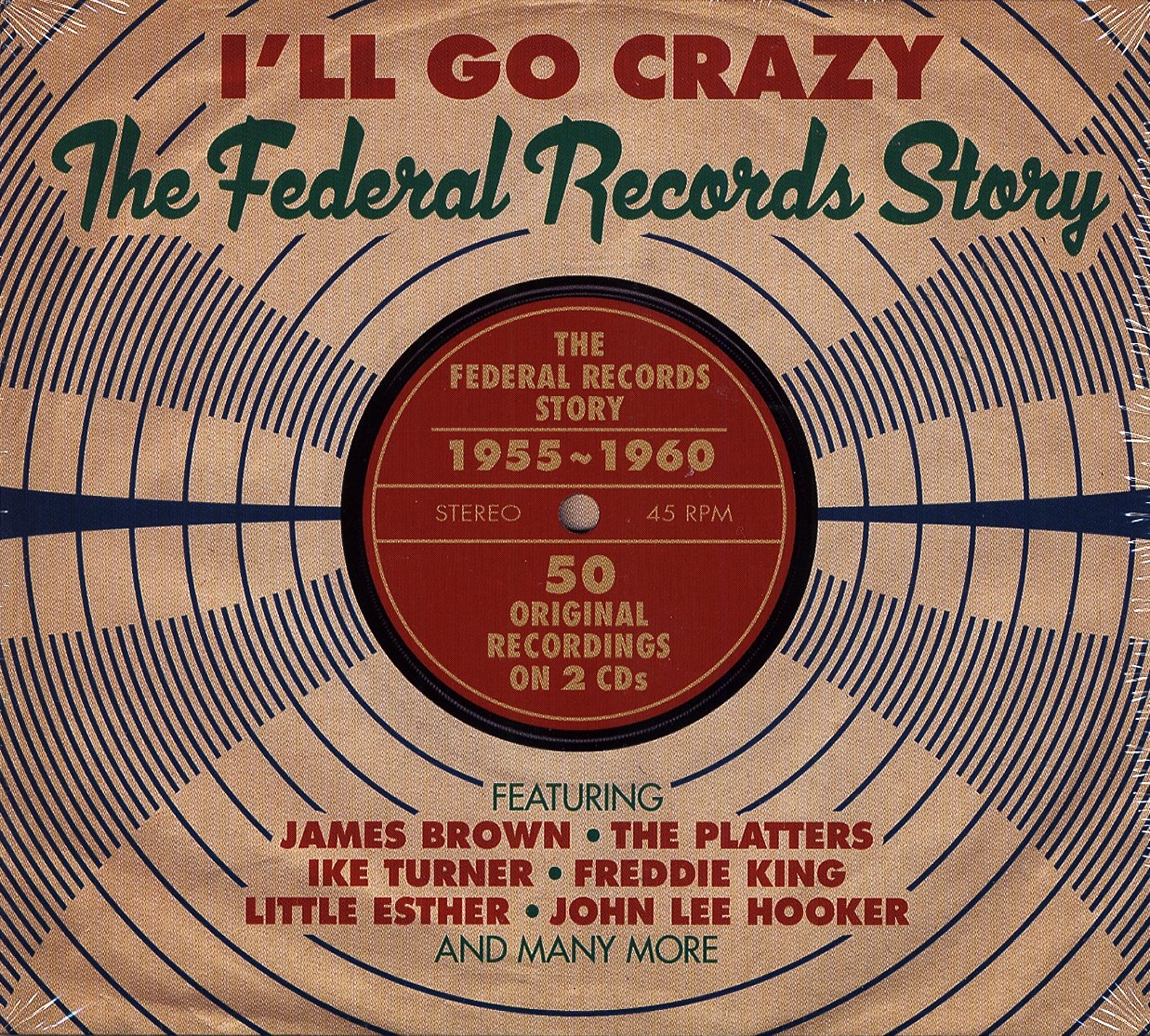
I'll Go Crazy the Federal Records Story
Federal Records was founded in 1950 as a subsidiary of King Records, Cincinnati, Ohio. Founded by Syd Nathan; primary A&R executive and producer: Ralph Bass; additional early producer: Johnny Otis. The label operated from approximately 1950 to the early 1960s before being folded into the King Records operation. Syd Nathan was inducted into the Rock and Roll Hall of Fame, 1997. King Records facility at 1540 Brewster Avenue, Evanston, Cincinnati, purchased by the City of Cincinnati, 2018, for historic preservation. Principal artists: Billy Ward and the Dominoes (featuring Clyde McPhatter, later Jackie Wilson); The Royals/Hank Ballard and the Midnighters; James Brown and His Famous Flames; Little Esther (Esther Phillips); Otis Williams and the Charms; Johnny "Guitar" Watson; Roy Brown; Champion Jack Dupree; Ivory Joe Hunter; Joe Tex. Notable recordings: "Sixty Minute Man" (The Dominoes, Federal 12022, 1951, #1 R&B / #17 Pop); "Have Mercy Baby" (The Dominoes, Federal 12068, 1952, #1 R&B 10 weeks); "Work with Me Annie" (The Midnighters, Federal 12169, 1954, #1 R&B); "Annie Had a Baby" (The Midnighters, Federal 12195, 1954, #1 R&B); "Please, Please, Please" (James Brown and His Famous Flames, Federal 12258, 1956); "Try Me" (James Brown, Federal 12337, 1958, #1 R&B).