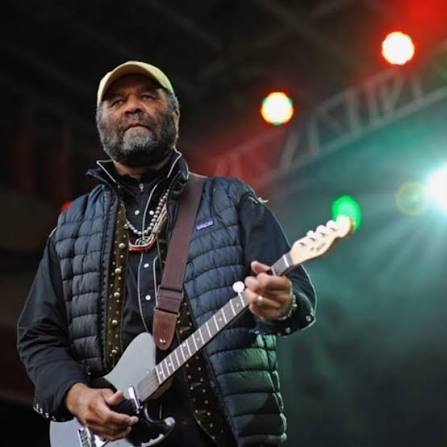
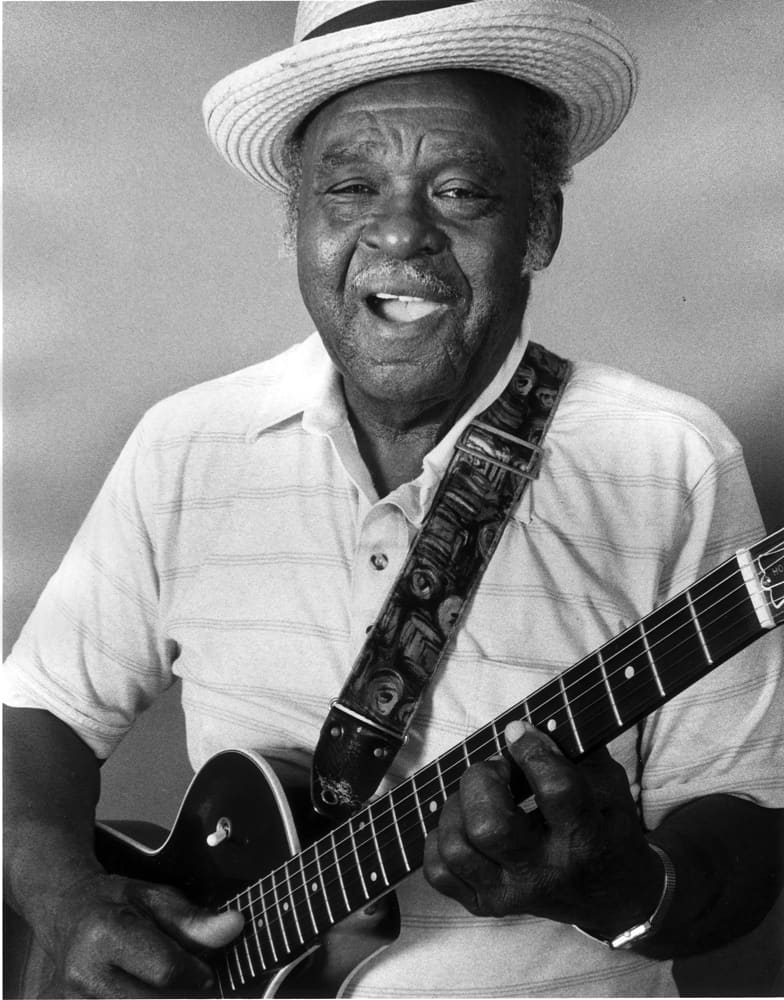
The story of postwar Chicago blues cannot be told without reckoning with the contributions of a soft-spoken man from the Mississippi Delta who preferred to stand slightly to the left of the spotlight, anchoring the music with a rhythmic precision that made everything around him sound deeper, tougher, and more inevitable. That man was Jimmy Rogers, born James Arthur Lane—though some accounts give his first name as Jay—on June 3, 1924, near Dougherty Bayou, just west of Ruleville in Sunflower County, Mississippi. The Lane family was part of the vast African American agricultural working class that defined the Delta in the early twentieth century, and young James was raised primarily by his grandmother in the nearby hamlet of Vance. The identity he would carry into adulthood, however, came from his mother's companion, a man named Henry Rogers, whose surname the boy adopted when he became a professional musician. It was a common enough practice among bluesmen of the era, a way of claiming kinship, stability, or simply a name that sounded right on a marquee, but in Rogers's case it also signaled something about his character: he was a man who absorbed influence, who adapted, who made himself at home in whatever musical configuration fate placed him.
The Delta of Rogers's childhood was not yet the mythologized landscape of Robert Johnson and Muddy Waters that later generations would imagine. It was a place of brutal agricultural labor, of sharecropping and tenant farming, of cotton and soybeans and the endless flat horizon that could make a young man desperate to see what lay beyond the next county line. But it was also a place saturated with music. The blues was in the air, in the juke joints that dotted the rural landscape, in the traveling musicians who passed through on their way to Memphis or Helena, in the harmonica quartets that young boys formed on front porches after the day's work was done. Rogers's first instrument was the harmonica, and he learned it in the company of his childhood friend Snooky Pryor, another Mississippi boy who would eventually find his way to Chicago and help shape the new electric sound. The two of them played together in a harmonica quartet, developing the lung power and ensemble discipline that would serve Rogers throughout his career. It was the harmonica that first gave him entry into the world of professional music, and for a time he imagined himself as a harp player in the mold of the great Sonny Boy Williamson.
But the guitar was calling. In his early teens, Rogers moved to Charleston, Mississippi, and there he picked up the six-string, teaching himself the rudiments of blues guitar in a region where the instrument was being transformed by a generation of innovators. His first professional gig came in Minter City, a small town in the Delta where he played country blues for dancers and drinkers in the local juke joints. The music he played in those years was acoustic, rooted in the Delta tradition but already showing signs of the urban sophistication that would define his mature style. He was listening to everyone: the intricate fingerpicking of Robert Johnson's disciples, the jazz-inflected chords of the territory bands, the raw power of the slide guitarists who played with knives and bottles. Among his most important early influences were Joe Willie Wilkins, the Helena guitarist whose clean, precise style would leave a lasting imprint on Rogers's approach, and Robert Jr. Lockwood, the brilliant young musician who had studied under Robert Johnson himself and who was already developing a modern, jazz-oriented approach to blues guitar. Big Bill Broonzy, the towering figure of pre-war Chicago blues, also exerted a powerful influence on the young Rogers, demonstrating that the blues could be both deeply rooted and commercially viable.
The Wandering Years
Before Chicago, there was a long apprenticeship on the road. Rogers did not follow the single trajectory of the Great Migration narrative that so often simplifies the lives of Southern blues musicians into a straight line from Delta cotton field to Chicago factory. His journey was more circuitous, more meandering, more like the music itself. He lived in Atlanta, where the black middle class and the thriving entertainment district on Auburn Avenue offered a glimpse of urban possibility. He spent time in Memphis and West Memphis, Arkansas, across the river from each other, twin cities of the blues where musicians like Howlin' Wolf and B.B. King were beginning to make their names. He performed in East St. Louis, Illinois, just across the Mississippi from St. Louis, a rough industrial city where the blues mixed with the emerging sounds of rhythm and blues and where Rogers worked with Robert Jr. Lockwood and other musicians who were pushing the music in new directions.
In the Delta, Rogers found himself in the orbit of Sonny Boy Williamson No. 2, the Rice Miller version of the legendary harmonica player whose electrifying performances and larger-than-life persona made him one of the most compelling figures in Southern blues. Playing with Williamson was an education in showmanship, in the art of holding a crowd, of building tension and releasing it through the music. Rogers also performed with Howlin' Wolf during this period, absorbing the ferocious energy of a man who would become one of the defining voices of Chicago blues. These were not casual associations; they were formative experiences, the equivalent of graduate school for a young musician trying to find his place in a tradition that was simultaneously ancient and in constant flux.
By the early 1940s, the pull of Chicago had become irresistible. The city was the destination for hundreds of thousands of African Americans fleeing the Jim Crow South, drawn by the promise of industrial jobs, relative freedom, and the chance to build a new life in the urban North. Rogers arrived in Chicago in the mid-1940s, joining the flood of Southern musicians who would transform the city's musical landscape. He was not yet twenty years old, but he carried with him the experience of years on the road, a network of musical connections, and an instrumental versatility that would prove invaluable in the competitive world of Chicago blues.
Maxwell Street and the Education of Chicago
Like virtually every newly arrived Southern musician in Chicago, Rogers made his way to Maxwell Street, the sprawling open-air market on the Near West Side that served as both commercial hub and informal conservatory for the city's blues community. Founded in the nineteenth century by Jewish immigrants, Maxwell Street had evolved into a bustling multicultural bazaar where black, Jewish, Mexican, and Eastern European vendors and shoppers mingled in a cacophony of languages, smells, and sounds. For musicians, it was a proving ground. You could set up on a street corner, play for tips, and be heard by other musicians who might invite you to a gig, a party, or a recording session. The competition was fierce, the standards were high, and the rewards—at least in the early going—were meager. But Maxwell Street was where the Chicago blues sound was being forged in real time, and Rogers was there for its creation.
At Maxwell Street, Rogers reconnected with Snooky Pryor, who had also made his way north, and he fell in with a circle of musicians that included the harmonica prodigy Little Walter Jacobs, a teenager whose revolutionary approach to the amplified harmonica would change the sound of blues forever. And there was Muddy Waters. McKinley Morganfield had arrived in Chicago in 1943, already a formidable talent but still finding his footing in the big city. Rogers and Waters became friends, then musical partners, then the core of what would become the most influential blues band in history. In those early years, Rogers helped Waters with his guitar playing, coaching him on technique and arrangement, sharing the knowledge he had accumulated on the road. It was a generous act that would pay dividends for both men, though neither could have known at the time just how consequential their partnership would become.
The first configuration of the Waters band was informal and fluid. Rogers was playing harmonica alongside guitarist Claude "Blue Smitty" Smith, with "Baby Face" Leroy Foster on drums. Waters played guitar and sang. They gigged around the South Side, playing house parties, clubs, and street corners, building a repertoire and a sound. When Blue Smitty departed, Rogers made a fateful decision: he brought in Little Walter to play harmonica and switched to guitar himself. It was a move that would alter the course of blues history. Walter's amplified harmonica, with its horn-like power and unprecedented sustain, demanded a guitar approach that could match its intensity without overwhelming it. Rogers, with his precise rhythm work and tasteful fills, was the perfect complement. He did not play lead guitar in the showy sense; he played support, laying down a bed of chords and rhythmic figures that allowed Waters's slide guitar and Walter's harmonica to soar above it. This was the birth of the classic Chicago blues ensemble sound, the template that would be copied by every blues band that followed.
The group developed a reputation that preceded them. They called themselves the Headhunters, or sometimes the Headcutters, a name that reflected their practice of dropping in on other bands' gigs and challenging them to musical combat. "There were four of us," Waters later told Down Beat magazine, "and that's when we began hitting heavy. Little Walter, Jimmy Rogers, and myself, we would go around looking for bands that were playing. We called ourselves 'the Headhunters,' 'cause we'd go in [to clubs] and if we got the chance we were gonna burn 'em." This was not mere bravado; it was a survival strategy in a city where club owners paid the band that could draw the biggest crowd, and where reputations were made and broken in real time. The Headhunters won more than they lost, and their reputation spread through the South Side like wildfire.
The Ora-Nelle Sessions and the False Starts
Before Leonard Chess came calling, Rogers made his first tentative steps into the recording studio. In 1946, he recorded as a harmonica player and singer for the Harlem label, run by the pioneering African American producer J. Mayo Williams. The record, a boogie called "Round About Boogie," was released not under Rogers's name but miscredited to Memphis Slim and His Houserockers, a frustrating indignity that was all too common for young black musicians in the 1940s. The following year, Rogers made his recorded debut as a leader, cutting "Little Store Blues" for the tiny Ora-Nelle label, a short-lived Chicago imprint run by the record store owner Bernard Abrams. The session featured Little Walter, and the record captured the raw energy of the Headhunters in their embryonic form. But Ora-Nelle was a shoestring operation, and the record barely made a ripple.
Rogers cut additional sides for Regal and Apollo, two slightly larger independent labels, but these recordings went unissued, consigned to the vaults where they would remain for decades. It was a pattern familiar to countless blues musicians: the promise of a record, the excitement of the studio, the long wait for release, and the eventual realization that the tapes had been shelved, lost, or forgotten. For Rogers, these false starts must have been discouraging, but they were also part of the apprenticeship. He was learning how to work in a studio, how to condense his live energy into the three-minute confines of a 78-rpm record, how to balance the competing demands of artistic expression and commercial viability.
Those labels' monumental errors in judgment would prove to be the gain of Leonard Chess, the Polish immigrant and nightclub owner who was building a recording empire on Chicago's South Side. Chess had started Aristocrat Records with his brother Phil and partner Evelyn Aron, and by 1950 they were ready to expand their blues roster beyond the handful of artists they had already recorded. Chess heard something in Rogers that the other labels had missed: not just a sideman, not just a competent musician, but a potential star with a distinctive voice and a songwriting gift that set him apart from the crowd. Leonard Chess's instinct for talent was legendary, and his decision to sign Rogers would prove to be one of his most astute moves.
The Chess Years: A Star Is Born
Jimmy Rogers's first recording as a bandleader for Chess came in August 1950, and it announced the arrival of a major talent. "That's All Right," backed with "Ludella," was released as Chess 1435 in October of that year, and it remains one of the definitive recordings of postwar Chicago blues. The A-side was an original composition, a medium-tempo shuffle with a deceptively simple guitar figure and a vocal that managed to be simultaneously relaxed and intense. Rogers's voice was smooth compared to the grittier approaches of Waters or Howlin' Wolf, a tenor with a slight rasp that conveyed vulnerability without weakness. Behind him, Little Walter's harmonica wove in and out of the arrangement with the precision of a jazz soloist, while Big Crawford's bass provided the steady pulse that was the hallmark of the Chess sound. The record was an immediate success, establishing Rogers as a solo artist of the first rank and giving Chess a hit to rival the best of Muddy Waters's output.
What made "That's All Right" so enduring was its perfect balance of tradition and innovation. The lyrics drew on the classic blues vocabulary of romantic complaint—"That's all right, mama, that's all right with you"—but the delivery was unmistakably modern, urban, and electric. Rogers's guitar playing on the record was a master class in rhythmic economy. He did not solo in the conventional sense; instead, he created a tapestry of chords and single-note responses that propelled the music forward while leaving space for Walter's harmonica and his own vocal. It was a style that would influence generations of rhythm guitarists, from the British Invasion bands of the 1960s to the roots-rock practitioners of the present day.
The success of "That's All Right" launched a remarkable run of recordings that stands as one of the most consistent bodies of work in the history of Chicago blues. Between October 1950 and February 1959, Rogers released thirteen singles on Chess, each one a gem of the genre. "Going Away Baby," recorded in October 1950 with Waters and Walter in support, was a slow blues of devastating emotional power, Rogers's voice cracking with believable sorrow as he sang of departure and loss. "Today, Today Blues," the flip side, was a more uptempo number that showcased his gift for catchy, conversational lyrics. "The World Is in a Tangle," recorded in January 1951 with a full horn section, expanded the sonic palette of Rogers's music, adding tenor saxophone to the standard guitar-harmonica-bass-drum configuration. "She Loves Another Man" was a classic blues narrative of betrayal, while "Money, Marbles and Chalk," from July 1951, was a good-time shuffle that became a staple of Rogers's live repertoire.
The 1952 singles continued the streak. "Back Door Friend" and "I Used to Have a Woman" showed Rogers's range, from the suggestive humor of the former to the straight-ahead blues lament of the latter. "The Last Time" and "Out on the Road," recorded in September 1952 with Muddy Waters and Willie Dixon, were road songs that captured the itinerant lifestyle of the working bluesman. In 1953, "Left Me with a Broken Heart" and "Act Like You Love Me" demonstrated Rogers's growing sophistication as a songwriter, with more complex chord changes and nuanced emotional content than many of his contemporaries attempted.
The year 1954 brought two of Rogers's most exciting recordings. "Sloppy Drunk" and "Chicago Bound," released as a single in June of that year, had a proto-rock-and-roll energy that pointed toward the musical revolution just around the corner. "Sloppy Drunk" was a raucous celebration of inebriation, with Rogers's guitar and Waters's slide engaging in a call-and-response that must have set dance floors ablaze. "Chicago Bound" was a travelogue and a declaration of identity, a song that announced Rogers's permanent allegiance to the city that had made him. The backing bands on these sides included some of the greatest musicians in Chicago: Waters, Spann, Dixon, Little Walter, and pianist Henry Gray, among others. It was an all-star cast, and Rogers was the undisputed leader.
In 1955, Rogers left Muddy Waters's band to concentrate on his solo career. It was a natural evolution for a man who had been recording under his own name for five years and who was eager to step out from behind the shadow of his more famous partner. But the departure was amicable; Rogers and Waters remained close friends for the rest of their lives, and they would continue to record and perform together periodically. The 1955 single "You're the One" b/w "Blues All Day Long" showed Rogers moving in a slightly more polished direction, with tighter arrangements and a more prominent role for piano.
The commercial peak of Rogers's Chess career came in November 1956 with the release of "Walking by Myself," backed with "If It Ain't Me (Who You Thinking Of)." The record was an adaptation of a T-Bone Walker tune called "Why Not," which Rogers had played rhythm guitar on when Walker recorded it for Atlantic. Rogers transformed the song into something entirely his own, a driving, insistent blues that featured a stunning harmonica solo from Big Walter Horton, who had been called in at the last minute to replace the no-show Good Rockin' Charles. Horton's solo on "Walking by Myself" is justly celebrated as one of the greatest harmonica performances in blues history, a torrent of notes that seems to defy the physical limitations of the instrument. The record reached the Billboard R&B charts in early 1957, the only chart success of Rogers's career, and it remains his best-known composition, covered by dozens of artists in the decades since.
The final Chess singles of the 1950s showed an artist still at the height of his powers even as the industry around him was changing. "I Can't Believe" and "One Kiss" (1957), "What Have I Done" and "Trace of You" (1958), and the 1959 farewell "Rock This House" b/w "My Last Meal" were all strong performances, though by 1959 the market for straight blues was shrinking as rock and roll claimed the attention of young black and white audiences alike. "Rock This House," with its propulsive rhythm and Reggie Boyd's light-fingered guitar work, ranked with Rogers's most exciting outings, a final burst of energy before the long silence.
The Sideman: Behind the Scenes at Chess
To understand Jimmy Rogers's contribution to Chicago blues, one must look beyond his own recordings to the vast body of work on which he appeared as a sideman. His guitar can be heard on some of the most iconic records in the Chess catalog, supporting Muddy Waters on classics like "Baby Please Don't Go," "I'm Your Hoochie Coochie Man," "I Just Want to Make Love to You," "I'm Ready," "Trouble No More," and "Got My Mojo Working." On these sessions, Rogers was not the featured artist but the foundation, the steady rhythmic hand that allowed Waters to concentrate on his vocal and slide guitar. It was a selfless role, and Rogers played it with the professionalism of a master craftsman.
But Waters was not the only beneficiary of Rogers's sideman skills. He played on records by Little Walter, Memphis Minnie, Sonny Boy Williamson No. 2, Sunnyland Slim, Floyd Jones, Johnny Shines, T-Bone Walker, and Howlin' Wolf. He accompanied Eddie Ware and other lesser-known artists who passed through the Chess studios, always delivering the same level of commitment and musical intelligence. On T-Bone Walker's Atlantic sessions, Rogers's rhythm guitar helped to shape the sound of one of the most influential blues guitarists of the era. On Howlin' Wolf's Chess recordings, he added texture and depth to the Wolf's primal roar. On Johnny Shines's "Joliet Blues" and "So Glad I Found You," recorded in October 1950 with Little Walter and Big Crawford, he provided the kind of sympathetic accompaniment that elevated the singer's performance.
This was the invisible labor that made the Chess machine run. The label's success depended on a core group of musicians who could walk into the studio at any hour, listen to a run-through, and lay down a perfect track in one or two takes. Rogers was one of the best in this demanding role. He understood the mathematics of ensemble playing: when to push, when to lay back, when to add a fill and when to let silence do the work. His guitar tone was clean and articulate, with just enough distortion to cut through the mix without overwhelming the other instruments. It was a sound that defined the Chess aesthetic, the sonic signature of an era.
The Long Silence
By the late 1950s, the world of blues was changing in ways that were not favorable to artists like Jimmy Rogers. Chess Records had discovered rock and roll, and the label's resources were increasingly devoted to Chuck Berry, Bo Diddley, and the other young artists who were selling records to the burgeoning teenage market. Blues was losing its commercial viability, at least in the form that Rogers practiced it. The small-combo, guitar-and-harmonica sound that had defined the postwar era was being eclipsed by louder, more aggressive styles that spoke to a different generation.
Rogers made his final Chess single in 1959. After that, the recordings stopped, and the gigs became fewer and farther between. In the early 1960s, he briefly joined Howlin' Wolf's band, playing the kind of raw, gutbucket blues that Wolf demanded, but the engagement lasted only about a year. Then Rogers made a decision that would have been unthinkable to the young man who had arrived in Chicago two decades earlier: he quit music altogether.
For nearly a decade, Rogers lived the life of a working-class Chicagoan. He drove a taxicab, navigating the city's streets with the same attention to detail that he had once brought to the bandstand. He opened a clothing store on the West Side, selling garments to the neighborhood residents who were his neighbors and friends. It was a respectable life, a stable life, a life far removed from the uncertainties of the music business. But it was not the life he had been born to live, and the blues does not release its hold on those who have truly given themselves to it.
The store burned down in 1968, destroyed in the riots that followed the assassination of Dr. Martin Luther King Jr. The loss was devastating, both financially and emotionally. For Rogers, it may have been a sign that his time away from music had run its course. The city was in turmoil, the old neighborhood was changing, and the music that had once been his livelihood was beginning to stir again, called back to life by a new generation of listeners who had discovered the blues through the British Invasion and the American folk revival.
The Return: Shelter and Beyond
Jimmy Rogers returned to performing in 1969, just as the blues revival was gaining momentum. White college students, European enthusiasts, and young American musicians were seeking out the masters of the postwar Chicago sound, and Rogers was rediscovered with something like the reverence that had always been his due but that the American market had rarely afforded him. In 1972, he toured Europe as part of the American Folk Blues Festival, sharing the stage with Big Mama Thornton, T-Bone Walker, and Jimmy Dawkins. The tour was recorded for a live double LP that captured the excitement of these transatlantic blues pilgrimages, and it introduced Rogers to an international audience that treated him not as a relic but as a living legend.
The real breakthrough of Rogers's comeback came in 1973 with the release of Gold Tailed Bird, his first full-length album, recorded for Leon Russell's Shelter label. The album was a revelation, showcasing Rogers's mature artistry in a format that his 1950s singles had only hinted at. The title track, with its slow-burning vocal and biting guitar tone, was a master class in blues restraint, while other cuts explored the range of Rogers's repertoire from shuffles to slow blues to good-time rockers. The backing band was stellar: Fred Below, the legendary drummer who had anchored the classic Chess sound, along with Dave and Louis Myers from the Aces, and a guest appearance by Freddie King. The production, credited to J.J. Cale, was clean and uncluttered, allowing Rogers's voice and guitar to occupy the center of the soundstage where they belonged.
Gold Tailed Bird established Rogers as a viable recording artist in the album era, and it set the pattern for the series of fine records that would follow. There was a 1979 LP with Left Hand Frank, a 1982 album with Hip Linkchain, and a steady stream of live appearances at blues festivals and clubs across America and Europe. In 1978, Rogers rejoined Muddy Waters for the I'm Ready album and tour, produced by Johnny Winter. The reunion was a triumph, a reminder of the musical telepathy that had always existed between the two men. Rogers's guitar on I'm Ready was as supple and supportive as it had been in the 1950s, and the tour introduced him to rock audiences who knew his name from the credits of their favorite records but had never seen him perform.
The 1980s and 1990s brought a steady stream of activity. In 1984, Chess released a two-LP compilation as part of its Chess Masters series, gathering Rogers's classic 1950s sides in one place for the first time. In 1988, he appeared on Wild Child Butler's Lickin' Gravy, adding his distinctive guitar to a set of tracks that also featured drummer Sam Lay. In 1990, Antone's Records released Ludella, a studio and live album recorded in Austin, Texas, with a backing band that read like a who's who of Chicago blues royalty: Calvin "Fuzz" Jones on bass, Bob Stroger, Hubert Sumlin on guitar, Willie "Big Eyes" Smith on drums, and Pinetop Perkins on piano. The album was a critical success, earning praise for its authenticity and its emotional depth.
In 1993, CrossCut Records released a live album recorded in 1991 with Ronnie Earl and the Broadcasters, capturing Rogers in concert with a sympathetic band that understood his music from the inside out. The following year brought two studio albums: Feelin' Good, recorded with Rod Piazza and the Mighty Flyers for Blind Pig, and Blue Bird, a studio set for Analogue Productions that featured harmonica player Carey Bell. A second 1994 album, Bill's Blues, paired Rogers with harmonica player Bill Hickey. These late-period recordings are not the work of a man coasting on past reputation; they are the work of an artist who still had something to say, who still found new nuances in the blues form after half a century of playing it.
Blues, Blues, Blues: The Final Statement
As the 1990s drew to a close, Jimmy Rogers was working on what would become his final musical statement. The project was conceived as an all-star tribute album, with Rogers as the bandleader and a rotating cast of rock and blues luminaries as his guests. The list of participants was staggering: Eric Clapton, Taj Mahal, Robert Plant, Jimmy Page, Mick Jagger, Keith Richards, Stephen Stills, Jeff Healey, Lowell Fulson, and others. These were not random celebrities drafted for a quick cameo; they were musicians who had grown up listening to Rogers's records, who regarded him as a primary influence on their own playing, and who jumped at the chance to record with him.
Mick Jagger, in particular, held Rogers in the highest esteem, considering him to be the originator of electric blues. Eric Clapton, whose own guitar style owed an obvious debt to the Chicago blues masters, brought his characteristic blend of reverence and fire to the sessions. Jimmy Page, the architect of Led Zeppelin's blues-based sound, traded licks with the man whose rhythm guitar had helped to define the very vocabulary that Page had expanded upon. Jeff Healey, the Canadian blues-rock guitarist who had made his name with a distinctive lap-slide approach, contributed his own passionate playing to the project.
The album, titled Blues Blues Blues and credited to the Jimmy Rogers All-Stars, was produced by John and Elaine Koenig, with Ahmet Ertegun serving as executive producer. Ertegun, the founder of Atlantic Records and one of the most important figures in the history of American popular music, had long been a champion of the blues, and his involvement lent the project an institutional gravitas that matched its artistic ambitions. The sessions took place in Chicago, with Rogers leading a core band that included his son, Jimmy D. Lane, on rhythm guitar, along with other Chicago veterans who had played with Rogers over the decades.
The album peaked at number one on the UK Jazz & Blues Albums Chart, a remarkable achievement for a record by a seventy-three-year-old bluesman who had never had a major pop hit in his life. But the triumph was bittersweet. Rogers was already ill during the sessions, battling the colon cancer that would claim his life. He died on December 19, 1997, before the album's release in January 1999. What had been conceived as a celebration became a posthumous tribute, a final gift from a musician who had given everything he had to the blues.
The tracks on Blues Blues Blues are a testament to Rogers's enduring influence and to the affection in which he was held by his fellow musicians. Jeff Healey opens the album with "Blow Wind Blow," a Rogers original that sets the tone for what follows. Eric Clapton takes the lead on "Blues All Day Long," his voice and guitar channeling the spirit of the Chess sessions he had studied as a teenager in Surrey. Mick Jagger and Keith Richards collaborate on "Trouble No More," the Rolling Stones' debt to Muddy Waters and Jimmy Rogers made explicit. Taj Mahal sings and plays harmonica on "Bright Lights Big City," bringing his own multicultural sensibility to the Chicago tradition. Lowell Fulson, the West Coast blues master, contributes his smooth guitar and vocals to the mix. Carey Bell and Kim Wilson provide harmonica throughout, bridging the generations of blues harp players who had learned from Little Walter and Big Walter Horton. Johnnie Johnson, the pianist who had helped to create the sound of Chuck Berry, adds his distinctive keyboard work.
It is impossible to listen to Blues Blues Blues without feeling the weight of history and the poignancy of Rogers's absence. He is there in the grooves, in the songs he wrote, in the guitar parts that his guests play, but his own voice and guitar are heard only on a few tracks. The album is both a celebration and a memorial, a reminder of how much Rogers had given to the music and how much he was missed.
The Sound and the Style
To describe Jimmy Rogers's guitar playing is to describe the very foundation of electric Chicago blues. He was not a soloist in the manner of B.B. King or Albert King, whose long, sustained notes and dramatic bends defined the lead guitar tradition. Nor was he a slide player like Muddy Waters or Elmore James, whose moaning, vocalized guitar lines carried the emotional weight of the Delta. Rogers was something rarer and, in some ways, more essential: he was a rhythm guitarist of genius, a musician who understood that the spaces between the notes were as important as the notes themselves.
His style was built on a few core elements. There was the steady, palm-muted chordal figure that propelled the shuffle rhythms, a technique that created a percussive snap on the backbeat and a rolling momentum on the downbeat. There were the single-note fills that answered the vocal or harmonica phrases, brief melodic statements that added color and commentary without drawing attention to themselves. There was the use of double stops and partial chords to create a fuller, more orchestral sound than a single guitar could normally produce. And there was the tone, a clean, slightly trebly sound that cut through the ensemble without harshness, achieved through a combination of amplifier settings, guitar choice, and the touch of a man who had spent decades refining his attack.
Rogers's vocal style was equally distinctive. Where Waters growled and Wolf howled, Rogers sang with a smooth, almost conversational ease that made his blues sound intimate rather than theatrical. He could summon emotion when the song demanded it—the cracked desperation of "Left Me with a Broken Heart," the sly humor of "Back Door Friend"—but his default mode was one of relaxed authority, a man telling you his troubles over a drink rather than shouting them to the heavens. It was a style that required confidence and control, and Rogers had both in abundance.
As a songwriter, Rogers favored the classic blues structures but infused them with a personal perspective that kept them from sounding generic. "That's All Right" takes a familiar phrase and turns it into a declaration of independence. "Walking by Myself" transforms a T-Bone Walker tune into a statement of solitary resilience. "Chicago Bound" is both a travel song and a love letter to a city. "Money, Marbles and Chalk" uses the language of gambling and games to explore the economics of love. These were not revolutionary lyrics, but they were crafted with care and delivered with conviction, and they have proven durable enough to enter the standard blues repertoire.
Influence and Legacy
Jimmy Rogers's influence on the development of blues and rock music is difficult to overstate, even if it has often gone unacknowledged by the broader public. He was, as the critic Bill Dahl has noted, the last living connection to the groundbreaking first Chicago band of Muddy Waters, and his death in 1997 severed a direct link to the formative years of electric blues. But his influence extends far beyond historical connection; it lives in the playing of virtually every blues and rock guitarist who has ever attempted to play rhythm in a band context.
The British Invasion guitarists who transformed popular music in the 1960s were, almost to a man, students of the Chess Records catalog, and Rogers's guitar was woven into the fabric of the records they studied. Eric Clapton, who played on Blues Blues Blues, has acknowledged the debt that his own rhythm work owes to Rogers and the other Chicago masters. Jimmy Page, whose work with Led Zeppelin redefined the possibilities of electric guitar, built his approach on the foundation that Rogers had laid. Jeff Beck, Keith Richards, Brian Jones, and the other British blues fanatics who made the music a global phenomenon in the 1960s were all, consciously or not, channeling Jimmy Rogers when they played the kind of tight, ensemble-oriented guitar that characterized the best rock bands of the era.
In America, Rogers's influence was equally profound. The Allman Brothers Band, Lynyrd Skynyrd, and the other Southern rock groups of the 1970s drew on the twin-guitar interplay that Rogers and Waters had pioneered. The blues-rock bands of the 1980s and 1990s, from Stevie Ray Vaughan Double Trouble to the Black Crowes, carried the rhythmic DNA of Rogers's playing in their sound. Even in the twenty-first century, as blues has become a niche genre and rock has fragmented into countless subcategories, the fundamental approach that Rogers developed—rhythm guitar as a melodic and dynamic force, rather than mere accompaniment—remains the standard by which players are judged.
Rogers was inducted into the Blues Hall of Fame in 1995, a recognition that was long overdue but welcome nonetheless. In 2016, the Blues Foundation inducted "That's All Right" as a "Classic of Blues Recording," acknowledging what fans had known for decades: that the song is a blues standard, as essential to the repertoire as "Sweet Home Chicago" or "Dust My Broom." These honors are fitting, but they are only part of the story. The true measure of Rogers's legacy is in the music itself, in the thousands of recordings that bear his imprint, in the countless guitarists who learned their craft by studying his parts, in the audiences who still dance to "That's All Right" and "Walking by Myself" in clubs and festivals around the world.
The Son Carries On
Jimmy Rogers's legacy is also carried forward by his son, Jimmy D. Lane, a guitarist, producer, and recording engineer who has built a career that honors his father's example while establishing his own identity. Jimmy D. played rhythm guitar in his father's band during the elder Rogers's later years, learning the music at the source, standing on stage beside a master and absorbing the lessons that can only be transmitted through shared performance. He has since fronted his own combo, recorded under his own name, and worked as an engineer at Blue Heaven Studios and APO Records, helping to preserve the acoustic blues tradition that his father helped to electrify. The father-son connection is one of the great through-lines in blues history, from the Pattons and the Hurt family to the Hookers and the Kings, and the Rogers lineage is a worthy addition to that tradition.
Reassessing Jimmy Rogers in the Twenty-First Century
As the decades pass and the original architects of Chicago blues recede into history, the work of reassessment and preservation continues. The 1997 two-CD set The Complete Chess Recordings, released by MCA/Chess, was a landmark in this process, gathering every solo side Rogers recorded for the label between 1950 and 1959 in one comprehensive package, along with detailed discographical information and liner notes that placed the music in its proper context. The 2016 compilation Chicago Bound, released by Jasmine Records, offered another entry point for listeners, presenting the complete Chess singles in chronological order on a single disc.
But the reassessment of Jimmy Rogers is about more than reissues and box sets. It is about recognizing the essential role that rhythm guitarists play in the creation of ensemble music, about understanding that the blues is not just a soloist's art but a communal form that depends on the sympathetic interaction of multiple voices. Rogers was a master of this communal art, a musician who made everyone around him sound better, who found his own voice in the service of the group, and who created a body of work that stands as some of the most elegant, durable, and emotionally resonant music in the blues canon.
To listen to Jimmy Rogers is to hear the sound of Chicago in the 1950s, a city of factories and clubs, of migration and transformation, of hardship and celebration. It is to hear a man who helped to invent a musical language that would conquer the world, who played with the giants of his era and held his own among them, who wrote songs that have outlived their moment and become part of the permanent vocabulary of American music. He was not the most famous bluesman of his generation, nor the most flamboyant, nor the most commercially successful. But he was, in his quiet, unassuming way, one of the most important. And his music, thank God, is still here for us to hear.
For those seeking to explore Jimmy Rogers's music in depth, the 1997 MCA/Chess two-CD set The Complete Chess Recordings remains the definitive collection of his 1950s work, presenting every solo side in chronological order with full discographical documentation. The 1999 Atlantic album Blues Blues Blues, credited to the Jimmy Rogers All-Stars, offers a fitting coda to his career, featuring contributions from Eric Clapton, Jimmy Page, Mick Jagger, Keith Richards, Taj Mahal, and others. For a taste of his classic Chicago blues at its finest, one could do worse than to start with "That's All Right," "Walking by Myself," "Chicago Bound," "Ludella," or "Sloppy Drunk"—songs that capture the essence of a musician who knew how to make a band swing, and who did so with a grace and authority that remain undimmed by time.

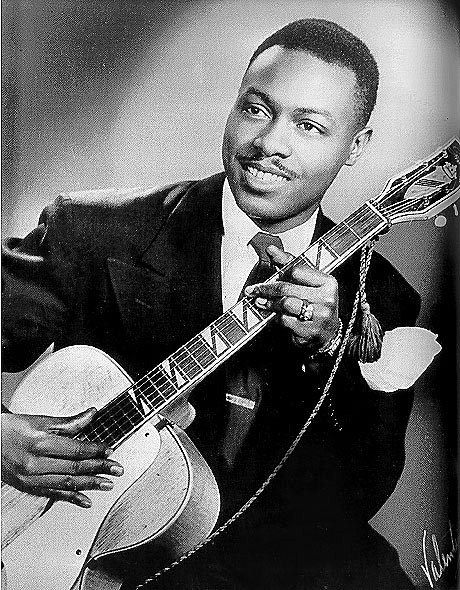
 Buy from Amazon The Complete Chess Recordings
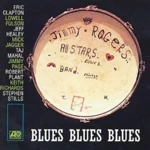 Buy from Amazon Blues Blues Blues
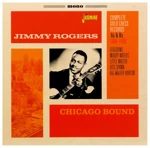 Buy from Amazon Chicago Bound: Complete Solo Chess Records As & Bs