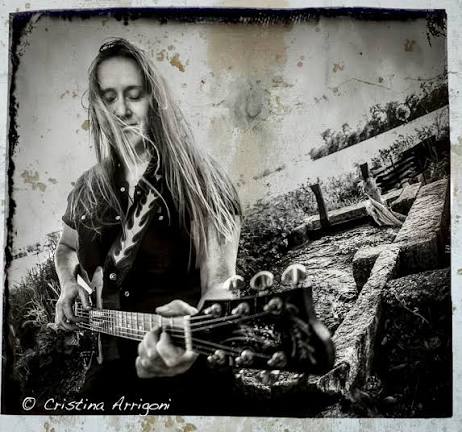
The story of Fiona Boyes begins not in the Mississippi Delta, not on the South Side of Chicago, not in the juke joints of Louisiana or the barrelhouses of Texas, but in Melbourne, Australia, a city more commonly associated with tram cars, coffee culture, and the angular architecture of Federation Square than with the bent notes and sliding chords of the blues. She was born and raised in this most antipodean of environments, of Scottish and English heritage, fair-haired and far removed from the African American experience that gave birth to the music she would eventually master. Yet geography and genetics proved no barrier to the gravitational pull of the blues, and Boyes would go on to become one of the most accomplished and internationally recognized practitioners of the form, a musician whose very existence challenges the lazy assumption that authenticity in blues is determined by birthplace or bloodline.
Boyes did not grow up in a musical household, at least not in the sense that would predict her future career. Her mother and grandmother played piano, and her father loved to sing, occasionally accompanying himself on a little button concertina. Family holidays featured Uncle Paul at the piano and singalongs with cousins and adults, mostly from old books of war-era tunes like "A Nightingale Sang in Berkeley Square." It was pleasant, it was communal, but it was not the blues. The music that would change Boyes's life came later, during her college years, when she met a harmonica player who introduced her to the raw, elemental sounds of early country blues and Delta blues. She was instantly hooked. "Yeah, this is what I've been missing," she thought, and the course of her life shifted irrevocably.
For several years, Boyes remained a devoted fan rather than a practitioner. She listened to records, went to see live gigs, and immersed herself in the music of the 1920s through the 1950s, the foundational era of recorded blues. She studied the classic Chicago blues greats—Muddy Waters, Howlin' Wolf, Willie Dixon, Buddy Guy, Koko Taylor—but she was equally drawn to the earlier, more acoustic sounds of Mississippi John Hurt, Reverend Gary Davis, Blind Willie McTell, and Big Bill Broonzy. Memphis Minnie held a particular fascination; Boyes would later describe the moment she first saw a photograph of Minnie, the only woman apparent among all the country blues classic players, looking sassy with her guitar, as a revelation that would influence her entire approach to the instrument. She also absorbed the work of T-Bone Walker, whose electric sophistication pointed toward the future, and Bonnie Raitt, whose gritty 1970s work would serve as a template for the kind of blues woman Boyes aspired to become.
The Maton and the Open Mic
Boyes did not begin playing guitar until her mid-twenties, a late start by the standards of most professional musicians but one that may have contributed to the distinctiveness of her approach. She was not a child prodigy racing through scales in her bedroom; she was an adult making a conscious, deliberate choice to devote herself to an art form she had come to love. Her entry into performance came through an open mic night, a "Talent Encouragement" competition sponsored by Maton Guitars, the leading guitar maker from her hometown of Melbourne. Boyes did not even own a guitar at the time; she borrowed an instrument from a friend to play that night. To her amazement, she won, and the prize was a beautiful brand new Maton CW80 acoustic guitar. That guitar, which she still owns, became the tool of her trade and the foundation upon which she built her career.
The significance of the Maton cannot be overstated. For an Australian musician, Maton represents the pinnacle of domestic instrument manufacturing, a company whose guitars have been played by everyone from Tommy Emmanuel to Keith Urban. For Boyes, the CW80 was the perfect vehicle for the fingerstyle approach she was developing, an approach rooted in the pre-war country blues tradition but filtered through her own personality and physicality. She never took to using a pick, on acoustic or electric guitar, and this decision—initially born of necessity and preference—would become one of the defining characteristics of her sound. Country blues players like Big Bill Broonzy and Mississippi John Hurt had played fingerstyle, and later she would discover that Hubert Sumlin, the legendary guitarist for Howlin' Wolf, also eschewed the pick. This validation from one of her heroes confirmed what her ears already knew: that the direct contact between flesh and string produced a warmth, a nuance, and a rhythmic complexity that a plastic triangle could not replicate.
The Mojos: Sisterhood and Swing
In 1990, roughly a year after she began performing, Boyes joined forces with four other Australian women to form an all-female blues band called the Mojos. The group—comprising Kaz Dalla Rosa on harmonica, Gina Woods on piano, organ, and accordion, Paula Dowse on drums, and Boyes on guitar and vocals, with various bassists over the years—represented a bold experiment in a musical landscape that was overwhelmingly male-dominated. The name came from Kaz Dalla Rosa's idea of a mojo as a good luck charm, and the band quickly developed from a group of fledgling players supporting each other into a serious musical outfit with a distinct identity.
The Mojos played swing, New Orleans-style tunes, and early blues, drawing on a roots-oriented aesthetic that set them apart from the guitar-heavy blues-rock bands that dominated the Australian scene. Where many of their male contemporaries had discovered blues through rock—Cream, Jimi Hendrix, and the like—the Mojos came to the music through its acoustic and early electric traditions, through the piano-driven sounds of Professor Longhair and the barrelhouse romps of the 1930s and 1940s. They recorded five albums during the 1990s: The Mojos (1990), Hardheaded Woman (1991), Sassy Mama (1995), Mumbo Gumbo (1996), and Swing O'Clock Blues (1999). Each album was a snapshot of where the band was at that moment, reflecting what they had been writing, listening to, and playing at their live gigs.
The experience of playing in the Mojos was formative for Boyes in ways that went beyond musicianship. As an all-female band in a male-dominated genre, they faced a double-edged sword. The novelty factor got them audiences initially, but they had to work twice as hard to be taken seriously as players. Boyes has spoken candidly about the frustration of being dismissed as an "all girl" band, of having their gigs attributed to gender rather than ability. Yet the sisterhood of the group also provided a supportive environment in which to learn and grow. They held a regular Saturday afternoon gig at a rowdy inner-city pub for more than eighteen months, earning fifty dollars each per show, grinding out their repertoire in front of sometimes skeptical, sometimes enthusiastic crowds. It was an apprenticeship of the old school, and by the time the Mojos finally broke up around the turn of the millennium, Boyes was ready to spread her wings.
Going Solo: Blues in My Heart
When the Mojos disbanded, Boyes made the decision to pursue a solo career, and in 2000 she released her debut solo album, Blues in My Heart. The album was a celebration of acoustic ragtime finger-style blues, recorded in a manner that harkened back to the early historical blues recordings she so admired. It was a statement of intent, a declaration that Boyes was not merely a blues-rock guitarist or a novelty act but a serious student of the tradition who could hold her own with anyone playing pre-war styles. The album won honors for Australian Female Artist, Song, and Album of the Year, establishing Boyes as a force in her home country's blues scene.
But Boyes was not content to remain a big fish in a small pond. The blues was born in America, and she knew that to truly test herself, she would have to go to the source. In 2003, she traveled to Memphis, Tennessee, to compete in the International Blues Challenge, the annual competition sponsored by the Blues Foundation that draws musicians from around the world to the city where so much of the music was forged. Boyes entered the solo/duo category and won, making history as the first woman and the first non-American to take the title. It was a watershed moment, not just for her career but for the perception of blues as a global music rather than a purely American possession. The victory announced to the world that a woman from Melbourne, Australia, could play the blues with an authenticity and authority that matched anything coming out of Chicago or the Delta.
The impact of the International Blues Challenge win was immediate and profound. The mayor of Clarksdale, Mississippi, the city widely recognized as the birthplace of the blues, was so impressed with her style and performance that he presented Boyes with the Key to the City, recognizing her as an Aussie ambassador of the blues. It was an extraordinary honor, a symbolic acknowledgment that the music had transcended its origins and found a worthy practitioner in the most unlikely of places. For Boyes, it was validation that her years of study and practice had not been in vain, and it opened doors that would have remained closed to a purely domestic artist.
Conquering America: Lucky 13 and the Yellow Dog Years
The success in Memphis led to a recording contract with Yellow Dog Records, the Memphis-based label that would release Boyes's American debut. Lucky 13 arrived in 2006, and it was worth the wait. Recorded in Austin, Texas, and produced by Mark "Kaz" Kazanoff of the Texas Horns, the album showcased a more electric, band-oriented side of Boyes's music than her acoustic solo work had suggested. It was an eclectic, sparkling set that drew on Chicago blues, New Orleans funk, Texas swing, and even rockabilly, with Boyes's sexy vocals and snaky guitar work at the center of every track.
The album featured an impressive roster of guests. Bob Margolin, who had played guitar for Muddy Waters for many years, contributed his distinctive slide and rhythm work. Marcia Ball, the Texas piano powerhouse, added her keyboard talents and shared vocal duties on the celebratory "Celebrate the Curves." The Texas Horns brought a brassy swagger to several tracks, and Floyd Domino, longtime pianist for Asleep at the Wheel, lent his boogie-woogie expertise. But despite the star power of the supporting cast, the spotlight remained firmly on Boyes. Reviewers noted her ability to move effortlessly from guttural to flowing, from nasty and dirty to smooth and sweet, her guitar playing consistently economical, tasteful, and imaginative.
Lucky 13 earned a Blues Music Award nomination for Contemporary Blues Album of the Year in 2007, the first of what would become a remarkable string of nominations from the Blues Foundation. These awards, considered the Grammys of the blues, had never before recognized an Australian artist, and Boyes's nomination was a breakthrough for the international blues community. The album also drew comparisons to some of the finest women in blues; reviewers described her as a "musical anomaly," "Bonnie Raitt's evil twin," and simply as "scaring the hell out of me." The All Music Guide review perhaps said it best: "It's time to lay the gender qualifier to rest. Fiona Boyes is an exceptional blues guitarist, period, as well as an exceptional vocalist and songwriter."
Boyes followed Lucky 13 with Blues Woman in 2008, another Yellow Dog release that continued her exploration of electric blues with a full band. The album maintained the high standards of its predecessor while pushing into new territory, and it earned Boyes further Blues Music Award nominations, this time for Contemporary Female Blues Artist in 2008 and Acoustic Blues Album of the Year in 2009 for her collaboration Live from Bluesville with Mookie Brill and Rich DelGrosso. The latter album won the US Blues Critics Award for Best Live Blues Album, confirming her status as a performer who could deliver the goods in concert as well as in the studio.
The Mentors: Sumlin, Margolin, and Perkins
One of the most remarkable aspects of Boyes's career has been the relationships she has forged with the elder statesmen of American blues, musicians who recognized in her a kindred spirit and a worthy successor. The most significant of these relationships was with Hubert Sumlin, the legendary guitarist who had defined the sound of Howlin' Wolf's band and who Keith Richards had called "the guitar-player's guitarist." Boyes met Sumlin through Bob Margolin, who had played with her on her Live in Atlanta album and who had originally been scheduled for an Australian tour with Boyes. When Margolin's schedule conflicted, his agent suggested Sumlin as a replacement, and Boyes could hardly believe her good fortune.
The tour was a fabulous experience, but the personal connection went deeper. Boyes spent a weekend at Sumlin's house, getting his huge old Cadillac out of the garage, driving to the store, talking, jamming, and sitting together as Hubert smiled and shook his finger, saying, "That's what I'm talkin' 'bout!" Sumlin's influence on Boyes's playing was profound. His eccentric fingerstyle technique, his quirky rhythm patterns, his exciting solos, and his idiosyncratic phrasing all found their way into her musical vocabulary. When Sumlin said of Boyes, "She's got it! I've played with all of them—and she's got it!" the endorsement carried the weight of a man who had played with the absolute greatest. It was not mere politeness; it was the recognition of a peer.
Bob Margolin, too, became a mentor and collaborator. Where Boyes had been more comfortable with country blues and swing when they first met, Margolin challenged her to stretch out and dig into grittier, tougher Chicago-style blues. Playing and touring with him proved to be a turning point in her development as an electric guitarist, and his influence can be heard in the harder-edged sound of her later band recordings. Margolin's deep, soulful musicianship and his firsthand knowledge of the Muddy Waters tradition provided Boyes with a direct link to the golden age of Chicago blues, a connection that informed her songwriting as well as her guitar playing.
Then there was Pinetop Perkins, the Grammy Award winner and Blues Hall of Fame pianist whose career stretched back to the 1930s. Perkins heard Boyes play and pronounced her "the best gal guitarist I heard since Memphis Minnie," adding, "I ain't never heard a woman finger-pick a guitar like that since Memphis Minnie." Coming from a man who had played with Muddy Waters, Howlin' Wolf, and virtually every other giant of the postwar era, this was perhaps the highest praise a woman blues guitarist could receive. It placed Boyes in a direct lineage stretching back to one of the most formidable musicians in blues history, and it cemented her reputation among the old guard as someone who had earned her place at the table.
The Fortune Tellers and the Art of the Ensemble
As Boyes's solo career developed, she assembled a backing band that would become her primary musical vehicle: the Fortune Tellers. The band's configuration has shifted over the years depending on geography—Boyes has maintained versions of the group in both her native Australia and her adopted home base of Portland, Oregon—but the core concept has remained consistent: a tight, sympathetic ensemble capable of navigating the full range of Boyes's repertoire, from acoustic fingerpicking to electric Chicago shuffles to New Orleans second-line grooves.
The Australian edition of the Fortune Tellers has featured Dean Addison on upright bass, Mark Grunden on drums, and Tim Neal on Hammond organ and saxophone, with Ali Penney on piano and Niels Rosendahl on saxophone joining for select engagements. The Portland band has included Dave Kahl on bass, Jimi Bott on drums, and Jim Wallace on harmonica. Both units are populated by professional, experienced players who understand the blues tradition from the inside out, and Boyes has used these bands as platforms for collaboration with visiting legends. Duke Robillard, Debbie Davies, Hubert Sumlin, and Bob Margolin have all appeared as featured guests with the Fortune Tellers, and festival shows have expanded the lineup to include Kaz Kazanoff and the Texas Horns or Terry Hanck on saxophone.
One of the most significant recordings by the Fortune Tellers was Live at Bluesfest 2004, a historic document featuring Hubert Sumlin and Australian harmonica master Chris Wilson. The album was captured direct from the soundboard to mini-disc recorder at the iconic Bluesfest Byron Bay, and its recent release on vinyl represents a major addition to the recorded legacy of both Boyes and Sumlin. The set list drew heavily on the Howlin' Wolf repertoire—"Sitting on Top of the World," "Spoonful," "Who's Been Talking"—with Sumlin's signature fingerpicking style complementing Boyes's own guitar work as they reveled in each other's talents. Chris Wilson's harmonica and vocals added another dimension, and the live chemistry among the musicians was palpable. For anyone who doubts that Boyes could hold her own with the giants of the tradition, this recording provides irrefutable proof.
The Audiophile Years: Professin' the Blues and Beyond
In 2015, Boyes released Box & Dice, an album written around her growing collection of cigar box guitars, those homemade instruments constructed from discarded wooden boxes, a few strings, and a lot of ingenuity. The album was nominated for Best Blues Album at the Music Victoria Awards, and it marked the beginning of a new phase in Boyes's recording career, one characterized by ever more adventurous instrumentation and a willingness to let the limitations of unusual instruments inspire new creative directions.
The following year brought Professin' the Blues, released on the audiophile label Reference Recordings. The album was a deliberate return to basics, an all-acoustic set recorded at Skywalker Ranch in Marin County, California, using the label's technical director Keith O. Johnson's own hand-built equipment. The recording environment was extraordinary: a huge sound stage normally used for orchestral soundtrack work, with Boyes and her small ensemble occupying a space that could accommodate a symphony orchestra. The result was a warm, intimate album that won the 2017 Blues Blast Music Award for Acoustic Blues Album of the Year and earned Boyes Blues Music Award nominations for Acoustic Artist of the Year and Acoustic Album of the Year.
The material on Professin' the Blues was almost entirely original, with Boyes accompanying herself on traditional acoustic guitars, resonator instruments, and cigar box axes, backed by bassist Denny Croy and drummer Jimi Bott. The songs ranged from the relationship lament "Can't Stay Here No More" to the devilish warning of "Devil You Know" to the tongue-in-cheek "Old and Stiff," which referred to the condition her husband, known as The Preacher, complained about upon waking. The album's spareness was its strength; without the armor of a full electric band, Boyes's voice, guitar, and songwriting were laid bare, and they more than held up to scrutiny.
In 2018, Boyes released Voodoo in the Shadows, a self-produced exploration of the musical stylings of Mississippi and Louisiana. The album featured swampy electric guitar, a collection of unique cigar-box guitars, and a rare National Reso-Lectric baritone, with Australian bandmates Tim Neal and Mark Grunden joined by New Orleans musician Johnny Sansone on harmonica and accordion. The songs dealt with themes of respect, partying, attitude, mystery, sensuality, and love, and the album earned Boyes her eighth Blues Music Award nomination, this time for the Koko Taylor Award as Best Traditional Female Artist. It was further confirmation that her career was not merely a momentary phenomenon but a sustained artistic journey that continued to evolve and deepen.
The Pandemic, Ramblification, and the Road Ahead
The COVID-19 pandemic brought the live music industry to a standstill worldwide, and Boyes, like every other touring musician, found herself grounded. But the forced isolation also provided an opportunity for reflection and creation. She spent the downtime reading books about the blues, and in Daniel Beaumont's biography of Son House, she came across a quote that struck her with the force of recognition: "I wasn't content anywhere long… just loved to ramble. I was just ramblified, you know." The word—ramblified—perfectly described her own life, spent largely on the road, and it became the title of her 2023 album, her thirteenth release and a celebration of the return to performance after the long silence.
Ramblified was a swampy mix of acoustic and electric instrumentation, featuring twelve original songs that showcased Boyes's continued growth as a songwriter and instrumentalist. The album opened with the confessional hill blues of "Devil Made Me Do It," a rollicking ride with echo-laden slide and grungy vocals, and moved through Delta blues, country blues, and electric shuffles with the ease of a musician who had long since internalized the grammar of the form. Watermelon Slim contributed harmonica to the playful "About Time Business Took Care of Me," while Phil "Philbilly" Jenkins added tuba to the same track, creating a delightfully quirky acoustic texture. Two instrumentals, "The Revenant" and "Ramblified Revisited," were performed on "Tenner," her four-string cigar box guitar, demonstrating her ongoing fascination with homemade instruments and their unique sonic possibilities.
The album was received with enthusiasm by critics who had followed her career from the beginning. Blues Blast Magazine praised its spareness and heartfelt quality, noting that "sometimes less is more, as seen here. Dang, she makes a lot of good music as she runs up and down the strings, slippin', slidin' and thumping." Backseat Mafia described it as "like a trip, with the reprise, Ramblified Revisited being its wonderfully perfect ending and a homecoming—sitting on the porch, drink in hand, sucking in the end of the day surrounded by the sounds of the great outdoors and a hazy sunset." For Boyes, the album represented both a look back at the tradition that had formed her and a step forward into whatever creative territory lay ahead.
The Guitarist's Guitarist: Style and Technique
To understand Fiona Boyes's contribution to the blues, one must understand her approach to the guitar, which is as distinctive as it is deeply rooted in tradition. She is a fingerstyle player exclusively, using no pick on either acoustic or electric instruments. This choice connects her to a lineage that includes not only the country blues masters she studied but also Hubert Sumlin, whose fingerstyle technique defied easy categorization and whose influence on Boyes is audible in her rhythmic approach. Her right hand is a marvel of independence, capable of maintaining a steady bass-line pulse while her fingers pluck melodic figures and percussive accents on the higher strings.
Boyes's tone is old-school in the best sense. She has never embraced pedals and effects, preferring the natural sound of vintage valve amplifiers with built-in spring reverb or tremolo. Her only concession to modern technology is a Boss Super Octave pedal, used occasionally to beef up the tones on her three-string cigar box guitar, and a custom-built clean-boost pedal to help her solos cut through when her Hammond player gets particularly enthusiastic. Otherwise, it is guitar, amp, and fingers, the same tools that the pioneers used.
Her instrument collection has expanded over the years to include a custom Maton Mastersound electric, her favorite touring guitar, which she praises for its versatility—rigid enough for fingerpicking old-style blues, with enough bottom end for grittier Chicago and Mississippi material. She also favors the low tones of her rare National Reso-Lectric baritone and has developed a particular affinity for cigar box guitars, those homemade instruments with three or four strings that force a player to rethink everything they know about the fretboard. As Boyes has explained, the limitations of these instruments are also their strength: "You can't just go 'I'll just play that lick.' Because you have to find new licks with one or two notes." Her husband, known as The Preacher, has even begun building cigar box guitars from scratch, creating custom instruments that expand Boyes's sonic palette in unexpected directions.
Vocally, Boyes possesses a husky, expressive instrument that has been described as ranging from silky to sandpaper. She can purr like a jazz chanteuse on a ballad, growl like a Delta bluesman on a shuffle, and deliver the kind of sassy, knowing humor that has always been part of the blues tradition. Her voice carries the wear of experience; she has joked that she earned its grit through cigarettes and alcohol in her younger days, though she is quick to add that she is a "good girl now." What matters is not how she acquired her vocal texture but how she uses it, and she uses it with the precision of a musician who understands that the voice is just another instrument in the ensemble, to be deployed with the same care as a guitar solo or a bass line.
The Songwriter: Stories, Humor, and Truth
Boyes's catalog is overwhelmingly original, a fact that separates her from many blues performers who rely heavily on covers of the standard repertoire. She writes in the classic blues modes—songs of romantic trouble, economic hardship, spiritual seeking, and good-time celebration—but she infuses them with a personal perspective and a dry Australian wit that keeps them from sounding generic. Her lyrics often contain a well-groomed sense of humor, as evidenced by titles like "Chicken Wants Corn" ("I want you baby like a chicken wants corn!"), "Celebrate the Curves" ("I'm built like a woman's meant to be built with a belly, butt and boobs!"), and "Two-Legged Dog," about a partner who runs with the wrong crowd and comes home with fleas.
But the humor never undermines the emotional truth of the songs. "Blues in My Heart," the title track of her debut, is a gently swinging lament about the tribulations of personal relationships that manages to be both specific and universal. "Angels and Boats" describes her flood-prone hometown near the Great Barrier Reef with a poet's eye. "One Rule for You" criticizes those who possess an unjustified sense of self-entitlement. "Call Their Name," from Voodoo in the Shadows, is a powerful invocation of memory and respect. These are not throwaway compositions; they are carefully crafted songs that reward repeated listening and that stand comparison with the best work of her American contemporaries.
Boyes's songwriting process is resolutely old-school. She writes on paper, not on screens, though she sometimes jots down riff ideas using the voice recorder app on her phone. She keeps a "bits box" where she stores scraps of lyrics, melodies, and chord progressions, returning to them at intervals to see if she can match the pieces into coherent songs. Sometimes the lyrics come first, sometimes a catchy riff, sometimes a song emerges from exploring a new tuning or instrument. The process is, as she describes it, "mystical," occurring in all sorts of ways and defying standardization. What is consistent is the quality of the result.
The Visual Artist: Album Art and Creative Vision
Before she became a full-time musician, Boyes worked as a graphic artist for Lonely Planet, the popular travel guide publisher. This background in visual art has informed her approach to album packaging and presentation throughout her career. She does not merely record music; she crafts albums as total artistic statements, obsessing over track order and liner notes, striving to give her fans an experience that extends beyond the audio.
For Voodoo in the Shadows, she created the album artwork herself, designing the typography by hand using a folk art technique. She made prints from panels of polystyrene from old takeout containers, scratching into them to create a block-print effect, then applying roller ink to produce the final image. The type on the album cover is literally a hand-pulled print, a perfect metaphor for an artist who values the handmade, the recycled, and the personally crafted over the mass-produced and the digital. This attention to the visual dimension of her work connects her to a Southern tradition—exemplified by artists like Stan Street at Hambone Gallery and Super Chikan—where musicians and visual artists are often the same people, creating funky artworks and decorating crazy homemade instruments with equal enthusiasm.
Teaching and the Transmission of Knowledge
Boyes has also made significant contributions as a teacher and mentor, sharing her knowledge with the next generation of players. She has taught at Fur Peace Ranch, the legendary guitar camp in Ohio hosted by Rock and Roll Hall of Famer Jorma Kaukonen and his wife Vanessa. The ranch, which Kaukonen has described as a special universe where the guitar rules, provides an intensive, immersive environment for students of all levels, and Boyes's presence there as an instructor is a mark of the respect she commands among her peers. Her teaching style reflects her playing style: patient, detailed, and rooted in the understanding that the blues is best learned through absorption and experience rather than through abstract theory.
Awards, Recognition, and the Only Australian
The list of accolades that Fiona Boyes has accumulated over her career is impressive by any standard. She has received more than thirty Australian music awards spanning the blues, folk, jazz, and Americana scenes. She has won the Blues Blast Music Award for Acoustic Blues Album of the Year. Her 2008 release Live from Bluesville won the US Blues Critics Award for Best Live Blues Album. She has been inducted into the Blues Victoria Hall of Fame. She was named Port Fairy Folk Festival Artist of the Year.
But perhaps her most significant recognition has come from the Blues Foundation in Memphis, the same organization that runs the International Blues Challenge she won in 2003. Boyes is the only Australian musician ever to be nominated for the Blues Music Awards, the blues equivalent of the Grammys, and she has received eight nominations across various categories since 2007. These nominations have included Contemporary Blues Album of the Year for Lucky 13, Contemporary Female Blues Artist, Traditional Female Blues Artist, Acoustic Blues Album of the Year for Professin' the Blues, Acoustic Artist of the Year, and the Koko Taylor Award for Best Traditional Female Artist. The fact that she has been nominated in so many different categories—contemporary and traditional, acoustic and electric, album and artist—speaks to the breadth of her abilities and the difficulty that categorizers have in pinning her down.
Influence and Legacy
Fiona Boyes's influence on the blues extends in several directions. For Australian musicians, she has been a trailblazer, proving that an artist from the antipodes can not only master the American blues tradition but can be recognized by the American blues establishment as one of its foremost practitioners. She has opened doors for other Australian blues artists and has served as an ambassador for the music in a country where it has always had a devoted following but rarely the mainstream recognition it deserves.
For women in blues, she has been an inspiration and a role model. In a genre that has historically been dominated by men, Boyes has refused to accept the limitations that others might place on her. She does not play "like a woman"; she plays like Fiona Boyes, and that is enough. The endorsements from Pinetop Perkins and Hubert Sumlin, two of the most respected elder statesmen of the music, carry a weight that no marketing campaign could match. When Sumlin said she was one of the best women guitar players since Memphis Minnie, he was not being generous; he was being accurate.
For the global blues community, Boyes represents the best argument against the narrow essentialism that would restrict the music to those of a particular race, nationality, or background. The blues has always been a music of adaptation and transformation, born in the African American experience but speaking to universal themes of struggle, resilience, humor, and hope. Boyes's career is proof that the blues belongs to anyone who approaches it with respect, study, and genuine feeling. As one reviewer noted, "I love it when an 'authentic' blues artist forces the blues police to re-adjust their judgment on the validity of that artist's work even though that artist's back story doesn't fit the cliché of who a 'real' blues artist should be."
The Road Goes On
As of this writing, Fiona Boyes continues to tour, record, and evolve. Her 2023 album Ramblified stands as one of her finest achievements, a mature work by an artist who has nothing left to prove but plenty left to say. She maintains a busy schedule of international appearances, dividing her time between her home in southern New South Wales, her musical base in Portland, Oregon, and the festival stages and club dates that have sustained her career for more than three decades. She remains a endorsed artist for Maton Guitars, a relationship that has lasted since that first CW80 she won in a Melbourne coffeehouse all those years ago.
The blues is a music of travelers, of people who have moved from one place to another, physically and spiritually, carrying their songs with them like luggage. Fiona Boyes is one of the great travelers in blues history, a woman who journeyed from Melbourne to Memphis, from the coffeehouse to the concert hall, from the Mojos to the Fortune Tellers, from acoustic purity to electric power and back again. She has played with the legends and earned their respect. She has won the awards and survived the industry. She has written the songs and played the gigs and made the records, and she has done it all with a style that is unmistakably her own.
To listen to Fiona Boyes is to hear the sound of the blues as a living, breathing, global music. It is to hear Delta slide guitar played by a woman from Down Under, to hear Chicago shuffles performed by an Australian, to hear New Orleans barrelhouse and Texas swing and Piedmont fingerpicking filtered through a sensibility that is at once deeply traditional and utterly original. She is, as Hubert Sumlin said, one of the best. And her music, thank God, is still here for us to hear.
For those seeking to explore Fiona Boyes's music in depth, her discography offers a rich and varied journey through the blues tradition. Start with the 20th Anniversary Edition of Blues in My Heart (2020) for her acoustic roots, Lucky 13 (2006) for her electric band sound, Professin' the Blues (2016) for audiophile acoustic excellence, Voodoo in the Shadows (2018) for her Mississippi and Louisiana explorations, and Ramblified (2023) for her most recent creative statement. The live album Live at Bluesfest 2004, featuring Hubert Sumlin and Chris Wilson, is an essential document of her stage presence and her ability to hold her own with the giants of the tradition.

 Buy from Amazon Blues in My Heart
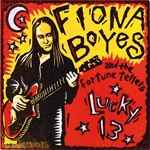 Buy from Amazon Lucky 13
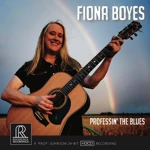 Buy from Amazon Professin' The Blues
 Buy from Amazon Voodoo in the Shadows
 Buy from Amazon Ramblified