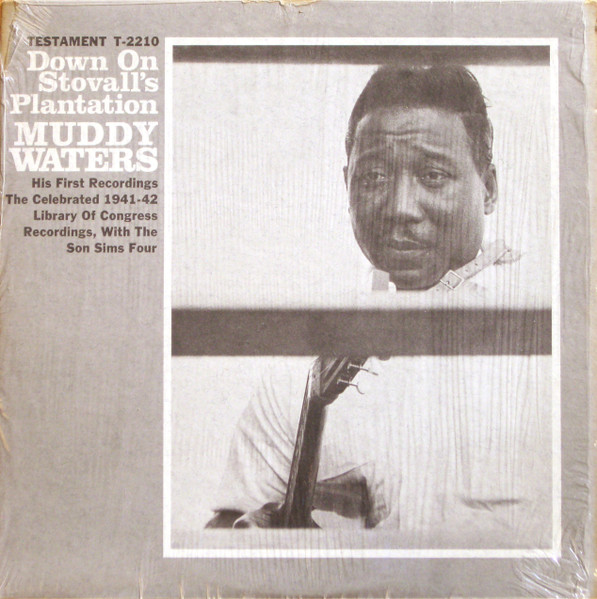
Down on Stovall's Plantation is a profoundly important album by Muddy Waters (born McKinley Morganfield, April 4, 1913 – April 30, 1983), released on the Testament Records label (T-2210) in 1966. The album compiles field recordings made by Alan Lomax and John Work III in 1941 and 1942 at Stovall's Plantation in Coahoma County, Mississippi, where the young Muddy Waters lived and worked as a sharecropper and tractor driver.
These recordings represent the earliest known documentation of Muddy Waters' music—captured years before his migration to Chicago and his transformation into the "father of Chicago blues." They are among the most historically significant recordings in the entire history of American music, documenting the moment when one of the most important figures in twentieth-century popular music was still an unknown Delta sharecropper playing for his own community.
Background and Context
Stovall's Plantation
Stovall's Plantation (also known as the Stovall Farms or Howard Stovall Plantation) was a large agricultural estate located near Clarksdale, Coahoma County, Mississippi, in the heart of the Mississippi Delta. The plantation was owned by the Stovall family and employed numerous African American sharecroppers and laborers who lived in small cabins on the property.
Muddy Waters had been brought to Stovall's as a young child by his grandmother, Della Grant, after his mother's death. He grew up on the plantation, working in the cotton fields and eventually becoming a tractor driver—a relatively skilled and prestigious position by plantation standards. Throughout his years at Stovall's, he also developed his skills as a musician, learning from local blues artists and from the recordings of Son House, Robert Johnson, and Charley Patton that circulated in the Delta.
By the early 1940s, Waters was well known in the local community as a musician. He played at juke joints, fish fries, house parties, and social gatherings throughout the Clarksdale area. He also ran a small juke joint of his own on the plantation, where he sold bootleg whiskey and provided musical entertainment on weekends.
The Fisk University–Library of Congress Study
The recordings that make up Down on Stovall's Plantation were made as part of a collaborative research project between the Library of Congress and Fisk University (a historically Black university in Nashville, Tennessee). The project was designed to study the musical culture of Coahoma County, Mississippi, as a representative example of African American folk music in the Deep South.
The two principal researchers were:
-
Alan Lomax (1915–2002): The son of folklorist John A. Lomax, Alan Lomax was one of the most important figures in the documentation and preservation of American folk music. Working for the Library of Congress's Archive of American Folk Song, he traveled throughout the American South (and later around the world) recording traditional musicians in their home environments. His earlier work had included the documentation of Lead Belly and recordings at the Mississippi State Penitentiary at Parchman Farm.
-
John Wesley Work III (1901–1967): A professor of music at Fisk University, Work was an accomplished composer, choral director, and scholar of African American folk music. He was a member of a distinguished family of musicians and scholars—his grandfather, John Wesley Work I, and his father, John Wesley Work II, had both been associated with the Fisk Jubilee Singers and the study of African American music.
The Lomax-Work collaboration was not without tension. There were disputes over credit, methodology, and the direction of the research that have been extensively documented by scholars. Lomax tended to dominate the public narrative of the project, and Work's contributions were for many years inadequately recognized. Recent scholarship has worked to restore Work's rightful place in the history of the project.
The 1941 Recording Session
In August 1941, Alan Lomax traveled to Coahoma County with portable recording equipment provided by the Library of Congress. He was directed to Muddy Waters by local informants who identified the young musician as one of the best in the area. Lomax visited Waters at his cabin on Stovall's Plantation and recorded him playing and singing a variety of songs.
The equipment used was a portable disc-cutting machine that recorded directly onto acetate discs—a technology that was standard for field recording in this era. The recordings were made in Waters' cabin and possibly outdoors on the plantation grounds, capturing the ambient sounds of the rural environment along with the music.
Waters later recalled the experience in numerous interviews. He described being initially nervous but quickly warming to the situation. He was particularly thrilled when Lomax played back the recordings for him—it was the first time Waters had heard his own voice on a recording. He later said that hearing himself on the playback gave him the confidence to believe he could be a professional musician: "I thought I sounded like a man who could make records," he recalled.
The 1942 Recording Session
Lomax returned to Stovall's Plantation in July 1942 to conduct additional recording sessions with Waters and other local musicians. These sessions captured further performances by Waters, both solo and with accompanists, expanding the documentation of his repertoire and musical style.
The 1942 sessions also included recordings of other musicians in the area, contributing to the broader Coahoma County study. However, it was the Waters recordings that would prove to be the most historically significant material captured during the project.
The Path to Release
The original acetate recordings were deposited in the Archive of American Folk Song at the Library of Congress, where they remained largely inaccessible to the general public for over two decades. During this time, Muddy Waters migrated to Chicago (in 1943), began recording for commercial labels (initially for Columbia in 1946, then for Aristocrat/Chess Records beginning in 1947), and became one of the most important and influential blues artists in the world.
In the mid-1960s, with the folk and blues revival in full swing and Muddy Waters established as a major figure, interest in his early recordings grew. Pete Welding, a blues scholar, critic, and the founder of Testament Records, obtained permission to release the Library of Congress recordings commercially. The result was Down on Stovall's Plantation, released in 1966.
The Sessions
Recording Details
- First Session: August 31, 1941, Stovall's Plantation, Coahoma County, Mississippi
- Second Session: July 1942, Stovall's Plantation, Coahoma County, Mississippi
- Recording Engineer/Producer: Alan Lomax (with John Work III participating in the research project)
- Equipment: Portable acetate disc-cutting machine (Library of Congress field recording equipment)
- Location: Muddy Waters' cabin on Stovall's Plantation and surrounding areas
- Original Format: Acetate discs
Production
The recordings were made by Alan Lomax in his capacity as a field researcher for the Library of Congress. There was no "producer" in the conventional record-industry sense—these were documentary field recordings, not commercial studio sessions. Lomax's role was to set up the recording equipment, identify and select the performers, and guide the recording process.
Lomax's approach was that of a documentarian rather than a commercial producer. He sought to capture the music as it was naturally performed, without attempting to alter, arrange, or "improve" it. The recordings have the raw, unmediated quality of field documentation—ambient sounds, room noise, and the natural acoustics of the performance space are all part of the sonic picture.
For the 1966 Testament release, Pete Welding served as the album's producer, selecting and sequencing the tracks, writing liner notes, and overseeing the transfer of the original acetate recordings to the LP format. Welding was a highly knowledgeable blues scholar and journalist who wrote extensively for Down Beat magazine and other publications. His liner notes provided essential context for the recordings and helped establish their historical importance.
Musicians
The musicians on the album include:
- Muddy Waters (McKinley Morganfield) – vocals, acoustic guitar (all tracks)
- Son Simms (also spelled Son Sims) – fiddle (on selected tracks)
- Louis Ford – mandolin (on selected tracks)
- Percy Thomas – second guitar (on selected tracks; sometimes listed as Charles Berry on certain discographies, though the identification is debated)
- Henry "Son" Simms – the fiddler who was part of Muddy Waters' string band
The group configuration on certain tracks represents Muddy Waters' string band, a small ensemble that played for local social functions. The string band format—combining guitar, fiddle, and mandolin—was a common performance configuration in the rural South, used for dances, picnics, and social gatherings. This instrumentation reflects the pre-electric, pre-Chicago chapter of Waters' musical life, when his music was rooted in the acoustic string band tradition of the Delta.
On other tracks, Waters performs solo—just his voice and acoustic guitar, sometimes with a bottleneck slide (a glass or metal slide worn on the finger and used to fret the guitar strings, producing the characteristic sliding, moaning sound of Delta blues guitar).
Musical Style and Context
The Delta Blues Tradition
The music on Down on Stovall's Plantation is rooted in the Mississippi Delta blues tradition—one of the most important and influential regional styles in American music. The Delta blues was characterized by:
-
Intense, emotional vocal delivery: Delta blues singers typically sang with raw power and emotional directness, using techniques like melisma, falsetto, moaning, and shouting.
-
Slide guitar: The use of a bottleneck or metal slide on the guitar strings was a hallmark of Delta blues, producing a distinctive vocal-like quality that could moan, cry, and wail in sympathy with the singer's voice.
-
Driving rhythmic patterns: Delta blues guitar often featured insistent, repetitive rhythmic patterns that created a hypnotic, trance-like quality.
-
Modal and drone-based harmony: Much Delta blues was built on simple harmonic structures, often hovering around a single chord or drone, rather than following the more harmonically elaborate patterns of other blues styles.
-
Connection to older African American musical traditions: The Delta blues drew on field hollers, work songs, spirituals, and other forms that connected it to the deepest roots of African American musical expression.
Muddy Waters' Early Style
The recordings on Down on Stovall's Plantation reveal a young Muddy Waters who is already a formidable musician but whose style is significantly different from the electrified Chicago blues for which he would become famous. Key characteristics include:
-
Acoustic guitar: Waters plays acoustic guitar throughout, often using a bottleneck slide. The acoustic tone is warm and resonant, with a percussive attack that suggests the influence of Son House and Robert Johnson.
-
Vocal power: Even at this early stage, Waters' voice is commanding and expressive, with the depth and authority that would characterize his later work. His vocal style shows the influence of Son House, whom Waters knew personally and from whom he learned directly.
-
Repertoire: Waters' repertoire at this point includes both original compositions and versions of songs associated with Robert Johnson, Son House, and other Delta blues artists. The line between "original" and "traditional" is blurred, as was typical in the folk blues tradition.
-
String band format: The tracks featuring the string band reveal a social music-making context that would be left behind when Waters moved to Chicago. The string band format is communal and dance-oriented, reflecting the function of music in the rural Delta community.
Track-by-Track Breakdown
The following analysis covers the tracks on Down on Stovall's Plantation as released on Testament Records. Track listings may vary slightly across different pressings and reissues.
1. "Burr Clover Farm Blues"
Songwriter: McKinley Morganfield (Muddy Waters)
Recorded: 1941
Personnel: Muddy Waters – vocal, acoustic guitar
Details: The album opens with a song that directly addresses the agricultural context of Waters' daily life on Stovall's Plantation. "Burr Clover Farm Blues" references the burr clover plant, a legume used as a cover crop and for livestock forage in the Mississippi Delta. The song grounds the listener immediately in the physical reality of plantation life—the land, the work, the cycles of planting and harvest that governed the sharecropper's existence.
Waters performs solo on this track, his acoustic guitar providing both rhythmic accompaniment and melodic commentary. The guitar work is confident and assured, with a strong rhythmic drive that suggests the physical labor described in the lyrics. His vocal delivery is direct and personal, singing about what he knows from firsthand experience.
The song is significant as an example of blues rooted in the specific details of rural working life. Unlike the more generalized romantic and emotional themes that dominate commercial blues, "Burr Clover Farm Blues" connects the music to the economic and agricultural realities of the Delta. It is a reminder that the blues was not just an art form but a functional music embedded in the daily lives of the people who created it.
2. "Country Blues"
Songwriter: McKinley Morganfield (Muddy Waters), based on traditional Delta blues patterns and showing the influence of Robert Johnson's "Walkin' Blues" and Son House's performances
Recorded: August 31, 1941
Personnel: Muddy Waters – vocal, acoustic guitar (with slide)
Details: "Country Blues" is one of the most important and widely discussed tracks on the album. It is the song that Alan Lomax recorded first during the August 1941 session, and it captures Waters performing in the deep Delta blues style that he had absorbed from Son House, Robert Johnson, and other local masters.
The song is built on a traditional Delta blues framework, with Waters' slide guitar producing the characteristic moaning, vocal-like tones of the bottleneck style. The relationship to Robert Johnson's "Walkin' Blues" is evident in the melodic and harmonic structure, though Waters' version is not a note-for-note copy but rather a personal interpretation of shared traditional material. Son House's influence is also strongly present in the vocal delivery—the raw, powerful, slightly rough-edged singing that House was known for.
Waters' slide guitar work on this track is remarkable for its expressiveness and technical assurance. The slide produces long, sustained tones that cry and moan between the vocal phrases, creating a dialogue between voice and instrument that is one of the hallmarks of the Delta blues style. The rhythmic foundation is steady and driving, with Waters' right hand maintaining a percussive pattern on the guitar body and strings.
This recording was the one that most impressed Lomax and that would later be cited as evidence of Waters' extraordinary talent. When Waters heard the playback of this recording, it was a transformative moment—the first time he had heard his own music reproduced mechanically, and the experience that convinced him he had the ability to make records professionally.
"Country Blues" would later serve as the foundation for Waters' first commercial recording, "I Can't Be Satisfied," recorded for Aristocrat Records in 1948 in Chicago. The transformation of this acoustic Delta blues into an electrified Chicago classic represents one of the most important evolutionary moments in American popular music.
3. "I Be's Troubled"
Songwriter: McKinley Morganfield (Muddy Waters)
Recorded: August 31, 1941
Personnel: Muddy Waters – vocal, acoustic guitar
Details: "I Be's Troubled" is another of the landmark recordings from the 1941 session. The song is a slow, deeply personal blues expressing emotional turmoil and restlessness. The lyrics convey a sense of dissatisfaction and wanderlust—the narrator is troubled, unable to settle, driven by forces he cannot fully articulate or control.
The performance is intensely intimate, with Waters' voice and guitar creating a private emotional world. The guitar work is sparse and deliberate, with each note carefully placed for maximum emotional impact. The vocal delivery is raw and unguarded, with a vulnerability that is deeply affecting.
Like "Country Blues," "I Be's Troubled" would be reworked for Waters' early commercial recordings. It became the basis for "I Feel Like Going Home," the B-side of "I Can't Be Satisfied" in 1948—the double-sided hit that launched Waters' career as a recording artist in Chicago. The comparison between the 1941 field recording and the 1948 commercial recording reveals the enormous transformation that Waters underwent in the intervening years, as he adapted his acoustic Delta style to the electric, urban context of postwar Chicago.
The song's emotional directness and musical simplicity are among its greatest strengths. There is no ornamentation, no artifice—just a man singing about his troubled state of mind with a clarity and force that transcends its humble origins.
4. "You Got to Take Sick and Die Some of These Days"
Songwriter: Traditional / arranged by McKinley Morganfield (Muddy Waters)
Recorded: 1941 or 1942
Personnel: Muddy Waters – vocal, acoustic guitar
Details: This track addresses mortality with the blunt directness characteristic of the blues tradition. The title itself is a statement of inescapable fact—you have to get sick and die eventually, no matter who you are. The song belongs to a tradition of blues and spirituals that confront death without flinching, acknowledging its inevitability while finding a kind of grim comfort or dark humor in the universality of the experience.
The performance has a somber, reflective quality, with Waters' vocal delivery conveying a mature acceptance of mortality that is striking in a man still in his late twenties. The guitar accompaniment is restrained and atmospheric, supporting the meditative mood of the lyrics.
The song draws on the shared repertoire of traditional blues and spiritual material that circulated in the Delta. Similar sentiments and even similar titles appear in the work of other Delta blues artists, reflecting the communal nature of the tradition. Waters' version is distinctive for the quiet intensity of his delivery and the clarity of his musical vision.
5. "You're Gonna Miss Me When I'm Dead and Gone"
Songwriter: McKinley Morganfield (Muddy Waters), based on traditional themes
Recorded: 1941 or 1942
Personnel: Muddy Waters – vocal, acoustic guitar
Details: This song continues the mortality theme of the previous track but shifts the focus from the inevitability of death to the consequences of loss. The narrator addresses a lover (or perhaps a broader audience), warning that they will miss him when he is gone. The implication is that the narrator's value is not fully appreciated in life and will only be recognized after death—a theme that resonates powerfully given Waters' status at the time of recording as an unknown sharecropper whose genius was unrecognized by the wider world.
The vocal performance is assertive and slightly defiant, with Waters projecting confidence in his own worth even as he contemplates his mortality. The guitar work complements the vocal with melodic figures that reinforce the song's emotional content.
The prophetic quality of the title is impossible to ignore in retrospect. Muddy Waters would indeed become one of the most missed and mourned figures in American music after his death in 1983, and these early recordings—captured decades before his fame—serve as evidence of the talent that was always present, waiting to be recognized.
6. "Rosalie"
Songwriter: McKinley Morganfield (Muddy Waters)
Recorded: 1942
Personnel: Muddy Waters – vocal, acoustic guitar; Son Simms – fiddle
Details: "Rosalie" is a song addressed to a named woman, a common blues convention. The performance features the addition of Son Simms on fiddle, marking one of the tracks that document Waters' string band configuration. Simms was an older musician who played fiddle in the local string band tradition, and his participation provides a glimpse into the communal music-making practices of the Delta.
The interplay between Waters' guitar and Simms' fiddle creates a rich, textured sound that is quite different from the solo recordings on the album. The fiddle adds a melodic dimension that complements and sometimes contrasts with the guitar, creating a dialogue between the two instruments. The rhythmic feel is looser and more dance-oriented than the solo tracks, reflecting the string band's function as dance music for social gatherings.
This track is historically valuable as documentation of a performance tradition—the African American string band—that was already declining by the early 1940s and that would be largely swept away by the postwar electrification of Black popular music. The string band format, which combined elements of African American and European American folk traditions, was a significant but often overlooked chapter in the history of American music.
7. "Ramblin' Kid Blues"
Songwriter: McKinley Morganfield (Muddy Waters)
Recorded: 1941 or 1942
Personnel: Muddy Waters – vocal, acoustic guitar
Details: "Ramblin' Kid Blues" addresses the theme of restless wandering—the narrator identifies himself as a rambler, a figure who cannot settle in one place or with one person. The rambling man is one of the archetypal figures of the blues, representing both freedom and rootlessness, adventure and alienation.
The theme had particular resonance for Waters, who would soon leave Stovall's Plantation for Chicago—an act of rambling on a grand scale that would transform both his life and the history of American music. Whether the song reflects a specific intention to leave or a more general restlessness is unclear, but the thematic connection to Waters' imminent migration gives the song an additional layer of significance.
The guitar work is rhythmically driving and forward-moving, suggesting the physical motion evoked by the lyrics. The vocal delivery is energetic and assertive, projecting the confidence and independence of the rambling figure. The performance has a youthful vitality that captures Waters at a moment of potential—on the verge of a journey that would change everything.
8. "Joe Turner"
Songwriter: Traditional (one of the oldest and most widely distributed blues and folk songs in the African American tradition)
Recorded: 1941 or 1942
Personnel: Muddy Waters – vocal, acoustic guitar; possibly with string band accompaniment
Details: "Joe Turner" (also known as "Joe Turner Blues" or "They Tell Me Joe Turner's Come and Gone") is one of the oldest songs in the African American blues tradition, with roots stretching back to the late nineteenth century. The historical "Joe Turner" (or "Joe Turney") is believed to have been Joe Turney, a law enforcement officer in Memphis, Tennessee, in the 1890s who transported prisoners from Memphis to the state penitentiary in Nashville. His arrival in a community to collect prisoners was a dreaded event, and the song expresses the sorrow and fear associated with the loss of men taken away by Turney.
The song evolved over time into a general expression of loss and separation, with the "Joe Turner" figure becoming a symbol of any force that takes loved ones away. The song was recorded by numerous blues artists, and its influence extends far beyond the blues—it inspired August Wilson's play Joe Turner's Come and Gone (1986), part of his celebrated Pittsburgh Cycle.
Waters' performance of this ancient song connects him to the deepest roots of the African American musical tradition. His version is personal and emotionally direct, investing the traditional material with his own vocal authority and guitar technique. The inclusion of this song in his repertoire demonstrates the continuity between the oldest layers of the blues tradition and the generation of artists—like Waters—who would carry that tradition into the modern era.
9. "Pearlie May Blues"
Songwriter: McKinley Morganfield (Muddy Waters)
Recorded: 1941 or 1942
Personnel: Muddy Waters – vocal, acoustic guitar
Details: "Pearlie May Blues" is another song addressed to a named woman—Pearlie May, who may refer to a real person in Waters' life or community. The song is a personal blues expressing romantic feelings, delivered with the intimacy and directness that characterize Waters' early acoustic work.
The guitar work features Waters' characteristic combination of rhythmic drive and melodic expressiveness, with slide passages that add emotional depth. The vocal delivery is warm and personal, creating a sense of private communication between the singer and his subject.
The song provides another example of the deeply personal, community-rooted nature of Waters' early music. These were songs written for and about specific people and places, rooted in the daily life of the Delta community. The transformation of this intimate, local art into a globally influential musical force is one of the remarkable stories of twentieth-century culture.
10. "Burr Clover Blues"
Songwriter: McKinley Morganfield (Muddy Waters)
Recorded: 1941 or 1942
Personnel: Muddy Waters – vocal, acoustic guitar; Son Simms – fiddle; possibly other string band members
Details: This track is a variant of or companion piece to "Burr Clover Farm Blues" (Track 1), returning to the agricultural imagery that connects the music to the daily reality of plantation life. The presence of the string band (including Son Simms on fiddle) gives this version a different character from the solo performance, with the ensemble arrangement creating a fuller, more communal sound.
The fiddle adds a plaintive, keening quality to the performance, complementing Waters' vocal and guitar. The interaction between the instruments suggests a well-practiced musical partnership, with each player responding to and building on the others' contributions.
The agricultural references in the lyrics—the burr clover, the farm work, the cycles of the seasons—ground the music in the specific material reality of life on Stovall's Plantation. These details are a reminder that the blues was not an abstract art form but a music deeply connected to the physical labor, economic conditions, and natural environment of the rural South.
11. "32-20 Blues"
Songwriter: Robert Johnson (original version), arranged and adapted by McKinley Morganfield (Muddy Waters)
Recorded: 1941 or 1942
Personnel: Muddy Waters – vocal, acoustic guitar (with slide)
Details: "32-20 Blues" is one of the tracks on the album most directly linked to the influence of Robert Johnson, the legendary Delta blues artist who had died in 1938, just a few years before these recordings were made. Johnson's "32-20 Blues" (recorded in 1936) was itself based on earlier versions by Skip James ("22-20 Blues," 1931) and others. The title refers to a .32-20 Winchester cartridge, a popular caliber for revolvers and rifles in the early twentieth century. The song uses the gun as a symbol of masculine power and retribution in the context of a troubled romantic relationship.
Waters' version demonstrates his deep engagement with Johnson's music. He had listened intently to Johnson's recordings and had also seen Johnson perform live in the Delta—an experience he later described as profoundly influential. Waters' interpretation of "32-20 Blues" is not a slavish imitation of Johnson but a personal adaptation, filtered through Waters' own vocal and guitar style.
The slide guitar work on this track is particularly notable, with Waters producing the kind of singing, sustained tones that Johnson himself had mastered. The vocal delivery is intense and emotionally charged, conveying the threat and desperation of the lyrics with convincing force.
This track is historically important as evidence of the direct transmission of repertoire and style from Robert Johnson to Muddy Waters—a lineage that would ultimately connect the acoustic Delta blues of the 1930s to the electrified Chicago blues of the 1950s and, through that, to rock and roll.
12. "You Got to Take Sick and Die Some of These Days" (alternate take or variant)
Songwriter: Traditional / arranged by McKinley Morganfield (Muddy Waters)
Recorded: 1941 or 1942
Personnel: Muddy Waters – vocal, acoustic guitar; possibly with string band accompaniment
Details: Some pressings of the album include a second version or variant of "You Got to Take Sick and Die Some of These Days," reflecting the field recording practice of capturing multiple performances of the same song. The variation between takes provides insight into Waters' approach to his material—the songs were not fixed compositions but living, flexible frameworks that could be varied with each performance.
The presence of alternate takes is a common feature of field recordings and provides valuable information about the performer's creative process. Comparing different versions of the same song reveals which elements were essential and fixed (the core lyrical and melodic ideas) and which were variable and spontaneous (specific phrasing, guitar figures, and improvised passages).
Buy The Album
 Buy from Amazon Reissue (ignore the incongruous cover the music is still good)
Significance and Legacy
Historical Importance
Down on Stovall's Plantation is one of the most historically significant blues recordings ever released, for several reasons:
1. Documentation of Muddy Waters' Origins
The album provides an irreplaceable document of Muddy Waters' music before he migrated to Chicago and transformed himself into the electrified, band-leading figure who would reshape American popular music. Without these recordings, the early chapter of Waters' artistic development would be almost entirely undocumented. They allow listeners and scholars to hear the raw material from which the Chicago blues would be forged.
2. The Acoustic-to-Electric Transition
The recordings capture a pivotal moment in the history of American music—the last years of the acoustic Delta blues tradition before electrification and urbanization transformed it into something new. By comparing the songs on this album with Waters' later Chicago recordings (particularly "I Can't Be Satisfied" and "I Feel Like Going Home," which are reworkings of "Country Blues" and "I Be's Troubled"), we can trace the transformation of the Delta blues into the Chicago blues with remarkable precision.
3. Documentation of Delta Musical Culture
Beyond Waters himself, the recordings document a broader musical culture—the string band tradition, the shared repertoire of the Delta community, the function of music in social life on the plantation. This documentation has been invaluable to scholars of African American music, Southern culture, and American social history.
4. The Lomax-Work Research Project
The recordings are a product of one of the most important research projects in the history of American ethnomusicology—the Fisk University–Library of Congress Coahoma County study. They demonstrate the extraordinary value of systematic field documentation and the potential for such work to capture artistic genius that might otherwise go unrecorded.
Musical Significance
The Sound of the Delta
Down on Stovall's Plantation captures the sound of the Mississippi Delta blues in its natural habitat—not in a recording studio, not on a concert stage, but in the cabins and juke joints where the music was created and consumed. The ambient sounds, the rough acoustic quality, and the informal performance context all contribute to a sonic document that is as much about place and culture as it is about music.
Slide Guitar Mastery
The album demonstrates that Waters was already a formidable slide guitarist by his late twenties, with a command of the bottleneck technique that would later become one of the defining sounds of the Chicago blues. His slide work on tracks like "Country Blues" and "32-20 Blues" is remarkable for its expressiveness and technical assurance.
Vocal Power
Waters' voice on these recordings is already distinctive and commanding—the same powerful instrument that would later deliver classics like "Hoochie Coochie Man," "Got My Mojo Working," and "Mannish Boy." The continuity of vocal style between these early recordings and his later work underscores the essential authenticity of his artistry.
Influence
The recordings on Down on Stovall's Plantation have influenced musicians and scholars in numerous ways:
Direct Musical Influence
While the album was not released until 1966—by which time Waters had long since established himself as a major recording artist—the material has been studied and absorbed by subsequent generations of blues, rock, and folk musicians. The album has been particularly influential among:
- Blues revivalists seeking to understand the roots of the tradition
- Slide guitarists studying the Delta bottleneck style
- Folk musicians interested in the acoustic blues tradition
- Rock musicians tracing the lineage from Delta blues through Chicago blues to rock and roll
Artists influenced by Waters' early acoustic style (as documented on this album and related recordings) include:
- Bonnie Raitt – whose slide guitar work draws on the Delta tradition
- Ry Cooder – who has extensively explored pre-war blues styles
- Eric Clapton – who recorded Me and Mr. Johnson (2004) exploring Robert Johnson's repertoire, the same tradition from which Waters drew
- The Rolling Stones – who took their name from a Muddy Waters song and whose interest in his music extended to his earliest recordings
- Jack White – who has expressed deep admiration for the raw quality of pre-war blues recordings
- Taj Mahal – whose exploration of acoustic blues draws on the Delta tradition
- Corey Harris, Keb' Mo', and other contemporary blues artists who have engaged with the acoustic Delta tradition
Scholarly Influence
The recordings have been extensively analyzed by music scholars, historians, and cultural critics. They have been central to academic discussions of:
- The development of the blues as a musical form
- The relationship between folk and commercial music
- The Great Migration and its cultural implications
- The role of field recording in documenting and preserving traditional music
- The ethics and politics of cross-racial cultural documentation (particularly regarding the Lomax-Work dynamic)
- The transformation of rural folk traditions into urban popular music
The Testament Records Release
The 1966 release on Testament Records made these recordings available to the public for the first time, coinciding with the peak of the folk and blues revival. The timing was significant—audiences who had become interested in blues and folk music through the revival were hungry for historical documentation, and the album satisfied that hunger while also generating new appreciation for Waters' artistry.
Pete Welding's production and liner notes provided essential context for the recordings, helping listeners understand their historical significance and their place in the broader narrative of American music. The Testament release established the recordings as canonical documents of the blues tradition.
Subsequent Reissues
The material from Down on Stovall's Plantation has been reissued numerous times in various formats:
-
The Complete Plantation Recordings (MCA/Chess, 1993): A comprehensive reissue that gathered all of the known Library of Congress recordings of Waters, including material not on the original Testament release, with extensive liner notes by Robert Palmer. This Grammy-nominated collection became the definitive presentation of the material.
-
Various compilation and anthology appearances: Individual tracks have appeared on numerous blues compilations and historical anthologies.
-
Digital releases: The recordings are available on streaming platforms and digital download services, ensuring their continued accessibility.
Cultural Legacy
Down on Stovall's Plantation has transcended its origins as a blues album to become a significant cultural document. It has been referenced and discussed in:
- Robert Palmer's landmark book Deep Blues (1981), which traces the history of the Delta blues tradition and devotes extensive attention to the Lomax-Waters encounter
- Alan Lomax's own writings and documentary work
- August Wilson's play Joe Turner's Come and Gone (1986), which draws on the same tradition documented in these recordings
- Martin Scorsese's PBS documentary series The Blues (2003)
- Numerous museum exhibitions, academic courses, and cultural programs devoted to the history of the blues and African American music
The album has become a touchstone for understanding the roots of modern American popular music. It demonstrates that the blues—and by extension, rock and roll, R&B, soul, funk, and hip-hop—emerged from the lived experience of African Americans in the rural South, from the specific conditions of plantation labor, sharecropping, racial oppression, and community resilience.
The Narrative of Discovery
The story surrounding the recordings—Alan Lomax's journey to the Delta, his "discovery" of the unknown sharecropper who would become one of the most important musicians of the twentieth century, Waters' transformative experience of hearing his own voice played back—has become one of the founding narratives of American music history. It is a story about the hidden reservoirs of genius in American life, about the role of documentation and technology in revealing that genius, and about the extraordinary journey from obscurity to global influence.
The narrative also raises important questions about power, credit, and cultural ownership. Lomax received the lion's share of public recognition for the "discovery" of Waters, while John Work III's contributions were long undervalued. Waters himself received no payment for the original recordings and had no control over their eventual release. These issues of credit and compensation reflect broader patterns in the history of African American music, where Black artists' work has often been documented, distributed, and profited from by white intermediaries.
Conclusion
Down on Stovall's Plantation is far more than a collection of early recordings by a future star. It is a document of profound cultural, historical, and musical significance—a window into a world that has largely disappeared, a portrait of an artist on the verge of transformation, and a testament to the extraordinary richness of the African American musical tradition.
The recordings capture Muddy Waters at the precise moment before everything changed—before the Great Migration, before electrification, before Chess Records, before the British Invasion bands that would carry his influence around the world. They reveal that the genius that would later express itself through amplified guitars, driving bands, and iconic recordings was already fully present in the cabin of a Mississippi sharecropper, waiting to be heard.
For anyone seeking to understand the roots of modern American popular music—the blues, rock and roll, R&B, and everything that flows from them—Down on Stovall's Plantation is essential, foundational listening. It is where the story begins.
Album Details Summary:
- Artist: Muddy Waters (McKinley Morganfield)
- Album: Down on Stovall's Plantation
- Label: Testament Records (T-2210)
- Recorded: August 31, 1941, and July 1942, Stovall's Plantation, Coahoma County, Mississippi
- Released: 1966
- Field Recordings by: Alan Lomax (Library of Congress) and John Work III (Fisk University)
- Album Producer: Pete Welding (Testament Records)
- Personnel: Muddy Waters (vocals, acoustic guitar, slide guitar), Son Simms (fiddle), Louis Ford (mandolin), Percy Thomas (guitar)
- Genre: Delta blues, country blues, field recordings, folk blues