Released on October 5, 1968, on Cadet Concept Records (a Chess subsidiary), Electric Mud stands as one of the most controversial and misunderstood albums in blues history. Conceived by Marshall Chess—son of Chess Records co-founder Leonard Chess—as a deliberate attempt to introduce Muddy Waters to the burgeoning rock and hippie audience, the album reimagined the King of Chicago blues through a psychedelic lens. While purists recoiled, the record sold an estimated 150,000 copies within six weeks of release and peaked at #127 on the Billboard 200—the first Muddy Waters album to chart on Billboard.
Recording Sessions & Production
The album was recorded in May 1968 at Ter-Mar Studios in Chicago (the "Mar" in the studio's name standing for Marshall Chess).
Marshall Chess served as the conceptual architect and producer. Then just 26 years old, he had grown up inside Chess Records and was acutely aware that Muddy's traditional blues singles were no longer reaching younger listeners enthralled by psychedelic rock. Marshall later explained his motivation: "I came up with the idea of Electric Mud to help Muddy make money. It wasn't to bastardize the blues. It was like a painting, and Muddy was going to be in the painting. It wasn't to change his sound, it was a way to get it to that market."
Charles Stepney—fresh from producing the psychedelic soul group Rotary Connection and arranging for Ramsey Lewis and the Dells—served as co-producer, arranger, and organist.
Gene Barge (tenor saxophonist and veteran Chess producer known as "Daddy G") rounded out the production team.
Muddy Waters himself was initially skeptical. According to Waters: "Quite naturally, I like a good-selling record. I was looking at it because I played for so many of these so-called hippies that I thought probably I could reach them."
Despite his reservations, he put in what many consider one of his most spirited studio performances. The sessions were mostly recorded live with few overdubs, capturing an off-the-cuff energy.
Muddy later dismissed the album as "dogshit" and complained that he couldn't perform the material live: "What the hell do you have a record for if you can't play the first time it's out?... If you've got to have big amplifiers and wah-wahs and equipment to make you guitar say different things, well, hell, you can't play no blues."
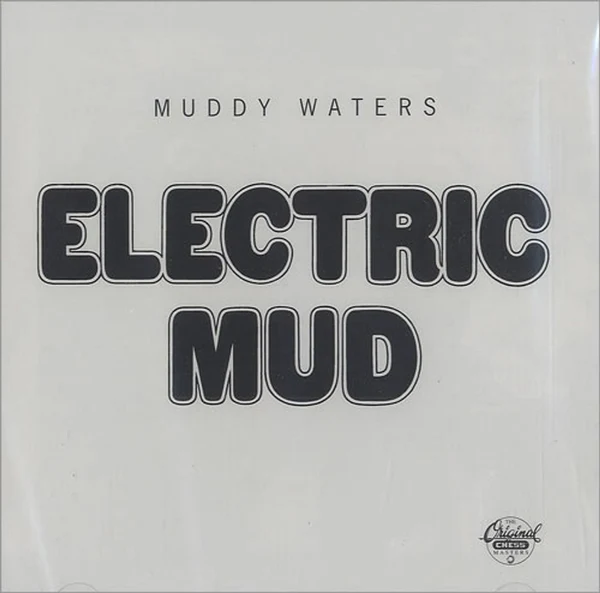
Stu Black engineered the sessions, while Abner Spector handled mixing. The stark white album cover (with black text) was designed by Bill Sharpe and Meire Murakami, with art direction by Vartan—a minimalist aesthetic that echoed the Beatles' White Album and the Stones' psychedelic period.
The Musicians
Marshall Chess deliberately assembled what he called "the hottest, most avant garde jazz rock guys in Chicago"—musicians drawn largely from Rotary Connection and the progressive Chicago jazz scene.
-
Muddy Waters — Vocals. The 55-year-old blues legend contributed only vocals (no guitar), adapting his phrasing to the unfamiliar psychedelic surroundings.
-
Pete Cosey — Guitar. A member of Sun Ra's Arkestra in 1968, Cosey would later become legendary for his work with Miles Davis's mid-1970s electric bands. His technique—encompassing distortion, wah-wah, alternative tunings, and feedback—was years ahead of its time.
-
Phil Upchurch — Guitar. A sought-after session guitarist fresh from jazz gigs with Stan Getz, Jack McDuff, Jimmy Smith, and Woody Herman. He would later play with Donny Hathaway and Michael Jackson.
-
Roland Faulkner — Guitar. A jazz guitarist who had played with Lionel Hampton and Sarah Vaughan, adding another layer of harmonic sophistication.
-
Charles Stepney — Organ, arranger, co-producer. The future Earth, Wind & Fire producer brought his psychedelic soul sensibilities to the arrangements, layering electric organ over the three-guitar attack.
-
Louis Satterfield — Bass. A Chess session regular who would later teach Verdine White of Earth, Wind & Fire to play bass.
-
Morris Jennings — Drums. The rhythmic anchor, recently active with Rotary Connection.
-
Gene Barge — Tenor saxophone. His horn contributions were deliberately restrained, adding textural color rather than solo flash.
The sheer density of guitarists meant barely half a second passed without one of them shredding incandescently, creating a thick, psychedelic wall of sound that often threatened to overwhelm Waters's vocal.
Track-by-Track Breakdown
Side One
1. "I Just Want to Make Love to You" (4:24)
Songwriter: Willie Dixon
Originally recorded by Waters in 1954, this Willie Dixon classic is transformed into a thundering psychedelic onslaught. Morris Jennings's thudding backbeat opens the track before Cosey's guitar erupts in raw, screaming distortion. The solo morphs from melodic phrases into a gigantic screeching feedback riff, growing louder and wilder until it reaches an intense, mind-bending groove on the brink of collapse.
Stepney's organ drones beneath the chaos, while Satterfield's bass snakes through the maelstrom. Waters's vocal is confident and commanding, riding atop the storm rather than being swallowed by it.
Songwriter: Willie Dixon
Originally recorded by Waters in 1954, this Willie Dixon classic is transformed into a thundering psychedelic onslaught. Morris Jennings's thudding backbeat opens the track before Cosey's guitar erupts in raw, screaming distortion. The solo morphs from melodic phrases into a gigantic screeching feedback riff, growing louder and wilder until it reaches an intense, mind-bending groove on the brink of collapse.
2. "I'm Your Hoochie Coochie Man" (4:48)
Songwriter: Willie Dixon
The Dixon-penned hoodoo anthem receives its most radical reinterpretation. The track incorporates free-jazz influences, with Gene Barge performing on concert harp (a psychedelic touch).
Wah-wah pedals are employed to maximum effect, and the guitar creates a liquidy, wave-like sound that washes over the verses. Muddy's vocals are mixed to seemingly come out of the speakers at the listener, with alternating lines panned left and right to create a disorienting, acid-like effect.
Despite the sonic chaos, Waters's voice still commands all attention.
Songwriter: Willie Dixon
The Dixon-penned hoodoo anthem receives its most radical reinterpretation. The track incorporates free-jazz influences, with Gene Barge performing on concert harp (a psychedelic touch).
3. "Let's Spend the Night Together" (3:17)
Songwriters: Mick Jagger & Keith Richards
In a deliberate nod to his British rock disciples, Waters covers the Rolling Stones' 1967 hit. The gesture was both a compliment to his biggest fans and a calculated move to connect with the youth market.
Waters transforms what could have been a cynical exercise into a believable, impassioned plea, delivering the vocals in a gospel-soul style with heavy influence from Cream's "Sunshine of Your Love."
The band turns it around so effectively it sounds as if Waters might have written it himself, with a big, mean-sounding back melody and soulful distorted guitar lines.
Songwriters: Mick Jagger & Keith Richards
In a deliberate nod to his British rock disciples, Waters covers the Rolling Stones' 1967 hit. The gesture was both a compliment to his biggest fans and a calculated move to connect with the youth market.
4. "She's All Right" (6:32)
Songwriter: McKinley Morganfield (Muddy Waters)
The longest track on the album, this Waters original opens with a trippy, disorienting passage where bass notes flutter up and sway back down, creating a seasick psychedelic effect before crashing into a wall of sound.
The track interpolates elements of The Temptations' "My Girl" within its framework.
At over six and a half minutes, it allows the three guitarists ample room for extended soloing and textural exploration, with Waters's voice serving as the anchor through the storm.
Songwriter: McKinley Morganfield (Muddy Waters)
The longest track on the album, this Waters original opens with a trippy, disorienting passage where bass notes flutter up and sway back down, creating a seasick psychedelic effect before crashing into a wall of sound.
Side Two
5. "I'm a Man (Mannish Boy)" (3:21)
Songwriter: McKinley Morganfield (Muddy Waters)
Waters's 1955 answer song to Bo Diddley's "I'm a Man" receives a funky, heavy reworking. On this version, Waters power-lifts the dense rhythms with a single yell and punches through the armor-plating with an emphatic "yeah" here and there.
The stop-time figure of the original is buried under layers of wah-wah guitar and organ, creating a proto-funk feel that anticipates 1970s black rock. The track demonstrates Waters's innate musicality—his ability to shape his voice around the sharp edges of the arrangement.
Songwriter: McKinley Morganfield (Muddy Waters)
Waters's 1955 answer song to Bo Diddley's "I'm a Man" receives a funky, heavy reworking. On this version, Waters power-lifts the dense rhythms with a single yell and punches through the armor-plating with an emphatic "yeah" here and there.
6. "Herbert Harper's Free Press News" (4:32)
Songwriters: Sidney Barnes & Robert Thurston
A previously unrecorded composition by Sidney Barnes (a member of Rotary Connection) and Robert Thurston. This track became legendary when Jimi Hendrix reportedly listened to it before every concert for inspiration during his own performance warm-ups.
The song's heavy, hypnotic groove and distorted guitar textures create a sound that critics have noted seems to anticipate hip-hop by three decades.
The droning, repetitive nature of the rhythm track, combined with Waters's projected vocal delivery, gives the track an almost proto-rap quality.
Songwriters: Sidney Barnes & Robert Thurston
A previously unrecorded composition by Sidney Barnes (a member of Rotary Connection) and Robert Thurston. This track became legendary when Jimi Hendrix reportedly listened to it before every concert for inspiration during his own performance warm-ups.
7. "Tom Cat" (4:02)
Songwriter: Charles Williams
Written by Charles Edward Williams—Muddy Waters's common-law stepson—this track showcases Waters's skill in shaping his voice around the sharp edges of the arrangement.
The song slinks along with a feline, predatory groove, Satterfield's bass prowling beneath the surface while the guitars scratch and claw. It's one of the moments where the psychedelic setting and Waters's persona align most naturally.
Songwriter: Charles Williams
Written by Charles Edward Williams—Muddy Waters's common-law stepson—this track showcases Waters's skill in shaping his voice around the sharp edges of the arrangement.
8. "Same Thing" (5:44)
Songwriter: Willie Dixon
The album closes with another Willie Dixon composition, stretched to nearly six minutes of slow-burning psychedelic blues. The track allows the ensemble to stretch out, with Stepney's organ swirling around the three-guitar attack and Barge's saxophone adding mournful color. Waters's vocal is gritty and dominant, his voice sounding as imperious as ever—gritty, sexually charged, and commanding.
The extended length gives the musicians space to build tension through dynamics, with the rhythm section locking into a hypnotic, loping groove that carries Waters to the album's conclusion.
Songwriter: Willie Dixon
The album closes with another Willie Dixon composition, stretched to nearly six minutes of slow-burning psychedelic blues. The track allows the ensemble to stretch out, with Stepney's organ swirling around the three-guitar attack and Barge's saxophone adding mournful color. Waters's vocal is gritty and dominant, his voice sounding as imperious as ever—gritty, sexually charged, and commanding.
Buy The Album
Critical Reception & Legacy
Electric Mud was met with immediate hostility from blues purists. In the November 9, 1968 issue of Rolling Stone, critic Pete Welding wrote that the album "does great disservice to one of the blues' most important innovators, and prostitutes the contemporary styles to which his pioneering efforts have led."
All Music Guide later called it "what could probably be considered the nadir of Muddy Waters' career."
Yet the album accomplished its commercial mission. It sold between 150,000 and 250,000 copies—extraordinary numbers for a blues album in 1968—and introduced Waters to a new generation of rock listeners who traced the Rolling Stones and Cream back to their source.
Perhaps more surprisingly, Electric Mud found a second life in hip-hop. Chuck D of Public Enemy hailed it as a brilliant record and an early influence, stating: "To me it's a brilliant record. I've played it about a thousand times. The voice and character of Muddy Waters stand above the new music. Muddy's vocals project. That's what created a hook for me to get into it."
Chuck D even led a reunion performance by the original session players (rechristened "The Electric MudKats") with hip-hop elements added, documented in Martin Scorsese's The Blues documentary series.
Today, Electric Mud is recognized not as a betrayal of the blues but as a fascinating, if flawed, experiment—an attempt by a 55-year-old blues master to communicate with a youth culture that had already borrowed heavily from his legacy. It remains a testament to Marshall Chess's commercial instincts, Charles Stepney's visionary arrangements, and above all, Muddy Waters's indomitable voice, which cuts through the psychedelic haze with undiminished authority.