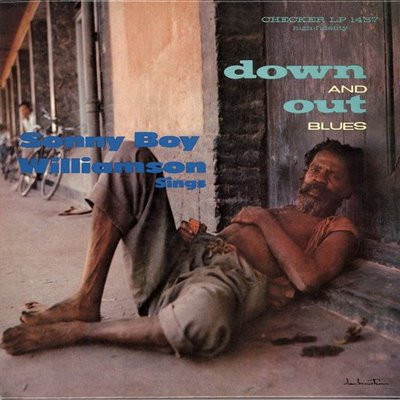
Released in 1959 on Checker Records (catalog no. LP-1437, with stereo issue LPS-1437), Down and Out Blues is the first LP by Sonny Boy Williamson II (Aleck "Rice" Miller)—one of the most original and influential figures in blues history. Rather than a studio album recorded in a single block of sessions, it is a compilation of twelve sides drawn from his first six recording dates for Chess's Checker subsidiary, spanning from August 1955 to March 1958. The album was inducted into the Blues Hall of Fame in 2007 and won a W.C. Handy Award for Vintage/Reissue Album (US) in 1988.
Recording Sessions & Production
All tracks were recorded at Chess Studios in Chicago. The album was produced by Leonard Chess, Phil Chess, and Willie Dixon, with engineering by the Chess house team.
The iconic album cover features a stark photograph of a homeless person by Don Bronstein, while the liner notes were written by the legendary Chicago radio personality and author Studs Terkel, who had previously written Giants of Jazz.
The sessions span nearly three years and represent Williamson's evolution from a Mississippi Delta radio personality to a defining voice of Chicago blues. Unlike many of his Chess contemporaries, Williamson rarely utilized the label's house songwriter Willie Dixon for original material; instead, every composition on the album is credited solely to Sonny Boy Williamson himself.
The Musicians
Williamson was backed by an extraordinary rotating cast of Chicago blues royalty. The core rhythm section of Willie Dixon (bass) and Fred Below (drums) appears on every track, providing the unshakeable foundation over which Williamson's harmonica and vocals weave. The guitar and piano chairs rotate across sessions:
-
Sonny Boy Williamson II — Vocals, harmonica (all tracks)
-
Muddy Waters — Guitar (tracks 1, 3)
-
Jimmy Rogers — Guitar (tracks 1, 3)
-
Robert Lockwood Jr. — Guitar (tracks 2, 4–12). Robert Johnson's stepson and Williamson's longtime musical partner from their Arkansas days, Lockwood's jazzy, sophisticated guitar work perfectly complemented Williamson's rhythmic sense.
-
Luther Tucker — Guitar (tracks 2, 4–7, 9–12). A master of economical, tasteful accompaniment.
-
Eugene Pierson — Guitar (tracks 8, 9)
-
Otis Spann — Piano (tracks 1, 3, 6, 9–12). The Muddy Waters band pianist and one of the greatest blues piano players of all time.
-
Lafayette Leake — Piano (tracks 8, 9). A versatile pianist and organist who would later record with Chuck Berry and Bo Diddley.
Track-by-Track Breakdown
Side One
1. "Don't Start Me to Talkin'" (2:30)
Songwriter: Sonny Boy Williamson II
Recorded: August 12, 1955
Musicians: Sonny Boy Williamson (vocals, harmonica), Otis Spann (piano), Muddy Waters (guitar), Jimmy Rogers (guitar), Willie Dixon (bass), Fred Below (drums)
Williamson's debut single for Checker and his highest-charting R&B hit, reaching #3 on the Billboard R&B chart in 1955.
The track opens the album with the full Muddy Waters band in support, and the two-guitar interplay between Waters and Rogers—what Keith Richards would later call the "ancient art of guitar weaving"—creates a chugging, circular rhythmic bed. Williamson's harmonica enters with a piercing, declarative line, and his vocal delivery is conversational and sly, warning the neighborhood gossips: "I'm goin' down to Rosie's, stop at Fannie Mae's / Gonna tell Fannie what I heard her boyfriend say."
Songwriter: Sonny Boy Williamson II
Recorded: August 12, 1955
Musicians: Sonny Boy Williamson (vocals, harmonica), Otis Spann (piano), Muddy Waters (guitar), Jimmy Rogers (guitar), Willie Dixon (bass), Fred Below (drums)
Williamson's debut single for Checker and his highest-charting R&B hit, reaching #3 on the Billboard R&B chart in 1955.
2. "I Don't Know" (2:20)
Songwriter: Sonny Boy Williamson II
Recorded: February 8, 1957
Musicians: Sonny Boy Williamson (vocals, harmonica), Robert Lockwood Jr. (guitar), Luther Tucker (guitar), Willie Dixon (bass), Fred Below (drums)
The B-side to "Fattening Frogs for Snakes," this track features the Lockwood-Tucker guitar team without piano, creating a leaner, more guitar-driven texture. Williamson's vocal is playful and boastful, his harmonica darting in and out of the guitar lines with characteristic economy.
3. "All My Love in Vain" (2:45)
Songwriter: Sonny Boy Williamson II
Recorded: August 12, 1955
Musicians: Sonny Boy Williamson (vocals, harmonica), Otis Spann (piano), Muddy Waters (guitar), Jimmy Rogers (guitar), Willie Dixon (bass), Fred Below (drums)
The flip side to "Don't Start Me to Talkin'," recorded at the same landmark session. A slower, more melancholy blues that showcases the empathy between Williamson and the Muddy Waters band. Waters and Rogers again weave their guitars around Otis Spann's delicate piano fills, while Williamson's vocal conveys a resigned sadness.
4. "The Key (To Your Door)" (3:10)
Songwriter: Sonny Boy Williamson II
Recorded: August 7, 1956
Musicians: Sonny Boy Williamson (vocals, harmonica), Robert Lockwood Jr. (guitar), Luther Tucker (guitar), Willie Dixon (bass), Fred Below (drums)
Released as the B-side to "Keep It to Yourself" on Checker 847. The absence of piano on this session gives the Lockwood-Tucker guitar pairing more sonic space. The track is a mid-tempo shuffle with a slightly jazzy feel, Lockwood's sophisticated chording complementing Williamson's staccato harp bursts.
5. "Keep It to Yourself" (2:45)
Songwriter: Sonny Boy Williamson II
Recorded: August 7, 1956
Musicians: Sonny Boy Williamson (vocals, harmonica), Robert Lockwood Jr. (guitar), Luther Tucker (guitar), Willie Dixon (bass), Fred Below (drums)
The A-side of Checker 847, a shuffle with stop-time sections that demonstrate Williamson's mastery of rhythmic dynamics. The lyrics are classic Williamson—guarded, suspicious, and morally ambiguous: "You have a husband / I have a wife / And if you stop to talk about it we will mess up our lives."
6. "Dissatisfied" (2:40)
Songwriter: Sonny Boy Williamson II
Recorded: September 1, 1957
Musicians: Sonny Boy Williamson (vocals, harmonica), Otis Spann (piano), Robert Lockwood Jr. (guitar), Luther Tucker (guitar), Willie Dixon (bass), Fred Below (drums)
The A-side of Checker 910 (with "Cross My Heart" as the B-side). Otis Spann returns to the piano bench for this session, adding his signature rolling piano to the Lockwood-Tucker guitar front line. Williamson's vocal is world-weary and edged with paranoia, a mood he cultivated perhaps better than any other blues singer.
Side Two
7. "Fattening Frogs for Snakes" (2:16)
Songwriter: Sonny Boy Williamson II
Recorded: February 8, 1957
Musicians: Sonny Boy Williamson (vocals, harmonica), Robert Lockwood Jr. (guitar), Luther Tucker (guitar), Willie Dixon (bass), Fred Below (drums)
Perhaps Williamson's most famous and enigmatic title. The phrase derives from an old American proverb about putting energy into something only to have someone else reap the benefits—spending ages fattening up a frog only to have a snake slip in and eat it.
In Williamson's telling, the frog represents his woman and the snake a predatory rival. The track is a brash, bouncy affair with Williamson's yelping harp setting the tone.
Songwriter: Sonny Boy Williamson II
Recorded: February 8, 1957
Musicians: Sonny Boy Williamson (vocals, harmonica), Robert Lockwood Jr. (guitar), Luther Tucker (guitar), Willie Dixon (bass), Fred Below (drums)
Perhaps Williamson's most famous and enigmatic title. The phrase derives from an old American proverb about putting energy into something only to have someone else reap the benefits—spending ages fattening up a frog only to have a snake slip in and eat it.
8. "Wake Up Baby" (2:21)
Songwriter: Sonny Boy Williamson II
Recorded: March 27, 1958
Musicians: Sonny Boy Williamson (vocals, harmonica), Lafayette Leake (piano), Robert Lockwood Jr. (guitar), Eugene Pierson (guitar), Willie Dixon (bass), Fred Below (drums)
The B-side to "Your Funeral and My Trial" (Checker 894). This session introduces Lafayette Leake on piano and Eugene Pierson on second guitar, replacing Luther Tucker. The track has a slightly different feel from the Lockwood-Tucker sessions—Leake's piano is more percussive and less rolling than Spann's, and Pierson's guitar offers a different textural contrast to Lockwood's.
9. "Your Funeral and My Trial" (2:26)
Songwriter: Sonny Boy Williamson II
Recorded: March 27, 1958
Musicians: Sonny Boy Williamson (vocals, harmonica), Lafayette Leake (piano), Robert Lockwood Jr. (guitar), Eugene Pierson (guitar), Willie Dixon (bass), Fred Below (drums)
One of Williamson's most chilling compositions. Slower and more menacing than anything else on the album, the track features Williamson's hooded, threatening vocal delivery: "I'm beggin' you baby, cut out that off the wall jive / If you can't treat me no better, it gotta be your funeral and my trial."
The session took place on Lockwood's 43rd birthday.
Songwriter: Sonny Boy Williamson II
Recorded: March 27, 1958
Musicians: Sonny Boy Williamson (vocals, harmonica), Lafayette Leake (piano), Robert Lockwood Jr. (guitar), Eugene Pierson (guitar), Willie Dixon (bass), Fred Below (drums)
One of Williamson's most chilling compositions. Slower and more menacing than anything else on the album, the track features Williamson's hooded, threatening vocal delivery: "I'm beggin' you baby, cut out that off the wall jive / If you can't treat me no better, it gotta be your funeral and my trial."
10. "99" (2:35)
Songwriter: Sonny Boy Williamson II
Recorded: September 1, 1957
Musicians: Sonny Boy Williamson (vocals, harmonica), Otis Spann (piano), Robert Lockwood Jr. (guitar), Luther Tucker (guitar), Willie Dixon (bass), Fred Below (drums)
Originally released as the B-side to "Born Blind" on Checker 883. A cryptic, uptempo number that showcases the tight ensemble playing of the September 1957 session. Williamson's harp solo is a model of razor-sharp economy, cutting through the interlocking groove of Spann's piano and the two guitars.
11. "Cross My Heart" (3:18)
Songwriter: Sonny Boy Williamson II
Recorded: September 1, 1957
Musicians: Sonny Boy Williamson (vocals, harmonica), Otis Spann (piano), Robert Lockwood Jr. (guitar), Luther Tucker (guitar), Willie Dixon (bass), Fred Below (drums)
The B-side to "Dissatisfied" (Checker 910). At over three minutes, it is one of the longer tracks on the album, allowing for extended instrumental interplay. The Lockwood-Tucker guitar team and Spann's piano create a rich, layered backdrop for Williamson's impassioned vocal and piercing harmonica.
12. "Let Me Explain" (2:50)
Songwriter: Sonny Boy Williamson II
Recorded: January 24, 1956
Musicians: Sonny Boy Williamson (vocals, harmonica), Otis Spann (piano), Robert Lockwood Jr. (guitar), Luther Tucker (guitar), Willie Dixon (bass), Fred Below (drums)
The A-side of Checker 834. This track exemplifies Williamson's conversational lyrical style: "Let's walk a little, and let's talk a little / Give me a chance to explain."
His yelping harp opens the track, setting the tone for a bouncy, good-natured blues that demonstrates the intuitive empathy between Williamson and his regular band.
Songwriter: Sonny Boy Williamson II
Recorded: January 24, 1956
Musicians: Sonny Boy Williamson (vocals, harmonica), Otis Spann (piano), Robert Lockwood Jr. (guitar), Luther Tucker (guitar), Willie Dixon (bass), Fred Below (drums)
The A-side of Checker 834. This track exemplifies Williamson's conversational lyrical style: "Let's walk a little, and let's talk a little / Give me a chance to explain."
Buy The Album
Critical Assessment & Legacy
Down and Out Blues peaked at #20 on the UK Albums Chart in June 1964, testament to the appetite for authentic Chicago blues among British R&B fans during the height of the British Invasion.
Robert Christgau captured what made Williamson special: "Miller's writing was as factual as a police complaint, his groove as sexy as a swamp in June, and he sang in the strong, slurred, subtle voice of someone who'd been talking his way out of shit since he learned to say maybe."
On his harmonica playing, Christgau noted: "Where fools like his star pupil James Cotton strain against the dynamic limitations of that little piece of steel, Sonny Boy plays it like he sings it like he talks it – slyly, lethally, whispering complaints, secrets, existential questions, and promises made to be broken to anyone who ventures within earshot."
Today, Down and Out Blues stands as an essential document of 1950s Chicago blues—an album that, despite being assembled from singles, flows with remarkable cohesion due to the consistency of Williamson's vision and the unparalleled quality of his backing musicians. It remains the definitive introduction to one of the blues' most original and enduring voices.