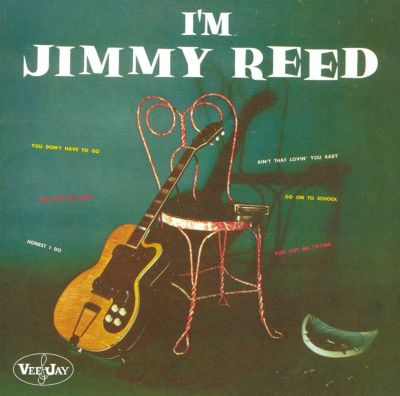
I'm Jimmy Reed — Jimmy Reed (Vee-Jay Records, 1958)
Released in 1958 on Vee-Jay Records (catalog no. VJLP 1001, also listed as VJ 1013), I'm Jimmy Reed stands as one of the most influential debut albums in blues history. Hailed by Record Collector as "arguably the first great blues album," it is not a studio album in the traditional sense but rather a meticulously curated compilation of twelve singles recorded between June 1953 and March 1958.
The collection captures Jimmy Reed at the peak of his early commercial powers, presenting the relaxed, accessible electric blues style that would make him second only to B.B. King among popular blues acts of the era and a foundational influence on the British Invasion.
Recording Sessions & Production
All tracks were recorded at Bill Putnam's Universal Recording Corporation in Chicago, the same facility where Chess Records cut their legendary sides.
Grammy-winning producer Scott Billington noted that "the snare drum sound on 'Honest I Do' is impossibly perfect," a testament to Putnam's engineering prowess.
While no single producer is explicitly credited on the original release, Al Smith—bandleader, arranger, and Vee-Jay session conductor—served as Reed's manager and oversaw many of his recording dates.
Label owners Vivian Carter and James Bracken were notably cooperative, allowing Reed to follow his established formula as long as it continued to produce hits.
The sessions span nearly five years, from Reed's first Vee-Jay recordings in 1953 through his 1958 hits. All compositions are credited to Jimmy Reed, though his wife Mary "Mama" Reed co-wrote much of the material and was a constant presence in the studio, famously whispering lyrics into Jimmy's ear during takes due to his memory issues caused by epilepsy and heavy drinking.
The Musicians
Reed's signature sound relied on a deceptively simple formula: a slow-to-medium shuffling beat, standard rhythm guitar riffs, casually appealing harmonica interludes, and Reed's laconic, slurred vocal delivery.
The core musicians included:
-
Jimmy Reed — Guitar, vocals, harmonica (all tracks)
-
Eddie Taylor — Guitar (tracks 1–9, 11 & 12). Reed's childhood friend from Mississippi and his most faithful musical collaborator, Taylor's rhythm guitar work was the integral ingredient in Reed's best recordings.
-
John Brim — Guitar (track 10). A true inside Chicago blues figure who appeared on one of Reed's earliest recordings.
-
Remo Biondi — Guitar (tracks 2, 5 & 11)
-
Earl Phillips — Drums (tracks 1–3, 5, 7, 8 & 11). The primary drummer on Reed's mid-period hits.
-
Albert King — Drums (tracks 4, 10 & 12). Before becoming one of the "Three Kings" of blues guitar, Albert King played drums on some of Reed's earliest Vee-Jay sessions.
-
Vernel Fournier — Drums (tracks 6 & 9)
Track-by-Track Breakdown
Side One
1. "Honest I Do" (2:40)
Songwriter: Jimmy Reed (with Mary Reed)
Recorded: April 3, 1957
Musicians: Jimmy Reed (guitar, vocals, harmonica), Eddie Taylor (guitar), Earl Phillips (drums)
Reed's first major pop crossover hit, "Honest I Do" reached #4 on the R&B chart and #32 on the Billboard Hot 100 in 1957.
The track is slightly poppier than Reed's standard 12-bar formula, distinguished by an elegantly woven descending guitar riff played by Eddie Taylor.
The Rolling Stones later covered it on their debut album, preserving the riff while adding their own rhythmic innovations.
Songwriter: Jimmy Reed (with Mary Reed)
Recorded: April 3, 1957
Musicians: Jimmy Reed (guitar, vocals, harmonica), Eddie Taylor (guitar), Earl Phillips (drums)
Reed's first major pop crossover hit, "Honest I Do" reached #4 on the R&B chart and #32 on the Billboard Hot 100 in 1957.
2. "Go On To School" (2:47)
Songwriter: Jimmy Reed
Recorded: March 12, 1958
Musicians: Jimmy Reed (guitar, vocals, harmonica), Remo Biondi (guitar), Earl Phillips (drums)
One of the latest recordings on the album, cut in early 1958. A mid-tempo shuffle with Reed's characteristic laid-back vocal and high-register harmonica fills. The track demonstrates the formula that had become Reed's trademark by this period.
3. "My First Plea" (2:45)
Songwriter: Jimmy Reed
Recorded: June 11, 1956
Musicians: Jimmy Reed (guitar, vocals, harmonica), Eddie Taylor (guitar), Earl Phillips (drums)
A solid example of Reed's romantic blues style, featuring his pleading vocal tone over a steady shuffle. The June 1956 session placed Reed firmly in his hit-making stride.
4. "Boogie In The Dark" (2:34)
Songwriter: Jimmy Reed
Recorded: December 29/30, 1953
Musicians: Jimmy Reed (guitar, vocals, harmonica), Eddie Taylor (guitar), Albert King (drums)
Originally the B-side to "You Don't Have To Go," this instrumental showcases Reed's harmonica work more aggressively than many of his vocal tracks. The recording captures the raw energy of Reed's earliest sessions, with Albert King holding down the drum chair.
5. "You Got Me Crying" (2:35)
Songwriter: Jimmy Reed
Recorded: March 12, 1958
Musicians: Jimmy Reed (guitar, vocals, harmonica), Remo Biondi (guitar), Earl Phillips (drums)
Recorded at the same March 1958 session as "Go On To School," this track features a more melancholic tone. Reed's slurred vocal delivery conveys a sense of genuine hurt, while his harmonica weeps in the upper register.
6. "Ain't That Lovin' You Baby" (2:14)
Songwriter: Jimmy Reed
Recorded: December 5, 1955
Musicians: Jimmy Reed (guitar, vocals, harmonica), Eddie Taylor (guitar), Vernel Fournier (drums)
One of Reed's biggest R&B hits, reaching the Top 10 (some sources cite #8, others #3).
The track became a blues standard, covered by artists across genres. The lyric—"They may kill me, baby, bury me just like they do / My body might lie, but my spirit gonna rise and come home to you"—combines morbid imagery with a feel-good shuffle arrangement typical of Reed's work.
Songwriter: Jimmy Reed
Recorded: December 5, 1955
Musicians: Jimmy Reed (guitar, vocals, harmonica), Eddie Taylor (guitar), Vernel Fournier (drums)
One of Reed's biggest R&B hits, reaching the Top 10 (some sources cite #8, others #3).
Side Two
7. "You Got Me Dizzy" (2:53)
Songwriter: Jimmy Reed
Recorded: October 3, 1956
Musicians: Jimmy Reed (guitar, vocals, harmonica), Eddie Taylor (guitar), Earl Phillips (drums)
Reed's third Top 10 R&B hit, reaching #3 on the R&B chart.
Critics have noted that Reed essentially re-recorded "Ain't That Lovin' You Baby" with new lyrics, yet the public embraced it just as enthusiastically—a testament to the durability of his formula.
Songwriter: Jimmy Reed
Recorded: October 3, 1956
Musicians: Jimmy Reed (guitar, vocals, harmonica), Eddie Taylor (guitar), Earl Phillips (drums)
Reed's third Top 10 R&B hit, reaching #3 on the R&B chart.
8. "Little Rain" (2:45)
Songwriter: Jimmy Reed (with Mary Reed)
Recorded: January 9, 1957
Musicians: Jimmy Reed (guitar, vocals, harmonica), Eddie Taylor (guitar), Earl Phillips (drums)
A relative lyrical highlight, "Little Rain" is somewhat unusual in its depiction of a simple romantic situation set to a 12-bar blues melody that typically implies negative emotions.
The track was originally released as the B-side to "Honey, Where You Going?" and showcases the romanticism that Mary Reed brought to the songwriting partnership.
Songwriter: Jimmy Reed (with Mary Reed)
Recorded: January 9, 1957
Musicians: Jimmy Reed (guitar, vocals, harmonica), Eddie Taylor (guitar), Earl Phillips (drums)
A relative lyrical highlight, "Little Rain" is somewhat unusual in its depiction of a simple romantic situation set to a 12-bar blues melody that typically implies negative emotions.
9. "Can't Stand To See You Go" (2:50)
Songwriter: Jimmy Reed
Recorded: December 5, 1955
Musicians: Jimmy Reed (guitar, vocals, harmonica), Eddie Taylor (guitar), Vernel Fournier (drums)
Recorded at the same December 1955 session as "Ain't That Lovin' You Baby," this track features Vernel Fournier on drums. The song became a notable R&B hit and demonstrates Reed's ability to mine emotional territory from his limited but effective musical vocabulary.
10. "Roll and Rhumba" (2:46)
Songwriter: Jimmy Reed
Recorded: June 6, 1953
Musicians: Jimmy Reed (guitar, harmonica), John Brim (guitar), Albert King (drums)
The earliest recording on the album, cut during Reed's very first Vee-Jay session in June 1953. An instrumental originally released as the B-side to "High and Lonesome," it represents an honest attempt at genre-mixing, blending blues with Latin rhythmic elements.
John Brim appears on second guitar, and Albert King plays drums—making this a fascinating document of future blues legends in their formative years.
Songwriter: Jimmy Reed
Recorded: June 6, 1953
Musicians: Jimmy Reed (guitar, harmonica), John Brim (guitar), Albert King (drums)
The earliest recording on the album, cut during Reed's very first Vee-Jay session in June 1953. An instrumental originally released as the B-side to "High and Lonesome," it represents an honest attempt at genre-mixing, blending blues with Latin rhythmic elements.
11. "You're Something Else" (2:35)
Songwriter: Jimmy Reed
Recorded: December 12, 1957
Musicians: Jimmy Reed (guitar, vocals, harmonica), Eddie Taylor (guitar), Remo Biondi (guitar), Earl Phillips (drums)
A late-1957 cut that finds Reed in confident form. The dual-guitar attack of Taylor and Biondi adds texture to the arrangement, while Reed's vocal is playful and relaxed.
12. "You Don't Have To Go" (3:04)
Songwriter: Jimmy Reed
Recorded: December 29/30, 1953
Musicians: Jimmy Reed (guitar, vocals, harmonica), Eddie Taylor (guitar), Albert King (drums)
Reed's breakthrough hit and the song that launched his career. Released in January 1955, it entered the Billboard R&B chart on March 5, 1955, and peaked at #5 during a ten-week run.
The track established the prototype for Reed's entire career: a relaxed, easygoing shuffle with Eddie Taylor's steady guitar underpinning Reed's laconic vocal and piercing harmonica. The song provided inspiration for countless latter-day blues-based rockers and remains one of Reed's most enduring compositions.
Songwriter: Jimmy Reed
Recorded: December 29/30, 1953
Musicians: Jimmy Reed (guitar, vocals, harmonica), Eddie Taylor (guitar), Albert King (drums)
Reed's breakthrough hit and the song that launched his career. Released in January 1955, it entered the Billboard R&B chart on March 5, 1955, and peaked at #5 during a ten-week run.
Buy This Album
Critical Assessment & Legacy
AllMusic reviewer Bruce Eder called I'm Jimmy Reed "about as strong a first album as was heard in Chicago blues," noting that while it was technically a collection of single sides rather than a formal album, this approach turned it into "a treasure-trove of prime material from his repertory."
The album's influence extends far beyond the blues world. The Rolling Stones covered "Honest I Do" on their 1964 debut, while "Ain't That Lovin' You Baby," "You Don't Have To Go," and "You Got Me Dizzy" became staples for British Invasion bands.
Reed's deceptively simple style—what appeared to be the work of a "back porch musician"—concealed songs that Scott Billington described as "among the most enduring (and at times most poetic) in the blues."
Today, I'm Jimmy Reed remains an essential document of 1950s Chicago blues, capturing the moment when electric blues crossed over from the South Side clubs to the national consciousness—and, ultimately, to the rock and roll revolution that would transform popular music forever.