Early Life
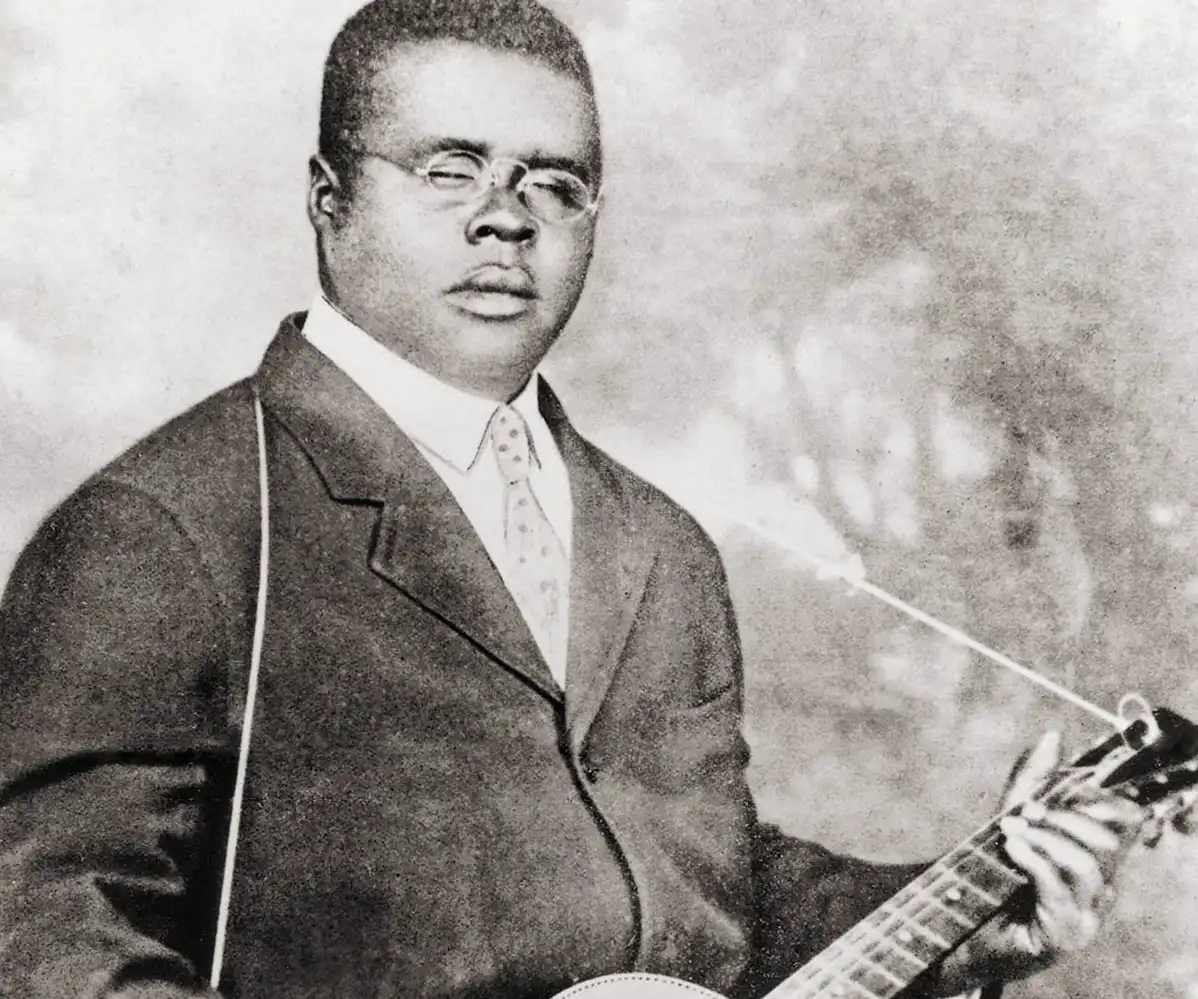
Lemon Henry Jefferson was born on September 24, 1893 (some sources suggest 1883–1894) in Couchman, near Wortham, Freestone County, Texas. He was the youngest of seven or eight children born to sharecroppers Alex and Clarissa Jefferson. Blind from birth (or very early childhood), he was spared from field labor and instead developed his musical talents early.
As a teenager, Jefferson taught himself guitar and began performing at country picnics, parties, barrelhouses, and on street corners in towns across East Texas. He traveled extensively throughout Texas and the South (Louisiana, Mississippi, Alabama, and Virginia), performing in saloons, brothels, levee camps, and medicine shows. His repertoire included blues, spirituals, dance tunes, and folk songs.
Career and Rise to Fame
Jefferson was discovered around 1925 by talent scout R.T. Ashford in Dallas. In late 1925 or early 1926, he traveled to Chicago to record for Paramount Records. His first sides were gospel numbers released under the pseudonym Deacon L.J. Bates. His blues recordings began appearing in 1926, with “Booster Blues” / “Dry Southern Blues” becoming early successes.
Between 1926 and 1929, Jefferson recorded approximately 100 tracks, nearly all for Paramount Records, with one session for OKeh in Atlanta in 1927. He became one of the biggest-selling “race” artists of the 1920s and the first major commercial success as a self-accompanied male country blues singer. His records sold in impressive numbers for the era, bringing him financial success unusual for a Black blues musician at the time. He split his time between Texas and Chicago.
Musical Style and Guitar Techniques: A Pioneering Texas Blues Style
Blind Lemon Jefferson is widely regarded as one of the most innovative and influential early country blues guitarists. His intricate, expressive, and often unconventional playing helped define the Texas blues sound and set a template for solo acoustic blues guitar that influenced generations of players. Overall Approach and Philosophy Jefferson treated the guitar as an equal partner to his voice — essentially a “second voice” that responded to, commented on, and extended his vocal phrases. His style was highly improvisational and free-form. He rarely adhered strictly to 12-bar blues structures, often stretching or compressing phrases for dramatic effect. His playing had a piano-like quality, with independent bass lines (left hand) and melodic/treble work (right hand) happening simultaneously, creating a rich, contrapuntal texture. He played with bare fingers (no pick), using a combination of thumb for bass notes and fingers for melody and fills. His rhythm was propulsive yet flexible, often incorporating rubato (slight speeding up or slowing down) to heighten emotional expression.
Key Technical Elements
- Fingerpicking Style
Complex, multi-layered fingerstyle with strong emphasis on alternating bass patterns. Thumb played steady bass notes or alternating bass while index, middle, and ring fingers handled melody, fills, and chordal stabs. Often created the illusion of two or more guitars playing at once through independent bass and treble lines. Heavy use of triads and dominant 7th chord stabs, often in clever turnarounds.
- Slide and Bottleneck Use
Jefferson occasionally used a slide (bottleneck), but he was primarily a fingerpicker. When he did use slide, it was for expressive, vocal-like phrases rather than constant droning.
- Tunings
He played mostly in standard tuning (sometimes dropped a half-step for a deeper sound). Evidence suggests he used open tunings selectively (e.g., Open G or variations) for certain effects, though standard tuning was his most common choice. His playing in standard tuning was highly sophisticated, using chord shapes and positions that allowed for fluid movement across the neck.
- Rhythmic and Textural Techniques
Percussive elements: Strong attack and muting for rhythmic drive. Bass runs and walking bass lines that connected chords smoothly. Imitative effects: Guitar mimicking trains (“Train Whistle Blues”), mosquitoes, or other sounds. Dynamic contrast: He would suddenly drop volume for intimate passages or build intensity with rapid runs.
- Phrasing and Improvisation
Guitar responses often extended beyond the vocal line, creating overlapping call-and-response. Free approach to time: He would stretch measures or add extra beats for emotional impact. Fast, intricate single-note runs combined with chordal playing.
Influence on Later Guitarists
Jefferson’s techniques directly impacted:
Lightnin’ Hopkins (his cousin) and T-Bone Walker (electric Texas blues). Lead Belly, Robert Johnson, and many Delta players. Fingerstyle revivalists like Chet Atkins, who cited Jefferson as an early influence. Rock and folk artists: Bob Dylan, the Beatles (via “Matchbox”), Ry Cooder, and countless acoustic blues players.
His style is notoriously difficult to imitate perfectly because of its rhythmic freedom and personal expressiveness. Modern players often study transcriptions by John Miller, Ari Eisinger, and others to capture his nuances.
Key Recordings:
Blind Lemon Jefferson recorded roughly 100 sides between 1926 and 1929, almost exclusively for Paramount Records. His discography is remarkable for its consistency and creativity. Below is a detailed look at his most important and influential recordings:
Early Hits (1926)
- “Booster Blues” / “Dry Southern Blues” (Paramount 12347, 1926) These were among Jefferson’s first blues releases. “Dry Southern Blues” established his high, keening vocal style and intricate fingerpicking. The guitar features strong alternating bass patterns and melodic fills that respond to the vocal lines. These sides helped prove there was a commercial market for solo male country blues singers.
Signature Masterpieces (1927–1928)
- “Black Snake Moan” (Paramount 12493, 1927) One of Jefferson’s biggest commercial successes. A hypnotic, slow blues with highly expressive guitar work. The guitar mimics the vocal phrasing almost like a second singer, using sliding notes and bent tones. The lyrics, with their sexual double entendres, became iconic. This track is often cited as a quintessential example of his “talking guitar” approach.
- “Matchbox Blues” (Paramount 12493, 1927) An up-tempo, bouncy blues that became one of his most enduring songs. Features lively, rhythmic fingerpicking with a strong, propulsive bass line. The playful lyrics and catchy melody made it accessible. Later covered by Carl Perkins (1955) and the Beatles (1964), helping introduce Jefferson’s music to rock audiences.
- “See That My Grave Is Kept Clean” (Paramount 12578, 1927–28) A haunting, spiritual-tinged blues about death and mortality. Jefferson’s vocal is particularly plaintive here, and the guitar provides sparse but emotionally charged accompaniment. Bob Dylan covered this song on his 1962 debut album, bringing it to the folk revival generation.
- “That Black Snake Moan” (Paramount 12510, 1927) A different but related version to “Black Snake Moan.” Faster and more rhythmic, showcasing Jefferson’s ability to shift moods while keeping the same thematic core. Excellent example of his improvisational freedom with timing.
- “Easy Rider Blues” (Paramount 12493, 1927) A medium-tempo blues with fluid guitar lines and a relaxed, almost conversational feel. Demonstrates Jefferson’s skill at creating intricate melodic runs while maintaining a steady rhythm underneath.
Social Commentary and Later Works (1927–1929)
- “Hangman’s Blues” / “’Lectric Chair Blues” (1927–1928) Powerful songs addressing the criminal justice system and the fear of execution. Jefferson’s vocals are intense and dramatic, with the guitar providing tense, brooding support. These tracks show his willingness to tackle serious social themes.
- “Mosquito Blues” (1929) A novelty-style blues where Jefferson uses his guitar to imitate the sound of mosquitoes buzzing. Highlights his creativity and ability to produce imitative effects with the instrument.
- “One Dime Blues” (1927) A deeply personal and emotional performance. Features complex fingerpicking with piano-like counterpoint between bass and treble strings. The lyrics express hardship and loneliness.
- “Long Lonesome Blues” (Paramount 12354, 1926) One of his earliest blues sides and a fan favorite. Shows his fully formed style already present in 1926 — high emotional vocals paired with sophisticated guitar work.
Selected Discography
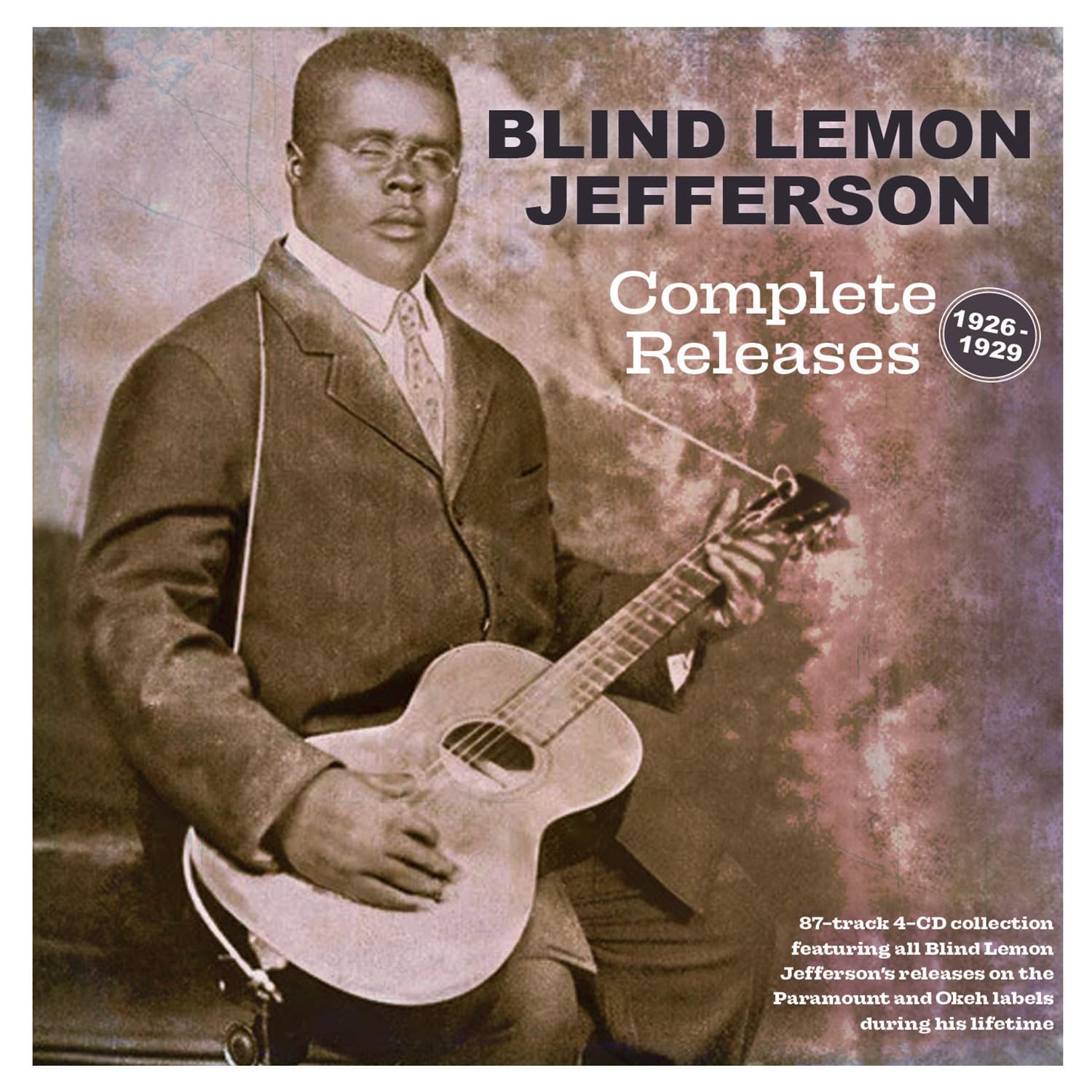 Buy from Amazon Complete Releases 1926-29
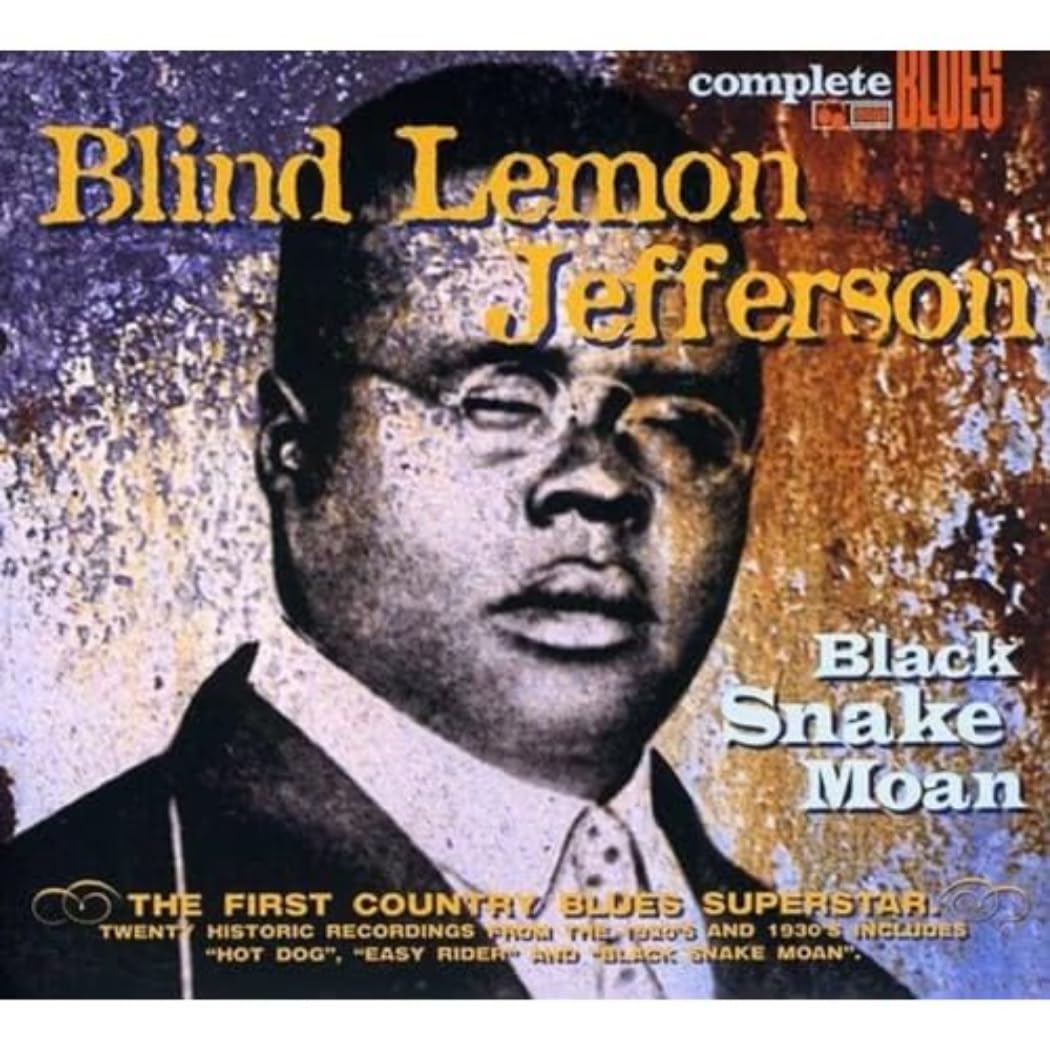 Buy from Amazon Black Snake Moan Compilation
Recording Context
All of Jefferson’s Paramount sessions took place in Chicago, except for a single 1927 session in Atlanta for OKeh Records. The Paramount recordings were made in makeshift studios with basic equipment, yet Jefferson’s powerful voice and dynamic guitar playing cut through remarkably well. His final session occurred in September 1929, just months before his death. These key recordings demonstrate Jefferson’s extraordinary range: from party dances and humorous numbers to deep, mournful blues and gospel-tinged spirituals. His ability to personalize traditional material while adding technical sophistication made each performance unique. His final recording session took place in September 1929 in Chicago.
Later Life and Death
Jefferson died on December 19, 1929, in Chicago at approximately age 36. The exact circumstances remain unclear. Popular legend claims he froze to death in a snowstorm, while other accounts suggest a heart attack. His body was shipped back to Texas and buried in the Wortham Negro Cemetery. His grave remained unmarked until a Texas Historical Marker was placed in 1967.
Influence and Legacy
Blind Lemon Jefferson is widely regarded as the Father of Texas Blues and one of the most important figures in the development of country blues. He helped establish the model of the solo male blues singer-guitarist that dominated the genre for decades. He elevated it from simple accompaniment to a sophisticated, orchestral art form. His combination of intricate fingerpicking, independent bass and treble lines, improvisational freedom, and deep emotional connection between voice and instrument made him a true pioneer.
His influence can be heard in the work of:
- Lightnin’ Hopkins, T-Bone Walker, Lead Belly, and B.B. King (Texas blues lineage).
- Robert Johnson, Son House, and many Delta blues artists.
- Later generations: Bob Dylan, the Beatles, Van Morrison, Ry Cooder, and countless rock and folk musicians.
“Matchbox Blues” was included in the Rock and Roll Hall of Fame’s list of 500 Songs That Shaped Rock and Roll. Jefferson was inducted into the Blues Hall of Fame in its inaugural class in 1980. Bands such as Jefferson Airplane and Blind Melon took their names in homage to him.
His recordings have been reissued extensively on labels such as Biograph, Document, Yazoo, and JSP Records. They remain essential listening for anyone studying the roots of blues, rock ’n’ roll, and American folk music.
Suggested Reading
 Buy from Amazon See That My Grave Is Kept Clean: The World and Music of Blind Lemon Jefferson