"Boogie Chillen'" (also rendered "Boogie Chillun") stands as one of the most consequential recordings in the history of American popular music. Cut by John Lee Hooker in a single September 1948 session at United Sound Systems in Detroit, the song became the first "down-home" electric blues record to reach No. 1 on the R&B charts, established a template for solo electric blues performance that would influence generations of guitarists, and spawned a copyright case that changed American intellectual property law. It is, as music critic Cub Koda famously observed, "the riff that launched a million songs."
Background: John Lee Hooker in Detroit
John Lee Hooker arrived in Detroit in 1943, part of the Great Migration of Southern Black Americans seeking wartime industrial employment. He settled in Black Bottom/Paradise Valley, a sixty-six-block area that housed most of Detroit's 150,000 Black residents. He found work at the Ford River Rouge Plant, later took a janitorial job at the Dodge Main Plant, and in 1948 moved to the day shift at Comco Steel. At night, he played guitar and sang at rent parties, bars, and clubs along Hastings Street, the cultural center of Detroit's Black community.
Hastings Street was a vibrant corridor of Black-owned businesses, jazz clubs, and churches. Henry's Swing Club, referenced in the song's lyrics, was one of many venues where musicians performed. Aretha Franklin's father, Reverend C.L. Franklin, established his church on the same street. Within a decade of Hooker's song being released, however, the entire neighborhood would be obliterated under the Housing Act of 1949 and the Highway Act of 1956, replaced by freeways and housing projects—a story of structural racism that played out in Black neighborhoods across America.
Discovery and the Recording Session
Hooker was discovered by Elmer Barbee, a local record shop owner who had a small recording studio at the rear of his shop. Barbee invited Hooker to record demos and then introduced him to Bernie Besman, owner of Sensation Records and co-owner of Pan American Music Distributors. Besman, who would become Hooker's producer and manager, arranged for Hooker's first major appearance at a concert at Detroit's Broadway Capitol Theatre, where he closed the show with a powerful solo performance.
The recording session took place in September 1948 at United Sound Systems, Detroit's premier recording studio. Hooker usually performed with a band in clubs—pianist James Watkins and drummer Curtis Foster were his regular accompanists—but Besman made the crucial decision to record him solo. This stripped-down approach, focusing entirely on Hooker's voice and guitar, was unconventional. The prevailing style in R&B at the time was jump blues, which emphasized full ensemble instrumentation. Recent hit singles by Muddy Waters and Lightnin' Hopkins had used a similarly reduced approach, but Hooker's recording was even more primal.
The Recording: Technique and Sound
The recording setup was ingeniously primitive. Hooker performed alone, accompanying himself on amplified electric guitar and providing percussion by stomping his foot on a wooden pallet that had been fitted with a microphone. To create a fuller, more ambient sound, Besman employed a makeshift echo chamber: Hooker's foot-stomp rhythm was fed into a speaker placed in a toilet bowl, which was then miked and returned to a speaker in the studio in front of Hooker's guitar. Three takes of "Boogie Chillen'" were recorded, with the third take serving as the master.
The result was a recording of startling rawness and power. Music critic Bill Dahl described it as "blues as primitive as anything then on the market; Hooker's dark, ruminative vocals were backed only by his own ringing, heavily amplified guitar and insistently pounding foot." The guitar sound was heavily distorted and resonant, the foot stomp provided an elemental rhythmic foundation, and Hooker's voice alternated between sung and spoken sections in a stream-of-consciousness narrative that was almost unprecedented in recorded blues.
Composition and Lyrics
"Boogie Chillen'" is not a conventional blues song in structure. Musicologist Robert Palmer noted that "the closest thing to it on records is 'Cottonfield Blues,' recorded by Garfield Akers and Joe Callicott, two guitarists from the hill country of northern Mississippi, in 1929. Essentially, it was a backcountry, pre-blues sort of music—a droning, open-ended stomp without a fixed verse form that lent itself to building up to a cumulative, trancelike effect."
Hooker credited his stepfather, Will Moore, with teaching him the rhythm. "I used to see Will Moore play," Hooker said in a 1997 interview. "He had a guitar, and he give me one—an old Stella. I started off from there. Will Moore taught me what I know. The things that I'm playing now, that's what he taught me." While Moore provided the rhythmic foundation, the lyrics were pure Hooker. "I wrote that song in Detroit when I was sittin' around strummin' my guitar. The thing come into me. It was just a old funky lick I found. I heard Will Moore do a song like that when I was a little kid down South, but he didn't call it 'Boogie Chillen'. But it had that beat."
The lyrics alternate between spoken narrative and sung exhortation, recounting Hooker's arrival in Detroit and his discovery of the blues scene:
When I first come to town people, I was walkin' down Hastings Street
I heard everybody talkin' about, Henry's Swing Club
I decided I'd drop in there that night, and when I got there
I say "Yes, people!", yes they was really havin' a ball!
Yes, I know
Boogie chillen'!
The final verse references the liberating conversation Hooker overheard as a child:
One night I was layin' down,
I heard mama 'n' papa talkin'
I heard papa tell mama to let that boy boogie-woogie,
'Cause it's in him, and it got to come out
Release and Immediate Impact
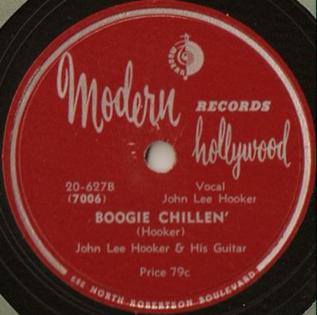
Because Sensation Records was too small to handle national distribution, Besman licensed "Boogie Chillen'" to Modern Records, a Los Angeles-based label owned by the Bihari brothers. It was released nationally on November 3, 1948, and its impact was immediate and explosive.
The song entered the Billboard Race Records chart on January 8, 1949, remained on the charts for eighteen weeks, and reached No. 1 on February 19, 1949. Nashville radio station WLAC, a 50,000-watt clear-channel station reaching fifteen states and Canada, played the song ten times in a row during one broadcast night. "The thing caught afire," Hooker recalled. "It was ringin' all around the country. When it come out, every juke box you went to, every place you went to... they were playing it there."
The Detroit Free Press published a favorable review on January 22, 1949, noting: "An unusual blues item is 'Boogie Chillen'' by John Lee Hooker on Modern 20-627. Hooker's singing is remarkable for vocal coloring and phrasing... His dynamic rhythms and subtle nuances on the guitar and his startling disregard for familiar scale and harmony patterns show similarity to the work of Robert Johnson, who made many fine records in this vein."
The success of "Boogie Chillen'" enabled Hooker to quit his day job and become a full-time musician. He quickly followed up with more hits: "Hobo Blues" and "Hoogie Boogie" both reached the R&B Top Ten in spring 1949, and "Crawling King Snake" also charted. By decade's end, he had landed three more original songs in the R&B Top 10 and recaptured the No. 1 spot in 1951 with "In the Mood."
The Original Recording Session: Complete Details
The September 1948 session at United Sound Systems produced multiple tracks beyond "Boogie Chillen'." The complete recordings from this period include:
-
"Boogie Chillen'" (Take 3, master) – 3:09
-
"Henry's Swing Club" – 3:10 (an alternate take or related boogie, sometimes titled "John Lee's Original Boogie")
-
"Johnny Lee's Original Boogie" – 2:53 (another take from the session)
-
"Leavin' Chicago" – 3:51
-
"Wednesday Evening Blues" – 3:53
Additional tracks recorded in November and December 1948 at the same studio include "Shake Your Boogie," "Poor Slim," "Down So Long," "Sally Mae," "War Is Over," "See, See Baby," "She Was In Chicago," "Crazy 'Bout That Woman," "Good Business," "Mercy Blues," "Boogie Woogie," "Stomp Boogie," "Who's Been Jiving You," "Black Man Blues," and "Poor Joe."
The first two takes of "Boogie Chillen'" from the September session began appearing on compilation albums in the 1970s, sometimes under the titles "John Lee's Original Boogie" and "Henry's Swing Club."
Personnel
The original recording features only:
-
John Lee Hooker – vocals, electric guitar, foot stomp on wooden pallet
There are no other musicians on the original 1948 recording. The production was handled by Bernie Besman, with engineering at United Sound Systems in Detroit. The songwriting credit on the original Modern Records single listed "John Lee Hooker," though Besman's name was later added to the credit.
Early Influence and Impact on Musicians
"Boogie Chillen'" had an extraordinary and immediate impact on aspiring musicians across America:
-
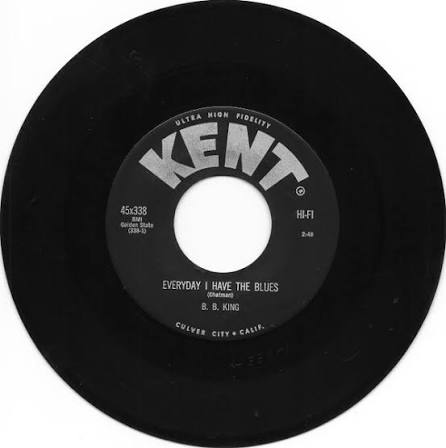
B.B. King, then a disc jockey at Memphis radio station WDIA, placed the song in heavy rotation. "That was a monster hit!" King recalled. "When John Lee made 'Boogie Chillen',' that wasn't blues. That was get up and get it!... He's havin' a ball. He's havin' a good time!" King noted that "hardly anybody around who was playing at that time didn't play 'Boogie Chillen'. That's just how heavy it was... if you didn't play 'Boogie Chillen'' at that time, people probably look at you and wonder what was wrong with you."
-
Buddy Guy, then a thirteen-year-old in rural Louisiana, described it as "the first thing I thought I learned how to play that I knew sounded right when someone would listen." Guy later recorded a version with Junior Wells for their 1981 album Alone & Acoustic.
-
Albert Collins also recalled that it was the first song he learned to play.
-
Bo Diddley (then Elias McDaniel) described it as "the first record I paid attention to... When I found John Lee Hooker on the radio, I said, 'If that guy can play, I know I can.' I mean John Lee's got a hell of a style."
Music critic Charles Shaar Murray likened the song to "the R&B equivalent of punk rock"—superficially simple enough not to intimidate beginners, yet possessed of a primal power that revealed deeper complexity the more one listened.
John Lee Hooker's Subsequent Versions
The demand for "Boogie Chillen'" remained high enough that Hooker re-recorded it numerous times throughout his career:
-
"Boogie Chillen' #2" (1950) – A faster version with different lyrics, recorded for Bernie Besman's Sensation label (also issued by Regal).
-
"New Boogie Chillun" (1952) – An edited version released by Modern Records.
-
"Boogie Chillun" (1959) – Recorded for Vee-Jay Records, this version closely follows the original single but runs about 2:36, roughly thirty seconds shorter than the 1948 version. Because of the similarity, the 1959 version is sometimes misidentified as the original and vice versa.
-
"Boogie Chillen' No. 2" (1970) – Recorded with the blues-rock group Canned Heat for their joint album Hooker 'n Heat. This version, over eleven minutes long, combines Hooker's vocal with Canned Heat's signature boogie rock backing. Blues historian Gerard Herzhaft described the performance as "memorable," and it remains "full of the same swagger as the original" despite its extended guitar and harmonica solos. Canned Heat's own jam song "Fried Hockey Boogie" was itself an adaptation of "Boogie Chillen'."
-
Live versions – From the 1960s onward, Hooker recorded numerous live renditions with guest musicians including Eric Clapton and the Rolling Stones.
Covers and Songs Derived from "Boogie Chillen'"
The song's influence extends far beyond direct covers. Songs that borrow from "Boogie Chillen'" or "Boogie Chillen' No. 2," either directly or indirectly, include:
-
"Feelin' Good" (1953) – Junior Parker's interpretation, his first hit for Sun Records, subsequently recorded by James Cotton (1967) and Magic Sam as "I Feel So Good (I Wanna Boogie)" on his 1967 album West Side Soul.
-
"On the Road Again" (1968) – Canned Heat's radio hit.
-
"Spirit in the Sky" (1970) – Norman Greenbaum's hit.
-
"La Grange" – ZZ Top's best-known hit, which allegedly uses elements of the song.
-
"Backdoor Medley" – ZZ Top.
-
"Shake Your Hips" (1972) – The Rolling Stones' version on Exile on Main St., which uses a similar arrangement to Slim Harpo's 1966 hit of the same name.
-
Slim Harpo's "Boogie Chillun" (1970) – Appeared on his album Slim Harpo Knew the Blues, using a similar arrangement to his hit "Shake Your Hips."
The "La Grange" Copyright Case and Its Legal Legacy
In 1991, Bernie Besman, acting as the song's publisher through La Cienega Music, brought legal action against ZZ Top for copyright infringement over their song "La Grange." Writer Timothy English noted that of the various Hooker recordings of "Boogie Chillen'," the 1971 version with Canned Heat "has the most elements in common with 'La Grange', including the guitar pattern and the 'howl, howl, howl' vocal line."
The case wound its way through the American legal system, including an appeal to the U.S. Supreme Court. When the ruling did not favor the publisher, the U.S. Congress was persuaded to amend the Copyright Act in 1998 to protect many songs recorded before 1978 from entering the public domain. ZZ Top settled out of court in 1997. Hooker himself gained no financial reward from the settlement—Besman had obtained Hooker's rights to the song years earlier. As music historian Ted Gioia noted, "Nonetheless, his spontaneous performance in a recording studio had led to a substantial change in U.S. intellectual property law."
Recognition and Legacy
"Boogie Chillen'" has received numerous honors that attest to its enduring significance:
-
1985: Inducted into the Blues Foundation Hall of Fame. Blues historian Jim O'Neal noted it was "the first down-home electric blues record to achieve No. 1 chart status and its success, together with that of the Hooker hits that followed, inspired record companies to search out the new electric generation of country bluesmen."
-
1999: Received a Grammy Hall of Fame Award.
-
Rock and Roll Hall of Fame: Included in the list of the "500 Songs That Shaped Rock and Roll."
-
2008: Added to the U.S. National Recording Registry, which noted that "the driving rhythm and confessional lyrics have guaranteed its place as an influential and enduring blues classic."
-
1992: Included in Jim Dawson and Steve Propes's book What Was the First Rock 'n' Roll Record?, identified among the precursors of rock and roll.
Hooker's Own Assessment
Near the end of his life, when asked where listeners could hear his best recordings, Hooker responded: "Back when I was younger coming up, I was playing more hard blues by myself. I could play more guitar and do more by myself. I had no band to interfere. I could do what I wanted to do when I wanted to do it. 'In the Mood,' 'Dimples,' 'Boom Boom,' and 'Boogie Chillen',' I would say. That's the real, real blues—the deep, deep blues."
Conclusion
"Boogie Chillen'" is more than a blues hit—it is a foundational document of American music. Recorded with nothing more than a voice, an electric guitar, a foot stomp, and a toilet-bowl echo chamber, it demonstrated that the most primitive tools could produce the most powerful art. Its No. 1 chart success proved that raw, unadorned Delta blues could find a mass audience in the postwar era. Its influence on B.B. King, Buddy Guy, Bo Diddley, Albert Collins, and countless others established the solo electric blues performance as a viable and vital form. Its legal aftermath changed American copyright law. And its central guitar riff—simple, hypnotic, endlessly adaptable—echoes through rock and roll, boogie rock, and blues to this day. John Lee Hooker's spontaneous creation in a Detroit studio in September 1948 remains, as he himself recognized, the real, real blues—the deep, deep blues.
Suggested Reading
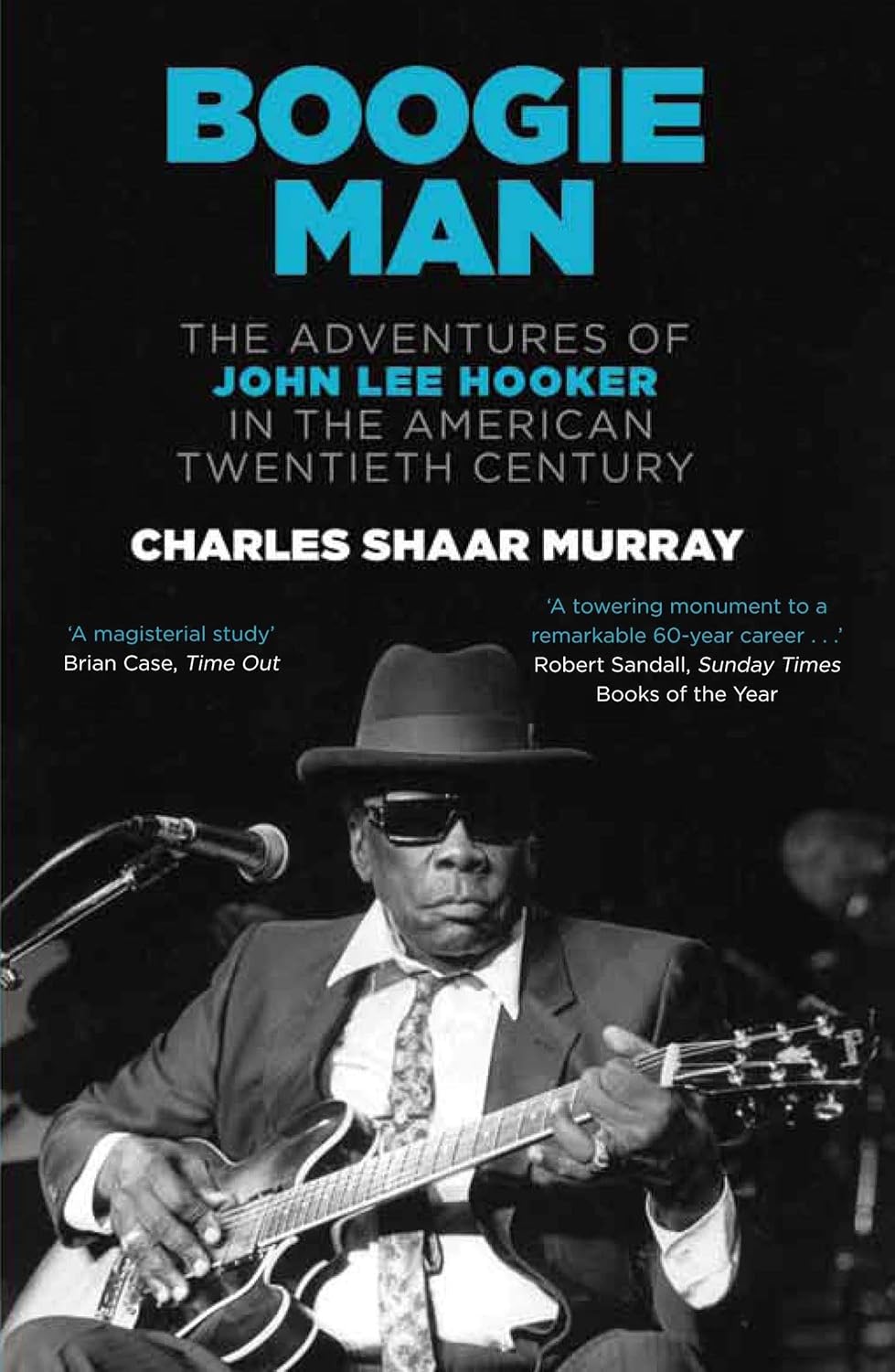 Boogie Man: The Adventures of John Lee Hooker in the American Twentieth Century