
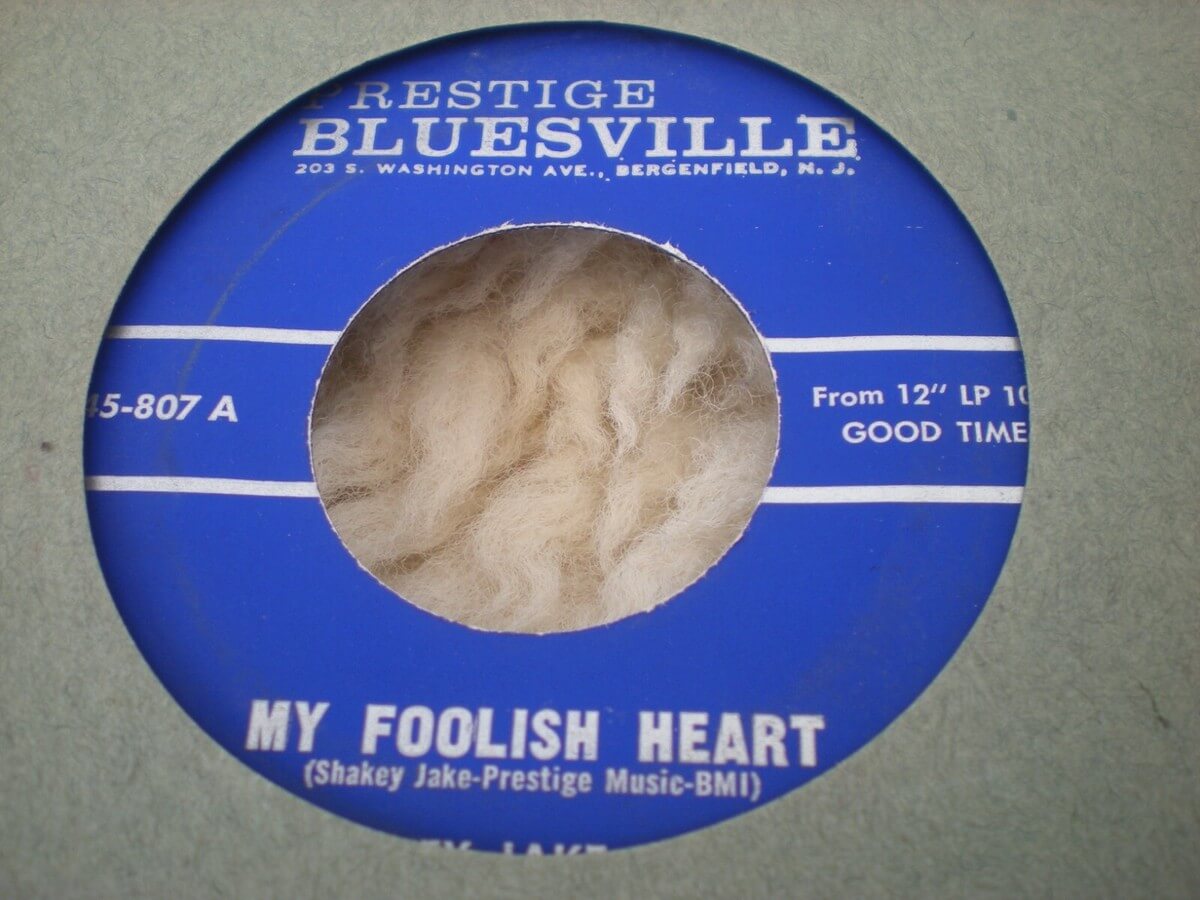
"My Foolish Heart" is a track from Shakey Jake Harris's debut album Good Times, recorded on May 11, 1960, at Rudy Van Gelder's legendary studio in Englewood Cliffs, New Jersey. Released on the Bluesville label (a Prestige Records subsidiary), the song represents one of the more unusual experiments in the early Bluesville catalog—a Chicago blues singer and harmonica player paired with two jazz musicians in a drumless trio setting.
The Artist: Shakey Jake Harris
James D. "Shakey Jake" Harris (April 12, 1921 – March 2, 1990) was a Chicago blues singer, harmonicist, and songwriter born in Earle, Arkansas. He moved to Chicago with his family at age seven during the Great Migration and began his professional music career around 1945. His nickname derived from his prowess as a professional gambler—specifically from the crapshooters' call to "shake 'em, Jake"—though alternative accounts suggest other origins.
Harris was the uncle of guitarist Magic Sam (Samuel Gene Maghett), and their familial and musical relationship proved crucial to both men's careers. Shakey Jake produced and featured Magic Sam on his debut single, "Call Me If You Need Me" backed with "Roll Your Moneymaker," recorded in 1958 for Artistic Records (a subsidiary of Cobra Records) and produced by Willie Dixon. Harris was not paid for that session but reportedly won $700 shooting craps with label owner Eli Toscano.
By 1960, Bluesville Records—then in its first year of operation—teamed Harris with two jazz musicians for what would become his debut album. The pairing was organized by producer Esmond Edwards, who sought to find "succulent common ground" between Harris's blues and the jazz sensibilities of his accompanists.
The Recording Session
The Good Times album was recorded on May 11, 1960, at Rudy Van Gelder's Studio in Englewood Cliffs, New Jersey. Van Gelder, already legendary for his work on jazz recordings for Blue Note, Prestige, and other labels, engineered the session. The choice of Van Gelder's studio was significant—at the time, he was simultaneously recording landmark jazz sessions, and the Bluesville albums benefited from the same meticulous attention to sound quality that characterized his jazz work.
The session was unusual in its instrumentation. Harris was paired with:
-
"Brother" Jack McDuff – organ
-
Bill Jennings – guitar
There was no drummer. This drumless trio format was a deliberate choice that emphasized the interplay between Harris's voice and harmonica, McDuff's Hammond organ, and Jennings's guitar. The absence of drums created a spacious, open sound that allowed each instrument room to breathe.
The Producer
Esmond Edwards served as the session's producer and supervisor. Edwards was a key figure in the early Bluesville operation, responsible for organizing sessions that paired blues artists with jazz musicians in innovative combinations. He also took the album's cover photograph. Edwards's approach was to find common ground between the blues and jazz traditions, and the Shakey Jake session was one of his most notable experiments in this direction.
Frank Driggs wrote the album's liner notes, providing context for the new audience that Bluesville was cultivating.
Songwriting
All compositions on the Good Times album, including "My Foolish Heart," were written by Jimmy D. Harris (Shakey Jake himself). This was not uncommon for blues albums of the era—artists typically drew from their own repertoire of original and adapted material. The song's title, "My Foolish Heart," shares its name with the famous 1949 pop standard written by Victor Young and Ned Washington, but Shakey Jake's composition is an original blues, not a cover of the pop song.
The Musicians
Shakey Jake Harris – Vocals and Harmonica
Harris's role on "My Foolish Heart" and the entire album was as lead vocalist and harmonica player. His harmonica style was rooted in the Chicago blues tradition, influenced by Sonny Boy Williamson (John Lee Williamson), whom Harris had seen perform in Chicago clubs. His playing on Good Times was notably restrained—AllMusic reviewer Bill Dahl noted that Harris "kept his mouth organ phrasing succinct and laid out when his more accomplished session mates catch fire." This restraint was a strength, allowing the trio's interplay to remain the focus rather than overwhelming the arrangement with blues harp pyrotechnics.
"Brother" Jack McDuff – Organ
Jack McDuff (1926–2001) was already establishing himself as one of the foremost jazz organists of the hard bop and soul jazz eras. His work with McGriff and later as a leader would make him a major figure in jazz, but in 1960 he was still relatively early in his career. On Good Times, McDuff's organ playing provided harmonic richness and rhythmic propulsion that compensated for the absence of drums. His ability to blend jazz voicings with blues feeling made him an ideal partner for Harris. The organ's sustained tones and ability to mimic horn sections gave the trio a surprisingly full sound despite the sparse instrumentation.
Bill Jennings – Guitar
Bill Jennings (1919–1978) was a jazz guitarist who had worked with Louis Jordan, the Lionel Hampton Orchestra, and numerous other jazz and R&B artists. His guitar style combined jazz sophistication with blues roots, making him well-suited to the Bluesville session. Jennings's playing on Good Times provided both rhythmic support and melodic counterpoint to Harris's vocals and McDuff's organ. His solos, when they occurred, demonstrated the jazz-blues fusion that was Bluesville's signature approach.
"My Foolish Heart" in Context
"My Foolish Heart" is the second track on Good Times, following "Worried Blues" and preceding the instrumental "Sunset Blues." It runs approximately 3:02 in duration. The track's placement early in the album establishes the template for the entire record: Harris's warm, slightly rough vocals, his tasteful harmonica interjections, McDuff's swirling organ, and Jennings's understated guitar work, all locked into a groove that swings without a drummer.
The song's lyrics, written by Harris, likely follow standard blues themes of romantic trouble and heartache—common territory for the genre. The title itself suggests a narrative of love gone wrong, a blues staple. Without access to the exact lyrics, the song can be understood as part of Harris's broader body of work that explored themes of gambling, love troubles, and urban migration.
The Single Release
"My Foolish Heart" was also released as a single on Bluesville 45-807, backed with the instrumental "Jake's Blues." The single featured the same personnel: Shakey Jake on vocals and harmonica, Brother Jack McDuff on organ, and Bill Jennings on guitar. This release helped establish Harris's name in the blues market, though it did not achieve significant chart success.
Critical Reception
The Good Times album received generally positive reviews, though it was not a major commercial success at the time of its release. AllMusic's Bill Dahl praised the trio's ability to find "succulent common ground even without a drummer," noting Harris's restraint and the quality of his accompanists. The album has aged well, with modern listeners appreciating its unique blend of blues and jazz sensibilities.
The album's initial poor commercial reception was partly due to its unusual format—blues audiences expected electric guitar and drums, while jazz audiences may have found the blues orientation too raw. However, in retrospect, Good Times stands as an important document of the early Bluesville approach and of Shakey Jake Harris's underappreciated artistry.
Legacy and Reissues
The Good Times album, including "My Foolish Heart," has been reissued several times:
-
1994: Reissued on CD by Original Blues Classics (OBC) as OBCCD-572-2
-
2022: Included in the Jasmine Records compilation Call Me When You Need Me (JASMCD3182), which gathered both Good Times and Mouth Harp Blues plus the 1958 Artistic single
-
Various digital reissues on streaming platforms
Shakey Jake Harris's broader legacy extends beyond his own recordings. He played an important role in nurturing Magic Sam's career, participated in the 1962 American Folk Blues Festival tour in Europe (where he performed "Good Times" and befriended T-Bone Walker), and later mentored younger harmonica players including William Clarke, to whom he imparted chromatic harmonica techniques alongside George "Harmonica" Smith. He moved to Los Angeles in the late 1960s, recorded for World Pacific and Polydor, briefly owned a nightclub and the Good Time Records label, and eventually returned to Arkansas, where he died in 1990 at age 68.
Buy the Album Here
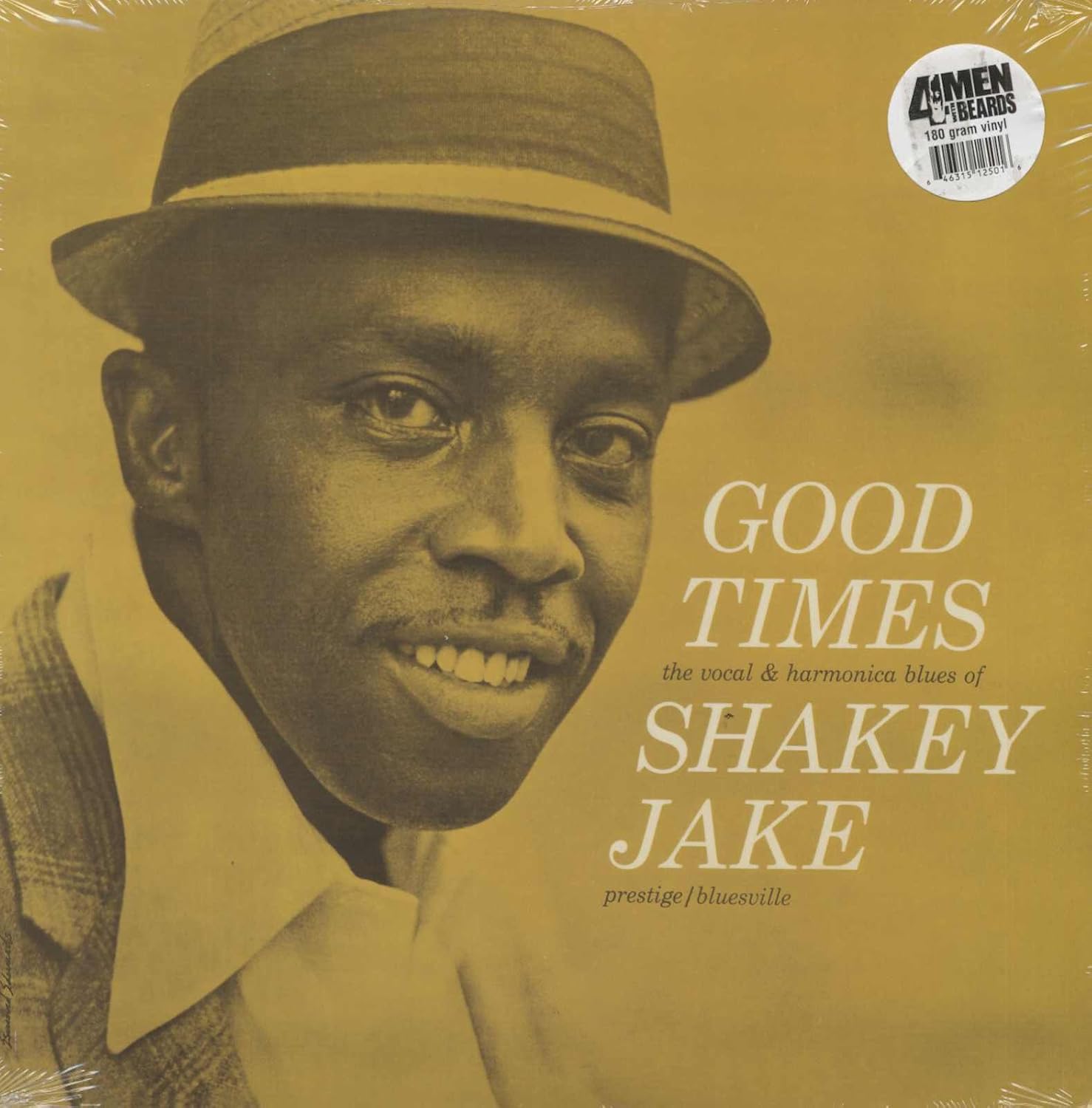 Good Times by Shakey Jake
Conclusion
"My Foolish Heart" represents a fascinating intersection of blues and jazz in the early 1960s. Recorded by Rudy Van Gelder with the same care given to landmark jazz sessions, produced by Esmond Edwards with an ear for cross-genre experimentation, and performed by a trio of musicians who found uncommon common ground, the track exemplifies the Bluesville label's mission to present blues as serious art. Shakey Jake Harris may not have achieved the fame of his nephew Magic Sam or his contemporaries like Muddy Waters and Howlin' Wolf, but "My Foolish Heart" and the Good Times album demonstrate that he was a distinctive artist with a unique vision—one that blended Chicago blues roots with jazz sophistication in a way that remains compelling more than six decades later.









