Elmore James stands as one of the most transformative figures in American music—a bluesman who took the raw, acoustic sounds of the Mississippi Delta, supercharged them with electricity, and created a template for rock and roll that would influence generations of guitarists from B.B. King to Jimi Hendrix, from Duane Allman to Eric Clapton. Known universally as the "King of the Slide Guitar," James was a vital bridge between the pre-war acoustic country blues of Robert Johnson and the post-war electric blues revolution of Chicago. In a recording career that lasted barely a dozen years, he created a body of work that reshaped the sound of the electric guitar and established the slide technique as a cornerstone of modern blues and rock.
Early Life in the Mississippi Delta
Elmore Brooks was born on January 27, 1918, in Richland, Holmes County, Mississippi, the illegitimate son of fifteen-year-old Leola Brooks, a field hand. His father was likely Joe Willie "Frost" James, who moved in with Leola, and the boy took his surname. Raised on sharecropping farms in the Durant area, James grew up in the grinding poverty that was the common lot of African Americans in the Jim Crow South. With little money and only a fourth-grade education, he gravitated toward music as both an escape and a potential livelihood.
His first instrument was a diddley bow—a simple one-string device constructed from old broom wire and a lard can, strung on a shack wall. This primitive instrument, common throughout the rural South, taught him the fundamentals of pitch and rhythm. By the time he was able to purchase his first real guitar, he had already developed into a skilled musician. By age fourteen, he was performing at dances, juke joints, roadhouses, and catfish suppers under the names "Cleanhead" and "Joe Willie James," supporting himself during the week as a radio repairman—a trade that would prove crucial to his later musical innovations.
The Robert Johnson Connection and the Birth of a Style
Around 1936, James met the legendary bluesman Robert Johnson, who may have taught him the rudiments of slide guitar. The meeting took place in Belzoni, Mississippi, where James had gone to meet his friend Aleck Miller—soon to find fame as Sonny Boy Williamson II. Before this encounter, James's guitar style had not emphasized slide playing. But Johnson showed him how to use a metal sleeve on his finger to create the sustained, crying tones that would become his trademark. Johnson's influence extended beyond technique to repertoire: James would later record electrified versions of Johnson's "I Believe I'll Dust My Broom," "Cross Road Blues," and "Ramblin' on My Mind," ensuring that Johnson's musical legacy would survive and reach new audiences.
James was also influenced by Kokomo Arnold, the Georgia-born blues singer whose "Milk Cow Blues" was a standard of the era, and by Tampa Red, the Chicago bluesman whose smooth slide guitar and sophisticated songwriting provided another model. James recorded several of Tampa Red's songs and, significantly, inherited two musicians from Tampa Red's backing band who would become core members of his own group: pianist "Little" Johnny Jones and drummer Odie Payne. In the late 1930s, James worked alongside Sonny Boy Williamson II, performing throughout the Delta and developing the musical chemistry that would carry into their recording careers.
The War Years and the Electric Revolution
In 1943, James was drafted into the United States Navy and served as a coxswain during World War II, participating in the invasion of Guam. Upon his discharge in 1945, he returned to central Mississippi and settled in Canton with his adopted brother, Robert Holston, who owned an electric shop. It was here that James made the fateful decision that would define his sound: he adopted the newly popular electric guitar and, drawing on his radio repair skills, began to experiment with amplifier hookups. He used parts from Holston's shop and an unusual placement of two DeArmond pickups to create a signature sound. He hot-wired his amplifiers to produce more power and distortion, achieving a raw, ferocious tone that was unlike anything else in blues at the time. As one commentator noted, "unlike most guitarists of the time, he really could 'turn it up to 11'!" This technical innovation—combining Delta slide technique with amplified volume and distortion—effectively invented the sound of blues-rock decades before the term existed.
In 1946, James was diagnosed with a weak heart, a condition that would plague him for the rest of his life and was exacerbated by heavy drinking and a tempestuous lifestyle. Despite his health issues, he threw himself into music with renewed intensity, forming a partnership with his stepbrother Robert Earl Holston and leading a band that included Holston on second guitar, Precious White on saxophone, Frock O'Dell on drums, and Tutney Moore on trumpet. By the early 1940s, James was already known for his electric slide guitar—the most important contribution he would make to modern blues.
The Trumpet Years: "Dust My Broom" and the Broomdusters (1951–1952)
James's recording career began in January 1951, when he entered Trumpet Records in Jackson, Mississippi, as a sideman backing Sonny Boy Williamson II and their mutual friend Willie Love. But it was his debut as a session leader on August 5, 1951, that changed everything. At the end of a Williamson session, James stepped forward and recorded "Dust My Broom"—an electrified adaptation of Robert Johnson's "I Believe I'll Dust My Broom." The recording featured O'Dell on drums, Leonard Warren on electric bass, and Sonny Boy Williamson on harmonica. Trumpet released the song credited to "Elmo James" in late 1951, and by early 1952 it had climbed to No. 9 on the Billboard R&B chart, becoming a surprise hit that established James as a major new voice in blues.
The song's opening riff—a swooping, full-octave slide guitar figure played at the twelfth fret—became one of the most recognizable sounds in blues history. Music historian Tony Glover later wrote that "you can hear his signature riff at least once a night from every slide guitarist working." The riff's power lay in its simplicity and its emotional directness: it was a call-and-response pattern rooted in the African American musical tradition, with the sung verse serving as a two-measure call and the high-pitch triplet riff answering as a one-measure response.
James's backing musicians from this session became known as the Broomdusters, and they would remain one of the top Chicago electric blues bands throughout the 1950s. The core lineup featured pianist Little Johnny Jones, tenor saxophonist J.T. Brown, bassist Ransom Knowling, and drummer Odie Payne—a powerhouse ensemble that could swing, rock, and wail with equal authority. Biographer Steve Franz, in his definitive work
The Amazing Secret History of Elmore James, describes the Broomdusters as "one of the finest post-war Chicago blues bands."
The Bihari Brothers Years: Meteor, Flair, and Modern (1952–1957)
Following the success of "Dust My Broom," James broke his contract with Trumpet Records to sign with the Bihari brothers—Jules, Saul, and Joe—who operated Modern, Flair, and Meteor Records out of Los Angeles. The scout who brought James to the Biharis was a young Ike Turner, who played piano and guitar on several of James's early recordings for the label. Turner would later recall that he had recorded James while the guitarist was still under contract to Trumpet, leading to legal proceedings that forced the Biharis to sit on some recordings for a period.
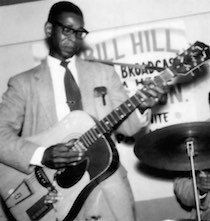
The Bihari years were extraordinarily productive. James recorded a string of singles for Modern, Flair, and Meteor that established him as one of the most exciting performers in blues. "I Believe" (1953), a reworking of his "Dust My Broom" riff with new lyrics, reached No. 9 on the R&B chart and became his second major hit. He also cut "Standing at the Crossroads" (1954), "Dust My Blues" (1955), and numerous other sides that showcased his evolving sound. During this period, he moved to Chicago and became a central figure in the city's burgeoning electric blues scene, regularly broadcasting for DJ Big Bill Hill on WPOA and performing at clubs throughout the South and West Sides.
James's sideman work during this period was equally significant. He played lead guitar on Big Joe Turner's 1954 top 10 R&B hit "TV Mama" for Atlantic Records, and his distinctive slide can be heard on recordings by Junior Wells (for the States label), Little Johnny Jones (Atlantic and Flair), J.T. Brown (Meteor), and Willie Love (Trumpet). These sessions spread his influence throughout the Chicago blues community and established him as the go-to guitarist for producers seeking that raw, electrified Delta sound.
The Chief Records Interlude (1957)
In 1957, James recorded for Mel London's Chief Records, producing some of his most ferocious work. "It Hurts Me Too"—a version of Tampa Red's 1940 recording—became one of his signature songs, its title phrase delivered with a pain that seemed to emanate from deep within. He also cut "Coming Home," "The 12 Year Old Boy," "Cry for Me Baby," and "Take Me Where You Go." The Chief sides were later reissued by Vee-Jay and other labels, ensuring their continued circulation. "Coming Home," in particular, made a deep impression on listeners: blues researcher Mike Rowe, author of
Chicago Breakdown, recalled hearing it for the first time and commenting, "Well, then. Nothing will ever quite be the same again, will it?"
The Fire Records Years: Masterpieces in Stereo (1959–1963)
The final and perhaps most artistically significant phase of James's recording career began in 1959, when Harlem record hustler and label owner Bobby Robinson tracked him down in Chicago. Robinson, who ran the Fire, Fury, and Enjoy labels, would record more than fifty sides with James over the next three years—sessions held in both Chicago and New York that represent some of the finest blues recordings of the era.
The Fire sessions produced a catalog of classics that have become staples of the blues repertoire:
-
"The Sky Is Crying" (1960) — Recorded on a rainy day when James felt the blues particularly strongly, this became one of his biggest hits and most enduring compositions. The song's melancholy atmosphere and crying slide guitar made it a blues standard, later covered by Stevie Ray Vaughan, Albert King, and countless others.
-
"Done Somebody Wrong" — A driving shuffle that the Allman Brothers Band would later make a fixture of their repertoire.
-
"Shake Your Moneymaker" (1961) — A raucous party anthem that would give its name to a later Southern rock band.
-
"Look on Yonder Wall" — A powerful blues that demonstrated James's ability to build tension through repetition and dynamics.
-
"My Bleeding Heart" — A slow blues of devastating emotional intensity.
-
"Stranger Blues" — A haunting minor-key piece that showcased his more introspective side.
-
"Rollin' and Tumblin'" — A raw, primal blues recorded with Wild Jimmy Spruill on second guitar.
-
"Bobby's Rock" — An instrumental showcase for his band's powerhouse sound.
Robinson also had the foresight to record James talking about his early life, preserving the musician's own voice for posterity. Many of the Fire recordings were made in stereo—a relative rarity for blues sessions of the period—giving them a clarity and presence that enhanced their impact. The complete Fire/Fury/Enjoy recordings were later compiled by Capricorn Records on the essential double-CD set
King of the Slide Guitar in the 1990s.
The Chess Sessions and Union Troubles
James's relationship with Chess Records was complicated by contractual entanglements. In 1953, he recorded for Chess (and its Checker subsidiary), but due to his existing contract with the Bihari Brothers, the tapes were shelved until 1960. When they were finally released, they included classics like "I Can't Hold Out," "The Sun Is Shining," and "Madison Blues." These sides, along with recordings by John Brim, were later packaged on the essential Chess LP
Whose Muddy Shoes (Chess 9114). The 1960 Chess session represented some of James's most polished work, with a tight band and crisp production that complemented his raw energy.
Despite his success, James faced significant obstacles. In the late 1950s, he fell out with the Chicago Musicians' Union over unpaid dues and contractual difficulties. The union blacklisted him for three years (1956–1959), preventing him from playing or recording in Chicago. During this period, he returned to Mississippi, where he played local clubs and reportedly made moonshine to supplement his income. The blacklist cost him crucial years at the height of his powers and contributed to the sense that his career never quite reached the commercial heights it deserved.
Personal Life and Character
James married three times: first to Minnie Mae around 1942, then to Georgianna Crump in 1947, and finally to a woman named Janice (surname unknown) around 1954. The legal status of these marriages remains uncertain, but they produced, it is believed, seven children, including musician Elmore James Jr. His personal life was marked by the same intensity that characterized his music—heavy drinking, a tempestuous temperament, and a relentless drive to perform despite his failing health.
Those who knew James described a man who looked more like a schoolteacher than a bluesman, with his thick glasses and conservative suits. But on stage, he was transformed. Belgian blues fan George Adins, who saw James perform in Chicago in 1959 with Muddy Waters, left a vivid account: "Elmore will always remain the most exciting, dramatic blues singer and guitarist that I've ever had a chance to see perform in the flesh... Wearing thick glasses, Elmore's face always had an expressive and dramatic look, especially when he was real gone on the slow blues. Singing with a strong and rough voice, he really didn't need a mike... Using the bottleneck technique most of the time, Elmore really let his guitar sound as I had never heard a guitar sound before. You just couldn't sit still! You had to move..."
Death and Posthumous Recognition
In the spring of 1963, James was scheduled to inaugurate a new club owned by DJ Big Bill Hill, the Copa Cabana Club, and was preparing to join the American Folk Blues Festival tour in Europe—a breakthrough that would have introduced him to international audiences. But on May 24, 1963, while staying with his older cousin, "Homesick" James Williamson, in Chicago, he died of a heart attack. He was 45 years old. The timing was cruel: within a year, the British Invasion would bring blues to white rock audiences, and James would have been perfectly positioned to capitalize on the renewed interest. Instead, he became one of the great "what ifs" of blues history.
He was buried in the Newport Baptist Church Cemetery in Ebenezer, Mississippi. For nearly three decades, his grave went unmarked. In 1992, Phil Walden of Capricorn Records raised funds for a granite headstone, which was unveiled at a dedication ceremony sponsored by the Mount Zion Memorial Fund. The headstone reads "King of the Slide Guitar" and features a bronze relief of James playing guitar—a fitting tribute to a man who defined the instrument's electric possibilities.
James's posthumous recognition has been extensive. He was inducted into the Blues Hall of Fame in 1980 as part of its initial class of inductees. In 1992, he was inducted into the Rock and Roll Hall of Fame as an "Early Influence." In 2012, he was honored with a marker on the Mississippi Blues Trail in Ebenezer. In 2019, "The Sky Is Crying" was inducted into the Blues Hall of Fame as a Classic of Blues Recording.
Musical Style and Innovation
Elmore James's contribution to music extends far beyond his famous slide guitar riff. As a transitional figure, he accomplished something that few musicians have managed: he preserved the emotional intensity and musical vocabulary of the pre-war Delta blues while translating them into the language of electric amplification and modern rhythm sections.
His most significant innovation was the electrification of Robert Johnson's slide triplet riffs. Where Johnson had played acoustic slide with the neck of a broken bottle or a metal ring, James transferred those figures to an electric guitar, using his radio repair skills to create a sound that was not merely louder but tonally distorted and capable of echo effects. He took the boogie bass lines that Johnson had played on the lower strings of his acoustic guitar and assigned them to the piano, drums, and bass guitar of his rhythm section. With the bass now driving a one-two beat and the lead guitar playing various riffs, James's electric band helped pioneer the precursors to rhythm and blues—and, when polished and smoothed out, to soul music and early rock and roll.
His experiments with guitar amplification demonstrated that electric blues could be loud enough to reach the back of any crowded juke joint or concert hall, but also that the amplifier itself could be an instrument of expression—that distortion, feedback, and tonal manipulation were not flaws to be eliminated but effects to be embraced. This insight, born of necessity and technical ingenuity in a Mississippi radio shop, would be rediscovered by psychedelic rock guitarists in the 1960s and remains central to electric guitar playing today.
Vocally, James combined the raw, field-holler quality of Delta singing with a melodramatic, almost frantic intensity that matched his guitar attack. Tony Glover captured this quality perfectly: "no one has ever quite matched that vocal intensity, which transformed the lonesome moan of the Delta into a Chicago scream." His voice was rough, urgent, and deeply human—a sound of struggle and transcendence that spoke directly to the Black working-class audiences who were his primary constituency.
Influence and Legacy
The breadth of Elmore James's influence is staggering. His direct impact on blues guitarists is immediate and unmistakable: Homesick James (his cousin), Hound Dog Taylor, and J.B. Hutto all recorded versions of his songs and incorporated his style into their own playing. His single-string playing influenced B.B. King and Chuck Berry, two of the most important figures in the transition from blues to rock and roll.
But it was in the world of rock that James's influence became truly global. The British blues boom of the 1960s introduced his music to white audiences who had never heard the blues, and young guitarists across the UK and America fell under his spell:
-
Brian Jones of the Rolling Stones was so enamored of James that he billed himself as "Elmo Lewis" in some of his earliest public performances. Jones later said that hearing James for the first time was like "the Earth shifted on its axis."
-
Jeremy Spencer of early Fleetwood Mac built his entire style around James's playing, reproducing his riffs note-for-note on the band's first albums.
-
Jimi Hendrix called himself "Jimmy James" early in his career in tribute to Elmore, and a photo on the sleeve of Hendrix's album Blues shows him holding James's UK LP The Best of Elmore James. Hendrix covered "Bleeding Heart" at the Experience's Royal Albert Hall concert in 1969 and with the Band of Gypsys at the Fillmore East.
-
Duane Allman drew direct inspiration from James for the Allman Brothers Band's versions of "Done Somebody Wrong" and "One Way Out," making them fixtures of the band's repertoire.
-
Eric Clapton, Johnny Winter, Frank Zappa, Jerry Garcia, and Derek Trucks all acknowledged James's influence on their playing.
-
The Beatles paid homage on "For You Blue," where George Harrison sings "Elmore James got nothin' on this, baby" while John Lennon plays a slide solo on a Höfner lap steel guitar.
-
Eric Burdon dedicated the song "No More Elmore" to him, featured on his album
Comeback and regularly played at his concerts.
American blues-rock bands also embraced his music. Canned Heat and the Paul Butterfield Blues Band featured his songs on their respective debut albums. The Allman Brothers Band's versions of "Done Somebody Wrong" and "One Way Out" introduced James to the Southern rock audience of the 1970s. Stevie Ray Vaughan's blistering cover of "The Sky Is Crying" became one of the defining blues-rock recordings of the 1980s.
As blues biographer Steve Franz observed, the "artistic transmission" in James's music originated with Robert Johnson and has now been passed down into "every whooping, weeping, soaring slide guitar solo we hear today." Without Elmore James, there would be no Duane Allman, no Ry Cooder, no Derek Trucks—no modern slide guitar as we know it.
Discography
Selected Singles (1951–1963)
-
"Dust My Broom" (1951), Trumpet
-
"I Believe" (1953), Flair
-
"Standing at the Crossroads" (1954), Checker
-
"Dust My Blues" (1955), Flair
-
"It Hurts Me Too" (1957), Chief
-
"Coming Home" (1957), Chief
-
"The Sky Is Crying" (1960), Fire
-
"I Can't Hold Out" (1960), Chess
-
"Done Somebody Wrong" (1960), Fire
-
"Rollin' and Tumblin'" (1960), Fire
-
"Shake Your Moneymaker" (1961), Fire
-
"Look on Yonder Wall" (1961), Fire
-
"Stranger Blues" (1962), Fire
-
"Bleeding Heart" (1965), Fire
-
"One Way Out" (1965), Fire
-
"Every Day I Have the Blues" (1965), Fire
-
"Madison Blues" (1968), Fire
Selected Compilation Albums
-
Blues After Hours (Crown, 1960)
-
The Sky Is Crying (Sphere Sound, 1965)
-
I Need You (Sphere Sound, 1966)
-
Whose Muddy Shoes (Chess, 1969) — split with John Brim
-
Street Talkin' (Muse, 1975) — split with Eddie Taylor
-
Shake Your Money Maker (Charly R&B, 1986)
-
Golden Classics (Collectables, 1988)
-
King of the Slide Guitar (Capricorn, 1992) — complete Fire/Fury/Enjoy recordings
-
The Classic Early Recordings: 1951–1956 (Virgin/Flair, 1993)
-
The Sky Is Crying: The History of Elmore James (Rhino, 1993)
-
Rollin' and Tumblin' (Recall/Snapper, 1999)
Conclusion: The King Reigns Eternal
Elmore James's career was brief—barely a dozen years of recording, cut short by a heart attack at age 45—but his impact was seismic. He was, as EBSCO's research summary puts it, "a vital link between the pre-World War II acoustic country blues of the Mississippi Delta and the postwar electric blues of Chicago." But he was more than a link: he was an innovator who transformed the slide guitar from a rural folk instrument into an engine of modern popular music, who demonstrated that the electric amplifier could be a tool of artistic expression rather than mere volume, and who created a body of songs that have become the common property of blues and rock musicians worldwide.
The "Dust My Broom" riff—that swooping, crying figure that opens his most famous record—has been played by thousands of guitarists in thousands of clubs and concert halls. But as Tony Glover noted, "no one has ever quite matched that vocal intensity, which transformed the lonesome moan of the Delta into a Chicago scream." It was that combination of technical innovation and emotional authenticity that made Elmore James the King of the Slide Guitar, and that ensures his reign will continue as long as musicians pick up electric guitars and seek to make them sing.
Suggested Reading
 Buy from Amazon The Amazing Secret History of Elmore James
Selected Discography
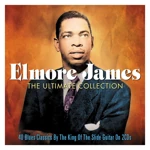 Buy from Amazon The Ultimate Collection - Elmore James
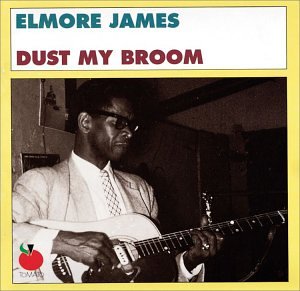 Buy from Amazon Dust My Broom