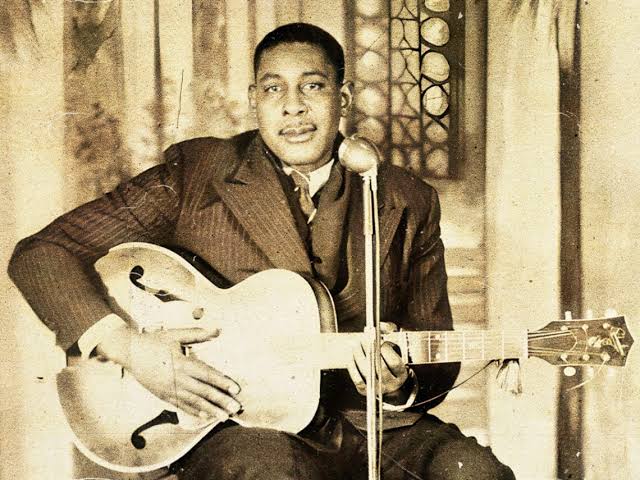
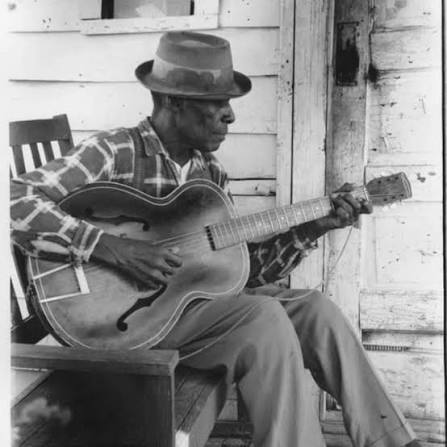
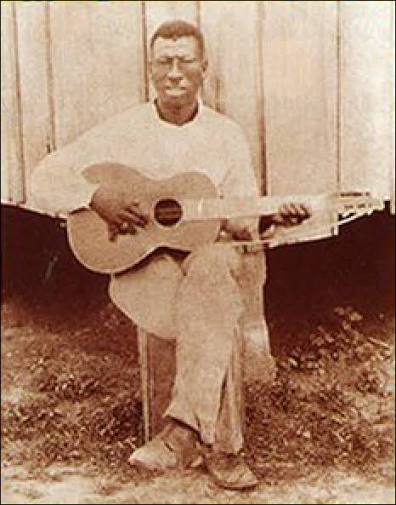
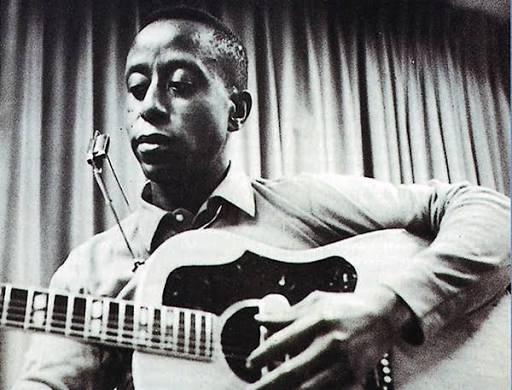
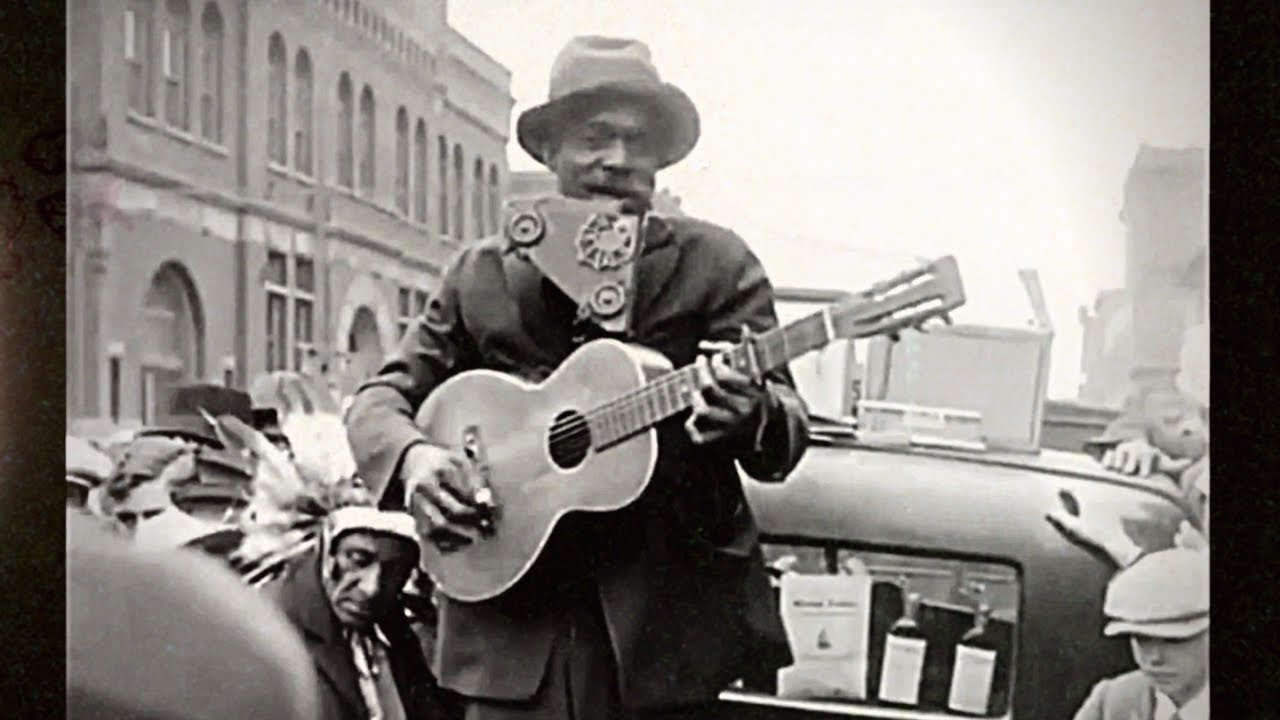
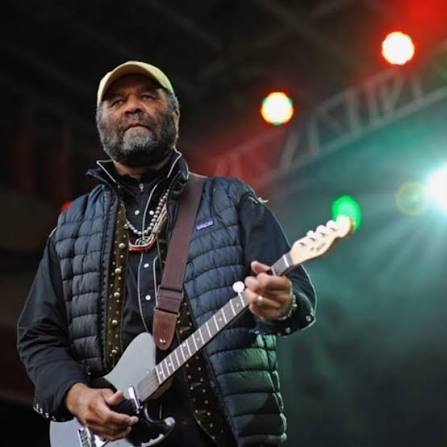
Arthur William "Big Boy" Crudup occupies one of the most paradoxical positions in American music history. He was a prolific blues songwriter and recording artist whose compositions launched the career of Elvis Presley and helped define the sound of rock and roll. He was dubbed "The Father of Rock 'n' Roll" by the Blues Hall of Fame, yet he died in poverty, having never received fair payment for the songs that made others wealthy. His story is simultaneously a testament to the creative genius of the Delta blues tradition and a stark indictment of the systemic exploitation of Black artists in the American music industry.
Early Life: From Gospel to the Blues
Arthur Crudup was born on August 24, 1905, on his grandparents' land in Forest, Mississippi, a small town in Scott County. His family were migrant workers who traveled throughout the South and Midwest in search of agricultural work. When Crudup was ten years old, the family relocated to Indianapolis, Indiana, for work, but returned to Mississippi a year later, settling in the Forest and Clarksdale areas. The family moved between Forest and Clarksdale through 1935, with young Arthur earning his keep working on farms.
Crudup's musical education began in the church. He sang in gospel choirs and with the Harmonizing Four, a gospel group that would eventually take him to Chicago in 1939. Like many blues musicians of his generation, his transition from sacred to secular music was born of necessity rather than choice. "What started me out was getting stuck in Chicago and stranded," he told Rolling Stone magazine in 1971. "I was a gospel singer. And after getting stranded, why, I seen I could make a better buck singing the blues than I could in gospel songs. And I turned to the blues."
Remarkably, Crudup did not take up the guitar until he was in his thirties—around 1939, when he was already in Chicago. He was largely self-taught, developing a distinctive style that combined rhythmic strumming with a powerful, emotive vocal delivery. His large physical stature earned him the nickname "Big Boy," which he carried throughout his career.
The Chicago Years: Discovery and Deception
Life in Chicago was brutal for the newly arrived Crudup. He found himself living in a packing crate under the 39th Street elevated train station, busking on street corners for pennies. One evening, while playing on a street corner, he caught the attention of Lester Melrose, a white record producer and talent scout for RCA Victor's Bluebird label. Melrose, who was already managing established blues artists like Tampa Red, Big Bill Broonzy, and Roosevelt Sykes, saw potential in the struggling musician. He put a dollar in Crudup's hand and asked him to play, then invited him to a party at Tampa Red's house. The impression Crudup made that night led to a recording contract with Bluebird.
Crudup's first recording session took place on September 11, 1941, in Chicago. Backed by Joe McCoy on mandolin, he recorded "If I Get Lucky" and "Death Valley Blues" for Bluebird. The records found an audience, and Crudup continued to record for RCA Victor through 1954, producing approximately 80 songs for the label. His early recordings established him as one of the most prominent blues artists of the 1940s, with a unique sound that blended Delta blues roots with a more urban, danceable feel.
His best-known recordings from this period included:
-
"Death Valley Blues" (1941) — His debut recording, a stark, atmospheric blues.
-
"Mean Old 'Frisco Blues" (1942) — A train blues that became one of his signature songs.
-
"Rock Me Mama" (1944) — Adapted from Big Bill Broonzy's "Rockin' Chair Blues" (1940), this song would have an extraordinarily long afterlife.
-
"Who's Been Foolin' You" (1944) — A popular blues that demonstrated his songwriting craft.
-
"I'm in the Mood" (1945) — One of his biggest hits, reaching the R&B charts.
-
"She's Gone" (1945) — The B-side to "I'm in the Mood," also charting.
-
"So Glad You're Mine" (1946) — A song that would later be covered by Elvis Presley.
-
"That's All Right" (1946) — The song that would change music history.
-
"My Baby Left Me" (1951) — Another Presley-bound composition.
Crudup's records sold well throughout the South, and he toured black clubs in the region, sometimes performing with Sonny Boy Williamson II and Elmore James. In his hometown of Forest, he played dance halls and cafes where both Black and white audiences attended, despite the segregation policies of the era. He also recorded under the pseudonyms "Elmer James" and "Percy Lee Crudup" for Trumpet and Checker Records in 1952, suggesting that his relationship with Melrose and RCA was already strained.
The Royalty Scandal: "I Was Making Everybody Rich, and Here I Was Poor"
The defining tragedy of Crudup's career was his relationship with Lester Melrose. Like many Black musicians of the era who had little education and no familiarity with copyright law, Crudup signed away his rights without understanding the consequences. Melrose was notoriously exploitative; he once stated, "I wouldn't record anybody unless he signed all his rights in those tunes over to me." Crudup held the rights to none of the approximately 80 songs he recorded for Bluebird/RCA.
By 1947, Crudup realized he was not being paid adequate royalties for his songs. The breaking point came when he discovered that the money from his recordings was being funneled to Melrose while he remained in poverty. "I realised I was making everybody rich, and here I was poor," he later said. He split with Melrose but continued to record for RCA, though his enthusiasm for the music business was permanently damaged. His last Chicago session was in 1951; his 1952–1954 Victor sessions were held at radio station WGST in Atlanta, Georgia, suggesting he was no longer welcome or willing to record in Chicago.
The financial exploitation had devastating consequences. In the early 1960s, Crudup finally received a sizable royalty check—for $1,600. But Melrose refused to turn over the copyrights. In 1971, Downbeat magazine estimated that Crudup should have earned over $250,000 (nearly $2 million in today's dollars) from "That's All Right" and "My Baby Left Me" alone. The American Guild of Authors and Composers tried to collect royalties on his behalf, but its managing director told High Fidelity magazine in 1972 that Crudup had been paid "at most $2,500" from their efforts.
Disillusioned and angry, Crudup withdrew from the music business in the mid-1950s. He returned to Mississippi, where he ran a reasonably successful bootlegging operation, sold moonshine to local drinking establishments including one called the Do Drop Inn, and worked as a laborer—stacking lumber, picking cotton, and hauling trash for $28.44 a week. "I had the family to take care of, a car note to pay off, a gas bill, a light bill," he explained. He eventually moved to Virginia's Eastern Shore, where he started a business transporting migrant workers between Florida and Virginia, and worked as a field laborer and bus driver to support his family. Throughout his life, he supported thirteen children, only four of whom were his biological offspring.
Elvis Presley and the Birth of Rock 'n' Roll
The story of Arthur Crudup's music might have ended there, as a footnote in blues history, were it not for a young white singer from Tupelo, Mississippi, who grew up listening to Crudup's records. On July 5, 1954, nineteen-year-old Elvis Presley was taking a break during a tryout session at Sun Studios in Memphis when "this song popped into my mind that I had heard years ago," as he later recalled. The song was "That's All Right." Sam Phillips, the legendary founder of Sun Records, immediately recognized Crudup's composition. He was amazed that the teenager knew it and felt his version "came across with a freshness and an exuberance."
Presley's recording of "That's All Right," backed with Bill Monroe's "Blue Moon of Kentucky," was released on July 19, 1954, as Sun 209. A Memphis radio station broadcast the record, and the response was "instantaneous," with phone calls and telegrams flooding in asking the station to replay it. "It was by far Elvis's biggest seller on the Sun label and set him off on what would soon become his almost unimaginable path to stardom," wrote biographer Peter Guralnick.
Presley would go on to record two more Crudup compositions: "My Baby Left Me" (1956) and "So Glad You're Mine" (1956). Elvis was candid about his debt to Crudup. "Down in Tupelo, Mississippi, I used to hear old Arthur Crudup bang his box the way I do now," he told The Charlotte Observer in 1956, "and I said if I ever got to the place I could feel all old Arthur felt, I'd be a music man like nobody ever saw." On another occasion, he said simply, "If I had any ambition, it was to be as good as Arthur Crudup."
Crudup himself had mixed feelings about Presley's success. He was sitting in a bar in Forest, Mississippi, in 1954 when someone put a coin in the jukebox and Presley's version of "That's All Right Mama" began to play. He was incensed and wrote to Melrose asking about royalties. He never received a straight answer. Years later, however, he told the Los Angeles Times that he liked Presley's interpretation: "He made it into a kind of hillbilly record. But I liked it. I thought it would be a hit. Some people like the blues, some don't. But the way he did it, everyone liked it."
The historical significance of "That's All Right" extends beyond Presley's career. Southeastern Louisiana University rock historian Joseph Burns considers it to be the first rock and roll song, noting that "this song could contain the first ever guitar solo break." The Blues Hall of Fame states that it "stands as a convincing front-runner for rock 'n' roll's ground zero." The recording mixed elements of blues and country into what Burns calls "a brand new thing"—a sound that would define popular music for generations.
The Blues Revival and the Return to Music
Crudup's recording career had effectively ended by the mid-1950s, but the 1960s folk and blues revival brought him back into the spotlight. In 1965, he returned to recording for Fire Records and Delmark Records, and began touring again. In 1968, Philadelphia-based blues manager, photographer, and advocate Dick Waterman sought out Crudup, finding the poverty-stricken bluesman and beginning a campaign to secure some level of royalties for him and to coax him back into performing.
Waterman's efforts were instrumental in rejuvenating Crudup's career. He helped Crudup gain a small amount of royalties for his old songs and arranged for him to perform at festivals and in clubs. Crudup toured with Bonnie Raitt, who became a champion for the aging bluesman, and shared stages with B.B. King and Taj Mahal. He played the Newport Jazz Festival, toured England in 1969, and toured Australia in 1972. A documentary film about his life,
Out of the Black, Into the Blue, was made in 1973.
During this period, Crudup recorded several albums that have become essential documents of his late style:
-
Crudup's Mood (Delmark, 1969)
-
Look on Yonder's Wall (Delmark, 1969)
-
Sunny Road (Delmark, 1969) — with Jimmy Dawkins and Willie "Big Eyes" Smith
-
Roebuck Man (United Artists, 1970)
-
Arthur "BigBoy" Crudup Meets the Master Blues Bassists (Delmark, 1994) — with Willie Dixon and Ransom Knowling, recorded in 1969 but released twenty years after his death
These recordings captured a more mature, reflective Crudup, still possessed of his powerful voice and distinctive guitar style, but with a world-weariness that came from decades of struggle.
The Failed Settlement and Final Years
Despite Waterman's best efforts, Crudup never received the financial justice he deserved. In 1973, Waterman negotiated a deal with Hill and Range, the music-publishing house that had acquired the rights to Crudup's songs after Melrose's death. The deal would have paid Crudup approximately $60,000. But when the lawyer went upstairs to get the check signed by the manager, he returned pale and shaken. "He won't sign the agreement. He said it gives more away in settlement than you could hope to get from litigation." Waterman stood before Crudup and told him over and over that they would make the publishers pay. Crudup looked him in the face and spoke slowly: "I know you done the best you could. I respects you and I honors you in my heart. But it just ain't meant to be."
"Naked I come into this world and naked I should leave it," Crudup told Waterman, accepting his fate with a stoicism born of a lifetime of hardship. He died the following spring, on March 28, 1974, in Nassawadox Hospital in Northampton County, Virginia, from complications of heart disease and diabetes. He was 68 years old.
But the story was not over. After Crudup's death, Waterman contacted an associate at Warner Brothers (he was managing Bonnie Raitt, who was signed to the label) and explained the outrage of how Hill and Range had cheated Crudup. Warner Brothers took up the cause. Around the same time, Chappell Music was moving to buy out Hill and Range and discovered the unresolved legal dispute over royalties with the deceased bluesman. They refused to complete the purchase until the dispute was resolved. Finally, Waterman had the leverage he needed, and Hill and Range settled with Crudup's estate. The first check they wrote was for $248,000. Over the course of the next thirty years, Crudup's estate would earn over $3 million in owed royalties. The scales of justice were slightly righted—but too late for the man who had created the music.
The "Wagon Wheel" Connection: A Century of Musical DNA
One of the most remarkable aspects of Crudup's legacy is the direct line of musical DNA that extends from his work to one of the biggest country hits of the 21st century. Crudup's 1945 recording "Rock Me Mama" was adapted from Big Bill Broonzy's 1940 song "Rockin' Chair Blues." In 1973, Bob Dylan recorded an unfinished demo called "Rock Me, Mama" during the
Pat Garrett and Billy the Kid sessions, borrowing the phrase from Crudup's song. The demo was never officially released but circulated on bootlegs.
In the early 2000s, Ketch Secor of Old Crow Medicine Show heard Dylan's bootleg and wrote verses around the chorus, creating "Wagon Wheel." When Secor sought copyright clearance from Dylan's management, he received a surprising response: "Bob agrees to split the song 50/50 with Ketch. Oh, and Bob says it's just an old folk song. He didn't write it. Says he learned it from Arthur Crudup." Secor later discovered that Crudup had credited Big Bill Broonzy, and Broonzy's earliest recording of the derivative was around 1928. As Secor noted, "In a way, it's taken something like 85 years to get completed." "Wagon Wheel" became one of the biggest country songs of all time, certified Diamond by the RIAA after Darius Rucker's version surpassed 10 million units in 2022.
Musical Style and Artistic Identity
Arthur Crudup's music occupied a unique space in the blues tradition. He was not a Delta bluesman in the raw, acoustic mold of Robert Johnson or Charley Patton, nor was he a fully urbanized Chicago blues artist like Muddy Waters. His style blended rural and urban elements, sacred and secular influences, blues and country-tinged phrasing. He played both acoustic and electric guitar, often performing solo with just his guitar, using a slide to create soulful and expressive melodies. His voice was powerful and emotive, with a delivery that could shift from tender intimacy to raw urgency.
His songwriting was direct and memorable, with lyrics that spoke to the everyday experiences of working-class Black Americans—love, loss, travel, and the struggle to make ends meet. Songs like "Mean Old 'Frisco Blues" and "Death Valley Blues" painted vivid pictures of life in the Jim Crow South, while "That's All Right" and "My Baby Left Me" distilled romantic complications into irresistible hooks. His ability to craft songs that were simultaneously personal and universal was the key to his enduring appeal.
Influence and Legacy
The breadth of Crudup's influence is staggering. Elvis Presley recorded three of his songs and cited him as a primary inspiration. But Presley was only the beginning. A total of 18 songs written by Crudup have been recorded by artists including the Beatles, B.B. King, Elton John, Rod Stewart, John Lennon, Canned Heat, Albert King, Colin James, John Hammond, Creedence Clearwater Revival, Led Zeppelin, Slade, and Eric Clapton (who covered "Mean Old 'Frisco Blues" on his 1977 album
Slowhand). There are currently 277 recorded versions of "That's All Right," 96 versions of "My Baby Left Me," and 37 versions of "So Glad You're Mine."
The Blues Hall of Fame stated that Crudup "became known as 'The Father of Rock 'n' Roll' after Elvis Presley recorded three of his songs" but added the crucial caveat that "Crudup was a classic victim of music industry exploitation, and despite the commercial success of his music, was never able to even support his family from his music." This dual legacy—musical fatherhood and economic exploitation—defines his place in history.
Crudup has been honored with a marker on the Mississippi Blues Trail in his hometown of Forest. The state of Virginia has installed a highway marker on the Eastern Shore honoring him, which notes: "Among others who covered Crudup were the Beatles, B.B. King, and Elton John. Rarely receiving royalties, Crudup supported his family as a laborer and farm worker." He was briefly portrayed by Gary Clark Jr. in the 2022 biopic
Elvis, and his case was cited by a California reparations task force examining the long history of discrimination against African Americans. His granddaughter, Prechelle Crudup Shannon, has been a vocal advocate for his recognition, arguing that he belongs in the Rock & Roll Hall of Fame.
Conclusion: The Unpaid Debt
Arthur "Big Boy" Crudup's story is the American music industry in microcosm: a Black artist creates work of extraordinary power and influence, sees it appropriated and commercialized by white performers and corporations, and dies in poverty while his songs generate millions for others. The $3 million his estate eventually received is a measure of what was stolen from him, not a measure of justice served.
And yet, Crudup's legacy transcends the injustice done to him. His songs—"That's All Right," "My Baby Left Me," "So Glad You're Mine," "Rock Me Mama," "Mean Old 'Frisco Blues"—are part of the permanent repertoire of American popular music. They have been sung by rock stars and country singers, blues legends and folk revivalists, bar bands and school choirs. The musical DNA he contributed flows through Elvis Presley, Bob Dylan, Old Crow Medicine Show, and countless others. He was, as Elvis himself acknowledged, the standard against which rock 'n' roll measured itself.
"If I had any ambition, it was to be as good as Arthur Crudup," Presley said. In the end, Presley became far more famous and far wealthier. But it was Crudup who wrote the songs that made it possible, Crudup who created the template, Crudup who was the father. The debt remains unpaid, but the music plays on.
Suggested Reading
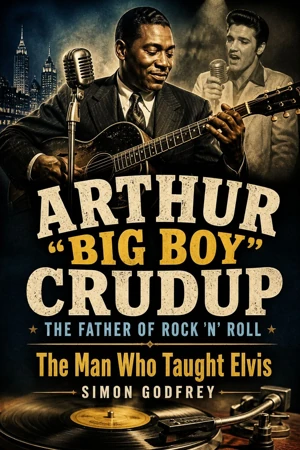 Buy from Amazon Arthur “Big Boy” Crudup: The Father of Rock ‘n’ Roll by Simon Godfrey
Suggested Listening
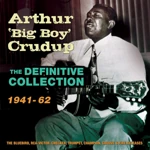 Buy from Amazon Definitive Collection 1941-62
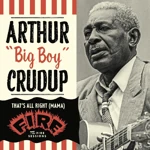 Buy from Amazon That's All Right Mama: The Fire Sessions