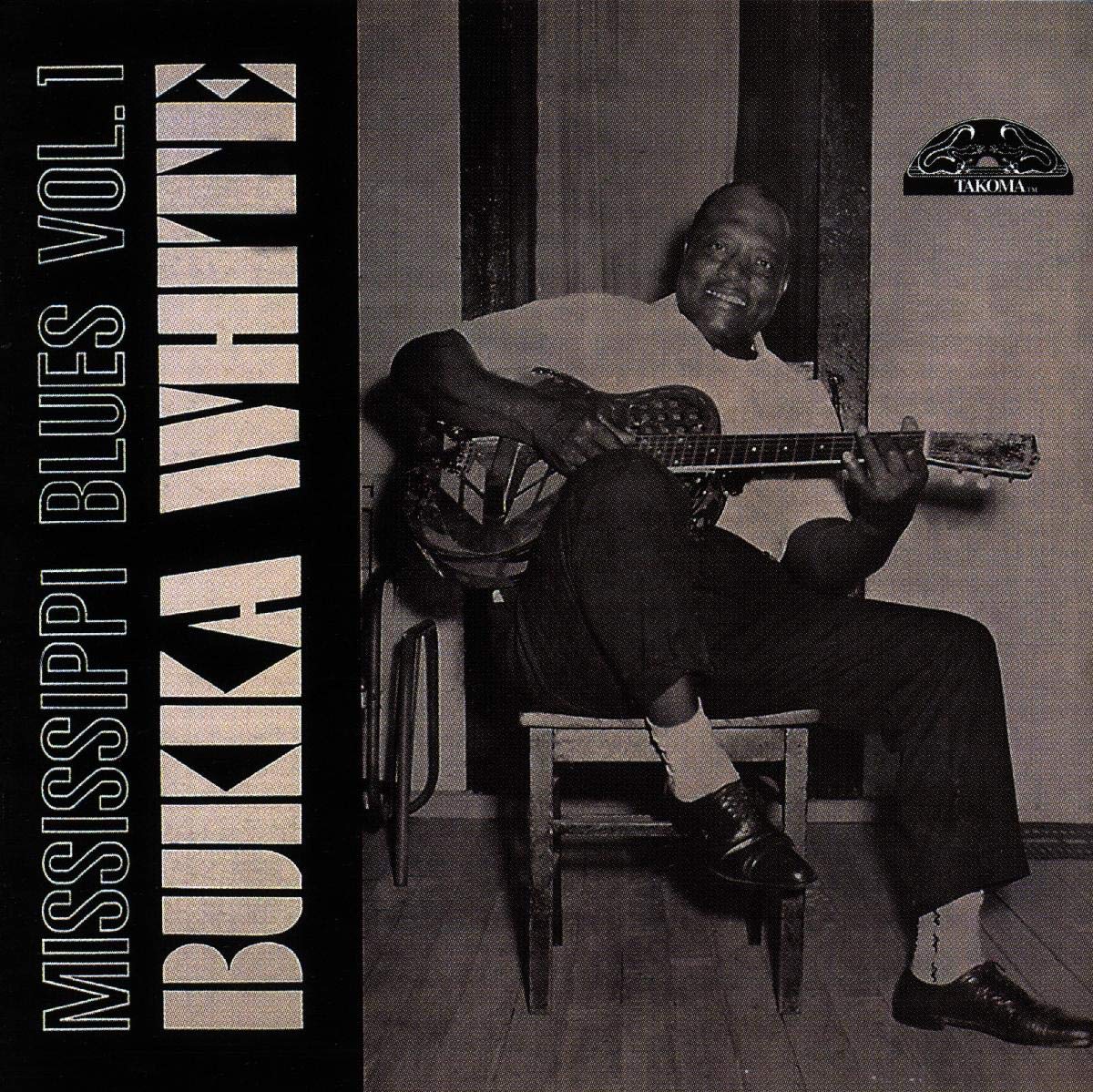
Released in 1963/1964 on Takoma Records (catalog no. B-1001), Mississippi Blues Vol. 1—also issued simply as Mississippi Blues—is the album that launched Bukka White's second career and stands as one of the most important documents of the 1960s folk-blues revival. Recorded in Memphis, Tennessee in 1963, the album captures the 59-year-old Delta bluesman just months after his "rediscovery" by John Fahey and Ed Denson, delivering the songs that had made him legendary three decades earlier with an intensity that belied his age.
Recording Sessions & Production
The album was recorded in 1963 in Memphis, Tennessee, at a time when White was working in a tank factory and had not recorded commercially in 23 years.
The album was produced by Ed Denson and John Fahey. Fahey was a 24-year-old guitarist, record collector, and Takoma label founder; Denson was a fellow blues enthusiast who became White's manager.
Their rediscovery of White is now blues legend: in 1963, Fahey sent a postcard addressed to "Bukka White (Old Blues Singer), c/o General Delivery, Aberdeen, Mississippi"—presuming, based on White's 1940 recording "Aberdeen Mississippi Blues," that he still lived there. A relative working in the Aberdeen post office forwarded the card to White in Memphis.
The Memphis sessions were stark and unadorned—just White, his National steel resonator guitar, and occasionally a piano. The production aesthetic was deliberately primitive, capturing White's "stomping" style (he famously explained, "I stomp 'em, I don't peddle 'em") without studio sweetening or additional musicians.
The original Takoma LP contained 11 tracks. Later CD reissues added three bonus tracks recorded in 1964 in Berkeley, California: "World Boogie," "Midnight Blue / Blues," and "Old Man Walking Blues."
The Musician
-
Bukka White — Vocals, acoustic guitar, piano (on "Drunk Man Blues"), spoken word (on "Remembrance of Charlie Patton")
White played his signature National steel resonator guitar in open tunings—primarily Spanish (open G) and cross-note (open E minor)—using a heavy glass slide on his ring finger.
His right-hand attack was percussive and relentless, generating a rhythmic drive that made his solo performances sound like a full band. His voice—a deep, booming baritone—had grown even more authoritative with age.
Track-by-Track Breakdown
Side One
1. "Aberdeen Mississippi Blues" (4:12)
Songwriter: Bukka White
Recorded: 1963, Memphis
Musicians: Bukka White (vocals, guitar)
The album opens with the song that made White's rediscovery possible. Originally recorded in 1940, this 1963 version is slower and more deliberate, with White's National guitar generating a dark, droning undertone. The lyric cites two Aberdeen women who are "gonna make me lose my mind."
The track's title had proven crucial in White's rediscovery—Fahey's postcard to Aberdeen found its way to Memphis, reconnecting White with the world.
Songwriter: Bukka White
Recorded: 1963, Memphis
Musicians: Bukka White (vocals, guitar)
The album opens with the song that made White's rediscovery possible. Originally recorded in 1940, this 1963 version is slower and more deliberate, with White's National guitar generating a dark, droning undertone. The lyric cites two Aberdeen women who are "gonna make me lose my mind."
2. "Baby Please Don't Go" (4:50)
Songwriter: Big Joe Williams (original); adapted by Bukka White
Recorded: 1963, Memphis
Musicians: Bukka White (vocals, guitar)
White's first recording of this blues standard, made 33 years after his recording debut. The song had been a hit for Big Joe Williams in 1935 and later became a staple of Muddy Waters and Van Morrison's Them. White's version is stark and menacing, his guitar creating a trance-like drone beneath his pleading vocal. The 1963 recording captures the song's essence as a desperate lover's plea: "Baby, please don't go back to New Orleans."
3. "New Orleans, Streamline" (3:45)
Songwriter: Bukka White
Recorded: 1963, Memphis
Musicians: Bukka White (vocals, guitar)
A reworking of his 1940 "Special Stream Line," this train blues describes a locomotive so fast that "the hobos don't fool with this train / They stand on the track with their hat in their hands."
White's lifelong fascination with trains— inherited from his railroad fireman father—permeates the track, his guitar mimicking the rhythm of the rails.
Songwriter: Bukka White
Recorded: 1963, Memphis
Musicians: Bukka White (vocals, guitar)
A reworking of his 1940 "Special Stream Line," this train blues describes a locomotive so fast that "the hobos don't fool with this train / They stand on the track with their hat in their hands."
4. "Parchman Farm Blues" (2:54)
Songwriter: Bukka White
Recorded: 1963, Memphis
Musicians: Bukka White (vocals, guitar)
White's most famous composition, originally recorded in 1940 after his release from the Mississippi State Penitentiary. The 1963 version retains the raw power of the original: a one-chord modal blues with a distinctive slide guitar break. The lyric is a direct, autobiographical warning: "If you wanna do good, you better stay off ol' Parchman farm."
5. "Poor Boy Long Way From Home" (2:22)
Songwriter: Traditional / Adapted by Bukka White
Recorded: 1963, Memphis
Musicians: Bukka White (vocals, guitar)
A traditional blues that White had first recorded as "Po' Boy" for Alan Lomax at Parchman Farm in 1939.
The song's lineage extends back to Gus Cannon's 1927 recording and Barbecue Bob's version the same year.
White's 1963 version is more measured than his 1939 Lomax recording, his vocal conveying the loneliness of the wandering man with devastating simplicity.
Songwriter: Traditional / Adapted by Bukka White
Recorded: 1963, Memphis
Musicians: Bukka White (vocals, guitar)
A traditional blues that White had first recorded as "Po' Boy" for Alan Lomax at Parchman Farm in 1939.
6. "Remembrance of Charlie Patton" (3:54)
Songwriter: Spoken word / Bukka White
Recorded: 1963, Memphis
Musicians: Bukka White (spoken voice)
Not a song but a spoken-word recollection of Charley Patton, the "Father of the Delta Blues." White recounts his early encounters with Patton and his influence on White's development as a musician. The track is a priceless oral history document, preserving firsthand testimony from a man who was there at the creation of the Delta blues. In the 1990s, this recording was sampled by electronic artist Recoil (Alan Wilder of Depeche Mode) for the track "Electro Blues for Bukka White."
Side Two
7. "Shake 'Em On Down" (3:32)
Songwriter: Bukka White
Recorded: 1963, Memphis
Musicians: Bukka White (vocals, guitar)
White's 1937 hit, re-recorded here with even greater ferocity. The song became a hit while White was serving time at Parchman Farm, and its driving, rhythmic attack made it one of the definitive prewar blues recordings.
The 1963 version demonstrates that White had lost none of his power in the intervening 26 years. Led Zeppelin later based "Hats Off to (Roy) Harper" largely on this song.
Songwriter: Bukka White
Recorded: 1963, Memphis
Musicians: Bukka White (vocals, guitar)
White's 1937 hit, re-recorded here with even greater ferocity. The song became a hit while White was serving time at Parchman Farm, and its driving, rhythmic attack made it one of the definitive prewar blues recordings.
8. "I Am In The Heavenly Way" (3:44)
Songwriter: Bukka White
Recorded: 1963, Memphis
Musicians: Bukka White (vocals, guitar)
A gospel song originally recorded in 1930 for Victor Records, where it was billed as a "Sermon Sung for You by Washington White, 'The Singing Preacher,' with Guitars and Women Singers."
The 1963 solo version strips away the female backing vocalists, leaving just White's voice and guitar. The song reflects his upbringing in the Baptist church and his father's influence as a musician and railroad worker.
Songwriter: Bukka White
Recorded: 1963, Memphis
Musicians: Bukka White (vocals, guitar)
A gospel song originally recorded in 1930 for Victor Records, where it was billed as a "Sermon Sung for You by Washington White, 'The Singing Preacher,' with Guitars and Women Singers."
9. "The Atlanta Special" (5:55)
Songwriter: Bukka White
Recorded: 1963, Memphis
Musicians: Bukka White (vocals, guitar)
One of the longest tracks on the album, a sprawling train blues that runs nearly six minutes. The lyric describes a journey "runnin' all down through Georgia / All down through the south / And all through the Gulf of Mexico."
White's guitar generates a relentless, driving rhythm that mimics the motion of the train, his vocal riding atop the groove with the authority of a man who had spent his life on the move.
Songwriter: Bukka White
Recorded: 1963, Memphis
Musicians: Bukka White (vocals, guitar)
One of the longest tracks on the album, a sprawling train blues that runs nearly six minutes. The lyric describes a journey "runnin' all down through Georgia / All down through the south / And all through the Gulf of Mexico."
10. "Drunk Man Blues" (3:53)
Songwriter: Bukka White
Recorded: 1963, Memphis
Musicians: Bukka White (vocals, piano)
The only track on the album on which White plays piano rather than guitar. A rare glimpse of White's keyboard skills, which he had developed during his years away from recording. The track is a blues of dissolution and regret, with White's piano adding a barroom atmosphere that his guitar tracks lack. It demonstrates his versatility as a musician and his willingness to explore different textures within the blues idiom.
11. "Army Blues" (3:03)
Songwriter: Bukka White
Recorded: 1963, Memphis
Musicians: Bukka White (vocals, guitar)
A short, punchy blues that addresses military service. At barely three minutes, it is one of the most compact tracks on the album, but no less potent for its brevity. White's guitar is particularly biting here, his slide creating a trebly, aggressive attack that cuts through the acoustic texture.
CD Bonus Tracks (1964 Berkeley, California Session)
12. "World Boogie" (2:33)
Songwriter: Bukka White
Recorded: 1964, Berkeley, California
Musicians: Bukka White (vocals, guitar)
A frenetic, dance-oriented instrumental that showcases White's "stomping" style at its most propulsive. The title refers to the universal, world-spanning nature of the blues groove.
Songwriter: Bukka White
Recorded: 1964, Berkeley, California
Musicians: Bukka White (vocals, guitar)
A frenetic, dance-oriented instrumental that showcases White's "stomping" style at its most propulsive. The title refers to the universal, world-spanning nature of the blues groove.
13. "Midnight Blue / Blues" (2:36)
Songwriter: Bukka White
Recorded: 1964, Berkeley, California
Musicians: Bukka White (vocals, guitar)
A nocturnal blues that finds White in a more reflective mood. The track's title evokes the late-night atmosphere of the juke joints where he had spent his early career.
Songwriter: Bukka White
Recorded: 1964, Berkeley, California
Musicians: Bukka White (vocals, guitar)
A nocturnal blues that finds White in a more reflective mood. The track's title evokes the late-night atmosphere of the juke joints where he had spent his early career.
14. "Old Man Walking Blues" (5:40)
Songwriter: Bukka White (instrumental)
Recorded: 1964, Berkeley, California
Musicians: Bukka White (guitar)
An instrumental showcase that allows White to stretch out on guitar for nearly six minutes. The track is a masterclass in his "stomping" style, with his National guitar generating a rhythmic drive that sounds like a full band. It is a fitting conclusion to the album, demonstrating the technical mastery that had made him a legend.
Buy This Album
 Buy from Amazon Mississippi Blues
Critical Assessment & Legacy
Mississippi Blues Vol. 1 was a landmark in the folk-blues revival. It was the first album by a rediscovered Delta bluesman to capture the raw power of the prewar style while introducing it to a new generation of listeners. The album's influence was immediate and profound: Bob Dylan had already covered White's "Fixin' to Die Blues" on his 1962 debut LP, and the Takoma release cemented White's status as a living legend.
After Takoma, White went on to record two volumes of Sky Songs for Chris Strachwitz's Arhoolie label, tour Europe with the American Folk Blues Festival, and become a fixture on the college and festival circuit until his death in 1977.
The album also launched Takoma Records as a significant force in the roots music world. John Fahey's label would go on to release landmark recordings by Leo Kottke, Robbie Basho, and others, but Mississippi Blues remains its most historically important release—the album that proved the rediscovery model could work and that the blues was not merely a historical artifact but a living, breathing art form.
Today, Mississippi Blues Vol. 1 stands as an essential document of American music—the sound of a man who had survived Parchman Farm, the Depression, and decades of obscurity, returning to the studio with undiminished power and proving that the Delta blues was timeless.