The story of Leroy Carr begins not in the Mississippi Delta, not in the cotton fields of the Deep South, not in the barrelhouses of Texas or the levee camps of Louisiana, but in the urban North, in a city of factories and railroads, of speakeasies and automobile plants, of the Great Migration and the new world that black Americans were building for themselves in the teeth of Jim Crow. He was born in Nashville, Tennessee, on March 27, 1905—though some sources suggest 1904—and his parents were John Carr, a laborer at Vanderbilt University, and Katie Lytle, who worked as a domestic.
The marriage did not last. When Leroy was still a small child, his parents separated, and his mother took him and his sister Eva Mae to Indianapolis, Indiana, to live with relatives.
Indianapolis in the 1910s was a city in transformation. A national center for automobile production and a major rail nexus, it was drawing African Americans from the South in ever-increasing numbers, part of the great demographic shift that would reshape American cities across the twentieth century.
For a young black boy arriving from Tennessee, the city offered both opportunity and danger, the promise of industrial wages and the reality of segregated neighborhoods, the excitement of urban life and the grinding poverty of the working class. Carr attended public school through the seventh grade at PS 24, a relatively substantial education for a black child of his era, and though he would not go further in formal schooling, the literacy he acquired would serve him well in the years to come.
It was as a teenager that music first took hold of him. He heard Ollie Atkins, a traveling pianist from Mississippi, and the sound of the piano—its capacity for both rhythm and melody, for accompaniment and solo statement—spoke to something in him that demanded expression.
He was self-taught, working out chords and progressions by ear, developing the light, bluesy touch that would become his trademark. But music was not yet a profession; it was a private passion, something to be pursued in the hours after work, in the rented rooms and back parlors where black Indianapolis gathered for relaxation and release.
Before he settled into music, however, Leroy Carr lived several lives. As a teenager, he ran away and joined a traveling circus, working menial jobs for a few weeks before returning home discouraged.
Later, having lied about his age, he enlisted in the United States Army and served at Fort Huachuca in southern Arizona. A photograph survived showing him in his army uniform, holding his discharge papers, a young man with his whole life ahead of him.
After his discharge, he married, fathered a daughter named Marrice, and settled into the working-class rhythms of Indianapolis life. He found employment in a meat-packing plant, one of the city's major industries, and like many men of his generation and class, he supplemented his income through less legal means. He was involved in bootlegging during the Prohibition era, an activity that eventually led to his arrest and a short prison term at the Indiana State Penitentiary.
By the mid-1920s, Carr had begun to find his way into the speakeasies of Indianapolis, those illegal taverns that flourished during Prohibition and that provided the primary venues for black entertainment in the city.
It was here, amid the smoke and the whiskey, the gambling and the dancing, that he honed his craft as a pianist and singer. And it was here that he met the man who would become his musical partner, his foil, and his constant companion for the next seven years: Francis "Scrapper" Blackwell.
Scrapper Blackwell and the Birth of a Partnership
Francis Blackwell was, like Carr, a product of the South who had made his way to Indianapolis. Born in 1903, he came from a large musical family—his father was a lead violinist, his siblings played guitar, drums, Hawaiian guitar, and sang.
He was a self-taught guitarist, and though he possessed genuine musical talent, he devoted much of his energy to his bootlegging business, which proved more profitable than music. When Carr and Blackwell met, sometime in 1927 or early 1928, they found in each other not merely musical compatibility but a shared understanding of the world they inhabited—two men who had known the rough side of life, who had done what was necessary to survive, and who had discovered in music a means of transcendence.
The partnership that emerged was one of the most perfectly balanced in the history of blues. Carr's light, bluesy piano provided the harmonic foundation and rhythmic pulse, while Blackwell's melodic jazz guitar added color, counterpoint, and a biting edge that kept the music from ever becoming too pretty.
They were a duo in an era when blues was increasingly dominated by soloists—solo guitarists like Blind Lemon Jefferson and Charley Patton, solo pianists like Roosevelt Sykes and Little Brother Montgomery. The piano-guitar format was not unprecedented, but Carr and Blackwell refined it into something uniquely suited to the urban environment, a sound that spoke to the experiences of black city dwellers rather than the rural past.
Their big break came through an English entrepreneur and storeowner remembered only as Mr. Guernsey, who had heard the duo perform and was eager to break into the record business. Guernsey was so impressed with their musical partnership that he suggested taking them to Chicago to make a record. Blackwell, tied to his bootlegging operations, refused to travel. Undeterred, Guernsey arranged for a makeshift studio to be set up in Indianapolis, using the local WFBM radio station as a recording facility.
On June 19, 1928, Carr and Blackwell recorded two titles for Vocalion Records: "How Long—How Long Blues" and "On My Own Lonesome Blues." The former was released as their debut single, and its impact was immediate and enormous. Within months, it had sold hundreds of thousands of copies, establishing the pair as major recording artists and launching a career that would produce nearly 150 titles over the next seven years.
"How Long, How Long Blues" and the Revolution of the Microphone
To understand the significance of "How Long, How Long Blues," one must understand the state of blues recording in 1928. The dominant male blues stars of the period were country bluesmen—Charley Patton, Son House, Tommy Johnson—men who sang with raw, powerful voices designed to project over the noise of a juke joint or a street corner. Their recordings captured a kind of primal intensity, a directness of expression that would later be celebrated by folk revivalists as the essence of the blues. But their voices were often coarse, their diction sometimes difficult to decipher, their approach rooted in the acoustic traditions of the rural South.
Leroy Carr changed all of that. His voice on "How Long, How Long Blues" was smooth, tuneful, and conversational. He sang with precise diction and clear articulation, enunciating every word so that the listener could follow the story without strain. Instead of shouting, he crooned. Instead of declaiming, he confided. The effect was revolutionary, and it was made possible by the same technological developments that were transforming popular singing across America—the electric microphone, which allowed a singer to be heard clearly without projecting at maximum volume, and the modern recording techniques that captured subtlety and nuance rather than sheer power.
Music historian Elijah Wald has argued that Carr's first record had an effect as revolutionary as Bing Crosby's pop crooning, and for similar reasons. Where previous blues stars had needed huge voices to project their music, Carr sounded like "a cool city dude carrying on a conversation with a few close friends."
This was not a diminishment of the blues but an expansion of it, a demonstration that the form could accommodate sophistication, intimacy, and urbanity without losing its emotional core.
The song itself—a lament about a departing lover, with the singer asking how long the train will be gone—was built on familiar blues themes. The train as metaphor for departure and loss was already well established in black American music. But Carr's treatment was distinctive. His piano playing established a solid, lilting beat that never rushed, never forced, but maintained a steady momentum that was both danceable and contemplative. Blackwell's guitar provided melodic commentary, answering Carr's vocal phrases with brief, pointed figures that enhanced the conversational quality of the performance. The result was a hip, urban club style that signaled a new era in popular music.
The success of "How Long, How Long Blues" was not merely commercial; it was cultural. Carr became, in the words of the Indianapolis Encyclopedia, "the most popular male blues musician of his day," and his image was as important as his sound.
He cultivated a persona as a well-groomed, well-spoken city dweller, dressing in natty suits and presenting himself as a man of the world rather than a rustic primitive. This was a radical departure from the marketing of blues artists, which had typically emphasized rural authenticity and rough-hewn charm. Carr offered his audience something different: the image of success, of urban sophistication, of a black man who had made it in the city and who carried himself with the confidence of someone who belonged there.
The Vocalion Years: A Body of Work
Between 1928 and 1934, Leroy Carr and Scrapper Blackwell recorded prolifically for Vocalion Records, producing a body of work that stands as one of the most consistent and influential in the history of the blues. They were not merely recording artists; they were working musicians, touring throughout the Midwest and upper South, playing clubs in St. Louis, appearing at the Booker T. Washington Theater, penetrating the Deep South and making trips to New York City for fresh recording sessions.
The songs that emerged from these sessions have become part of the permanent repertoire of American music. "Naptown Blues," a celebration and lament of their Indianapolis home—"Naptown" being local slang for the city—established Carr as a songwriter with a strong sense of place. "Corn Licker Blues" was a comic drinking song that demonstrated Carr's lighter side, his ability to blend humor with the blues in a way that made the music accessible without diluting its emotional power. "Papa's on the House Top" was another uptempo number that showed the duo's capacity for party music, for the kind of good-time blues that kept dance floors full and bar tabs running.
But it was the slower, more introspective material that established Carr's reputation as a songwriter of depth and subtlety. "Blues Before Sunrise," recorded in 1932, is a masterpiece of melancholy atmosphere, its lyrics painting a picture of loneliness so complete that it seems to extend beyond the personal into the existential: "I had the blues before sunrise, with tears standing in my eyes / It's such a miserable feeling, a feeling I do despise."
The song has been covered by John Lee Hooker, Elmore James, and Ray Charles, among others, and its influence extends far beyond the blues into the broader realm of American popular song.
"Midnight Hour Blues," another 1932 recording, is perhaps Carr's most emotionally devastating performance. The lonesome passion of his voice on this track, the way he stretches syllables and lets notes hang in the air, created a template for blues ballad singing that would be followed by generations of vocalists.
"When the Sun Goes Down," recorded in 1934, is a song of such poetic economy and emotional precision that it became the direct model for Robert Johnson's "Love in Vain Blues," one of the most celebrated compositions in the entire blues canon.
Johnson adapted Carr's form, including the wordless last verse, and though he added his own guitar virtuosity and Delta intensity, the debt is unmistakable.
"Hurry Down Sunshine," from 1934, and "Sloppy Drunk," from 1930, represent different facets of Carr's artistry. The former is a plea for deliverance, for the sun to hurry down and bring the relief of night, of forgetfulness, of the temporary oblivion that alcohol and music can provide. The latter is a celebration of drunkenness so unapologetic that it borders on the comic: "I'd rather be sloppy drunk than anything I know / I love my moonshine whiskey better than a chili lager."
Yet even in his drinking songs, there is a self-awareness, a recognition that the pleasure is temporary and the consequences real.
What united all of Carr's work was the quality of his lyrics. Unlike many blues songwriters of the period, who relied on formulaic verses and floating stanzas, Carr wrote carefully crafted songs that blended soulful poetry with wry humor. His lyrics were specific enough to feel personal, universal enough to resonate with a broad audience. He wrote about love and loss, about drinking and wandering, about the daily struggles and small triumphs of urban black life in the Depression era. And he delivered these lyrics with a vocal technique that was, for its time, unprecedented in the blues: a laid-back, crooning approach that moved blues singing toward a new urban sophistication.
The Piano, the Guitar, and the Sound of the City
The musical format that Carr and Blackwell perfected—the piano-guitar duo—was ideally suited to the urban blues that they were creating. Carr's piano style was light and bluesy, grounded in the traditions of barrelhouse and ragtime but refined into something more controlled, more melodic, more suited to the listening as well as the dancing audience. He was not a pounding boogie-woogie player in the manner of Meade Lux Lewis or Albert Ammons; his touch was delicate, his voicings sophisticated, his rhythmic approach subtle rather than driving.
Yet he could generate momentum when the song demanded it. Tracks like "It's Too Short" and "Sloppy Drunk" feature a pounding piano and sharp guitar lines that, as Elijah Wald has noted, sound like direct antecedents of Ike Turner and Chuck Berry, the roots of rock and roll emerging from the blues of the 1930s.
Carr's piano could shift in a moment from a light, lilting swing to a driving boogie, demonstrating a versatility that kept his music fresh across dozens of recording sessions.
Scrapper Blackwell's contribution was equally essential. His guitar playing was melodic and jazz-inflected, providing a counterpoint to Carr's piano that elevated the duo above the typical accompaniment format. Blackwell's solos were brief, pointed, and perfectly timed, never overwhelming the vocal but always enhancing it. The interplay between the two musicians was a model of restraint and mutual support. As the blues historian Paul Oliver observed, "together they made an incomparable team, with a driving movement and lilting swing which was extremely infectious. Neither was at his best alone; it was their perfect timing and effortless mutual support which made them."
The sound they created was not the sound of the Delta, with its raw slide guitars and hollered vocals. It was not the sound of New Orleans jazz, with its collective improvisation and brassy exuberance. It was the sound of the black urban Midwest, of Indianapolis and Chicago and St. Louis, of men who worked in factories and packing plants, who drank in speakeasies and danced in clubs, who wore suits and hats and aspired to something better than the poverty and discrimination that defined their lives. Carr's music was the soundtrack of the Great Migration, of the black working class finding its voice in the cities of the North.
The Bluebird Sessions and the Final Recordings
By 1934, Carr and Blackwell's association with Vocalion had come to an end. They moved to Victor's Bluebird label, probably at the instigation of Tampa Red, the influential Chicago bluesman who had connections with the company. The change of label brought no diminishment in quality; if anything, Carr's final recordings show a musician at the height of his powers, his voice and piano as assured as ever, his songwriting as sharp and affecting.
Their last recording session together took place in Chicago on February 25, 1935. By this time, Carr's health had been deteriorating for some time. Both he and Blackwell were hard drinkers, but Carr's alcoholism had progressed to the point where it was affecting his ability to function. He was, by some accounts, practically unmanageable in the studio. The session began with the two musicians working together, but disagreements arose—over a new contract, over money, over the accumulated tensions of years of partnership and shared dissolution. Blackwell stormed out before the session was finished.
Carr completed the session alone. The sides he recorded that day include some of his finest work: "Ain't It a Shame," "When the Sun Goes Down," "Big Four Blues," and the exuberant "Just a Rag," which showcased his piano work as it had rarely been heard before. But the final song he recorded was a solo performance of "Six Cold Feet in the Ground," a meditation on mortality so stark and unsparing that it seems, in retrospect, like a premonition.
The title alone—six cold feet in the ground—speaks of a man who knew his time was running out, who had seen enough of life to understand its inevitable end.
Two months after that session, and one month after his thirtieth birthday, Leroy Carr died of nephritis in Indianapolis.
Nephritis, an inflammation of the kidneys, was almost certainly related to his severe alcohol addiction, the years of hard drinking that had sustained him through the pressures of performance and the disappointments of life but that had ultimately destroyed his body. He was buried in Floral Park Cemetery in Indianapolis, leaving behind a wife, a daughter, and a body of recorded work that would influence American music for generations to come.
The Shadow and the Stereotype: Carr's Posthumous Reputation
Leroy Carr's death at the age of thirty might have been expected to cement his legend, to transform him into one of the romantic martyrs of the blues alongside Robert Johnson, who would die three years later, or Charley Patton, who had died four years earlier. But Carr's posthumous reputation followed a different trajectory, one that reveals as much about the changing audience for blues as it does about the quality of his music.
When Columbia Records had a surprise success in the early 1960s with Robert Johnson's
King of the Delta Blues Singers, the label naturally followed up with a Carr compilation, titled
Blues Before Sunrise after one of his most popular songs.
But the folk and rock fans who had embraced Johnson as a genius showed little interest in Carr. His music was dismissed as overly smooth, too sophisticated, insufficiently "authentic" for an audience that had come to equate primitivism with truth. He was, as Elijah Wald has observed, treated like Pat Boone to Johnson's Elvis Presley—a pale, urban imitation of the real, rural thing.
Never mind that Carr's first records predated Johnson's by eight years. Never mind that Johnson's work showed an immense debt to Carr's innovations, that "Love in Vain" was essentially a rewrite of "When the Sun Goes Down," that Johnson's smoother, more melodic recordings owed far more to Carr's urban style than to the raw Delta tradition of Patton and House. The audience that had discovered blues through the folk revival wanted their bluesmen rough, rural, and haunted, and Carr's natty suits and conversational croon did not fit the image.
This rejection was not merely a matter of taste; it reflected a fundamental divide in the audience for blues. The black Americans who had made Carr a star in the 1920s and 1930s were looking forward, not backward. They were urban, modern, aspirational. They wanted music that reflected their lives in Chicago and Indianapolis and New York, not nostalgic evocations of the rural South they had left behind. The white audience that discovered blues in the 1960s, by contrast, was overwhelmingly nostalgic for a past it had never known, drawn to the romance of the Delta and the myth of the lone bluesman walking a dusty road.
Carr's music did not fit this mythology, and so he was marginalized in the very revival that should have celebrated him. It would take decades, and the efforts of scholars like Elijah Wald and reissue producers like Francis Smith, to restore Carr to his rightful place in the pantheon of blues greats. The 2004 Columbia Legacy two-disc set
Whiskey Is My Habit, Women Is All I Crave—the title taken from a line in his "Hustler's Blues"—represented the first major-label release of his work since the 1960s, and it signaled a reassessment that continues to this day.
The Chain of Influence: From Indianapolis to the World
To trace the influence of Leroy Carr is to trace the evolution of American popular music in the twentieth century. His impact was not confined to the blues; it extended into jazz, rhythm and blues, soul, and rock and roll, touching virtually every genre that emerged from the African American musical tradition.
In Mississippi, a young Muddy Waters recalled that "How Long, How Long Blues" was the first song he ever learned to play, learned directly from Carr's record.
Waters would go on to become the defining figure of Chicago electric blues, but his earliest musical education came from Carr's smooth, piano-based style. In Kansas City, Count Basie recorded Carr's hits as piano solos, and Basie's band shows the clear influence of Carr's piano style in its rhythmic approach and harmonic vocabulary.
On the West Coast, T-Bone Walker and Charles Brown made Carr's smooth urbanity the hallmark of the Los Angeles blues style, the sophisticated, jazz-tinged sound that would dominate California rhythm and blues for decades. Walker, the pioneer of electric blues guitar, and Brown, the master of the blues ballad, both owed a direct debt to Carr's vocal and instrumental approach.
Amos Milburn, Jimmy Witherspoon, and countless other vocalists absorbed Carr's laid-back crooning technique, adapting it to their own styles and passing it along to the next generation. Nat King Cole's first hit, "That Ain't Right," was a Carr-inflected blues, and the R&B historian Arnold Shaw traced a direct line from Carr through Dinah Washington and Sam Cooke to Otis Redding and Jerry Butler, demonstrating that soul ballad singing as we know it would be unimaginable without Carr's innovations.
Ray Charles, perhaps the most important figure in the transition from blues to soul, was deeply influenced by Carr's vocal style. The lonesome passion of Carr's voice on songs like "Midnight Hour Blues" set the stage for Charles's own blend of gospel intensity and blues melancholy. Charles covered Carr's songs and incorporated his phrasing into his own inimitable approach, ensuring that Carr's influence would reach audiences who had never heard the original recordings.
Robert Johnson, the most celebrated figure in the mythology of the Delta blues, was also a student of Carr's work. Johnson's "Come On In My Kitchen" was influenced by the lilting melody of "How Long, How Long Blues," and his masterpiece "Love in Vain" follows the form of Carr's "When the Sun Goes Down" so closely that the debt is unmistakable.
Johnson added his own guitar virtuosity and Delta intensity, but the structural and melodic foundation came from Carr.
In Chicago, Carr's success spawned a wave of imitators. Studios filled up with piano-guitar duos modeled on the Carr-Blackwell format, and Carr clones like Bumble Bee Slim and Bill Gaither—billed as "Leroy's Buddy"—rode the wave of popularity that Carr had created.
In New York, vocal groups from the Ink Spots to the Dominoes harmonized on Carr compositions, bringing his songs into the mainstream of popular music. Even the rock and roll revolution of the 1950s bears Carr's imprint; the pounding piano and sharp guitar lines of his up-tempo numbers sound like direct antecedents of the music that Chuck Berry and Ike Turner would make famous.
The list of artists who have recorded Carr's songs reads like a roll call of American music: Big Bill Broonzy, Moon Mullican, Champion Jack Dupree, Lonnie Donegan, Long John Baldry, Memphis Slim, Barrelhouse Chuck, Eric Clapton.
Each of these musicians found in Carr's compositions a combination of melodic accessibility and emotional depth that transcended the boundaries of genre and era.
The Man and the Music
Leroy Carr was, by all accounts, a complex and contradictory man. He was known for his natty suits and well-groomed appearance, for the image of urban sophistication that he cultivated both on and off the stage.
Yet he was also a bootlegger and a convict, a man who had served time in the Indiana State Penitentiary for illegal liquor operations. He sang with a smooth, controlled voice that suggested emotional restraint, yet his lyrics often plumbed the depths of despair and longing. He was a family man, married with a daughter, yet his life was increasingly consumed by alcohol and the itinerant demands of the musician's trade.
His partnership with Scrapper Blackwell was similarly complex. The two men were bound together by music, by shared experiences, and by the mutual dependencies of the recording industry. Yet they were also rivals of a sort, competitive and temperamental, and the disagreements that ended their final session together were the culmination of years of tension. Blackwell would outlive Carr by nearly three decades, retiring from music after Carr's death, then returning in the late 1950s to make some of the finest recordings of the blues revival before his own violent death in a mugging in an Indianapolis alley in 1962.
Carr's alcoholism was the great tragedy of his life, the force that ultimately destroyed him. By the early 1930s, his drinking had begun to affect his health, his relationships, and his music. His vocal skills were beginning to falter by the time of his last session, and the bright promise of his early career was dimming into a kind of desperate maintenance, the attempt to keep going despite a body that was failing him.
Yet even in decline, he produced work of extraordinary quality, demonstrating the resilience and the artistic integrity that had defined him from the first.
He was more sexually explicit than the average vaudeville blues singer, more direct in his treatment of desire and disappointment than the polished entertainers who performed for white audiences in the theaters of New York. His blues were the blues of the speakeasy and the rent party, of the private gathering and the late-night session, music made for people who knew the score and did not need their sorrows sanitized for popular consumption.
The Recognition That Came Too Late
Leroy Carr was inducted into the Blues Hall of Fame in 1982, nearly half a century after his death, a posthumous honor that acknowledged what his contemporaries had known but that the wider world had forgotten: that he was one of the most important figures in the history of the blues.
The recognition was welcome, but it came too late for Carr to enjoy it, and it came after decades of neglect during which his contributions had been minimized or ignored by an audience that preferred its blues raw and rural.
Elijah Wald's assessment of Carr as "the most influential male blues singer and songwriter of the first half of the 20th century" is not hyperbole; it is a measured evaluation of a career that, though brief, transformed the possibilities of the genre.
Carr brought the blues into the city, gave it a smoothness and sophistication that expanded its audience and its expressive range, and established a template for urban blues that would dominate African American popular music for more than two decades.
His influence on the piano-guitar duo format, on the crooning vocal style, on the lyrical treatment of urban themes, and on the very conception of what a blues musician could be—all of these are immeasurable. He was not a rural primitive, not a haunted Delta wanderer, not a vaudeville entertainer playing to white audiences in blackface. He was a city man, a working-class musician who made art out of the materials of his own life, who sang about love and loss and liquor and loneliness with a directness and a subtlety that remain unmatched.
Listening to Leroy Carr Today
To listen to Leroy Carr's recordings today is to hear the sound of a world that has vanished, the world of the black urban Midwest in the years before the Second World War, of speakeasies and rent parties, of factory wages and bootleg whiskey, of the hope and the disappointment that accompanied the Great Migration. It is also to hear the origins of much that we take for granted in American popular music: the crooning vocal style, the piano-guitar interplay, the blues ballad, the very idea that black music could be sophisticated, urban, and commercially successful without losing its emotional truth.
The reissues that have appeared in the twenty-first century—the JSP box sets, the Document CDs, the Columbia Legacy compilations—have made Carr's work more accessible than ever before, and they have allowed a new generation of listeners to discover what his original audience knew: that this was music of rare beauty and lasting power.
The sound quality of these reissues, carefully remastered from the original 78 rpm discs, captures the warmth and immediacy of Carr's voice, the crisp attack of Blackwell's guitar, the subtle interplay of piano and vocal that made their partnership one of the most rewarding in blues history.
For the blues enthusiast, Carr offers something that cannot be found in the more celebrated Delta masters: a sense of urbanity, of modernity, of the blues as a living, evolving form rather than a fossilized folk tradition. His music is not primitive; it is sophisticated. It is not raw; it is refined. It is not the sound of the plantation; it is the sound of the city, of the factory whistle and the train whistle, of the speakeasy piano and the streetcorner guitar, of a people in motion, building a new world in the North.
Leroy Carr died at thirty, his body destroyed by alcohol, his potential barely tapped, his future unwritten. But in the seven years of his recording career, he produced a body of work that has influenced every subsequent generation of blues and R&B musicians, that established the urban blues as a dominant force in American music, and that continues to reward close listening nearly a century after it was made. He was the cool city dude, the smooth-voiced pianist, the songwriter of "How Long, How Long Blues" and "Blues Before Sunrise" and "When the Sun Goes Down." He was Leroy Carr, and his music is still here, still speaking, still singing the blues before sunrise.

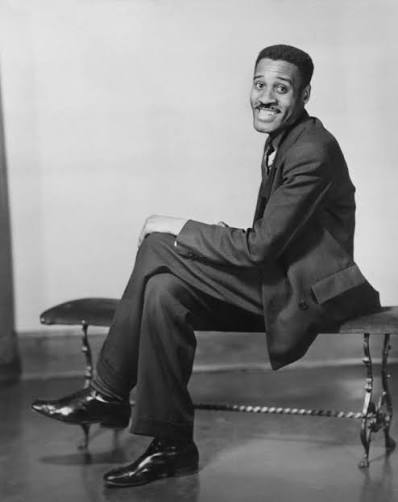
 Buy from Amazon A Career Anthology: Vocalion & Bluebird Recordings 1928-35
 Buy from AmazonLeroy Carr & Scrapper Blackwell Vol.1 1928 -1934