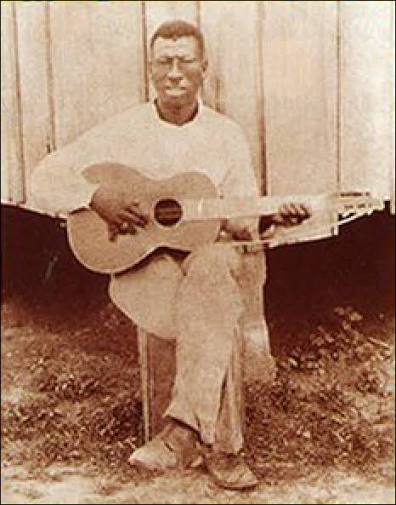
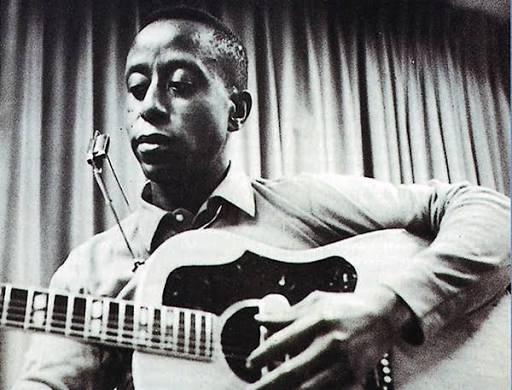
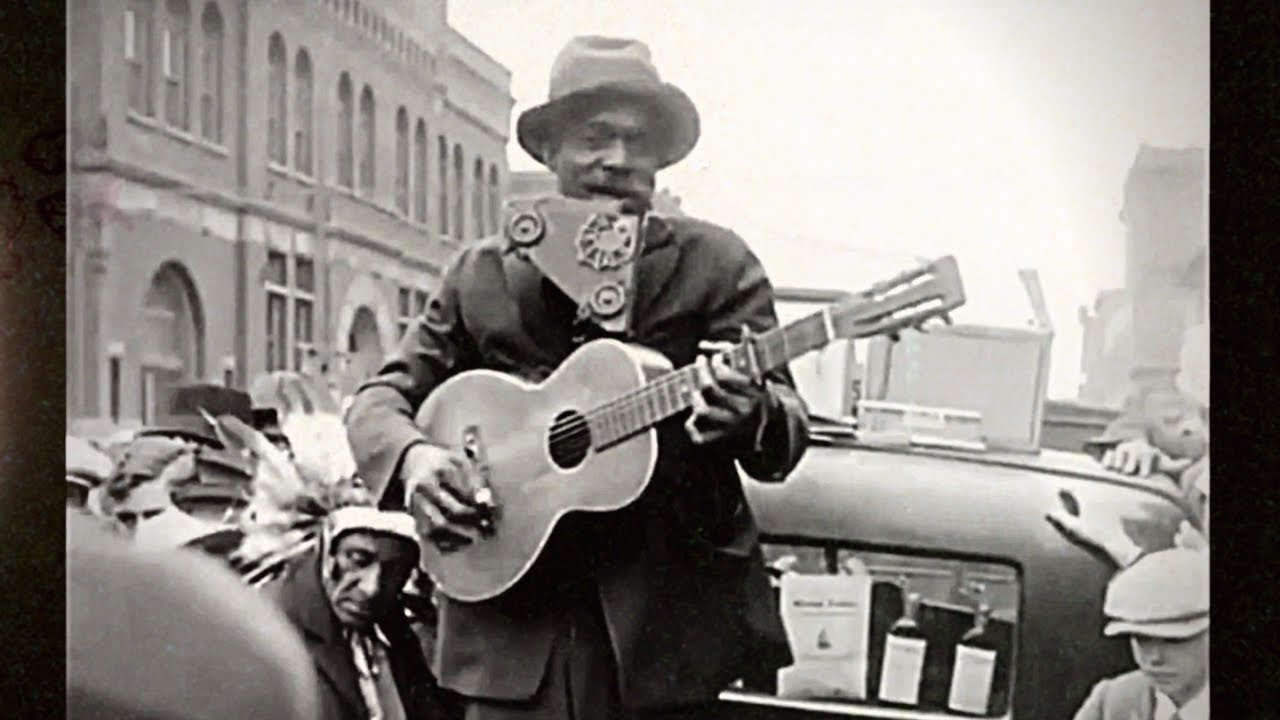
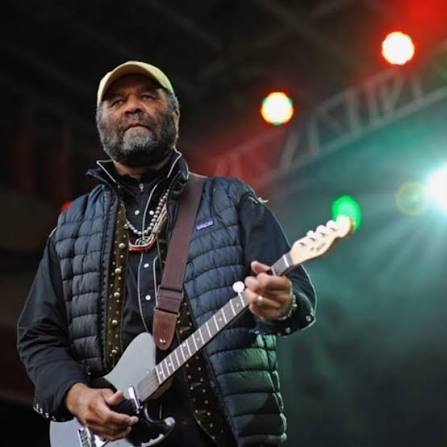
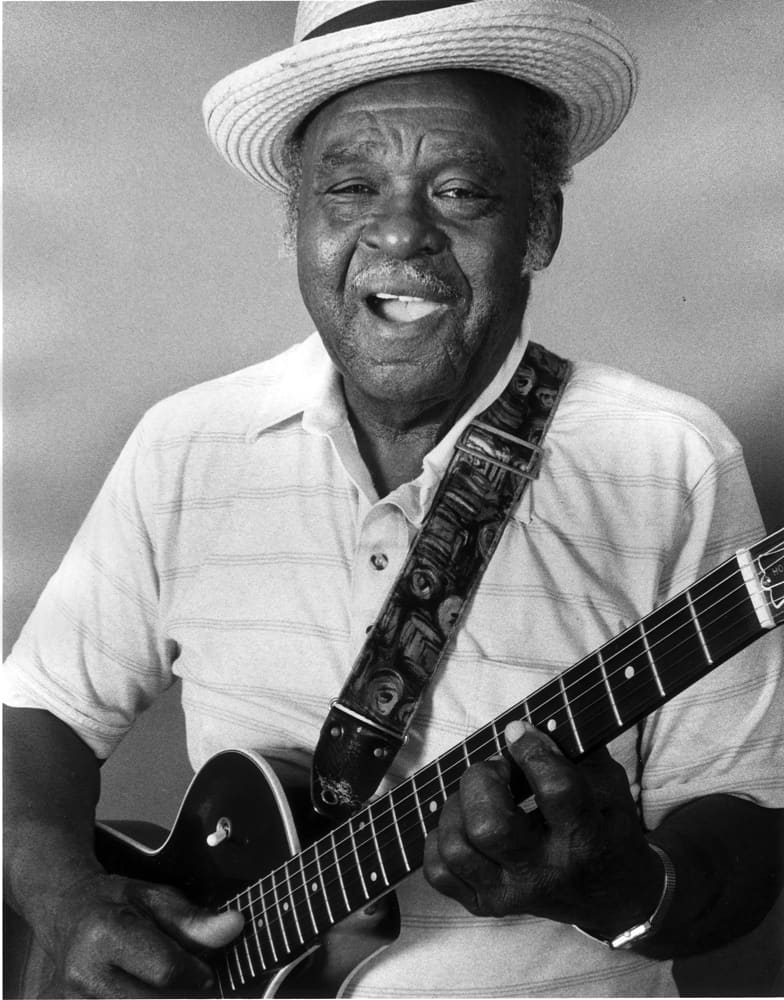
There are lives in American music that seem less like conventional biographies and more like oral epics, stories passed from mouth to mouth across generations, accumulating detail and resonance with each retelling. The life of David "Honeyboy" Edwards is one such epic, a narrative that stretches from the cotton fields of the Mississippi Delta to the concert halls of Europe and Asia, from the Jim Crow South of the 1910s to the Obama-era North, from the shadow of Robert Johnson to the spotlight of the Grammy Awards. He was born David Edwards on June 28, 1915, in Shaw, Mississippi, a small town in the heart of the Delta, to parents who were cotton sharecroppers working land they would never own.
His father, Henry Edwards, played guitar and violin. His mother played harmonica. Music was not entertainment in the Edwards household; it was sustenance, as necessary as food or water, a means of surviving the grinding labor and the relentless heat of the Delta. Young David was drawn to his father's guitar from the first moment he saw it. "Every time he put his guitar down, I pick it up," Edwards recalled decades later. "I started playing the guitar and he'd lie down some nights and listen to me."
He was twelve years old when he began to play seriously, learning the basic chords and progressions from his father, absorbing the repertoire of country breakdowns, spirituals, and blues that constituted the musical vocabulary of rural black Mississippi.
But his father was not his only teacher. The Delta in the late 1920s was alive with music, with traveling musicians who moved from plantation to plantation, from juke joint to house party, carrying songs and styles that mutated and evolved as they traveled. In 1929, when David was fourteen, Tommy Johnson came down from Crystal Springs, Mississippi, and set up in the area around Shaw. Edwards would spend his nights in the cotton fields listening to Johnson play—"playin' the blues, shuffle blues, low-down-dirty-shame blues"—and it was from Johnson that he learned the essential techniques of Delta guitar playing.
In his autobiography,
The World Don't Owe Me Nothing, Edwards wrote with characteristic directness: "Listening to Tommy, that's when I really learned something about how to play guitar."
The nickname "Honeyboy" came from his sister, a childhood moniker that stuck and that he would carry for the rest of his long life. By the time he was a teenager, he was already playing for money, performing at house parties and juke joints, developing the intricate fingerpicking and slashing bottleneck-slide techniques that would become his trademarks.
He was, by his own account, a quick study and a natural musician, but he was also restless, hungry for experience, eager to see what lay beyond the cotton fields and the dirt roads of the Delta.
The Road and the Rambling Life
At the age of fourteen, Honeyboy Edwards left home and took to the road, beginning a life of rambling that would continue, with only brief interruptions, for more than ninety years.
He traveled as a hobo on freight trains, riding the rails from town to town, from state to state, learning the survival skills that every itinerant black musician needed in the Jim Crow South. He learned to sleep during the day and move at night, to avoid the police and the vagrancy laws that could land a black man in jail or worse. He learned to gamble, to play blues for tips until he made enough money to enter a game, to read faces and calculate odds with the same intensity he brought to his music. He became, by necessity, a man of the road, a "rambling" bluesman in the oldest sense of the term.
In 1932, when Edwards was seventeen, he met the man who would become his most important early mentor: Big Joe Williams, the towering figure of Mississippi blues who would later achieve fame as a solo artist and songwriter. Williams was impressed by the young guitarist's skill and took him under his wing, teaching him the practical arts of survival on the road—the best routes, the friendly jukes, the dangerous towns to avoid, the techniques for keeping body and soul together when the money ran out and the gigs dried up.
Edwards traveled with Williams through the 1930s and into the 1940s, a partnership that shaped his understanding of what it meant to be a professional bluesman.
The road was not kind. It was a life of hunger and uncertainty, of sleeping in barns and under bridges, of playing for whiskey and a plate of food, of constant movement in search of the next gig, the next dollar, the next woman. But it was also a life of extraordinary richness, of encounters with musicians who would become legends, of nights when the music transcended the squalor of the juke joint and touched something eternal. Edwards met and played with Charley Patton, the father of the Delta blues, whose raw, propulsive guitar and gravelly voice set the standard for everything that followed. He encountered Johnny Shines, Robert Johnson's traveling companion, and the two became friends and fellow ramblers. He played with Tommy McClennan, the underappreciated Delta master who wrote "Crosscut Saw" and "Bottle Up and Go." He spent time in Memphis with Will "Son Brimmer" Shade of the Memphis Jug Band, with Frank Stokes, with Memphis Minnie, with Sleepy John Estes.
And then there was Robert Johnson.
Robert Johnson and the Night of Poison
The relationship between Honeyboy Edwards and Robert Johnson is one of the most consequential in the history of the blues, not because of any musical collaboration they recorded—no such recording exists—but because Edwards was the last living person who knew Johnson, who played with him, who witnessed the final days of his life. Their paths crossed in 1937 and 1938, when Edwards was in his early twenties and Johnson was at the height of his brief, incandescent career.
Edwards worked with Johnson during this period, traveling and performing together in Mississippi, Arkansas, and Tennessee. They were not close friends in the way that Johnson and Johnny Shines were; they were fellow professionals, members of the same fraternity of rambling musicians who recognized in each other a shared dedication to the craft and a shared fate of perpetual motion. But Edwards was with Johnson on the night that has become the most famous death in blues history.
In August 1938, Johnson was playing a dance in the Greenwood area of Mississippi, near the town of Three Forks. Edwards was there, playing alongside him. The story that Edwards told for the rest of his life, and that he told with the conviction of an eyewitness, was this: Johnson had become involved with a woman whose boyfriend or husband was a jealous man. The man placed a bottle of poisoned corn whiskey on a chair next to Johnson as he played. Johnson, who loved whiskey and women with equal and fatal intensity, drank from the bottle. Soon he began feeling sick. Edwards helped him to the home of a friend, where he lay in bed, his guitar across his chest, growing weaker by the hour. A few days later, he was dead.
"This man had a good looking woman, and he didn't want to lose her," Edwards told interviewers decades later. "And Robert was about to take her away." The poison, according to Edwards, was strychnine, slipped into the whiskey by a man who could not bear to lose his woman to a blues singer. "Robert loved whiskey and women," Edwards would say, shaking his head at the memory. "And some women you got to leave alone, you know what I mean?"
The historical accuracy of this account has been debated by scholars, some of whom favor alternative explanations for Johnson's death—syphilis, Marfan syndrome, complications from other causes. But Edwards was there, and his testimony, delivered with the authority of direct experience, carried a weight that no amount of archival research could displace. As the blues writer Ted Gioia observed, with Edwards's death in 2011, the last firsthand witness to Robert Johnson's final days passed from the world, and a direct line to the most mythologized figure in American music was severed forever.
Edwards himself was no stranger to the dangers of the road. He had his own scrapes with the law, his own encounters with violence and jealousy, his own narrow escapes. But he survived, and in surviving, he became the bearer of a history that would otherwise have been lost.
The Lomax Recordings and the War Years
In 1942, Alan Lomax, the legendary folklorist and musicologist, came to Clarksdale, Mississippi, as part of a Library of Congress project to document the folk music of the American South. Lomax was traveling with a mixed-race team, a daring undertaking in the Jim Crow South, and he was looking for musicians who could represent the authentic sound of the Delta blues. Someone directed him to a young guitarist named David Edwards, who was living in Clarksdale and trying to avoid the military draft that was sweeping up men of his age for service in the Second World War.
Lomax found a musician who was talented, cocky, and seemingly fearless, a young man who reveled in the persona of the bluesman and who spoke with disarming frankness about his life and his art. Edwards told Lomax that musicians liked two things: "whiskey and women. And the womens like us better than they do the average working man." He boasted of having "four or five children scattered here and about other country places." He spoke of his mother, who had accompanied his father to dances and juke joints until "she got converted and joined the church and got him to quit playing the blues." And he cheerfully acknowledged that the blues were the "devil's business": "Well, I believe the blues is. And I'm the devil's child right now. I guess it's been seven or eight years since I been to church. If I'm not a church man, I just won't be a hypocrite."
Lomax recorded fifteen sides of Edwards's music for the Library of Congress, a session that produced some of the most important documentation of pre-war Delta blues ever captured.
The recordings included "Wind Howlin' Blues" and "The Army Blues," performances that showcased Edwards's intricate fingerpicking, his searing bottleneck slide, and his raw, expressive vocals. These were not commercial recordings, polished for popular consumption; they were field recordings, made in the environment where the music lived, and they captured Edwards in his natural element, playing the songs he had learned on the road, adapted to his own style, and made his own.
The Lomax recordings were not released commercially at the time. They were archived in the Library of Congress, available to scholars and collectors but unknown to the general public. Edwards would not make another recording for nearly a decade, a silence that speaks to the difficulties facing black musicians in the 1940s and 1950s, when the recording industry was contracting and the market for rural blues was shrinking. But the Lomax session established Edwards as a musician of historical importance, a living repository of the Delta tradition, and it ensured that his music would survive even if his career did not immediately flourish.
The First Recordings and the Move to Chicago
Honeyboy Edwards did not record commercially until 1951, nearly a decade after the Lomax session, when he traveled to Houston, Texas, and recorded two sides for the Artist Recording Company: "Who May Be Your Regular Be" and "Build a Cave." He was billed as "Mr. Honey," a name that obscured his identity while maintaining a connection to his familiar nickname.
The record was a modest affair, a 78 rpm single that made little commercial impact, but it marked Edwards's entry into the world of commercial recording, the first step in a discography that would eventually span more than half a century.
In 1953, he recorded for Chess Records in Chicago, cutting several tracks that would remain unissued for nearly two decades. Only one song from that session, "Drop Down Mama," would see the light of day, and not until 1970, when it was included on an anthology release.
The delay was typical of the Chess operation, which recorded vast quantities of blues and R&B but released only a fraction of what it captured, leaving generations of musicians in limbo, their work locked in vaults, awaiting rediscovery.
By the mid-1950s, Edwards had settled in Chicago, following the path of the Great Migration that had brought millions of black Southerners to the industrial cities of the North. He found work as a laborer—construction, factory work, whatever was available—and he played the blues in his off hours, performing in small clubs on the South and West Sides, on street corners, at house parties, wherever an audience could be found.
He played with Big Walter Horton, the harmonica genius whose tone and technique set the standard for Chicago blues harp. He played with Carey Bell, another harmonica master who would become a mainstay of the Chicago scene. He played with Floyd Jones and Johnny Temple, with Kansas City Red and Sunnyland Slim, becoming part of the loose network of musicians who kept the acoustic blues alive even as electric blues was taking over the Chicago sound.
The 1950s and 1960s were lean years for Edwards as a recording artist. He cut tracks for Sun Records and for Chess, but most of these sessions went unreleased until the 1970s, when the blues revival created a market for archival material. He recorded for Pete Welding in 1964 and 1967, sessions that would eventually appear on Testament Records in the mid-1990s. He cut tracks for Adelphi Records in 1969, some of which appeared on the double LP
Really The Blues and, later, on Adelphi's subsidiary label Genes.
In 1969, in one of the more unexpected episodes of his career, Edwards was a guest on an album by the British rock band Fleetwood Mac, the same band that had been founded by Peter Green, the guitarist who had done so much to popularize the music of Robert Johnson and the Delta blues. The connection was fitting: Edwards, who had known Johnson, was now recording with the band that had made Johnson's music famous to a new generation of white listeners.
Michael Frank and the Earwig Years
The great turning point in Honeyboy Edwards's career came in 1972, when he met Michael Frank, a young harmonica player and blues enthusiast who had fallen in love with the music of the Delta and who recognized in Edwards something that the world had largely forgotten: a living link to the origins of the blues, a man who had played with Robert Johnson and Charley Patton, who had ridden the freight trains and played the juke joints, who carried within him a history that could not be learned from books.
Frank was twenty-one years old. Edwards was fifty-seven. The age difference meant nothing; what mattered was the music, and the recognition that Edwards was a treasure who needed to be documented, promoted, and preserved. In 1976, four years after their first meeting, they formed the Honeyboy Edwards Blues Band, breaking into Chicago's then-fledgling North Side blues club scene. They also performed as a duo, a format that allowed Edwards's guitar and voice to occupy the center of attention without the distraction of a full band.
Frank founded Earwig Music Company in 1979, and Edwards was there from the beginning. The second release on the Earwig label was
Old Friends, an album that brought Edwards together with Sunnyland Slim, Kansas City Red, Floyd Jones, and Big Walter Horton—musicians who had known each other for decades, who had played together in Chicago clubs and on Southern street corners, who were now recording as a kind of living archive of the blues tradition.
The Earwig association would last for the rest of Edwards's life, thirty-nine years of collaboration that transformed him from a lesser-known figure in the Chicago blues scene into an internationally recognized legend. Frank became Edwards's manager, his producer, his friend, and his champion, and under his guidance, Edwards's career entered a phase of productivity and recognition that would have seemed impossible in the lean years of the 1950s and 1960s.
In 1978, Edwards recorded his first full-length LP,
I've Been Around, for Trix Records, produced by the ethnomusicologist Peter B. Lowry. The album showed Edwards in fine form, his guitar work as sharp as ever, his voice carrying the weight of decades of experience. In 1979, Earwig released
Mississippi Delta Bluesman on Folkways Records, a solo album that captured Edwards in a relaxed, unplugged moment, playing the deep Delta blues that had been his life's work.
But the masterpiece of Edwards's late career was
Delta Bluesman, released by Earwig in 1992. The album combined Edwards's early Library of Congress recordings from 1942 with new recordings made in 1979 and 1990, creating a dialogue between the young man and the old, between the raw Delta player of the Lomax sessions and the seasoned veteran who had survived the Chicago clubs and the European tours.
The result was one of the most important blues albums of the 1990s, a document that bridged six decades of American history and demonstrated that the Delta blues was not a museum piece but a living, breathing art form.
The Autobiography and the Voice of History
In 1997, Chicago Review Press published Edwards's autobiography, The World Don't Owe Me Nothing: The Life and Times of Delta Bluesman Honeyboy Edwards, a book that stands as one of the most important firsthand accounts of the blues life ever written.
The title came from a phrase Edwards used often, a kind of personal philosophy that acknowledged the hardness of life while refusing to surrender to bitterness or self-pity. The book was written in Edwards's own voice, direct and unvarnished, full of the stories he had been telling for decades at clubs and festivals, on street corners and in living rooms.
The autobiography recounted his childhood in Shaw, his apprenticeship under Tommy Johnson and Big Joe Williams, his travels with Robert Johnson, his hobo days on the freight trains, his move to Chicago, his struggles and his triumphs. It was a recipient of the Blues Foundation's Keeping the Blues Alive Award in Literature, and it became essential reading for anyone interested in the Delta blues, the Great Migration, or the life of the itinerant musician in Jim Crow America. A companion CD with the same title was released by Earwig, featuring live recordings that captured Edwards's storytelling as well as his music.
What made the book extraordinary was not merely the facts it contained but the voice in which they were delivered. Edwards spoke with the authority of direct experience, without the filtering of academic interpretation or the romanticizing of folk revivalists. He told the truth as he remembered it, and if his memory sometimes conflicted with the historical record, that was part of the book's value—it was a primary source, an oral history committed to paper, with all the contradictions and ambiguities that such sources entail.
Michael Frank, his longtime manager, described Edwards as having "a photographic memory of every fine detail of his entire life, all the way up until he died. He had so much history that so many other musicians didn't have and he was able to tell it."
This gift for memory and narrative made Edwards not merely a musician but an oral historian, a living archive of a world that was rapidly disappearing.
The Guitar and the Sound
Honeyboy Edwards's guitar playing was, by the standards of the Delta tradition, both conventional and distinctive. He played in the standard Delta style, using intricate fingerpicking patterns and slashing bottleneck-slide work to create a sound that was raw, rhythmic, and intensely personal.
His right hand was precise and powerful, generating the complex polyrhythms that distinguished Delta guitar from the simpler strumming of folk musicians or the single-note lines of jazz players. His left hand, when armed with a glass or metal slide, could produce the crying, singing tones that were the hallmark of the Delta sound, the sound of the guitar as a human voice, wailing and moaning in response to the singer's call.
But Edwards was not a purist in the narrow sense. He was one of the first Delta blues musicians to perform with a saxophonist and drummer, expanding the traditional solo or duo format into something closer to a small band.
He borrowed from other guitarists, adapting their techniques to his own style, and he was constantly learning, picking up chord books from music stores and teaching himself new voicings to keep up with the changing demands of the music. "All musicians borrow and learn from each other," he said, and his own playing demonstrated the truth of that observation, incorporating elements from the country blues of the Delta, the urban blues of Chicago, and the jazz-tinged sounds of the Southwest.
His voice was equally distinctive—not the smooth croon of a Leroy Carr or the high, keening wail of a Robert Johnson, but a rough, gravelly instrument that carried the weight of decades of hard living. He could be tender when the song demanded it, and he could be fierce, but there was always a quality of authenticity, of lived experience, that made his singing impossible to fake or imitate. You believed Honeyboy Edwards because he had been there, because every note he played and every word he sang was grounded in a life that had known poverty and violence, joy and transcendence, the full range of human experience compressed into the twelve bars of the blues.
The Grammy Awards and the Late Triumphs
The final decades of Honeyboy Edwards's life were marked by a level of recognition that would have seemed unimaginable to the young hobo riding the freight trains through Mississippi. In 2007, he recorded
Last of the Great Mississippi Delta Bluesmen: Live in Dallas with Henry Townsend, Pinetop Perkins, and Robert Lockwood Jr., a gathering of elder statesmen of the blues that won the 2008 Grammy Award for Best Traditional Blues Album.
In 2010, he received the Grammy Lifetime Achievement Award, an honor that placed him among the most distinguished musicians in American history.
The same year, he was honored with the Mississippi Governor's Award for Excellence in the Arts, a recognition from the state where he had been born into sharecropping and where he was now celebrated as a cultural treasure. He headlined the Delta Blues Festival, the Highway 61 Blues Festival, and the Sunflower River Blues and Gospel Festival, returning to Mississippi as a conquering hero, the native son who had carried the Delta blues to the world and was now bringing it home.
In February 2010, he performed in Jackson in a special "three generations of the blues" show with King Edward and Grady Champion, a symbolic passing of the torch from the elders to the young. In early 2011, he performed in Meridian as part of a Robert Johnson centennial tour, a fitting tribute to the man whose death he had witnessed seventy-three years earlier. And in April 2011, he made his last public performance at the Cat Head Mini Blues Festival in Clarksdale, the town where Alan Lomax had first recorded him in 1942, closing a circle that had begun nearly seven decades before.
The 2008 Earwig release Roamin' and Ramblin' was a late-career triumph, an album that featured fresh takes on old gems and the first release of historic recordings, including 1975 studio sessions with Big Walter Horton and circa 1976 concert tracks with Sugar Blue. New 2007 sessions brought in harmonica greats Bobby Rush, Billy Branch, and Johnny "Yard Dog" Jones, creating a bridge between the oldest and newest generations of blues musicians.
The Death of the Last Witness
David "Honeyboy" Edwards died on August 29, 2011, at his home in Chicago, of heart failure. He was ninety-six years old, and he had been playing the blues for more than eighty years.
His health had declined seriously in May of that year, forcing him to cancel concerts scheduled through November, but his death still came as a blow to the blues community, which had come to see him as indestructible, a permanent feature of the landscape, a man who would somehow keep playing forever.
The obituaries and tributes that followed emphasized what everyone knew: with Edwards's death, the last direct link to the first generation of Mississippi Delta blues musicians was gone. "That piece of the history from that generation, people have to read about it from now on," Michael Frank told the press. "They won't be able to experience the way the early guys played it, except from somebody who's learned it off of a record."
It was a profound loss, and it was felt not only by blues enthusiasts but by anyone who understood that Edwards represented something irreplaceable: a living connection to a moment in American history that had shaped the music of the twentieth century. He had known Robert Johnson and Charley Patton, Tommy Johnson and Big Joe Williams, Howlin' Wolf and Muddy Waters and Little Walter. He had ridden the freight trains and played the juke joints, had survived the Jim Crow South and the Chicago winters, had recorded for the Library of Congress and won Grammy Awards. He had seen it all, done it all, and lived to tell the tale.
The Legacy of the Rambling Man
The influence of Honeyboy Edwards on subsequent generations of musicians is difficult to measure in conventional terms. He was not a hitmaker; his records did not climb the charts or define the sound of an era. He was not a guitar virtuoso in the manner of a B.B. King or a Jimi Hendrix; his technique was rooted in the traditional patterns of the Delta, and he did not seek to revolutionize the instrument. His influence was of a different, and perhaps more profound, kind: he was a living repository of the blues, a man who carried the tradition in his hands and his voice and his memory, and who passed it on to everyone who heard him play.
For younger blues musicians, Edwards was a direct link to the source. Guitarists who had learned Robert Johnson's songs from records could now meet a man who had actually known Johnson, who had played with him, who could demonstrate the techniques that Johnson had used and describe the context in which they were developed. For scholars and historians, Edwards was an invaluable primary source, a witness to events that had become shrouded in myth and speculation. For audiences around the world, he was a performer of extraordinary charisma and authenticity, a man who could hold a room spellbound with a guitar, a voice, and a story.
His influence extended through his recordings, his autobiography, and the documentary films in which he appeared, including the 2002 documentary
Honeyboy, which captured his charming personality, his storytelling skills, and his memories of the early blues artists.
He appeared in documentaries about the blues and about American music, always generous with his time and his memories, always willing to tell the stories that kept the history alive.
The Honeyboy Edwards Fund for Blues Education, established after his death by his manager and friends, continues his work by providing scholarships and advocacy for young musicians, ensuring that the tradition he represented will be passed on to new generations.
Suggested Listening
 Buy from Amazon Delta Bluesman
 Buy from Amazon Mississippi Delta Bluesman
The World Don't Owe Me Nothing
To listen to Honeyboy Edwards's recordings today is to hear the sound of a world that has vanished, the world of the Mississippi Delta in the 1920s and 1930s, of sharecroppers and cotton fields, of juke joints and freight trains, of a black musical tradition that emerged from the soil and the sorrow of the American South. But it is also to hear something timeless, something that speaks to the universal human experiences of wandering and longing, of love and loss, of the need to make music as a way of surviving the unsurvivable.
Edwards's best recordings—the Lomax Library of Congress sides, the tracks on Delta Bluesman, the live performances captured on The World Don't Owe Me Nothing and Roamin' and Ramblin'—are essential documents of American music, as important in their way as the recordings of Robert Johnson or Charley Patton or Muddy Waters. They show a musician who remained true to his roots while adapting to changing circumstances, who played the blues not as a nostalgic exercise but as a living art form, who carried the Delta tradition into the twenty-first century with dignity, grace, and an unwavering commitment to the music that had saved him.
He was, in the end, what the greatest bluesmen have always been: a traveler, a storyteller, a survivor. He took the name Honeyboy from his sister and made it legendary. He took the guitar from his father and made it sing. He took the blues from Tommy Johnson and Robert Johnson and Big Joe Williams and made them his own, passing them along to the next generation with the generosity of a man who understood that the music was bigger than any individual, bigger than any career, bigger than any single life.
David "Honeyboy" Edwards lived for ninety-six years, and he played the blues for more than eighty of them. He was the last living link to Robert Johnson, the last of the great rambling Delta bluesmen, the last witness to a world that produced some of the most powerful and enduring music in human history. When he died, a direct line to the origins of the blues was severed, and the world became a poorer place. But the music remains, captured on recordings and in the memories of those who heard him, and in the fingers of young guitarists who will never know the Delta but who will learn its songs, note by note, from the records that Honeyboy Edwards made.
The world don't owe me nothing, he said, and he meant it. But the world owed him a great deal, and it paid him, in the end, with the only currency that matters to a bluesman: the recognition that he had played it right, that he had told the truth, that he had kept the faith. Honeyboy Edwards was the real deal, the epitome of a Delta bluesman, and his music will ramble and roll as long as there are ears to hear it and hearts to feel it. He was the last of his kind, and he was one of a kind, and the blues is richer, deeper, and truer for his having been here.

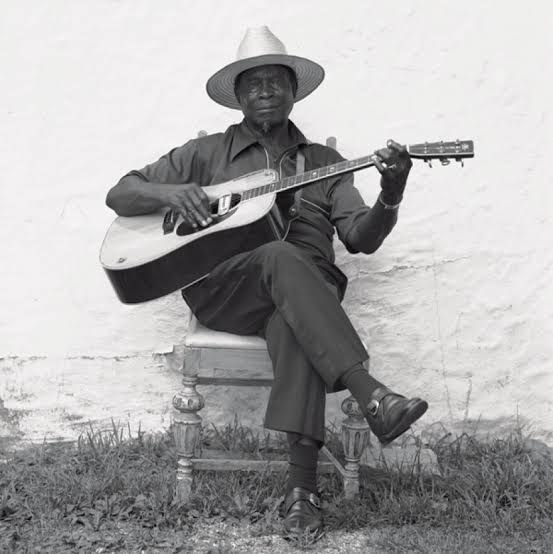
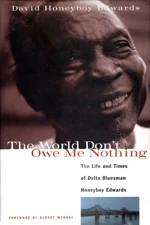 Buy from Amazon The World Don't Owe Me Nothing