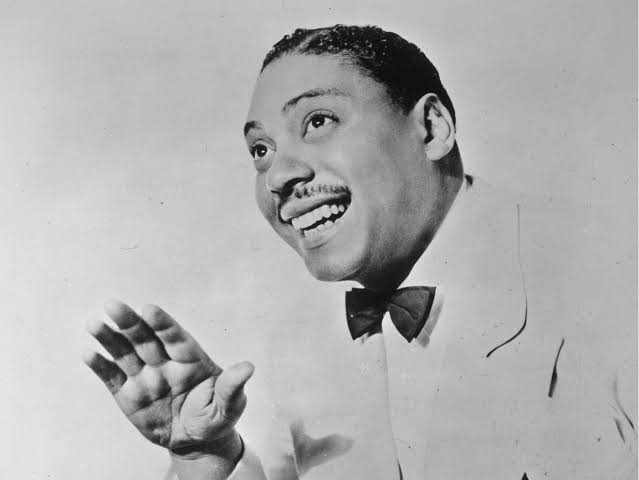
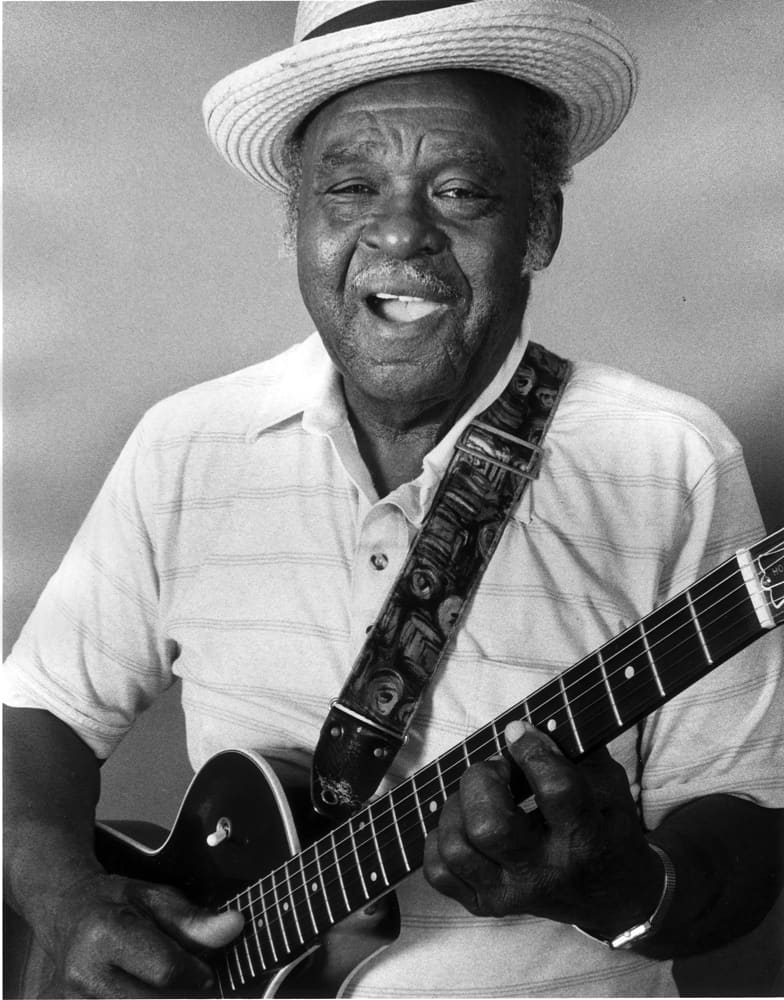
Joseph Vernon Turner Jr. was born on May 18, 1911, in Kansas City, Missouri, into a world that would shape him in ways both obvious and subtle. His father died when the boy was only four years old, leaving him to be raised by his mother, his grandmother, and his sisters in the African American quarter of a city that was already becoming one of the most important musical crucibles in American history.
The loss of his father at such an early age was a wound that never fully healed, and it may have contributed to the deep reservoir of melancholy that Turner would draw upon throughout his career, even in his most exuberant performances. But it also forced him to grow up quickly, to become self-reliant, to find his place in a world that was not inclined to make room for him.
As a boy, Turner sang in church choirs, developing the powerful voice that would one day make him famous. But church was not his only musical education. Kansas City in the 1910s and 1920s was a wide-open town, a place where Prohibition was more suggestion than law, where the political machine of Tom Pendergast kept the police away from the nightclubs and the speakeasies, where music flowed from dusk until dawn and the streets rang with the sound of jazz, blues, and boogie woogie.
Young Joe Turner absorbed all of it. He loved the music and the dancers of the speakeasy saloons, the cabarets and the dance halls, and he would sneak inside during the day to scrape paint off the windows so he and a friend could peer in at night during the shows.
At the age of twelve, a fire broke out in his apartment building. To escape the flames, he jumped from a second-story window. "I broke everything," he recalled decades later. "I was in a hospital bed for two months and crawled around on the floor a year until I got sick of it."
The accident could have ended his life or crippled him permanently, but Turner was not a boy who accepted defeat. He relearned how to walk, and as soon as he could, he was back on the streets, shining shoes and selling newspapers, learning to use his voice not in school or church but to project through the noise of the city, to make himself heard above the traffic and the crowds.
He quit school at fourteen, needing to help support his family, and after lying about his age, he found work as a bartender, a cook, and a bouncer.
The bars and clubs of Kansas City were his university, and he studied hard. He sang after hours with the bands that performed at famous venues like The Kingfish Club and The Sunset, developing a reputation as the "Singing Bartender," a man who could mix a drink and belt a blues with equal skill.
Even as a teenager, the big-boned Turner looked mature enough to gain entry to the niteries of Kansas City, and by the late 1920s, he was a fixture of the scene, known for a voice that could rattle the foundation of any gin joint without the assistance of a microphone.
Pete Johnson and the Birth of a Sound
The defining partnership of Big Joe Turner's life began in the early 1930s, when he met Pete Johnson, a boogie-woogie pianist who was already making a name for himself in the Kansas City clubs. Johnson was working at the Backbiter's Club on Independence Avenue and Troost when Turner, then sixteen and still technically a minor, used his size and a mustache drawn on with his mother's makeup pencil to gain entrance.
Johnson took a liking to the kid and his zeal for music, and the two began working together, first at the Black and Tan Club and later at the legendary Sunset Club, managed by Piney Brown with a legendary kindness toward his musicians.
The concept they developed was simple but revolutionary. Johnson would begin on the piano with the opening measures of a boogie-woogie, and from behind the bar, Turner's voice would boom out, shouting blues rhymes over the driving piano. Turner would serve drinks and slowly make his way to the stage, his voice carrying across the room with a power and clarity that seemed almost supernatural.
It was a performance style that combined the informality of the barroom with the drama of the stage, and it made them the most exciting act in Kansas City.
Johnson's piano was spectacular, a percussive, driving style that pushed the boogie-woogie tradition to new levels of intensity. Turner's vocals were volcanic, half-shouted and full of repetitive phrases that built tension to an almost unbearable degree. Together, they created a sound that was not merely blues and not merely jazz but something new, a hybrid that would eventually be called jump blues, rhythm and blues, and, ultimately, rock and roll.
The Kansas City jazz scene of the 1930s was dominated by figures like Count Basie, Bennie Moten, Andy Kirk, and the Jay McShann Orchestra, and Turner moved easily among them. He toured with these bands, absorbing the swinging, relaxed but propulsive rhythmic feel that characterized Kansas City jazz, a style that emphasized the four-beat pulse, the riff-based ensemble playing, and the blues foundation that underlay everything. He was intrigued by the shift from big-band jazz and blues to what would become R&B, and in his after-hours sessions with Johnson, he began pushing the slow blues faster, adding rhythmic variance and an uptown energy that was distinctly Kansas City.
In 1936, Turner and Johnson made their first trip to New York City, where they opened for Benny Goodman. The engagement was not a success; they lacked the connections and the reputation to sustain a career in the competitive New York market, and they eventually returned to Kansas City.
But the trip had introduced them to the national stage, and it set the stage for the breakthrough that would come two years later.
Spirituals to Swing and the Carnegie Hall Moment
The turning point came in 1938, when the jazz promoter and producer John Hammond came to Kansas City. Hammond was a wealthy, well-connected enthusiast who had made it his mission to bring authentic black American music to white audiences, and he had heard about the singing bartender and the boogie-woogie pianist who were tearing up the Sunset Club. He went to see them, and what he heard convinced him that Turner and Johnson were exactly what he needed for his most ambitious project yet: a concert at Carnegie Hall called "From Spirituals to Swing," designed to demonstrate the full range of African American musical expression, from gospel to blues to jazz.
On December 23, 1938, Turner and Johnson took the stage at Carnegie Hall alongside Big Bill Broonzy, Sonny Terry, the Golden Gate Quartet, Sister Rosetta Tharpe, Albert Ammons, Meade Lux Lewis, and Count Basie.
They performed "Low Down Dog" and "It's All Right, Baby," and the response was electric. The New York audience, sophisticated and demanding, was stunned by the raw power of Turner's voice and the relentless drive of Johnson's piano. The concert was a triumph, and it launched a boogie-woogie craze that would sweep the nation and land Turner and Johnson a long-running slot at Cafe Society, the integrated nightclub in Greenwich Village where they appeared on the same bill as Billie Holiday and Frankie Newton's band.
While in New York, Turner and Johnson recorded for Vocalion Records. On December 30, 1938, they cut "Roll 'Em Pete," a twelve-bar blues that had been Johnson's signature tune in the Kansas City clubs. The recording captured something essential: Johnson's mad, dazzling keyboard technique, Turner's booming voice and edgy, emotionally direct lyrics, and a drive that seemed to point toward the future.
The song was not a chart hit in the modern sense, but its influence rolled across the decades. Writers have called it the birth of rock and roll, and while such claims are always debatable, there is no denying that "Roll 'Em Pete" contains within it the DNA of everything that would follow—the pounding piano, the shouted vocal, the sexual energy, the sense of barely controlled chaos that would define Little Richard, Jerry Lee Lewis, and the first wave of rock and roll.
The Carnegie Hall performance and the subsequent Cafe Society engagement transformed Turner from a regional act into a national figure. He and Johnson performed on Benny Goodman's Camel Caravan radio shows and signed a five-year contract with Cafe Society, establishing themselves as fixtures of the New York nightlife. Turner was now a professional musician in the fullest sense, no longer a bartender who sang but a singer who commanded the stage.
The Decca and National Years
In 1939, Turner and Johnson began recording for Vocalion in earnest, producing sides that included "Cherry Red," "I Want a Little Girl," and "Wee Baby Blues." "Cherry Red," recorded with Hot Lips Page on trumpet and a full band in attendance, showed that Turner could work within a larger ensemble context, his voice cutting through the brass and reeds with the same power it brought to the piano duo format.
"Wee Baby Blues" was a song Turner had been singing since his Kingfish Club days, a slow blues that demonstrated the tender side of his massive voice, the ability to croon as well as shout.
In 1940, Turner and Johnson moved to Decca Records, where they recorded "Piney Brown Blues," a song Turner had written for the manager of the Sunset Club, the man who had given them their start. The record sold over 400,000 copies, a remarkable achievement for a blues record in that era, and it established Turner as a recording artist with genuine commercial appeal.
During their time with Decca, they also recorded with other pianists, including Willie "The Lion" Smith, Art Tatum, and Sammy Price, demonstrating Turner's versatility and his ability to adapt his voice to different musical settings.
The early 1940s found Turner in Los Angeles, where he performed in Duke Ellington's revue "Jump for Joy" in Hollywood, appearing as a singing policeman in a comedy sketch called "He's on the Beat."
Los Angeles became his home for a time, and in 1944 he worked in Meade Lux Lewis's Soundies musical movies, singing on the soundtrack recordings. He also performed at the Cavalcades of Jazz concert at Wrigley Field in Los Angeles on September 23, 1945, before a crowd of 15,000, sharing the bill with Count Basie, the Honeydrippers, and Valaida Snow.
In 1945, Turner signed with National Records, where he recorded under the supervision of Herb Abramson. His first hit for the label was a cover of Saunders King's "S.K. Blues," released in two parts across both sides of a 78 rpm disc. He also recorded "My Gal's a Jockey" and the risqué "Around the Clock," as well as a duet with Wynonie Harris called "Battle of the Blues."
The National recordings were solid R&B, but they were not massive sellers, and Turner moved from label to label throughout the late 1940s—Freedom, MGM, Down Beat/Swingtime, Modern/RPM, Aladdin, Imperial, and DooTone—recording prolifically but making little commercial impact as the market for blues shifted and evolved.
During this period, Turner also recorded with a young pianist from New Orleans who was beginning to make waves. In April 1950, Imperial Records took Turner to the Crescent City for a session with the Dave Bartholomew Orchestra, featuring a pianist named Fats Domino. The resulting sides, including "Blues Jumped the Rabbit" and "Jumpin' Tonight," are among the more obscure of Turner's pre-Atlantic work, but they are invaluable as a bridge between the Kansas City blues tradition and the New Orleans R&B sound that would soon dominate American popular music.
Atlantic Records and the Rock and Roll Revolution
The great turning point in Big Joe Turner's career came in 1951, and it came, as so many important moments do, through a combination of luck, timing, and the recognition of talent by those who knew what they were hearing. Turner was filling in as lead vocalist with the Count Basie Orchestra at Harlem's Apollo Theater, standing in for the usual singer, Jimmy Rushing. In the audience that night were Ahmet and Nesuhi Ertegun, the Turkish-born brothers who had just founded Atlantic Records, a small independent label dedicated to recording the best in jazz and rhythm and blues.
They heard Turner sing with Basie, and they knew immediately that they had found something special. They signed him to Atlantic, and the partnership that resulted would produce some of the most important records in the history of American popular music.
Turner's debut single for Atlantic was "Chains of Love," a slow blues written by Ahmet Ertegun under the pseudonym "Nugetre" (Ertegun spelled backward) with music by Vann "Piano Man" Walls. The song was notable for its distinguishable melody line, something that was hardly omnipresent in the blues world of the time. Ertegun gave half the royalties to Walls, "because he played such a beautiful introduction," and the record soared to number two on the R&B chart, staying there for twenty-five weeks.
It was Turner's first million-seller, and it announced that the "Boss of the Blues" was back in business in a major way.
What followed was one of the most remarkable runs of hit records in the history of rhythm and blues. "The Chill Is On" reached number three on the R&B chart in 1951. "Sweet Sixteen," a blues ballad that B.B. King would later make one of his signature songs, hit number three in 1952. "Don't You Cry" reached number five the same year. And then, in 1953, came "Honey Hush," a romping, stomping rocker that topped the R&B chart and crossed over to number twenty-three on the pop chart, introducing Turner's voice to a mainstream white audience.
The Atlantic recordings were characterized by a sound that was simultaneously raw and polished, bluesy and commercial. Ertegun and his team understood that Turner was not merely a blues singer but a potential pop star, and they surrounded him with musicians who could bridge the gap between the juke joint and the jukebox. On "TV Mama," recorded in Chicago in 1953, the guitarist was none other than Elmore James, whose distinctive slide guitar nearly stole the show from Turner but helped the record reach the R&B top ten.
The band credited as "Joe Turner & his Blues Kings" was actually Elmore James's usual outfit, the Broomdusters, a connection that linked Turner directly to the Mississippi Delta tradition even as he was becoming a rock and roll star.
The peak of Turner's Atlantic career came in 1954 with "Shake, Rattle and Roll," written by Jesse Stone under the pseudonym Charles Calhoun. The song was as risqué as anything Turner had recorded—"You wear those dresses, the sun comes shining through, I can't believe my eyes, all that mess belongs to you"—and some radio stations refused to play it. But the jukeboxes played it endlessly, and it topped the R&B chart while crossing over to number twenty-two on the pop chart, a rare achievement for a black record in those days.
The same year, Bill Haley and His Comets recorded a cleaned-up version of "Shake, Rattle and Roll" that eclipsed Turner's sales and became one of the defining records of the early rock and roll era. Haley's version removed the sexual innuendo and added a teenage energy that made it palatable to white audiences, but the foundation was Turner's original, and everyone involved knew it. Turner had created the template, and Haley had adapted it for a new market.
The hits kept coming. "Flip, Flop and Fly" in 1955, written by Stone and Turner but credited to Turner's wife, Lou Willie Turner, sold a million copies and reached number two on the R&B chart. "Hide and Seek" hit number three. "Corrine, Corrina" in 1956 became his fourth million-seller. "The Chicken and the Hawk," "Morning, Noon and Night," "Lipstick, Powder and Paint," and "Love Roller Coaster" all charted, establishing Turner as one of the biggest stars in rhythm and blues and one of the pioneers of rock and roll.
Doc Pomus, the legendary songwriter, would later declare that "rock and roll would have never happened without him," and while such statements are always hyperbolic, they contain an essential truth. Turner's Atlantic records were the bridge between the blues shouter tradition of the 1930s and the rock and roll revolution of the 1950s. They demonstrated that black music could be commercially successful with white teenagers without losing its power, its sexuality, or its blues foundation.
The Voice and the Style
To understand Big Joe Turner's importance, one must understand his voice, which was not merely an instrument but a force of nature. He was a big man—six feet three inches tall, weighing as much as 320 pounds at his heaviest—and his voice matched his physique. It was a brawny, booming instrument that could fill a room without amplification, that could ride over a big band or cut through a rock and roll combo with equal ease.
But size alone does not explain Turner's vocal power. What made him extraordinary was his control, his ability to modulate that massive voice from a whisper to a roar, from a tender croon to a blues shout that seemed to shake the walls. The New York Times music critic Robert Palmer described his voice as "pushing like a Count Basie solo, rich and grainy as a section of saxophones, which dominated the room with the sheer sumptuousness of its sound."
Turner was a blues shouter in the classic tradition, a singer who could project over a band without a microphone, who used his voice as a percussive instrument, whose lines fell like blows. But he was also a master of the blues ballad, capable of the kind of tender, melancholy phrasing that made "Sweet Sixteen" and "Chains of Love" into standards. The jazz critic Whitney Balliett wrote that Turner had "heft and agility and streamlining. He is a percussive singer, and his lines fall like blows."
His style was conversational as well as declamatory. He would punctuate his vocals with shouts to the band members—"That's a good rockin' band!", "Go ahead, man! Ow! That's just what I need!"—creating a sense of spontaneity and interaction that made his records feel like live performances. On "Honey Hush," he repeatedly sang "Hi-yo, Silver!", the famous command of the Lone Ranger, turning a radio catchphrase into a blues refrain that connected his music to the popular culture of the moment.
Turner was also a master of traditional blues verses, and at Kansas City jam sessions he could swap choruses with instrumental soloists for hours, improvising lyrics and melodies with a fluency that came from decades of experience. He was, in the words of the Rock and Roll Hall of Fame, "part of the transition from big bands to jump blues to rhythm and blues to rock and roll," a man who embodied the entire history of twentieth-century black popular music in a single career.
The Albums and the Later Career
As the 1950s progressed, Turner's chart success began to wane. The rise of Elvis Presley, Chuck Berry, and the younger generation of rock and roll stars made a forty-five-year-old blues shouter seem less relevant to the teenage market, and Turner's appearance as a fairly static man of some girth did not help him in terms of visual appeal.
But Turner was not a man to be defeated by changing fashions. He shifted his focus to albums, proving equally adept at classic blues, jazz, and R&B-inflected rock and roll.
His definitive Atlantic album,
The Boss of the Blues: Joe Turner Sings Kansas City Jazz, released in 1956, was a masterpiece of the genre, marrying the boogie-woogie piano stylings of Pete Johnson with a jazzy horn section and Turner's voice at its most commanding.
A sequel,
Big Joe Rides Again, appeared in 1960, and both albums remain essential listening for anyone interested in the intersection of blues, jazz, and rock and roll.
In 1957, Turner toured Australia with Lee Gordon's Big Show, sharing the bill with Bill Haley and the Comets, LaVern Baker, and Freddie Bell and the Bellboys. It was a measure of his status that he could headline alongside the very artists who had covered his songs and ridden the rock and roll wave to greater commercial success than he had enjoyed. Turner never expressed public bitterness about the covers; he understood that music was a shared language, and that his originals would outlast any individual interpretation.
After leaving Atlantic in 1962, Turner entered a new phase of his career, returning to the blues and jazz worlds that had nurtured him. He recorded for a bewildering variety of labels—Arhoolie, United Artists, MCA, Black and Blue, Big Town, Spivey, Muse, Savoy, and Pablo—maintaining a presence in the music industry even as the spotlight moved to younger artists.
In 1965, he toured England with the trumpeter Buck Clayton and the trombonist Vic Dickenson, accompanied by Humphrey Lyttelton and his band. The show was billed "Jazz From Kansas City," and part of a studio concert was televised by the BBC for the groundbreaking
Jazz 625 series.
He also toured Europe with Count Basie and his orchestra, reaffirming the connections that had sustained him since the 1930s.
In 1966, Bill Haley helped revive Turner's career by lending him the Comets for a series of popular recordings for the Orfeón label in Mexico. It was a fitting collaboration, the rock and roll pioneer paying tribute to the man whose music he had helped popularize, and the recordings introduced Turner to a new Latin American audience.
The 1970s and 1980s found Turner recording for Norman Granz's Pablo Records, the jazz label that specialized in pairing established stars with top-flight musicians. Turner made albums with Count Basie, with Dizzy Gillespie, Roy Eldridge, Harry "Sweets" Edison, and Clark Terry on
The Trumpet Kings Meet Joe Turner (1975), with Milt Jackson and Roy Eldridge on
Nobody in Mind (1976), and with Pee Wee Crayton and Sonny Stitt on
Everyday I Have the Blues (1978).
He also recorded with the German boogie-woogie pianist Axel Zwingenberger on
Boogie Woogie Jubilee (1981), demonstrating that even in his seventies, he could still ride the eight-to-the-bar with the best of them.
In 1977, he recorded a cover of Guitar Slim's "The Things That I Used to Do" for Pablo, and the same year he cut "I'm Gonna Sit Right Down and Write Myself a Letter" for Spivey Records with Lloyd Glenn on piano. He participated in a "Battle of the Blues" with Wynonie Harris and T-Bone Walker, a summit meeting of the blues shouting tradition that must have been a sight to behold.
In 1979, Turner received top billing alongside Count Basie in the Kansas City jazz reunion movie
The Last of the Blue Devils, featuring Jay McShann, Jimmy Forrest, and other players from the city where it all began. The film was a documentary tribute to the Kansas City jazz scene, and Turner's presence was both a validation of his historical importance and a reminder that he was still very much alive and performing.
The Awards and the Recognition
Big Joe Turner's contributions to American music were recognized with numerous awards and honors throughout his life and after his death. In 1945, he won the Esquire magazine award for male vocalist. In 1956, the British music magazine Melody Maker named him best "new" vocalist, a charming designation for a man who had been singing professionally for three decades. In 1965, the British Jazz Journal awarded him top male singer.
In 1983, two years before his death, he was inducted into the Blues Hall of Fame, an honor that acknowledged his central role in the development of the blues. That same year, Muse Records released
Blues Train, an album that featured Turner with the band Roomful of Blues, bridging the gap between the traditional blues of Turner's generation and the revivalist movement that was keeping the music alive.
In 1987, two years after his death, Big Joe Turner was inducted into the Rock and Roll Hall of Fame, with the Hall lauding him as "the brawny voiced 'Boss of the Blues.'" The induction was posthumous but entirely appropriate, a formal recognition of what musicians and fans had known for decades: that Turner was not merely a blues singer who happened to record some rock and roll hits, but a foundational figure in the creation of the genre, a man whose voice and records had shaped the sound of American popular music.
Influence and the Chain of Transmission
The influence of Big Joe Turner on subsequent generations of musicians is both vast and somewhat diffuse, precisely because his style was so personal, so dependent on the unique qualities of his voice, that it could not be easily imitated. But the musicians who heard him, who played with him, who covered his songs, all carried something of his approach into their own work.
Bill Haley was perhaps the most direct beneficiary, though the relationship was complicated. Haley's cover of "Shake, Rattle and Roll" made him a star, but it also obscured Turner's original for a generation of listeners who assumed that Haley had created the song. Yet Haley acknowledged his debt to Turner, and in 1966 he lent Turner his Comets for the Mexican recordings, a gesture of respect and gratitude that spoke to the genuine affection between the two men.
Elvis Presley, Jerry Lee Lewis, and the early rock and roll singers all owed a debt to the blues shouting tradition that Turner had perfected. The physicality of their performances, the way they used their bodies and their voices to generate excitement, can be traced back to Turner and his contemporaries. Chuck Berry, Bo Diddley, and the architects of 1950s rock and roll all grew up listening to Turner and the jump blues he had helped create.
B.B. King's recording of "Sweet Sixteen" brought Turner's blues ballad style to a new generation of guitar-oriented blues fans. Ray Charles, James Brown, and the soul singers of the 1960s absorbed Turner's combination of blues feeling and showmanship, his ability to move an audience with nothing but a voice and a song. The British blues boom of the 1960s, with its reverence for American blues, brought renewed attention to Turner's work, and bands like the Rolling Stones, the Animals, and Them all covered his songs or adapted his style.
The Alvin brothers, Dave and Phil, who would form the Blasters and later pursue solo careers, met Turner in Los Angeles in the 1960s, where he was playing in clubs on Central Avenue and living in the Adams district between tours. Phil Alvin opened for Turner a few times with his first band, Delta Pacific, and Turner continued mentoring the brothers until his death. Dave Alvin later wrote a song called "Boss of the Blues" about an evening he spent with Turner, and the brothers recorded four Turner covers on their 2015 reunion album Lost Time.
The Final Years and the End of an Era
Big Joe Turner died on November 24, 1985, in Inglewood, California, at the age of seventy-four.
The British music magazine NME, in its December 1985 issue, described him as "the grandfather of rock and roll," a title that captured his historical importance while perhaps understating his role as an active participant in the music's creation.
He died, according to some accounts, in poverty, a fate that has befallen too many great American musicians. But his legacy was secure. The wealth of recordings he left behind, spanning five decades and dozens of labels, ensured that his voice would never be forgotten. The artists he had influenced, from Bill Haley to B.B. King to the Alvin brothers, continued to perform his songs and spread his music to new audiences.
Suggested Listening
 Buy from Amazon The Absolutely Essential Collection
 Buy from Amazon Ten Years Of Hits
The Boss of the Blues
To listen to Big Joe Turner's recordings today is to hear the sound of American music in the process of becoming itself. The early sides with Pete Johnson—"Roll 'Em Pete," "Goin' Away Blues," "Cherry Red"—capture the raw energy of the Kansas City blues scene, the marriage of boogie-woogie piano and blues shouting that would eventually produce rock and roll. The Decca and National recordings of the 1940s show a mature artist navigating the changing landscape of black popular music, adapting to new styles while maintaining his essential identity. The Atlantic hits of the 1950s—"Shake, Rattle and Roll," "Honey Hush," "Flip, Flop and Fly"—are masterpieces of rhythm and blues, records that defined an era and influenced everything that followed. And the late Pablo recordings demonstrate a man who never lost his power, never compromised his art, who could still summon the volcanic energy of his youth even as he entered his eighth decade.
Big Joe Turner was not a bluesman in the narrow sense of the term. He was not a Delta guitarist or a Chicago electric blues player. He was something larger and more encompassing: a shouter, a jazz singer, a rock and roll pioneer, a balladeer, a showman, and a bluesman in the broadest and most generous sense of the word. He was the Boss of the Blues, and his voice—rich and grainy as a section of saxophones, pushing like a Count Basie solo, dominating the room with the sheer sumptuousness of its sound—remains one of the most thrilling instruments in the history of American music.
For the blues enthusiast, Big Joe Turner offers something that cannot be found elsewhere: the sound of a voice that was both primitive and sophisticated, both raw and controlled, both of the juke joint and of the concert hall. He was a bridge between the blues of the 1920s and the rock and roll of the 1950s, between the black audience of the segregated South and the white teenagers of the integrated North, between the bartender who sang for tips and the international star who commanded the stage at Carnegie Hall and the Royal Albert Hall. He was, in the end, what the greatest American musicians have always been: a working-class artist who transformed his experience into art, who gave the world songs that would outlast him by generations, and who proved that the blues, at its best, is not a museum piece but a living, evolving, revolutionary force. Big Joe Turner was the Boss of the Blues, and the blues, in his hands, was boss indeed.