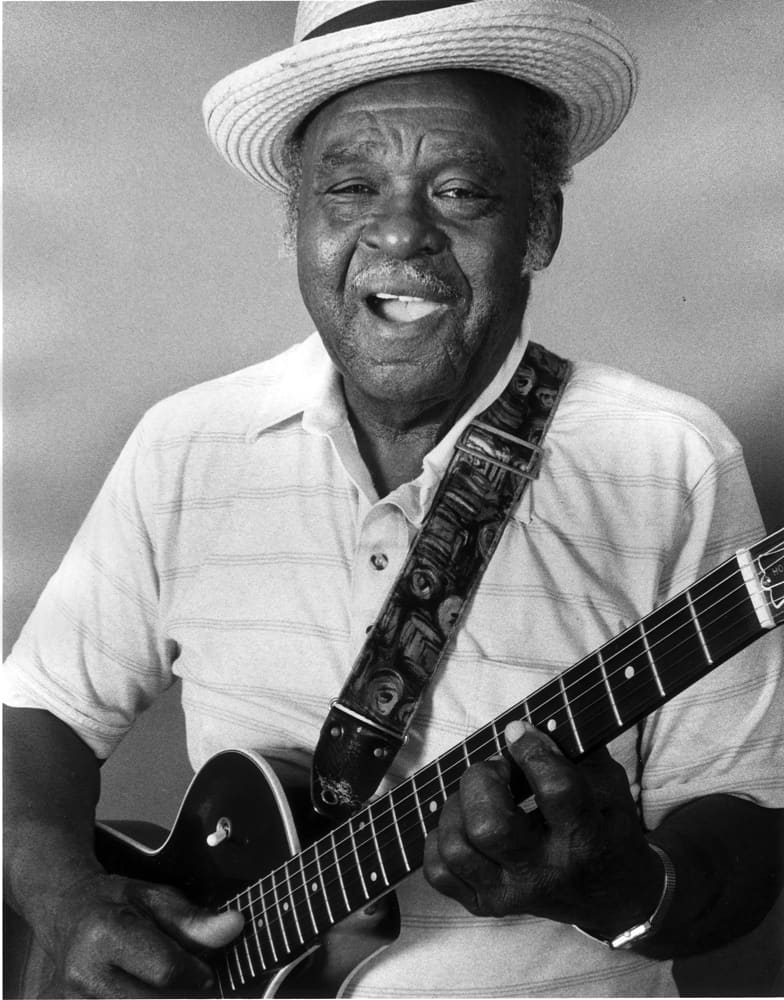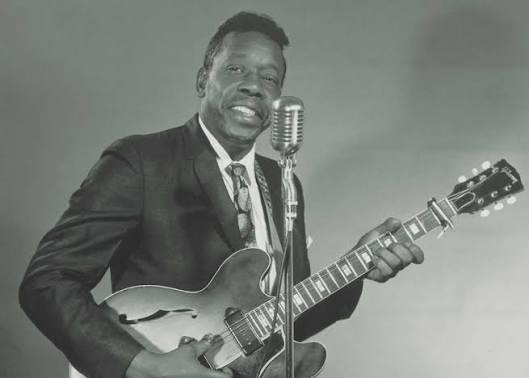
For a man who barely moved on stage, Slim Harpo traveled a long way — from a dirt road in West Baton Rouge Parish to the top of the R&B charts, from a cinderblock studio in Crowley to the grooves of Exile on Main St., from juke joints that needed chicken wire to protect the band to the Apollo Theater.
He did it by doing less. That is his lesson and his mystery. In blues, where so many singers shout and so many harp players try to play a hundred notes where ten will do, Harpo waited. He played behind the beat, sang behind the beat, lived behind the beat. The effect is hypnotic. It makes you lean in.
When Mick Jagger first tried to sing like an American bluesman in 1963, hunched over a cheap microphone in a damp flat in Edith Grove, London, he wasn't trying to sound like Muddy Waters. Muddy was too big, too electric, too Chicago. He was trying to sound like a man from West Baton Rouge Parish who sang like he had just woken up and was telling you a secret you shouldn't repeat. He was trying to sound like Slim Harpo.
And when Keith Richards figured out how to make a guitar shimmer like heat off a levee road, he wasn't listening to Chuck Berry. He was listening to the tremolo guitar on a Jay Miller record cut in a cinderblock studio in Crowley, Louisiana, with egg cartons on the wall and a chicken incubator business next door.
Slim Harpo never had to be the loudest man in the room. He was the coolest, and that was louder.
Lobdell
James Isaac Moore was born January 11, 1924, in Lobdell, Louisiana, an unincorporated community in West Baton Rouge Parish that most maps still have trouble placing. It sits on the west bank of the Mississippi, across from Baton Rouge, in the world of sugarcane, levees, and the Port of Greater Baton Rouge. His parents, Isaac and Lillie, were working people. James was the oldest boy. He left school early to work.
This matters because Harpo never had the myth of the rambling bluesman. He was not a hobo. He was not a preacher's son who found the devil's music. He was a laboring man who played music on the side because the laboring men around him wanted to dance on Saturday night. For most of his twenties and early thirties, he worked as a longshoreman, a stevedore, a truck driver, a construction hand. He lifted sacks. He waited for barges. He drove.
He learned harmonica the way most rural Louisiana kids did then — from an older man on a porch, by ear, on a ten-cent Marine Band. He also learned guitar, not well enough to be a guitar hero, but well enough to write songs and to understand rhythm in a way that harp-only players sometimes don't. He played locally around Baton Rouge as Harmonica Slim, respected but not ambitious.
Two women changed that. The first was Lovell Casey, who became Lovell Moore. She heard something in her husband's playing that he didn't — a restraint, a patience. The second was the sister of Lovell, who married a tall, charismatic bluesman named Otis Hicks. Otis became Lightnin' Slim. Lightnin' was already driving over to Crowley, 80 miles west, to record for a white man named Jay Miller who had a deal with Excello Records in Nashville.
Lovell told James he should go with Lightnin'. James said he had work. Lovell insisted. Without Lovell Moore, there is no Slim Harpo, and every serious history of Excello should give her a producer credit.
Crowley
To hear Slim Harpo's records correctly, you have to picture where they were made.
Jay Miller's studio on North Avenue in Crowley, Louisiana, was not Sun or Chess. It was a small, flat-roofed building Miller built himself after his living room got too crowded. He owned Miller's Record Shop and a poultry incubator company. He was a hillbilly guitarist, a songwriter who used his wife's maiden name and the pseudonym Jerry West for publishing, and a segregationist who nonetheless recorded some of the greatest Black music of the twentieth century because he knew it would sell and because, in his own complicated way, he loved it.
Miller's aesthetic was specific. He hated loud drums. He told every drummer who came in to play brushes or hot rods, to keep it down. He loved reverb and tremolo. He built his own echo chamber — a small, hard-tiled room with a speaker at one end and a microphone at the other — and he ran vocals and harmonica through it so they sounded like they were floating in a humid night. He loved clean guitar amps, Fenders mostly, with the tremolo cranked slow and deep, so the guitar shimmered. He liked to record dry and add the effect later, which is why Harpo's records sound intimate and otherworldly at once.
When James Moore walked in, sometime in early 1957, Miller knew what to do. He already had Lightnin' Slim, who was a direct descendant of Muddy Waters — raw, moaning, electric. Moore was different. He sang behind the beat, almost talking. He played harmonica not like Little Walter, who attacked the instrument, but like a singer, breathing through it, using tongue-blocking to get chords, holding long notes and letting them shake with his hand.
Miller gave him a name. James Moore became Slim Harpo. Slim from Lightnin' Slim, to tie them together in the market. Harpo from harmonica, and from Harpo Marx, who was still famous enough that the joke landed. Moore thought it sounded silly. Miller knew it would be remembered. Miller was right.
The band Miller put behind him was essentially Lightnin's band: James Johnson on rhythm guitar, Lloyd Lambert on bass, Clarence "Jockey" Etienne or John Perotto on drums, and later the secret weapon, Rudy Richard. Richard was a guitarist from Baton Rouge with a jazzier touch, a T-Bone Walker fluidity that made Harpo's simple songs sound sophisticated. On many of Harpo's best records, what you think is one guitar is actually two — Harpo chopping a simple pattern and Richard playing those clean, arpeggiated figures with tremolo.
On March 12, 1957, give or take a day — Miller's logs were famously sloppy — they cut Excello 2113.
King Bee
"I'm a King Bee" b/w "I Got Love If You Want It" did not chart nationally. It sold in the South, in Houston and New Orleans and Baton Rouge, on jukeboxes in places where the beer was cold and the law was not looking too close. But it invented something.
"I'm a King Bee" is built on one of the oldest metaphors in blues — the king bee who buzzes around the hive — but it sounds like nothing that came before it. It is not a twelve-bar shuffle. It is a drone in E. The guitar plays a minor-inflected figure with tremolo so deep it sounds like it is underwater. The bass walks but barely. The drums are brushes. And then Harpo enters, humming through his harmonica to literally buzz, and singing so far behind the beat you think he might miss the next bar entirely. He never does.
The lyric is a proposition delivered as a confidant's whisper: "Well, I'm a King Bee, baby, buzzin' around your hive." It is not a shout. It is not a threat. It is an invitation. That was Harpo's invention: blues as seduction, not confrontation.
The B-side, "I Got Love If You Want It," is his other foundation stone. It is his debt to Jimmy Reed, the biggest influence on his early style — that loping, boogie shuffle where the harmonica answers the vocal line for line. Reed was from Mississippi and made his name in Chicago. Harpo made Reed's shuffle sound like it was made for Louisiana, slower, sweatier, with more air in it.
Together, the two sides established the rules of swamp blues, a term that would be invented later by English journalists trying to describe what Miller was doing. Swamp blues is blues played with country and western tools: clean, tremoloed guitar, upright or flatwound electric bass, light drums, amplified but not distorted harmonica, vocals that are not shouted. It sounds like it was made at midnight with the windows open because it often was — the musicians had day jobs and drove to Crowley after work.
Between 1957 and 1964, Harpo released a string of singles on Excello that is, for consistency and atmosphere, one of the great runs in post-war blues. "Wonderin' and Worryin'" in 1958 is pure Jimmy Reed worship but with that cavernous reverb Miller put on Harpo's harp. "You'll Be Sorry One Day" in 1959 is a slow blues in 12/8 where Harpo sings in a near-falsetto that anticipates deep soul. "Buzz Me Babe" returns to the bee metaphor with a Bo Diddley beat. "Little Queen Bee" is its sequel. "I Need Money (Keep Your Alimony)" is a topical, funny B-side about bills and ex-wives that tells you who Harpo's audience really was — working men.
Excello did not make albums for bluesmen. Albums were for pop. If you had enough singles that sold, they compiled them. So Harpo's first album, "Slim Harpo Sings 'Raining In My Heart...'" (Excello LP 8003) in 1961, is really a singles collection, but it plays like a proper album because the sound is so unified. It is the sound of a room.
Rainin' In My Heart
If "I'm a King Bee" is Harpo's most famous song among rock musicians, "Rainin' In My Heart" is his masterpiece. Ask any swamp blues musician. Ask any serious blues harp player. They will tell you.
Recorded in 1960 and released in 1961 on Excello 2194, it was credited to Moore and Jerry West — Jay Miller's pseudonym. It is not a blues form at all. It is a country-pop ballad. It moves from C to C7 to F to G with a sophistication that would not be out of place in Nashville. Rudy Richard plays clean, tremoloed arpeggios. The drums are brushes, barely there.
Harpo sings it straight. No slyness. No buzz. His voice cracks on "the rain is fallin'." His harmonica solo is eight bars long. He plays maybe a dozen notes, mostly long, held tones with a slight hand tremolo, letting Miller's echo do the work. It sounds like loneliness feels.
It became a hit, his first national one: number 17 R&B, number 34 pop on Billboard. White listeners heard it. English listeners heard it. When Van Morrison sings behind the beat on Them's early records, that soft, almost spoken ache, he is singing "Rainin' In My Heart." When you hear the tenderness in some of the Rolling Stones' ballads, it is there too.
The B-side, "Snoopin' Around," was a tough shuffle that did well on New Orleans jukeboxes. The follow-ups — "Don't Start Cryin' Now" with its descending tremolo guitar riff that appears on dozens of Miller productions, and its joyful B-side "I Love The Life I'm Living" with a calypso lilt that Lazy Lester probably added percussion to — sold steadily in the South but did not chart nationally. Soul music was taking over Black radio. Blues 45s were becoming harder to sell.
By 1964, Harpo was still working a day job. He still had to ask Miller for session money. Excello was notorious for not paying royalties, or paying them in ways that were creative. But he kept recording.
The English Boys
Slim Harpo never toured England in his prime, but England toured him.
In early 1964, The Rolling Stones released their debut album, "The Rolling Stones." Side one, track six is "I'm a King Bee." Brian Jones plays slide where Harpo had tremolo. Mick Jagger tries to sing behind the beat like Harpo but cannot quite stop himself from shouting. It is a love letter, and it sold hundreds of thousands of copies.
They were not alone. The Kinks put "I Got Love If You Want It" on their debut album in 1964, with Ray Davies doing a surprisingly credible Harpo impression on harp. The Yardbirds played "I'm a King Bee" live and recorded "I Got Love If You Want It" with Eric Clapton. Them, Van Morrison's Belfast band, cut raw, almost punk versions of "I Got Love If You Want It" and "Don't Start Cryin' Now" in 1965. The Pretty Things covered "Rainin' In My Heart." The early Pink Floyd with Syd Barrett played "I'm a King Bee" at the UFO Club. The Doors played it at their first shows.
Why Harpo? Because Chicago blues was urban, powerful, aggressive — it sounded like the city. Harpo sounded like the country at night. He sounded mysterious, rural, adult, sexy in a way that was not obvious. For a generation of English art school kids obsessed with what Black American cool sounded like, Harpo's sunglasses indoors, his sharkskin suits, his absolute refusal to hurry, was the blueprint.
Harpo himself was bemused. He did not have a passport until the late sixties. He heard about the covers through royalty statements that showed little money. He reportedly asked, "Who are these English boys playin' my songs?" He did not dislike them. He just did not understand why they wanted to sound like him when they could sound like themselves.
Baby Scratch My Back
By 1965, Harpo's career was at a low ebb. Excello was struggling. Miller was listening to what was happening on soul radio — James Brown, organ combos, the move from shuffle to groove.
He decided to try something different.
The session that produced "Baby Scratch My Back" is one of the great accidents in blues history. The song is credited to Moore and Miller, but it is essentially a jam. The lineup was Harpo on harmonica and vocals, James Johnson or Rudy Richard on that chicken-scratch guitar, a young organ player — accounts differ whether it was Warren Mills or Michael McGowan — playing a repetitive, hypnotic figure, and a drummer playing with hot rods, not sticks, to keep it soft. The lyric is almost nothing: "Baby scratch my back, baby scratch my back." It is pure rhythm.
Miller added handclaps. He double-tracked Harpo's harmonica so it sounded thicker. He left in a lot of space.
When it was released in late 1965 on Excello 2273, with "I'm Gonna Keep What I Got" on the B-side, Black radio picked it up because it sounded like soul. White radio picked it up because it sounded like nothing else. It went to number 1 on the Billboard R&B chart and number 16 on the Hot 100 in early 1966. It sold over a million copies. At forty-two years old, James Moore from Lobdell, a truck driver, had a gold record.
The follow-up was even more primal. "Shake Your Hips," released in 1966 as the B-side of "Midnight Shift," did not chart as high — number 29 R&B — but its groove is elemental. It is one chord, E, for almost the entire song. A Bo Diddley-like beat, a repetitive bass pattern, Harpo chanting "Shake your hips, babe, shake your hips." It is almost rap. Six years later, the Rolling Stones would copy it almost exactly on "Exile on Main St.," down to the guitar licks, and Keith Richards would call its groove the essence of rock and roll.
"Baby Scratch My Back" changed Harpo's live show. He had always fronted a band called The King Bees, later The Real King Bees to distinguish from other bands using the name. Now the King Bees had to learn soul grooves. The mid-sixties lineup — Johnson or Richard on guitar, Jesse Kinchen or Lloyd Lambert on bass, Mills or John Dubois on drums and sax — was a tight, road-hardened unit that could play jukes, white college clubs, and the chitlin circuit with equal ease. Harpo himself stood center stage, in his suit and shades, harp on a rack, and barely moved. He let the groove do the work.
Tip On In and The End
Success brought pressure. Excello wanted more "Scratch My Backs." Harpo wanted to keep his blues identity.
The compromise was "Tip On In," recorded in 1967 and released as a two-part single, Excello 2285. Part 1 is the vocal, Part 2 the instrumental that DJs loved because they could talk over it. The groove is similar — organ, scratch guitar, laconic drums — but Harpo's vocal is more melodic. He sings about sneaking into his baby's house: "Tip on in, baby, tip on in." Suggestive without being explicit, which was his gift. It reached number 37 R&B, number 50 pop. It was his last Top 50 pop hit.
The album "Tip On In" from 1968 is arguably his best long-player. It collects the recent singles and adds new material like "Mailbox Blues," a funky, proto-rap complaint about bills — "I got them mailbox blues, every day I get them bills" — and "Te-Ni-Nee-Ni-Nu," a nonsense dance song with a drum break that hip-hop producers would later sample.
During this period, Harpo finally toured widely. He played the Apollo in Harlem, the Regal in Chicago, the Fillmore and Avalon in San Francisco, the Whisky in Los Angeles. White audiences who expected a wild bluesman got a quiet, dignified man who played hypnotic grooves. If they danced, they got it.
He began recording outside Crowley, in Nashville and Baton Rouge, as Excello's grip loosened. He cut a surprising cover of Johnny Cash's "Folsom Prison Blues" in 1968, slowing it down into a swamp shuffle that Cash himself reportedly loved. Cash heard Harpo's version on the radio while driving and, according to a story told by Miller's assistant, said "that man understands prison better than I do," which, coming from a man who had never been in prison either, was a compliment about feel, not biography.
His songwriting during this period got sharper, funnier, more observational. Harpo was never a protest singer, but he was a reporter of working-class Black life in Louisiana in the sixties. "Mailbox Blues" is about bills. "The Price Is Too High" is about inflation. "I've Got My Finger On Your Trigger" is about gun violence in a way that is direct without being preachy — "I've got my finger on your trigger, and I don't want to pull it" — which is a more complicated moral position than most blues songs take. He wrote about Jody, the folk figure who takes your woman while you're in the army or in jail, in "Jody Man," with a groove that anticipates the Meters. He wrote about not being able to go home, about being two of a kind, about scratching backs and tipping in. His great gift was concision. He could tell a whole story about infidelity with three words: tip on in. He cut "I've Got My Finger On Your Trigger" and "The Price Is Too High," tough, socially aware soul blues that hint at where he might have gone in the seventies — toward deep soul, toward funk, toward something like Bobby Womack.
His last sessions in 1969 produced "Jody Man," his take on the blues folklore character who takes your woman while you're away, with a Meters-like funk groove, and "I Can't Go Home," a sad soul ballad. You can hear him trying to find a place between blues and the emerging funk of James Brown and Sly Stone.
On January 31, 1970, James Isaac Moore died of a heart attack. He was forty-six. Stories vary — at home, in a hospital in Baton Rouge — but all agree it was sudden. He had been complaining of chest pains but had not seen a doctor. He could not afford to stop working. He had just been booked for his first European tour, where finally he would be a headliner, not just a name on a cover.
He is buried in Mulatto Bend Cemetery in Port Allen, Louisiana, not far from Lobdell. His grave was unmarked for years until blues fans raised money for a headstone. It reads: James Moore, Slim Harpo.
The King Bees Live
If you only know Harpo from the 45s, you don't know the full funk. Live tapes that circulate among collectors — a 1968 set from a club in Baton Rouge, a radio broadcast from Houston's Eldorado Ballroom in 1966, a few audience recordings from California in 1969 — reveal a band that was tougher and looser than Miller allowed in the studio.
The King Bees in the late sixties were James Johnson or Rudy Richard on guitar, Jesse Kinchen on bass, Warren Mills on drums and sometimes tenor sax, and later Gerry McGee, who would go on to play with The Ventures. They could play a slow blues, then pivot into a soul vamp without a cue. Harpo would stand center stage in a sharkskin suit, dark glasses even indoors, harp on a rack around his neck, and count off with a soft "one, two" that was almost a whisper.
He didn't talk much. He didn't need to. He would say "Thank you, ladies and gentlemen" in that soft West Baton Rouge accent and let the groove talk. On "Baby Scratch My Back" live, the band would stretch the one-chord vamp for ten minutes, Harpo shouting "good God!" in a way that anticipates James Brown's live show, then dropping back to a whisper. On "Midnight Shift," a song about working late, the band would go almost jazz, Richard playing clean, Wes Montgomery-like octaves.
White rock audiences who saw him at the Fillmore in 1968 didn't know what to make of him at first. They expected a wild man. They got a quiet man who made you dance by barely moving. If you danced, you understood.
The Guitar You Don't Hear
Everyone talks about Harpo's harmonica, but his guitar playing is the secret architecture of his records. He played a Fender Telecaster and later a Jazzmaster with heavy flatwound strings, using a thumbpick and fingers, not a flatpick. That gives his rhythm a soft, rolling quality, not a sharp attack.
He often played in standard tuning but used simple two-note shapes — root and seventh, root and minor third — on the off-beat, creating that behind-the-beat lurch. On songs like "I'm a King Bee" and "Little Queen Bee," what you think is one guitar is often two: Harpo chopping that simple pattern and Rudy Richard playing the tremolo figure that defines the sound. Miller loved to double them, slightly out of phase, so the guitar shimmers.
On ballads, Harpo would sometimes tune to open E and play slide with a glass bottleneck, very lightly, not like Elmore James. You can hear it on alternate takes of "Rainin' In My Heart" that Ace Records released — a ghostly slide line behind the vocal that Miller mixed out of the master.
He was not a virtuoso. He was a groove guitarist, and groove guitarists are rarer and more valuable.
What He Played
For harp enthusiasts, Harpo is a masterclass in less. He primarily played Hohner Marine Band diatonics in second position — an A harp in the key of E, which lets you bend the draw notes to get the blues scale. On ballads like "Rainin' In My Heart" and "What A Dream," he switched to first position or to a chromatic harmonica, which has a button that gives you all twelve notes. That chromatic is what gives "Rainin'" that slightly jazzy, lonesome ache.
His mic was the classic Astatic JT-30 crystal, but he held it loosely, letting air leak. He played through small amps — Fender Champs, Gibson GA-6s, sometimes a Fender Bassman turned down low — so the harp sounded breathy, not distorted. Unlike Chicago players who cupped tight and cranked for overdrive, Harpo wanted clean. Miller then added his tiled-room echo, which is why Harpo's harp sounds like it is in a cave and a bedroom at once.
His technique for the buzz on "King Bee" is deceptively simple: hum a root note while playing a draw bend. It creates a drone that sounds like a bee. Try it. It is harder than it sounds to hum and play at the same time without choking.
Lovell and the Business
You cannot tell Harpo's story without talking about money, because the lack of it shaped his career.
Excello's business model was common for the time and brutal by today's standards. Artists were paid a small advance for a session — maybe $50 — and royalties were charged against everything: recording time, travel, the cost of pressing records, even the cost of the records sent to DJs. Publishing was split with Miller and his wife. Harpo co-wrote most of his songs, but Miller's name or his pseudonym Jerry West is on almost everything.
Lovell Moore kept the books as best she could. She was the one who would call Miller to ask where the money was. She was the one who pushed Harpo to keep recording when he wanted to quit and just drive a truck. After Harpo died, she fought for years for royalties. She got some, but not much. Excello was sold to a series of owners — first to a Nashville gospel company, then to larger conglomerates — and the catalog went out of print in the early seventies except for cheap, rechanneled stereo compilations that sounded terrible.
It was not until British and European collectors — John Broven, Martin Hawkins, Bruce Bastin — started licensing the mono masters for labels like Flyright and Ace in the late seventies that the music returned. Ace's reissues, done from Miller's original tapes, finally presented Harpo as he was meant to be heard: mono, dry, with that echo intact.
In 2003, Hip-O Select, part of Universal, released "The Excello Singles Anthology," two CDs, every A and B side, remastered by Erick Labson, with notes by Randy Fox. It is still the definitive set. If you want vinyl, the Sundazed mono reissue of "Tip On In" is excellent, cut from the original tapes.
Lovell passed in the 1990s. Her role is now recognized by historians of Louisiana music as essential — the manager, the motivator, the memory.
The Quiet Radical
Slim Harpo's influence is out of proportion to his fame. He never became a household name like B.B. King. But musicians know.
For blues harmonica, he is the other god. Little Walter and Sonny Boy Williamson II are the technical gods — fast, distorted, virtuosic. Harpo is the feel god. Kim Wilson of The Fabulous Thunderbirds, Charlie Musselwhite, James Cotton, and later Lee Oskar have all said that learning Harpo taught them about space and tone. He never played many notes. He played the right notes, in the right place, with the right sound. He used an Astatic JT-30 crystal mic but held it loosely, letting air escape, playing through small Fender Champs at low volume so his harp sounded breathy, vocal, almost acoustic. Miller's reverb did the rest. His use of chromatic harmonica on "Rainin' In My Heart" opened up possibilities for later players who wanted to play sweet as well as bluesy.
For songwriting, he proved concision is power. "Baby scratch my back" is not complex, but it is perfect for its groove. "Tip on in" is three words that tell a whole story about infidelity.
For bands, his lesson is groove is everything. You can play one chord for five minutes if the pocket is deep enough. Listen to "Shake Your Hips." It is one chord. But the drums, bass, and guitar create a pocket so deep you could fall into it. The Stones learned that. The Black Keys learned that. Anyone who has ever tried to play swampy learned that.
And for swamp blues itself, without Slim Harpo there is no genre. He and Lightnin' Slim and Lazy Lester and Lonesome Sundown and Carol Fran and Guitar Gable created a regional sound that is now recognized worldwide. It is Louisiana's other blues, distinct from New Orleans R&B and from Cajun and zydeco, but related to both. It sounds like the landscape: flat, humid, slow-moving, but with hidden currents.
His records went out of print in the early seventies after Excello was sold. His family saw little money. It was not until the late seventies and eighties, when British and European fans on labels like Flyright, Red Lightnin', and Ace Records reissued the mono masters, and then in 2003 when Hip-O Select released "The Excello Singles Anthology," a definitive two-CD set, that his music came back into circulation properly.
Modern artists keep covering him. The Grateful Dead played "I'm a King Bee" over fifty times, turning it into a Pigpen showcase. The White Stripes played it as a raw, two-piece stomp. The Black Keys built their early sound on Harpo's one-chord grooves — listen to "Thickfreakness" and you hear "Shake Your Hips." Captain Beefheart covered "I'm a King Bee" on "Safe As Milk" and turned Harpo's cool into surreal menace. The Kinks, Yardbirds, Pretty Things, Them, Doors — all took his songs into the garage.
In Baton Rouge, his influence never left. You can hear Harpo in every swamp blues band that plays at Tabby's Blues Box or Teddy's Juke Joint, in Zachary or Prairieville. Kenny Neal, a Baton Rouge bluesman who grew up in the same circuit, calls Harpo "the definition of laid-back. He taught us you don't have to sweat to make people sweat." Lazy Lester, who lived until 2018 and was the last of the Crowley crew, would tell anyone who asked that Harpo was the best singer of them all because "he never tried to sing. He just talked on key."
There is also the question of race and cool. Harpo was a Black man from rural Louisiana who made records that white kids in England thought were the epitome of modern cool, and he did it without changing his accent, his pace, or his suit. He did not have to put on a show of suffering to be authentic. He was not a sharecropper myth. He was a working man who liked sharp clothes and quiet rooms. That is a different kind of authenticity, and it is why his records still sound modern. They don't sound like museum pieces. They sound like a man who knew exactly how much to give and how much to hold back.
The reissue trail tells the story of his afterlife. After the Ace reissues in the eighties, there was Bear Family's "Buzz Me Babe" box in Germany, beautifully packaged but expensive. Then the Hip-O anthology. Then in the 2010s, streaming brought him to a new generation, but often in bad transfers — fake stereo, noise reduction that killed the air. The best way to hear him is still mono vinyl, preferably original Excello yellow label if you can find it and afford it. At record fairs in Sydney — Red Eye, Egg Records, the Marrickville Town Hall collectors fair — original 45s of "Rainin' In My Heart" and "Baby Scratch My Back" still turn up, usually for $40 to $200 depending on condition. Check the dead wax for Miller's hand-etched matrix numbers. First pressings have a deep groove and the address "Ernest Young Enterprises, Nashville" on the label.
And then there is the cemetery. Mulatto Bend Cemetery in Port Allen is not easy to find. It is near the river, under oaks. For years Harpo's grave was unmarked, just a patch of grass. In 1996, blues fans led by British enthusiast Martin Hawkins and the West Baton Rouge Historical Society raised money for a headstone. It is simple granite: James Moore, Slim Harpo, 1924-1970. People leave harmonicas. People leave guitar picks. People leave little plastic bees. On a hot Louisiana afternoon, the insects buzz in the trees. It sounds, if you want it to, a little like a King Bee.
Perhaps his most important influence is philosophical, and this is where blues enthusiasts and casual listeners meet. In a world of blues shouters and guitar heroes, Slim Harpo remains the quietest radical. He taught us that the most powerful thing you can do on a record is wait half a beat before you sing. The world will lean in to hear you. He taught us you do not have to shout to be heard, you do not have to play fast to be funky, you do not have to be tortured to be authentic. He was a working man who made elegant, sexy, understated music. He made cool sound effortless, which is the hardest thing to do, because effortless cool is never actually effortless. It is the result of knowing exactly what not to play.
Listen to how little happens on his records and how much it makes you feel. A guitar shivers. A bass walks two steps. A brush hits a snare. A voice enters late and says "well..." That "well" is everything. It is hesitation and confidence at once. It is the sound of a man who knows he doesn't have to hurry because you are already listening.
Put on his records late at night, preferably on vinyl, preferably with a little surface noise, and he is immediately present. That voice, that harp, that guitar with the tremolo that sounds like heat lightning over sugarcane. He is not trying to impress you. He is not trying to convert you. He is just telling you how it is, at his own pace, from Lobdell to Crowley to wherever you are.
He was a King Bee, baby, buzzin' around your hive. And the hive is still buzzin'.
And that is why, fifty-plus years after his death, his records still get played at 2 a.m. in kitchens in Baton Rouge and in record shops in Sydney and in flats in London where some kid is still trying to figure out how to sing like an American bluesman without shouting. You put on "Rainin' In My Heart" when it is raining. You put on "Baby Scratch My Back" when you need to dance in a small room. You put on "I'm a King Bee" when you need to remember that cool is not loud. Cool is knowing you are the King Bee and not having to prove it.
He was a King Bee, baby, buzzin' around your hive. And the hive is still buzzin'.
Suggested Further Reading
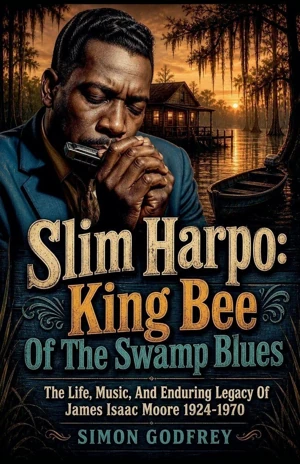 Buy from Amazon Slim Harpo: King Bee of the Swamp Blues
Essential Listening: Start with Hip-O Select's "The Excello Singles Anthology" (2003) in mono. Then get "Slim Harpo Sings 'Raining In My Heart...'" (Excello LP 8003, 1961) and "Tip On In" (Excello LP 8011, 1968). For influence, play Harpo's "I'm a King Bee" back-to-back with The Rolling Stones' 1964 version, and "Shake Your Hips" with the Stones' 1972 version on Exile on Main St. For context, read John Broven's "South to Louisiana" and Martin Hawkins' "A Shot In The Dark." For vinyl, seek Sundazed mono reissues or original yellow-label Excello 45s — check dead wax for Jay Miller's hand-etched matrices.
 Buy from Amazon The Excello Singles Anthology
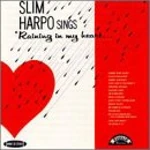 Buy from Amazon Slim Harpo Sings Raining in My Heart
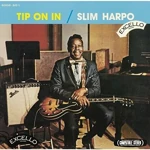 Buy from Amazon Tip On In