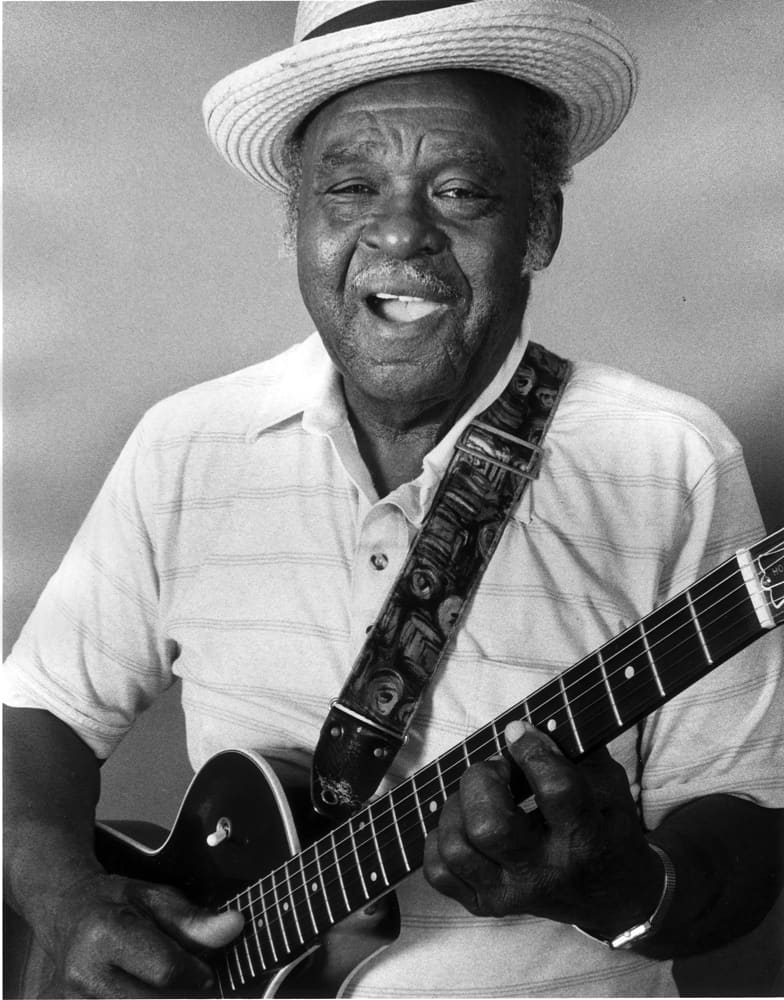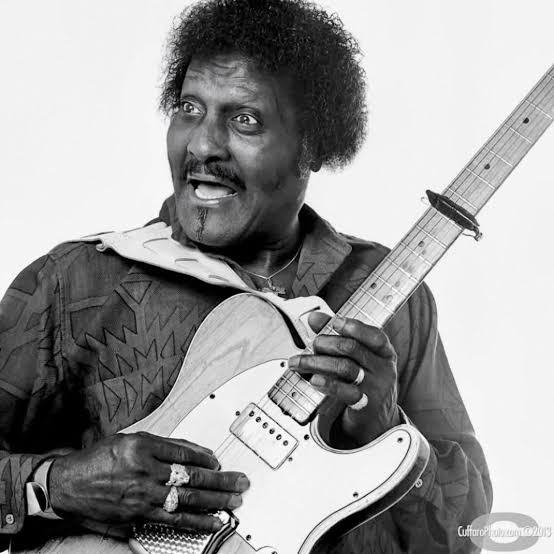
He tuned to F minor, capoed at the seventh fret, plugged in a hundred feet of cord, and walked out the door playing. How a kid from Third Ward Houston invented the coldest, hottest blues guitar sound and taught Hendrix and Stevie Ray how to sting.
If you saw Albert Collins live only once, you remember the cord before you remember the notes.
It was not wireless. It was a hundred, sometimes a hundred and fifty feet of ordinary guitar cable, coiled on stage like a sleeping snake, plugged into a battered sunburst Fender Telecaster Custom. Midway through "Frosty," Collins would grin — that big, genuine, gap-toothed grin — step off the stage, and keep playing while he walked out the front door of the club, down the sidewalk, into the pizza joint next door, into the bar across the street. People eating slices would look up to find the Iceman standing next to their table, playing a stinging, treble-drenched lick right in their face, his right hand snapping the strings with a thumbpick and bare fingers, his left hand hammering high up the neck where a capo lived permanently at the seventh fret. He never missed a beat. The band kept vamping inside. The crowd followed him out.
It was showmanship in the tradition of T-Bone Walker doing splits and Guitar Slim walking through the audience with 350 feet of cord, but Collins made it his own because his guitar sounded like nothing else on earth: bright, biting, clean and loud, minor-key, with almost no sustain and all attack. It sounded like ice cracking. They called him the Iceman. They called him the Master of the Telecaster. They called him the Razor Blade because his tone cut.
And for almost forty years, from a dirt-road town called Leona, Texas to Houston's Third Ward to a small club in Minneapolis where Bruce Iglauer rediscovered him, Albert Collins made some of the most distinctive, joyful, and influential blues guitar music ever recorded. He did it with a tuning no one else used, a technique no one else could copy, and a smile that said he knew exactly how cool he was and didn't need to brag about it.
Leona to Third Ward
Albert Gene Collins was born Albert Gene Drewery on October 1, 1932, in Leona, Texas. Leona is in Leon County, East Texas piney woods, halfway between Houston and Dallas, a small farming town where Black families worked land they didn't own. His mother Effie was young. His father was not present in the official records. He would later take the name Collins from a stepfather.
When he was seven, his family moved to Houston, to the Third Ward. If you know Texas blues, you know Third Ward. In the 1940s, it was a city within a city, the center of Black business, church, and music in Houston. It had its own ballrooms — the Eldorado Ballroom on Elgin and Dowling, built in 1939, which could hold a thousand people and booked everyone from Count Basie to B.B. King, and the Bronze Peacock on Erastus Street — and its own icehouses, open-air beer joints where working men went after work in the brutal Houston heat. The Eldorado taught you to play with horns and arrangements. The icehouses taught you to cut through noise and get people dancing or you didn't work.
Collins went to Jack Yates High School, the historic Black high school that produced an astonishing number of musicians. He learned piano and sang in the choir. He did not yet play guitar. That changed because of family. His cousin was Sam Hopkins, who the world would know as Lightnin' Hopkins. Lightnin' was already a legend in Third Ward, playing for tips and recording for Gold Star. He would come to family gatherings with a guitar and play, and young Albert would watch his hands. Lightnin' showed him a few chords, but more importantly showed him that a Black man from Texas could make a life playing blues.
His other early heroes were the Texas guitar kings who played Houston: T-Bone Walker, the original electric blues showman who played behind his head and did splits; Clarence "Gatemouth" Brown, who played guitar and fiddle with a ferocity that bordered on jazz; and Pee Wee Crayton and Goree Carter, who brought a horn-like phrasing to guitar. Houston blues was not Delta blues. It was flashy, horn-influenced, uptown, and it prized showmanship. Collins absorbed all of it.
He bought his first guitar at eighteen with money from driving a truck. He tried to play like T-Bone in standard tuning and it didn't sound right. His fingers hurt. The sound in his head was minor, not major, and high, not low. So he started experimenting with tuning, the way a kid might tune a guitar to a song he hears on the radio.
What he found was open F minor.
The Tuning No One Else Dared
Every guitarist who tries to learn Albert Collins hits the same wall and most give up there.
Standard tuning is E-A-D-G-B-E. Most blues lives there. Some players use open E or open G for slide. Collins tuned low to high F-C-F-Ab-C-F. Strum it open and you get an F minor chord, dark and ominous. It is a high-tension tuning — you tune the low E up a half step to F, A up a minor third to C, D up a minor third to F, G up a half step to Ab, B up a half step to C, high E up a half step to F — hard on necks and strings, not a tuning you stumble into.
How he found it is a story he told many times with a laugh. He was trying to learn a Lightnin' Hopkins song and couldn't get it in standard. So he tuned the guitar to the song, to the voices in his head. He kept tuning until the open strings sounded like the song.
Then he added the second part: a capo, very high. He often capoed at the 5th, 7th, even 9th fret. With open F minor and capo at the 7th fret, you are sounding in C minor, but you are playing way up the neck where the scale length is short, the strings are tight, and the tone is bright, almost mandolin-like. Bends are easier because the string is short, but you have to bend further.
Then the third part: fingers, not a flatpick. He wore a National thumbpick and played with his thumb and index and middle fingers, snapping the strings from above, popping them against the fretboard, muting with his palm. That snap is his signature. A flatpick can't do it. It is part of why his notes don't sing, they stab.
Then the fourth part: the Telecaster and how he set it. A mid-sixties Fender Telecaster Custom, sunburst, double binding, maple neck, bridge pickup only, tone wide open, treble all the way up, played through a Fender Quad Reverb with JBL D120F speakers, treble on 10, bass on 2, volume on 7. Loud, clean, bright. Most guitarists try to tame a Telecaster's brightness. Collins weaponized it.
Put it all together and you get a sound that is instantly identifiable. Three notes and you know it's him. Bright, biting, minor, with huge attack and almost no sustain. He didn't play with distortion. He played clean and loud. He left space. He would play a stinging phrase, then stop, grin, let the band breathe, then sting again.
When young guitarists would ask him how to play like him, he would show them the tuning and they would give up. You have to live in F minor. You can't visit.
The Freeze and Frosty
By the early 1950s, Collins was playing Third Ward clubs with his band The Rhythm Rockers, which had a saxophone because in Houston you needed a sax to work. The sax player, Henry Hayes, had played with Illinois Jacquet and taught Collins how to play heads in unison with horns, how to leave space.
In 1958, Houston disc jockey and label owner Bill Hall and producer Joe Calloway heard Collins at a club playing an instrumental built around that F minor riff with a stop-time break where the band freezes. They called it "The Freeze" and released it on Kangaroo Records 103. It didn't chart nationally but sold well in Texas and got on Houston R&B radio. It already has everything: the tuning, the high capo, the finger snap, the humor — the band stops cold, freezes, then starts again.
He followed it with a string of ice-titled instrumentals on Kangaroo and Hall and TCF Hall: "The Slop," "Defrost," "Sno-Cone," "Icy Blue," "Kool Aide." The titles were marketing — he's the Iceman, get it? — but they were accurate.
Then came "Frosty" in late 1962 at Gold Star Studios, 5620 Navigation Boulevard, the same studio where Lightnin' recorded "Mojo Hand." The lineup was Collins on guitar with a shout of "Frosty!" at the top, organist Charles Allen playing a churchy riff, bass, drums, and two saxes and a trumpet. The song is in C minor — Collins capoed at the 7th fret playing F minor shapes — built on a simple, unforgettable descending pentatonic riff with a straight-eighth groove that is as much soul and rock and roll as blues, like "Green Onions" with ice in its veins.
Hall pressed it on Hall 1923, sent it to Texas jukebox operators first, then leased it nationally. It entered Billboard Hot 100 in December 1962 and peaked at 74 pop, 10 R&B in early 1963. For an instrumental blues record by a Texas guitarist with no national profile, that was a million-seller and a ticket to package shows.
He followed with "Thaw-Out" and "Hot 'N Cold," but the British Invasion and soul were changing radio. Instrumental blues wasn't getting played. By 1967, like many Texas bluesmen, Collins looked west.
California
He moved first to Kansas City, then to Palo Alto, then Los Angeles by 1968. California had clubs and session work. He fell in with Johnny Otis, the LA R&B patriarch, and recorded for Imperial Records, which had bought Minit.
His Imperial period 1968-1971 produced some of his best, if underheard, work. "Love Can Be Found Anywhere (Even in a Guitar)" (1968) and "Trash Talkin'" (1969) show him trying to adapt — adding vocals, funk rhythms, soul horns — without losing his sound. He was never a great singer in the Bobby Bland technical sense, but he was a great vocal stylist, gruff, warm, talking as much as singing, telling stories with a laugh. On "Trash Talkin'," the title track is almost spoken-word with guitar interjections, a precursor to rap. "Do the Sissy" is a dance tune.
In LA he played the Ash Grove, where young white blues fans and rock musicians saw him. One was Jimi Hendrix, who caught Collins at the Ash Grove in 1967 and was floored by his tuning and his use of the Telecaster bridge pickup. Hendrix asked him about it. Collins showed him. You can hear Collins in Hendrix's clean, stinging high-register work and in his use of minor shapes high up the neck.
He also influenced Frank Zappa, who loved Collins' biting tone, and a generation of LA guitarists like Johnny "Guitar" Watson.
But by the early seventies, Collins was largely forgotten outside Texas and California, playing five sets a night, sometimes driving a truck during the day, raising a family.
Ice Pickin'
In 1977, Bruce Iglauer, who had started Alligator Records in Chicago in 1971 with $1,000 inherited to record Hound Dog Taylor, saw Collins at the Cabooze in Minneapolis. The club was small, the PA was bad, but Collins walked out the door with a hundred feet of cord, down the street, playing "Frosty" while people on the sidewalk stared. Iglauer had heard the early singles but had never seen the show.
After the set, Iglauer asked, "Want to make a record?" Collins, burned before, said, "You got money?" They shook hands.
"Ice Pickin'" (Alligator AL 4713, 1978) is one of the great comeback albums in blues history. Recorded in Chicago with his touring band — Casey Jones on drums, Aron Burton on bass, plus horns — produced by Iglauer with a dry, close sound that puts the Telecaster in your face, not buried in reverb, it has instrumentals like "Master Charge," a reworking of "The Freeze" with a funky wah-inflected rhythm and a drum break James Brown could have used, and "Conversation with Collins," where he talks through his guitar, and vocal numbers like "Honey, Hush" and "Cold, Cold Feeling" and "When the Welfare Turns Its Back on You," a Collins specialty — topical, funny, and true.
Dave Marsh raved in Rolling Stone. It won a W.C. Handy Award. It sold 50,000 copies in its first year, huge for blues then. Suddenly at 46, Collins was a star again, this time to a white college audience that had found blues through Clapton and Winter.
He followed with "Frostbite" (1980) with "Brick," a storytelling masterpiece about being built like a brick, and "Frozen Alive!" (1981), a live album from Minneapolis and Boulder that is essential because it captures the cord routine — nine-minute "Frosty" with Collins out on the street while the band vamps inside, crowd laughing and shouting.
Alligator also did something important: it paid royalties. Iglauer was fanatical about it. Collins, who had seen little from "Frosty," finally made a living from records.
The Show
If you ask anyone who saw Collins in the eighties what they remember, they say three things: the suit, the cord, the smile.
The suit: always sharp. Early sharkskin suits and thin ties like T-Bone. Later glittery jumpsuits, three-piece suits, always a hat. He understood blues was entertainment.
The cord: not a gimmick at first but practical. Stages were small. He wanted to play for people at the back, so he had a cord made long enough to go out the door. He would walk out, down the street, into a neighboring bar, playing the whole time. Police would sometimes stop him. He would grin and keep playing. People followed.
The smile: Collins smiled the whole time he played, not a fake stage smile but genuine joy. He loved the sound of his guitar. He loved watching faces when he hit that high stinging note. He was not a tortured bluesman. He was joyful, and that joy was infectious.
His show had a pattern but never felt patterned. Start with an instrumental — "Frosty" or "Master Charge" — to get the band tight. Sing a few, his voice gruff but warm, talking as much as singing, telling stories about Houston, about being cold, about welfare, about his wife Gwendolyn. Then the cord routine during "Frosty," walking out while the band vamped. Then back, sweaty, grinning, and a slow blues that showed he could play sweet as well as stinging.
He toured relentlessly. Europe loved him. Japan loved him. Montreux, North Sea, Chicago Blues Festival — festival favorite because he could play to 10,000 as easily as 100.
Showdown!
By the early eighties, Collins was a mentor. Young guitarists came to watch his hands. He was generous. He showed them open F minor, where the capo went, how he snapped strings. Most gave up.
One who got it in spirit was Robert Cray. Born in 1953 in Tacoma, Washington, Cray plays standard tuning with a pick, so he doesn't sound like Collins, but he learned about space, about singing behind the beat, about being sharp. Collins championed him.
Another was Johnny Copeland, fellow Texan, born in Haynesville, Louisiana, raised in Houston, Third Ward contemporary, big powerful singer with a more conventional tuning but similarly joyful approach.
In 1985, Iglauer had an idea: put them together like the old Chess showdown albums. "Showdown!" (Alligator AL 4743) with Collins, Cray, and Copeland is one of the best blues albums of the eighties and won a Grammy for Best Traditional Blues Recording in 1986.
It works because it's not a cutting contest. It's three friends, three Texas blues styles, listening. Collins' "T-Bone Shuffle" — tribute to T-Bone — and "Blackjack" and "The Dream" are stinging and joyful. Cray's are smoother, more soulful. Copeland's raw and powerful. The closing jam on "Something to Remember You By" shows how well they listened.
"Showdown!" did for all three what "Ice Pickin'" did for Collins — brought them to a wider white audience. It led to a tour where they traded verses and grins.
Collins' next solo, "Cold Snap" (Alligator AL 4752, 1986), was his most successful. Duet with Cray, "Ain't Got No Business Goin' to the Canteen," and guest Stevie Ray Vaughan on "If You Love Me Like You Say." Vaughan, from Dallas, grew up on Collins, cited him as major influence — heavy strings, stinging high notes, Telecaster bridge pickup, minor blues. On "Cold Snap," Vaughan plays rhythm behind Collins, respectful, not trying to outplay him. It was nominated for a Grammy. Title track became live showpiece.
Iceman in the Mainstream
By late eighties, Collins was no longer cult. He was blues star. Austin City Limits, late-night TV, movies — he played himself in a Chicago blues club in 1987's "Adventures in Babysitting." He played on records by Gary Moore, George Thorogood.
He became father figure to Texas guitarists taking blues to arenas. Stevie Ray Vaughan and Double Trouble opened for Collins early, later Collins opened for them. Vaughan would tell interviewers Collins was why he played Telecaster on some songs and why he used heavy strings.
Jimi Hendrix, who died in 1970, had been influenced too. Hendrix saw Collins in LA in '67, fascinated by tuning and bridge pickup. You hear Collins in Hendrix's clean stinging high register and minor shapes.
Collins proved blues guitar could be clean and loud, not distorted and loud, and still be powerful. In era when rock guitarists cranked Marshalls for sustain, Collins cranked a Quad Reverb for snap. That clean-but-loud approach influenced Vaughan, Cray, Jimmie Vaughan, Duke Robillard, and later Joe Bonamassa, Kenny Wayne Shepherd, Jonny Lang — all have Collins licks even if played in standard with a pick: minor pentatonic phrase high up neck, snap on first note, quick vibrato.
In 1990 he left Alligator for Pointblank/Virgin for "Iceman" (1991) with B.B. King guesting, produced by Jim Gaines who worked with Vaughan. Slicker, more rock production, good but less distinctive. Title track autobiographical.
The Last Tour and the Warm Heart
In early 1993 Collins was diagnosed with lung cancer. Smoker for years. Kept private, kept touring. Booked for Europe that summer. Played London Town & Country Club, walked out with cord one last time into kebab shop playing "Frosty" while people stared.
Last US shows included benefit for medical expenses in Seattle organized by friends. He played Montreux in July 1993, visibly thinner but still stinging.
He died November 24, 1993 in Las Vegas, age 61, survived by wife Gwendolyn and children. Memorials in Houston and Las Vegas. Robert Cray played "Phone Booth" and cried. B.B. King sent video: "Albert was the Iceman, but he had the warmest heart."
He is buried in Davis Memorial Park in Las Vegas, but marker in Houston's Third Ward says: Albert Collins, The Master of the Telecaster, The Iceman, 1932-1993, Third Ward's Own. In 2018 city unveiled official marker at Jack Yates High School.
How to Play Like the Iceman and Where to Start
For guitarists who want to learn Collins, here is the method as close as we can get.
Tune to open F minor: F-C-F-Ab-C-F. Use heavy strings, .010-.046 or .011-.050. Capo at 7th fret — you are now in C minor playing F minor shapes. Put on a National thumbpick, attack with thumb and index and middle fingers, snapping string against fretboard, muting with palm. Play through Fender amp, bridge pickup, treble on 10, mid 5, bass 2, reverb 3, loud and clean. No distortion pedal. Play a minor pentatonic lick, then stop. Leave space. Play slightly behind beat. Smile.
For bands, lesson is minor blues can be joyful. You can play one chord and make it funky. You can walk out door with hundred feet of cord and make people follow. Blues should go where people are.
For listening, start with Alligator core: "Ice Pickin'" (1978), "Frostbite" (1980), "Frozen Alive!" (1981), "Don't Lose Your Cool" (1983), "Showdown!" (1985), "Cold Snap" (1986). These six are mature Collins and all in print.
Then go back to early singles: "The Complete Imperial Recordings" and "Frosty" comps have "The Freeze," "Frosty," "Thaw-Out," "Sno-Cone," "Defrost." Best single-disc early is "Truckin' with Albert Collins" or "The Cool Sound of Albert Collins."
Then California period: "Love Can Be Found Anywhere (Even in a Guitar)" (1968) and "Trash Talkin'" (1969) for vocal numbers and funk.
Live: "Frozen Alive!" essential, plus bootlegs from North Sea and Montreux where cord routine extended.
For Sydney collectors, original Hall 45s of "Frosty" turn up at Red Eye Records and Marrickville fair for $40-$200 depending on condition. Check dead wax for Hall matrix. Alligator vinyl reissues on 180-gram are excellent, cut from original tapes, better than fake stereo Imperial reissues with noise reduction that kills snap.
Further listening beyond Collins: Lightnin' Hopkins "Mojo Hand," T-Bone Walker "T-Bone Blues," Clarence Gatemouth Brown "Okie Dokie Stomp," Johnny Copeland "Copeland Special," Robert Cray "Strong Persuader," Stevie Ray Vaughan "Texas Flood," Jimi Hendrix "Axis: Bold As Love" for clean stinging tone.
And to hear influence directly, play Collins' "Frosty" then Vaughan's "Cold Shot," Collins' "Master Charge" then Cray's "Phone Booth," Collins' "Conversation with Collins" then any modern Telecaster blues player. The ice still stings.
In Houston's Third Ward today, Bronze Peacock and Eldorado are gone or changed. But put on "Frosty" on hot Texas afternoon, windows open, and he is there. That stinging Telecaster, that laugh, that shout of "Frosty!" Cold music for hot weather, which is why it works in Texas and everywhere.
In end, Collins' career was long but fame concentrated in last fifteen years. Twenty years as working musician, driving truck, playing five sets, making singles that sold locally. Fifteen years as star, touring world with hundred feet of cord, winning Grammy, playing with B.B. King and Cray and Vaughan, smiling all time.
He never lost his cool. That was joke and truth. Iceman never melted. He just cut through.
When he walked out of club with long cord, playing down street, he was taking blues out of club into street, into world, to people not expecting it. Saying blues is not just for blues clubs. It is for pizza joints and sidewalks and anywhere people are alive.
That is his legacy. Not just tuning, not just Telecaster, not just cord, but idea: blues should go where people are, bright and biting and joyful, stinging like ice and warming like fire at same time.
He was Master of the Telecaster. He was Iceman. He was Albert Collins, from Leona, Texas, from Third Ward Houston, from everywhere.
And if you ever see guitarist walk out door of club with hundred feet of cord, playing, grinning, you know who he learned it from.
Essential Listening: Alligator's Ice Pickin' (1978) in original mix, then Frosty on Hall 45 mono. For influence, play Frosty back-to-back with Vaughan's Cold Shot and Hendrix's If 6 Was 9.
The Voice You Forget
Everyone talks about Collins' guitar, but his voice is half the story. He was not a great singer in the technical sense — gruff, limited range, a little nasal — but he was a great blues singer in the feel sense, like Jimmy Reed or John Lee Hooker. He sang like he talked, behind the beat, with a laugh in his voice, telling stories.
Listen to "When the Welfare Turns Its Back on You" from Ice Pickin'. It is a topical song about poverty, but Collins sings it with humor and dignity, not self-pity. "I got a letter from the welfare, said they gonna turn their back on me." He talks the verse, then sings the chorus slightly sharp, slightly late, and it works because you believe him. He lived it. He drove a truck. He knew what it was like to be broke.
Or "Cold, Cold Feeling," a slow blues where he sings about being cold in a way that is both literal — his ice persona — and emotional. He doesn't shout the blues. He confides it.
Or "Brick" from Frostbite, where he talks about being built like a brick, a big man, with a laugh that says he knows he's big but he's gentle. His vocal style influenced Robert Cray, who also sings behind the beat and talks as much as sings, and it influenced Stevie Ray Vaughan's vocal style, which is similarly gruff and conversational.
Collins also had a gift for titles that were also jokes: "Master Charge" because you can buy anything with it, "Conversation with Collins" where he literally has a conversation with his guitar, "Don't Lose Your Cool" which is both advice and his persona. He was funny on stage, telling stories about Houston, about his wife, about being stopped by police while walking with the cord. He would say, "They thought I stole my own guitar."
That humor is important because blues in the seventies and eighties was often presented as serious, tortured, authentic. Collins was authentic and joyful. He proved you could be blues and have fun.
Houston's Other Iceman
Houston in the 1950s had two Icemen: Albert Collins and another guitarist named Johnny "Guitar" Watson, who also played stinging Telecaster and had a long cord. Watson later went into funk and had hits like "A Real Mother for Ya." Collins and Watson knew each other, jammed together, and learned from each other about showmanship. Watson's cord was even longer — 200 feet — and he would walk through the audience playing behind his back.
Houston also had a tradition of minor-key blues that is distinct from Chicago major blues. Lightnin' Hopkins often played in minor keys, and so did Lil' Son Jackson and Texas Alexander. Collins' open F minor tuning fits that tradition but takes it further. His blues is almost always minor, even when the band is playing major. That minor-over-major tension is part of what makes his sound cold and modern.
The Third Ward scene also included Big Mama Thornton, who recorded "Hound Dog" before Elvis, and Johnny Copeland, who was a few years younger than Collins but grew up in the same clubs. Copeland and Collins would play together at the Eldorado, trading licks, learning how to front a band with horns.
When Collins moved to California, he brought that Third Ward sensibility with him — horn charts, tight arrangements, showmanship, minor keys — and it made him stand out in California, where blues was often more laid-back.
The Alligator Sound vs. The Imperial Sound
For enthusiasts who care about production, the difference between Collins' Imperial and Alligator records is instructive.
Imperial records, produced by Bob Thiele and others, have a lot of reverb, a lot of room sound, horns mixed back, guitar mixed back. They sound like late-sixties R&B records, with a little psychedelia creeping in — phasing, stereo panning. They are good records but they don't sound like Collins live.
Alligator records, produced by Bruce Iglauer and Dick Shurman, are dry, close-miked, guitar forward, drums tight, horns punchy and in your face. Iglauer understood that Collins' Telecaster should be the loudest thing in the mix, that his snap should hit you in the chest. He miked Collins' Quad Reverb with a Shure SM57 close and a Neumann U87 further back, blending them, and he left the treble alone. No de-essing, no smoothing.
That production choice is why "Ice Pickin'" still sounds modern and Imperial records sound dated. It is also why "Frozen Alive!" is the best representation of his live sound — it was recorded with a mobile truck, minimal overdubs, crowd noise left in.
For collectors, original Alligator vinyl pressings from 1978-1986, pressed at Columbia Records Pressing Plant in Terre Haute, have a warmth that CD reissues lost. The 180-gram reissues from 2015, cut by Kevin Gray, are excellent and closer to the original tapes.
The Cord
The cord deserves its own meditation because it was more than a gimmick. It was philosophy.
In an era when guitarists were going wireless — first with Schaffer-Vega systems, then with Nady — Collins stuck with a cord, a hundred to a hundred and fifty feet of ordinary Belden cable, coiled, sometimes with a simple buffer to avoid high-end loss. Why? Because wireless in the late seventies and early eighties sounded bad — compressed, noisy — and because the cord was part of the show.
When Collins walked out the door, he was doing what blues has always done: taking the music to the people, not waiting for people to come to the music. He was taking it out of the club, into the street, into everyday life. He would walk into a bar next door where people were not expecting blues and play, and they would follow him back to the club. It was marketing and it was missionary work.
It was also dangerous. He was a Black man in the seventies and eighties walking down the street in mostly white neighborhoods in Minneapolis or Seattle or Europe, playing loud electric guitar, with a long cord trailing behind him. Police stopped him more than once. He would grin and say, "I'm the Iceman, officer, just coolin' the block." Usually they let him go because the crowd was with him.
The cord also changed how he played. When you are a hundred feet from your amp, you can't hear it well. You have to play by feel, not by ear. You have to trust your hands. Collins developed an ability to play without hearing himself clearly, which made his live playing even more physical, more about snap and attack than about listening.
In later years, he tried wireless but went back to cord because he missed the physical connection, the way people reacted when they saw the cord trailing out the door.
The Lasting Cold
Albert Collins died in 1993, but his cold is still felt.
In Texas, every blues guitarist knows his licks. In Houston, Kenny Neal, a Baton Rouge-born but Houston-raised bluesman, says, "Albert taught us you can be minor and still make people dance. You don't have to play happy to make people happy."
In Chicago, the Alligator family — Koko Taylor, Lonnie Mack, Johnny Winter — all cite Collins as a favorite. In England, Gary Moore covered "Too Tired" and "Cold, Cold Feeling" and said Collins was his favorite blues guitarist because "he never wasted a note."
In modern blues-rock, Joe Bonamassa plays Collins licks in standard tuning with a pick, admitting he can't do the tuning. Kenny Wayne Shepherd plays "Frosty" live as a tribute. Jonny Lang plays "Master Charge" in his set.
And the Telecaster — Collins is the reason many blues players play Telecasters. Before Collins, the Telecaster was a country guitar. After Collins, it was a blues guitar. The bright, biting bridge pickup, the snap, the clean loudness — that is Collins.
His influence is also in gear. Fender now makes a signature Albert Collins Telecaster, with a humbucker in the neck that he never used, a custom wiring, and a capo included. It is a tribute, but no one who buys it sounds like him because they don't tune to F minor and they don't play with fingers.
In the end, Collins' legacy is not just notes but attitude: blues can be joyful, showmanship is not selling out, you can have a completely individual technique and still be blues, and you should always have enough cord to walk out the door.
He was the Iceman. He never melted. He just kept cutting through, one stinging, snapping, grinning note at a time.
Epilogue: Third Ward to Everywhere
If you go to Third Ward Houston today, you can still find the ghosts if you know where to look. The Eldorado Ballroom is still there at 2310 Elgin, restored, with photos on the wall of Collins and Lightnin' and Gatemouth and Big Mama. The Bronze Peacock is gone, replaced by a lot. Shady's Playhouse is a church. But the streets are still there, and on a hot afternoon, the heat shimmers off the asphalt like tremolo.
At Jack Yates High School, there is a Hall of Honor with Albert Collins' photo. At the corner of Dowling and Elgin, there is a mural that includes his face, Telecaster high, capo gleaming, cord trailing out of frame. At the Houston Blues Museum pop-up, there is a display with one of his capos, a Shubb, worn smooth where his thumb pressed.
In Leona, Texas, there is less — a small marker, a mention in the county history. But in Leona, people still talk about Effie Drewery's boy who went to Houston and became the Iceman.
Collins' family still lives in Houston and Las Vegas. His daughter organizes tributes. His wife Gwendolyn kept his Telecaster for years before loaning it to the Rock and Roll Hall of Fame for display.
The Telecaster itself is a 1966 Custom, sunburst, double binding, maple cap neck, wear on the back where his belt buckle rubbed, wear on the fretboard at the 7th fret where the capo lived, wear on the bridge pickup where his fingers snapped. It smells like smoke and sweat and Fender amp dust. It looks like it has been played, because it has.
Put on "Ice Pickin'" on a good system, loud, and you hear why. The first note of "Master Charge" — that snap, that sting, that minor chord with the capo high — cuts through room noise, through conversation, through whatever you were thinking about. It demands attention, not by being loud in the distorted sense, but by being bright and present and utterly confident.
That confidence is what blues enthusiasts love about Collins. He never aped anyone. He never tried to sound like B.B. or Muddy or T-Bone, even though he loved them. He sounded like himself, because he had to — his tuning forced him to. You can't play standard licks in open F minor with a capo at the seventh fret. You have to invent your own licks. Collins invented a whole vocabulary.
And that vocabulary is still being spoken. When you hear a modern blues guitarist play a stinging high note with a quick snap and then stop, leaving space, that's Collins. When you hear a band play a minor blues shuffle that makes people dance instead of brood, that's Collins. When you see a guitarist walk out into the audience, playing, grinning, that's Collins.
He was not the most famous bluesman of his generation. He was not the most recorded. But he might have been the most individual, the most joyful, and the most unforgettable live.
He was the Iceman who never melted, the Master of the Telecaster who never needed a humbucker, the man with a hundred feet of cord who always found his way back to the stage.
And if you ever hear a guitar sound like ice cracking on a hot Texas night, you know who it is.
Suggested Reading
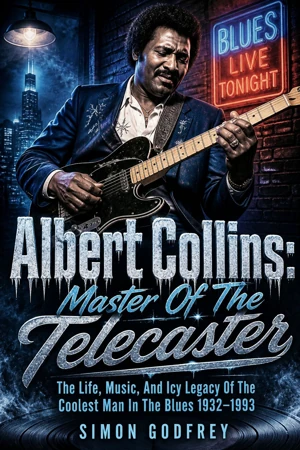 Buy from Amazon Albert Collins: Master of the Telecaster (The Roots of the Blues #12)
Essential Listening: Start with Alligator's Ice Pickin' (1978) original vinyl, then Hall Records Frosty 45 mono, then Showdown! (1985) for context. For gear heads, seek Fender Custom Shop Albert Collins Telecaster and Quad Reverb with JBL D120Fs. For live, Frozen Alive! (1981) is non-negotiable.
 Buy from Amazon Ice Pickin
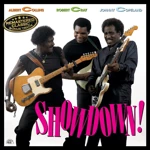 Buy from Amazon Showdown!
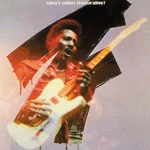 Buy from Amazon Frozen Alive!