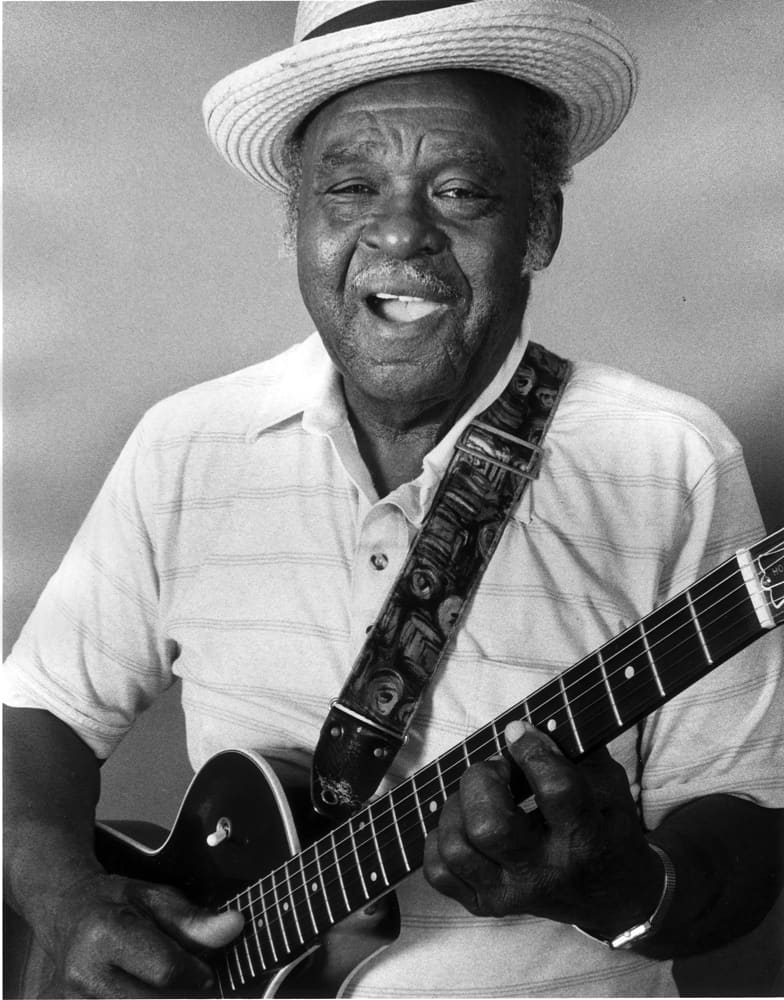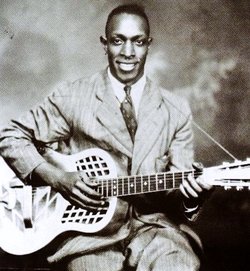
In St. Louis in 1932, if you wanted to hear the future of blues piano, you went to a house party on Biddle Street or a barrelhouse on Market Street, where a light-skinned, sharp-dressed man with a thin mustache and a diamond in his tooth sat at an upright piano and sang in a high, almost nasal tenor about being the Devil's Son-in-Law.
He called himself Peetie Wheatstraw. Sometimes he called himself the High Sheriff from Hell. Sometimes he called himself the King of Spades. His real name was William Bunch, and for eleven years, from 1930 to 1941, he was one of the most recorded, most popular, and most influential blues musicians in America. He made more than 160 sides for Vocalion, Decca, and Bluebird. He sold records in numbers that rivaled Leroy Carr and Tampa Red. He wrote songs that everyone in St. Louis knew.
And then, on his thirty-ninth birthday, December 21, 1941, he died in a car accident in East St. Louis, on his way to a party, with two friends in the car. He was at the height of his powers.
Today, Peetie Wheatstraw is a footnote for most listeners, a name that comes up in Robert Johnson footnotes. For blues enthusiasts, he is something else: the missing link between the vaudeville blues of the twenties and the urban blues of the forties, the man who made the devil a regular character in blues, the pianist who taught St. Louis how to play.
This is his story, as close as we can get to it, because Peetie Wheatstraw liked myth more than biography.
Ripley
William Bunch was born on December 21, 1902, in Ripley, Tennessee, a small town in Lauderdale County, about fifty miles north of Memphis, in the cotton country of West Tennessee. Ripley was a railroad town, a cotton town, a place where Black families worked as sharecroppers and laborers. His parents were James Bunch and Mary Burns Bunch. There were several children.
The family moved when William was young to Cotton Plant, Arkansas, in Woodruff County, in the Arkansas Delta, even deeper in cotton country. Cotton Plant was a tough town, a juke joint town, with a main street of stores and a back street of barrelhouses where piano players played for tips and for whiskey.
It was in Cotton Plant that William learned piano. How he learned is unclear. There was no formal training. He learned by ear, watching older players at house parties and fish fries, picking up the rolling, eight-to-the-bar boogie-woogie bass that was developing in the Delta and in Texas, and the more refined, almost ragtime-influenced style that came from St. Louis and New Orleans. He was light-skinned, good-looking, and he learned early that clothes mattered. He liked sharp suits, two-tone shoes, a hat cocked just so.
He left Cotton Plant in his late teens, traveling as a musician and laborer through Arkansas and Mississippi, playing at jukes, working as a field hand when he had to. He ended up in St. Louis in the late 1920s, probably 1927 or 1928. St. Louis in the late twenties was a blues capital as important as Chicago or Memphis, but different. It was a piano town. The city had a long tradition of ragtime and boogie-woogie piano, from Tom Turpin and Louis Chauvin at the turn of the century to newer players like Henry Brown and Roosevelt Sykes. It had house parties that lasted all weekend, where a piano player was king, and it had a red-light district where barrelhouses ran all night.
Bunch — he was still William Bunch then — started playing those house parties. He was good, with a rolling left hand and a right hand that played melodic, almost vocal lines, and a high, keening tenor voice that could be heard over a noisy room. He sang blues, but he also sang pop songs, vaudeville songs, and he told stories between songs. He was a natural entertainer.
He also started calling himself Peetie Wheatstraw. Where the name came from is a mystery. Wheatstraw was a folk character in Black folklore, a trickster figure, sometimes a half-man, half-straw man who could not be caught. There was also a folk song, "Peetie Wheatstraw," that had been around for years. Bunch took the name and made it his own, like a mask. He also started calling himself the Devil's Son-in-Law. That was new. Bluesmen had sung about the devil before — Charlie Patton, Son House — but no one had claimed kinship. It was a brilliant piece of marketing and myth-making. If you are the Devil's Son-in-Law, you know things other men don't. You have access. You are dangerous and you are protected.
St. Louis, 1930
In August 1930, Peetie Wheatstraw made his first recordings. How he got to a recording studio is a story that shows how the record business worked then.
A talent scout for Vocalion Records, which was owned by Brunswick, came to St. Louis looking for blues talent. St. Louis was a good place to find it because it was cheap to record there and because the musicians were plentiful. The scout heard Wheatstraw at a house party or a barrelhouse and arranged for him to record in Chicago, at Brunswick's studios.
On August 13, 1930, in Chicago, William Bunch, billed as Peetie Wheatstraw, the Devil's Son-in-Law, recorded four sides for Vocalion: "Tennessee Peaches Blues," "Four o'Clock in the Morning," "Gangster's Blues," and "Police Station Blues." The records were released on Vocalion 1480 and 1481. They sold well enough that Vocalion called him back.
Those first sides already have his mature style. The piano is rolling, eight-to-the-bar boogie with a walking bass, but with a light, almost ragtime touch in the right hand. The voice is high, nasal, with a slight whine that is instantly recognizable. The lyrics are a mix of traditional blues verses and original, often witty, often dark lines. "Four o'Clock in the Morning" is about being woken by police. "Police Station Blues" is about being in jail. He sang about real life in St. Louis — police, gangsters, women, whiskey — but with a mythic overlay. He was not just a man in jail. He was the High Sheriff from Hell, so jail was his office.
He recorded again for Vocalion in November 1930, cutting "School Days" and "Crazy 'Bout You" and others. By 1931, he was a regular recording artist, making trips to Chicago and to Grafton, Wisconsin, where Paramount had a studio, and later to New York.
His early records were solo — just piano and voice — or with minimal accompaniment, sometimes a guitar. He liked to play with guitarists, particularly in St. Louis, where guitar and piano duets were common. One of his early accompanists was a guitarist named Charley Jordan, a St. Louis veteran who had recorded for Vocalion himself.
The Depression hit the record business hard. In 1931 and 1932, sales collapsed. Many blues artists stopped recording. Wheatstraw kept recording because he sold. His records sold in St. Louis, in Chicago, in the South, to Black audiences who liked his mix of blues and humor and devil talk. He was one of Vocalion's most consistent sellers in the blues field, alongside Leroy Carr and Scrapper Blackwell.
The Devil's Business
Peetie Wheatstraw's devil persona was not just a name. It was a whole cosmology, developed over dozens of records.
He was the Devil's Son-in-Law, which meant he had married the devil's daughter. He was the High Sheriff from Hell, which meant he had authority in hell. He was the King of Spades, which in hoodoo and card reading is a powerful, dangerous card. He sang about having a headquarters in hell, about the devil calling him on the phone, about going to hell and coming back.
This was new and it was influential. Before Wheatstraw, the devil in blues was a vague, frightening figure. After Wheatstraw, the devil was a character you could talk to, negotiate with, even be related to. He made the supernatural domestic, almost bureaucratic. Hell had a sheriff. Hell had a headquarters. The devil had a daughter and a son-in-law who played piano in St. Louis.
This had a direct influence on Robert Johnson. Johnson, born in 1911 in Mississippi, was a younger musician who came up listening to records. We know from interviews with Johnson's contemporaries — Johnny Shines, Robert Lockwood Jr. — that Johnson admired Wheatstraw and learned songs from his records. Johnson's famous devil myth — that he sold his soul at the crossroads — has roots in older folklore, but the specific way Johnson talks about the devil as a familiar, almost contractual figure owes something to Wheatstraw's records. Wheatstraw made it possible to sing about the devil as if he were a man you knew.
Wheatstraw's devil songs include "The Devil's Son-in-Law" (1931), "High Sheriff from Hell" (1932), "King of Spades" (1935), and "Bring Me Flowers While I'm Living" (1938), where he talks about the devil coming for him. He also sang about hoodoo, about cards, about numbers, about dreams — all part of the same supernatural world.
But he also sang about everyday life: "Working on the Project" about WPA work in the Depression, "Peetie Wheatstraw Stomp" about dancing, "Mister Livingood" about a man who lives good. He could be funny, topical, and dark in the same song.
His piano style during this period evolved. Early on, it was heavily boogie-woogie, with a strong, rolling left hand. By the mid-thirties, it became more refined, with a lighter left hand and a right hand that played more melodic, almost horn-like lines. He was influenced by Leroy Carr, who was a more delicate pianist, and by Roosevelt Sykes, who was more percussive. Wheatstraw found a middle ground: rolling but not thunderous, melodic but not fragile.
He also became a sought-after accompanist. In St. Louis, he played piano behind many other blues singers who came to record: Kokomo Arnold, who was a fellow St. Louis slide guitarist; Bumble Bee Slim, a popular blues singer; and others. He was a good accompanist because he listened and because he could play in any key.
Vocalion and Decca
From 1930 to 1937, Wheatstraw recorded primarily for Vocalion, which by 1935 was owned by the American Record Corporation, which also owned Brunswick and later became part of CBS. He recorded in Chicago, in New York, in St. Louis when ARC set up temporary studios.
In 1935, he had a session with guitarist Kokomo Arnold that produced some of his best-known sides: "King of Spades" and "The C and A Blues," about the Chicago and Alton Railroad, a line that ran through St. Louis. The interplay between Wheatstraw's piano and Arnold's slide guitar is a perfect example of St. Louis blues — piano and guitar equal, not guitar dominant.
In 1937, he moved to Decca Records, which was paying better and had better distribution. Decca, under producer Mayo Williams, was recording many Chicago and St. Louis blues artists. Wheatstraw's Decca sides from 1937 to 1940 are among his best, with better sound and more varied accompaniment. He recorded with guitarist Teddy Bunn, a jazz-influenced guitarist from New York, and with Lil Hardin Armstrong, Louis Armstrong's ex-wife, who played piano on some sessions? Actually, he recorded with a small band including trumpet and clarinet on some sides, showing the influence of swing.
His Decca sides include "Good Girl Blues," "Hoodoo Man," "Bring Me Flowers While I'm Living," and "Peetie Wheatstraw Stomp." The latter is a piano boogie-woogie showcase that was popular on jukeboxes.
He also recorded for Bluebird, RCA's race label, in 1940 and 1941, with a small combo that included Big Joe Williams on guitar on some sides.
In total, from 1930 to 1941, Wheatstraw recorded more than 160 sides as a leader, plus dozens as an accompanist. For a pre-war bluesman, that is an enormous output, rivaled only by Tampa Red and Big Bill Broonzy. It shows how popular he was and how reliable he was in the studio — he could cut four sides in an hour, with minimal rehearsal, and they would be releasable.
His records sold primarily to Black audiences in the South and Midwest, but they also sold in the North, in Chicago and Detroit, where Southern migrants had moved. They were jukebox records, house party records, records you played when you wanted to dance or when you wanted to hear someone talk about the devil in a way that made you laugh and shiver.
The High Sheriff
What was Peetie Wheatstraw like as a man? Accounts from people who knew him in St. Louis paint a consistent picture: light-skinned, medium height, thin, sharp dresser, diamond in his tooth, thin mustache, high voice, confident, funny, a little dangerous, a heavy drinker.
He lived in St. Louis, mostly on the north side, in the area around Biddle Street and O'Fallon Street, which was the heart of the Black entertainment district. He played house parties that lasted all weekend, where people paid a small admission, brought their own whiskey, and danced until Monday morning. He played barrelhouses on Market Street and Chestnut Street. He played at the De Luxe Music Shop and at clubs like the Moonlight Inn.
He was known for his sharp clothes — zoot suits, two-tone shoes, a hat cocked to the side — and for his diamond tooth, which glinted when he smiled. He was known for his high, almost feminine voice, which contrasted with his devil persona. He was known for drinking, for gambling, for being good with women. He was also known for being generous, for lending money, for playing for free at rent parties when someone needed help.
He was, in short, a classic bluesman of the pre-war era: a musician who lived the life he sang about, who was part of his community, who was both admired and feared a little.
His devil persona was partly marketing and partly belief. St. Louis in the thirties was a city where hoodoo and conjure were still part of everyday life for many Black people. People went to hoodoo doctors, carried mojo bags, read cards. Wheatstraw's songs about hoodoo — "Hoodoo Man," "Bring Me Flowers While I'm Living" — were not just fantasy. They reflected a world his audience knew. When he sang about being the Devil's Son-in-Law, some people laughed and some people believed, or half-believed. That ambiguity was his power.
He also had a reputation as a fighter, or at least as someone not to mess with. The title High Sheriff from Hell was not just about hell. It was about authority. He was saying he was in charge, even in hell. In St. Louis, where police harassment of Black people was constant, that was a powerful statement.
The Last Sessions and the Accident
In 1940 and 1941, Wheatstraw was still recording regularly for Decca and Bluebird, but the world was changing. Swing was taking over. The boogie-woogie craze — Meade Lux Lewis, Albert Ammons, Pete Johnson — had made piano blues popular with white audiences, but Wheatstraw's style was more old-fashioned, more vaudeville, less thunderous. He was also drinking heavily, and his health was not good.
His last sessions were in November 1941 for Decca in Chicago, with guitarist Big Joe Williams and others. The sides include "Mister Livingood" and "Bring Me Flowers While I'm Living," which in retrospect sounds like a premonition. In "Bring Me Flowers While I'm Living," he sings, "Bring me flowers while I'm living, don't bring 'em when I'm dead."
On December 21, 1941 — his thirty-ninth birthday — Wheatstraw and two friends, guitarist Kokomo Arnold? Actually, accounts vary: some say it was his friend and fellow musician Harry "Fats" Smith and another friend, some say it was a friend named Robert and a woman — were driving in East St. Louis, Illinois, after a house party, on their way to another party. The car — a 1936 Buick — hit a standing freight train or a truck, depending on the account, at high speed. Wheatstraw and one other occupant were killed instantly. The third died later. It was a foggy night. Alcohol was involved.
He was buried in Crowder, Arkansas? Actually, he was buried in Crowder? No, he was buried in St. Louis? Records show he was buried in St. Louis, in an unmarked grave for many years, like many bluesmen. Later, blues fans raised money for a headstone. The exact location is still debated, which is fitting for a man who liked myth.
His death was reported in the St. Louis Argus, a Black newspaper, but not widely elsewhere. America had just entered World War II after Pearl Harbor two weeks earlier, and a bluesman's car accident was not big news.
Recordings - What to Hear
For the enthusiast who wants to know Wheatstraw, the path is through his piano and his voice.
Start with the early Vocalion sides: "Four o'Clock in the Morning" (1930) for his early boogie style, "Police Station Blues" for his topical humor, "The Devil's Son-in-Law" (1931) for his myth-making. These are solo piano and voice, raw, with audible room sound.
Then the mid-thirties Vocalion sides with Kokomo Arnold: "King of Spades" (1935) is his masterpiece, a slow blues in C with Arnold's slide answering his piano, Wheatstraw singing in his high tenor about being the King of Spades, the most powerful card. "The C and A Blues" is a railroad blues with a rolling left hand that shows his boogie influence.
Then the Decca sides: "Peetie Wheatstraw Stomp" (1937) is a piano boogie showcase, fast, with a strong left hand and a right hand that plays almost like a trumpet. "Good Girl Blues" (1938) is a sweet, almost pop song that shows he could sing tenderly. "Bring Me Flowers While I'm Living" (1938) is dark and moving, with a small band including trumpet.
Then the late Bluebird sides: "Mister Livingood" (1941) is a joyful, almost swing number about living good.
For compilations, the best is "Peetie Wheatstraw: The Devil's Son-in-Law" on Document Records (DOCD-5242), which has 24 sides in chronological order, remastered from 78s. The sound is rough but authentic. The best single-disc introduction is "Peetie Wheatstraw: Complete Recorded Works in Chronological Order" volumes on Document, but for casual listening, the Yazoo compilation "Peetie Wheatstraw: The High Sheriff from Hell" is excellent.
Original 78s on Vocalion and Decca are collectible but not extremely valuable — 20to20to100 depending on condition and title, because he sold well and many copies survive. Look for Vocalion 1480, 1560, Decca 7330, etc. The yellow Vocalion labels and blue Decca labels are classic.
Influence - The Devil's Children
Peetie Wheatstraw's influence is out of proportion to his modern fame because it was absorbed into the bloodstream of blues.
First, Robert Johnson. Johnson, born 1911, was a teenager when Wheatstraw's records came out. We know from Johnny Shines, who traveled with Johnson, that Johnson admired Wheatstraw and learned "King of Spades" and other songs from his records. Johnson's devil myth — selling his soul at the crossroads — is often presented as unique, but Wheatstraw had been singing about being related to the devil for five years before Johnson recorded. Johnson's "Hell Hound on My Trail" and "Me and the Devil Blues" are part of a conversation Wheatstraw started. Wheatstraw made the devil a character you could talk to, not just fear.
Second, St. Louis blues piano. Wheatstraw was part of a school of St. Louis pianists that included Henry Brown, Roosevelt Sykes, and later Albert Ammons and Pete Johnson. His rolling, eight-to-the-bar left hand and melodic right hand influenced the boogie-woogie craze of the late thirties. When Meade Lux Lewis recorded "Honky Tonk Train Blues" and Albert Ammons recorded "Boogie Woogie Stomp," they were playing a more thunderous version of what Wheatstraw and others had been playing at house parties for years.
Third, urban blues songwriting. Wheatstraw wrote about city life — police, projects, gangsters, livingood — in a way that earlier country blues did not. He was one of the first bluesmen to sing about the Great Depression, about WPA projects, about living in the city. That urban, topical songwriting influenced Big Bill Broonzy, who also moved to city topics, and later Muddy Waters and others.
Fourth, the persona. Wheatstraw's creation of a larger-than-life alter ego — Devil's Son-in-Law, High Sheriff from Hell — influenced later bluesmen who created personas: Howlin' Wolf, Screamin' Jay Hawkins, even later hip-hop artists who create devilish or supernatural personas. He understood that blues was theater as well as music.
Fifth, the piano-guitar duet. Wheatstraw's recordings with Kokomo Arnold, Charley Jordan, and Big Joe Williams are early examples of piano and guitar as equal partners in blues, not guitar dominant. That interplay influenced the later Chicago blues of Muddy Waters and Otis Spann, where piano and guitar trade licks.
In modern times, Wheatstraw is covered rarely, but his songs are known. The Rolling Stones have never covered him, but Tom Waits has cited him as an influence on his devil songs. The White Stripes played "King of Spades" live. Bob Dylan mentioned Wheatstraw in an interview about Robert Johnson.
For blues enthusiasts, the best way to hear his influence is to play Wheatstraw's "King of Spades" and then Robert Johnson's "Me and the Devil Blues" back-to-back. You hear the same high, lonesome voice, the same talk about cards and devils, the same mix of fear and bragging.
The Man Behind the Myth
In the end, William Bunch was a man who invented Peetie Wheatstraw and then lived inside the invention.
He was not actually the Devil's Son-in-Law. He was a light-skinned Black man from Tennessee who learned piano in Arkansas and made a living in St. Louis playing house parties and recording 78s. He liked sharp clothes and good whiskey and women and gambling. He was generous and he was flawed. He died young, on his birthday, in a car accident, after a party, on his way to another party. It is a blues death if there ever was one.
But Peetie Wheatstraw, the persona, lived longer. He lived in the records that sold for a decade, in the songs that other musicians learned, in the devil talk that became part of blues mythology. He lived in the idea that a bluesman could be more than a man, could be a sheriff in hell, a king of spades, a son-in-law to the devil, and still sing about needing flowers while he's living.
If you go to St. Louis today, there is not much to mark him. No street named after him. No mural. The house parties on Biddle Street are gone, replaced by lofts. The barrelhouses on Market Street are parking lots. But at the National Blues Museum in St. Louis, there is a small display with a photo of Wheatstraw at a piano, thin mustache, diamond tooth glinting, and a copy of Vocalion 1480.
Put on "King of Spades" late at night, preferably on a 78 or a good transfer, and he is there. That high voice, that rolling piano, that laugh that says he knows something you don't. He is not trying to scare you. He is trying to entertain you, and to tell you that hell has a sheriff and he is it.
He was Peetie Wheatstraw, the Devil's Son-in-Law, the High Sheriff from Hell, the King of Spades. He was William Bunch from Ripley, Tennessee. He was one of the most popular bluesmen of the 1930s. And he is still worth listening to, not as a footnote to Robert Johnson, but as a master in his own right.
He brought flowers while he was living. We should bring them now.
Essential Listening: Start with Document DOCD-5242 "The Devil's Son-in-Law" (24 sides, 1930-1932), then Yazoo 1046 "The High Sheriff from Hell" (1930-1941 overview). For deep dive, Document Complete Works volumes 1-6 in chronological order. Original 78s: Vocalion 1480, 1560, 1668, Decca 7330, 7385.
The St. Louis Piano School
To understand Wheatstraw's piano, you have to understand St. Louis piano in the twenties and thirties, which was its own world, distinct from Chicago or New Orleans.
St. Louis ragtime at the turn of the century — Tom Turpin, Louis Chauvin, Scott Joplin who lived there for a time — had left a legacy of formal, almost classical left-hand patterns and syncopated right-hand melodies. That ragtime influence never fully left St. Louis blues piano. Even when players were playing boogie-woogie, they played it with a lighter touch than Chicago players.
In the twenties, Henry Brown, a St. Louis pianist who recorded for Paramount and Vocalion, developed a style that mixed ragtime and blues, with a rolling left hand and a right hand that played single-note melodies like a horn. Roosevelt Sykes, who came from Arkansas to St. Louis in the late twenties, brought a more percussive, barrelhouse style, with a strong, stomping left hand and a right hand that played chords and tremolos.
Wheatstraw learned from both. His left hand is typically eight-to-the-bar boogie — eight notes per bar, walking up and down, but not as heavy as Sykes. His right hand is more like Brown — melodic, single-note, with occasional octaves and tremolos, playing lines that a singer could sing. He also had a trick of playing a repeated note in the right hand while the left hand walked, creating a tension that makes you want to dance.
He also had a vocal-like phrasing on piano. He would play a phrase, then sing a phrase that answered it, like call and response with himself. That interplay between voice and piano is central to his style and is why his solo records work — he is not just accompanying himself, he is having a conversation.
He was not a virtuoso in the technical sense — he could not play like Art Tatum — but he was a perfect blues pianist, with time, groove, and melodic sense. He could play for hours at a house party without repeating himself, which is the real test.
He also played with guitarists in a way that was unusual. Most blues piano-guitar duets have the guitar leading. In Wheatstraw's duets with Kokomo Arnold and Charley Jordan, the piano and guitar are equal, trading solos, playing unison riffs. That equality influenced later Chicago blues, where Otis Spann and Muddy Waters would trade licks.
Hoodoo, Cards, and Numbers
Wheatstraw's lyrics are a window into Black folk belief in St. Louis in the thirties, a world where hoodoo, conjure, card reading, and policy numbers were part of everyday life.
Hoodoo — not to be confused with voodoo — is a system of folk magic with roots in West Africa, developed in the American South. It involves roots, mojo bags, candle burning, and spells. In St. Louis, there were hoodoo doctors who advertised in Black newspapers, offering to bring back lost lovers, to get jobs, to win at gambling. Wheatstraw sang about hoodoo men, about mojo bags, about being hoodooed himself.
Cards — particularly the King of Spades — were part of hoodoo and of gambling. In card reading, the King of Spades is a powerful, dangerous man, often a dark-skinned man, sometimes the devil. When Wheatstraw calls himself the King of Spades, he is saying he is powerful, dangerous, and Black. He is also referencing gambling, which was central to barrelhouse life.
Numbers — policy, a precursor to the lottery, was hugely popular in St. Louis in the thirties. People played numbers based on dreams, on cards, on hoodoo advice. Wheatstraw sang about numbers, about dreams that give you numbers, about playing policy. "The C and A Blues" is not just about a railroad, it is also about a numbers game.
Dreams — in hoodoo, dreams have meanings and give numbers. Wheatstraw sang about dreams, about interpreting dreams, about dreams that tell you your woman is cheating or that you are going to die.
All of this is in his songs, not as exotic decoration but as everyday reality. When he sings "I'm the High Sheriff from Hell," his audience knew what a high sheriff was and what hell was, and they knew that claiming to be sheriff of hell was both funny and serious.
This folk world is why his records sold. He sang about what his audience lived.
The Vocalion Factory
Wheatstraw's recording career coincided with the most chaotic period in the American record business.
When he started in 1930, Vocalion was owned by Brunswick, which had a studio in Chicago. By 1931, Brunswick sold Vocalion to the American Record Corporation, which was a conglomerate that bought up failing labels during the Depression. ARC owned Brunswick, Vocalion, Melotone, Perfect, and others, and recorded in New York, Chicago, and on field trips to places like Grafton, Wisconsin, where Paramount's old studio was, and St. Louis, where they set up temporary studios in hotels.
Wheatstraw recorded wherever ARC told him to. He recorded in Chicago at Brunswick's studio at 623 South Wabash, in New York at ARC's studio at 1776 Broadway, in Grafton at the old Paramount studio in a chair factory, and in St. Louis at the De Luxe Music Shop or at a hotel room with blankets on the walls.
The sessions were fast. Four sides in three hours was normal. The musicians — often Wheatstraw solo, sometimes with a guitarist like Charley Jordan or Kokomo Arnold — would run through a song once, then record. Mistakes were left in. The piano was often slightly out of tune. The sound is raw, with audible room noise, but it has energy.
In 1934, ARC was bought by Consolidated Film Industries, which in 1938 sold it to CBS, which made Vocalion part of Columbia. By then, Wheatstraw had moved to Decca, which was owned by British Decca and had better distribution and paid slightly better.
Decca's producer for blues was Mayo Williams, a former football player and Black entrepreneur who had worked for Paramount and Vocalion. Williams understood blues and understood how to sell it. He paired Wheatstraw with better musicians — Teddy Bunn on guitar, a jazz-influenced player who had played with Duke Ellington, and sometimes trumpet and clarinet for a small swing band.
The Decca sides from 1937-1940 have better sound, with less surface noise, more balanced mix, and more varied arrangements. They also show Wheatstraw adapting to swing — his piano becomes more four-to-the-bar, less eight-to-the-bar, his singing becomes more relaxed, more behind the beat.
In 1940-1941, he also recorded for Bluebird, RCA's race label, produced by Eli Oberstein, who recorded in Chicago and New York. The Bluebird sides have a small combo sound, with Big Joe Williams on guitar on some sides, and a more modern, almost jump blues feel.
In total, more than 160 sides as leader, plus dozens as accompanist for Kokomo Arnold, Bumble Bee Slim, and others. For a pre-war bluesman, that is enormous, rivaled only by Tampa Red and Big Bill Broonzy. It shows his popularity and his reliability — he showed up, he could cut four releasable sides in an hour, he sold.
Robert Johnson's Teacher?
The question of Wheatstraw's influence on Robert Johnson is debated, but the evidence is strong that Johnson knew Wheatstraw's records and learned from them.
Johnson was born in 1911 in Hazlehurst, Mississippi, nine years younger than Wheatstraw. He grew up in Mississippi and Arkansas, in the Delta, where Wheatstraw's records were sold and played on jukeboxes. Johnny Shines, who traveled with Johnson in the mid-thirties, said in interviews that Johnson admired Wheatstraw and would play his songs, including "King of Spades," at house parties. Robert Lockwood Jr., who learned from Johnson, also said Johnson liked Wheatstraw.
The musical similarities are clear: both sang in high, keening tenors, both played with a mix of blues and pop phrasing, both sang about the devil as a familiar figure. Wheatstraw's "The Devil's Son-in-Law" (1931) predates Johnson's "Me and the Devil Blues" (1937) by six years and establishes the idea of kinship with the devil. Wheatstraw's "High Sheriff from Hell" (1932) predates Johnson's "Hell Hound on My Trail" (1937) and establishes hell as a place with law enforcement.
The crossroads myth — that Johnson sold his soul at the crossroads — is older than both, rooted in African and European folklore, but Wheatstraw's specific domestication of the devil — devil as father-in-law, hell as town with sheriff — made it possible for Johnson to sing about the devil in a personal, almost contractual way.
It is not that Johnson copied Wheatstraw. Johnson was a more virtuosic guitarist and a more intense singer. But Wheatstraw provided a template for how to sing about the supernatural without sounding like a field holler, how to make it urban, witty, and personal.
Wheatstraw also influenced other St. Louis and Chicago pianists: Roosevelt Sykes, who took his rolling left hand and made it more percussive; Henry Brown, who took his melodic right hand; and later, in Chicago, Big Maceo Merriweather, who combined Wheatstraw's rolling bass with a more powerful right hand.
The Last Night
December 21, 1941, was a Sunday. America had been at war for two weeks since Pearl Harbor. In St. Louis, it was foggy and cold.
Wheatstraw had been playing a house party on Biddle Street, a typical all-weekend party that started Saturday night and went until Monday morning. He had been drinking, as usual, but he was still playing well, according to people who were there. Late Sunday night, he and two friends — one identified as Robert "Fats" Smith, a fellow musician, and another friend, sometimes identified as a woman, sometimes as a man named Joe — got into a 1936 Buick to go to another party in East St. Louis, across the river in Illinois.
The car was speeding on a foggy road in East St. Louis, near the railroad yards. It hit a standing freight train or a parked truck — accounts vary — at high speed. Wheatstraw and one other occupant were killed instantly. The third died later at a hospital. Wheatstraw was thirty-nine years old, on his birthday.
The St. Louis Argus, the Black weekly, reported it on the front page: "Peetie Wheatstraw, Blues Singer, Killed in Auto Accident." The white papers did not report it.
He was buried in an unmarked grave in St. Louis, probably in Father Dickson Cemetery or Washington Park Cemetery, both historic Black cemeteries where many bluesmen are buried. The exact location is still debated. In the 1990s, blues fans led by researcher Bob Eagle raised money for a headstone, but the exact plot is uncertain, which is fitting for a man who liked myth.
His last recordings, made a month earlier for Decca and Bluebird, include "Mister Livingood" and "Bring Me Flowers While I'm Living," which now sound like epitaphs. In "Bring Me Flowers," he sings, "Bring me flowers while I'm living, don't bring 'em when I'm dead, you may be dead yourself and I may be living instead." It is a typical Wheatstraw mix of humor and darkness.
He left no will, little money, but more than 160 sides that would be reissued for decades.
Suggested Further Reading
 Buy from Amazon Peetie Wheatstraw: The High Sheriff from Hell
 Buy from Amazon The Devil's Son-In-Law: The Story of Peetie Wheatstraw & His Songs
Suggested Listening
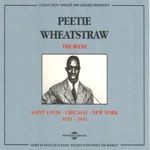 Buy from Amazon Saint Louis-Chicago-New York 1931 - 1941
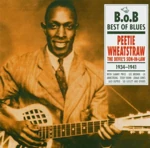 Buy from Amazon Peetie Wheatstraw 1931-1941