Some songs become standards because they are endlessly covered.
Others become standards because one artist completely reinvents them.
That is exactly what happened with “Mean Old World.”
Originally recorded by T-Bone Walker in the early 1940s, the song was transformed a decade later by Little Walter into one of the defining recordings of Chicago blues. Walter’s version did more than reinterpret the original—it electrified it, urbanized it, and reshaped the emotional language of postwar blues music.
Today, Little Walter’s “Mean Old World” stands as one of the most influential blues recordings of the 1950s: a perfect fusion of amplified harmonica, modern rhythm, emotional restraint, and street-level Chicago intensity. It also represents a pivotal moment in the evolution of electric blues and the rise of Chess Records as the dominant blues label in America.
The Origins of “Mean Old World”
The song began with legendary electric guitarist T-Bone Walker, who recorded the original version on July 20, 1942, in Hollywood for Capitol Records. Walker was accompanied by pianist Freddie Slack, bassist Jud DeNaut, and drummer Dave Coleman. The recording featured Walker’s sophisticated electric guitar phrasing and smooth vocal delivery, helping establish electric blues as a modern urban style.
Music historians frequently describe Walker’s early Capitol recordings as some of the first major electric guitar blues performances ever captured on record. His “Mean Old World” introduced the song’s now-famous opening lines:
“This is a mean old world…”
Walker’s version was deeply rooted in West Coast blues and jazz sensibilities. The arrangement was spacious, polished, and elegant. But when Little Walter revisited the song in 1952, he took it somewhere entirely different.
Little Walter and the Birth of Modern Chicago Blues
By 1952, Little Walter was already becoming one of the most revolutionary musicians in blues history.
Born Marion Walter Jacobs, Walter had transformed the harmonica from a largely acoustic folk instrument into an electrified lead voice capable of competing with electric guitars and full rhythm sections. His use of amplification, distortion, phrasing, and rhythmic attack changed blues music permanently.
Earlier that same year, Walter scored a massive hit with “Juke,” the only harmonica instrumental ever to reach number one on the Billboard R&B charts. Produced by Leonard Chess for Checker Records, “Juke” established Walter as a solo star after years playing in Muddy Waters’ band.
The success of “Juke” created immediate demand for follow-up recordings, and Chess Records moved quickly.
That is where “Mean Old World” enters the story.
The 1952 Checker Recording Session
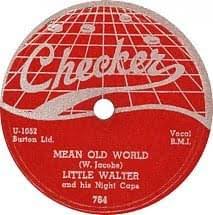
Little Walter recorded “Mean Old World” in October 1952 for Checker Records, the blues subsidiary of Chess Records in Chicago. The session was overseen by producer Leonard Chess, whose instinct for commercially powerful blues records helped shape the entire Chicago blues sound of the 1950s.
The recording featured members of the legendary blues group The Aces:
-
Little Walter — vocals and amplified harmonica
-
Louis Myers — guitar
-
Dave Myers — guitar and bass
-
Fred Below — drums
The Myers brothers and Fred Below were among the finest young musicians on the Chicago blues scene. Their tight rhythmic backing gave Walter room to stretch melodically while maintaining a strong groove throughout the performance.
Unlike T-Bone Walker’s smoother West Coast arrangement, Walter’s version was raw, urban, and emotionally direct. The amplified harmonica became the dominant voice of the recording, replacing the guitar-centered sophistication of the original with something tougher and more modern.
This was no longer nightclub blues.
This was street-corner Chicago blues.
Leonard Chess and the Chess Records Sound
Producer Leonard Chess deserves enormous credit for the success of “Mean Old World.”
Chess Records had become the center of postwar electric blues by the early 1950s, recording artists such as Muddy Waters, Howlin’ Wolf, Jimmy Rogers, and Willie Mabon. Leonard Chess understood that amplified blues reflected the sound of industrial Chicago itself—loud, intense, crowded, and emotionally urgent.
Chess encouraged musicians to emphasize:
-
Amplification
-
Strong rhythmic grooves
-
Emotional immediacy
-
Short, radio-friendly performances
“Mean Old World” fits that formula perfectly.
The recording is concise, powerful, and emotionally economical. Walter never overplays. Every harmonica phrase feels deliberate, conversational, and emotionally weighted.
The production also captures one of the defining features of early Chess recordings: controlled distortion. Walter’s amplified harmonica produces a slightly overdriven tone that became one of the most influential sounds in blues history.
That distorted harp tone later influenced:
-
Paul Butterfield
-
Junior Wells
-
James Cotton
-
The British blues explosion of the 1960s
Without Little Walter’s Chess recordings, modern blues harmonica would sound completely different.
Musical Analysis: Why the Recording Works
What makes “Mean Old World” remarkable is its balance between restraint and intensity.
Walter avoids flashy virtuosity for much of the performance. Instead, he focuses on tone, phrasing, and emotional pacing.
Several musical elements stand out:
1. Amplified Harmonica as Lead Instrument
Walter treats the harmonica almost like a horn section or human voice. His phrases answer the vocal lines in a call-and-response structure inherited from traditional blues, but electrification gives the instrument a sharper emotional edge.
The harmonica sounds wounded, aggressive, and lonely all at once.
2. Rhythmic Precision
Fred Below’s drumming is subtle but essential. His shuffle rhythm anchors the performance without overcrowding it. Meanwhile, the Myers brothers create a tight rhythmic framework that allows Walter to float above the groove.
This became one of the defining characteristics of Chicago blues.
3. Urban Emotional Tone
Unlike rural Delta blues recordings, “Mean Old World” reflects postwar urban alienation. The loneliness in the song feels less mythic and more immediate—like exhaustion after a long night in the city.
Walter’s vocal delivery is conversational rather than theatrical. That intimacy makes the song feel deeply personal.
4. Simplicity
The arrangement is remarkably economical. No unnecessary solos. No elaborate structure. Every musical decision serves the emotional atmosphere.
That simplicity gives the recording its enduring power.
Commercial Success
“Mean Old World” became one of Little Walter’s early solo hits, reaching number six on the Billboard R&B chart in 1953, where it remained for six weeks.
Although “Juke” had already established Walter as a major star, “Mean Old World” proved his success was not accidental. It confirmed that amplified harmonica blues could compete commercially with vocal R&B acts and jump blues bands.
The recording also helped cement Checker Records as one of the premier blues labels in America.
The Legacy of “Mean Old World”
Little Walter’s version became so influential that many listeners now associate the song more closely with him than with T-Bone Walker.
The recording helped define:
-
Chicago blues harmonica
-
The Chess Records sound
-
Postwar electric blues
-
Early rhythm-and-blues production aesthetics
Walter’s approach to amplification and phrasing directly influenced later generations of harmonica players, while the song itself became a blues standard interpreted by numerous artists over the decades.
Even Eric Clapton and Duane Allman later recorded versions connected to Walter’s interpretation and songwriting credit.
Why the Song Still Matters
More than seventy years later, “Mean Old World” still sounds modern.
Part of that comes from the production. Chess recordings of the early 1950s captured an immediacy that still feels emotionally alive. But the greater reason lies in Little Walter himself.
Walter understood something fundamental about blues performance: emotional truth matters more than technical complexity.
Every note on “Mean Old World” feels necessary.
That economy, combined with Walter’s groundbreaking amplified harmonica tone, helped transform blues from a regional folk tradition into a modern electric art form capable of influencing rock and roll, soul, and contemporary blues for generations to come.
“Mean Old World” is not just a classic Little Walter recording.
It is one of the defining sounds of modern American music.
Suggested Reading
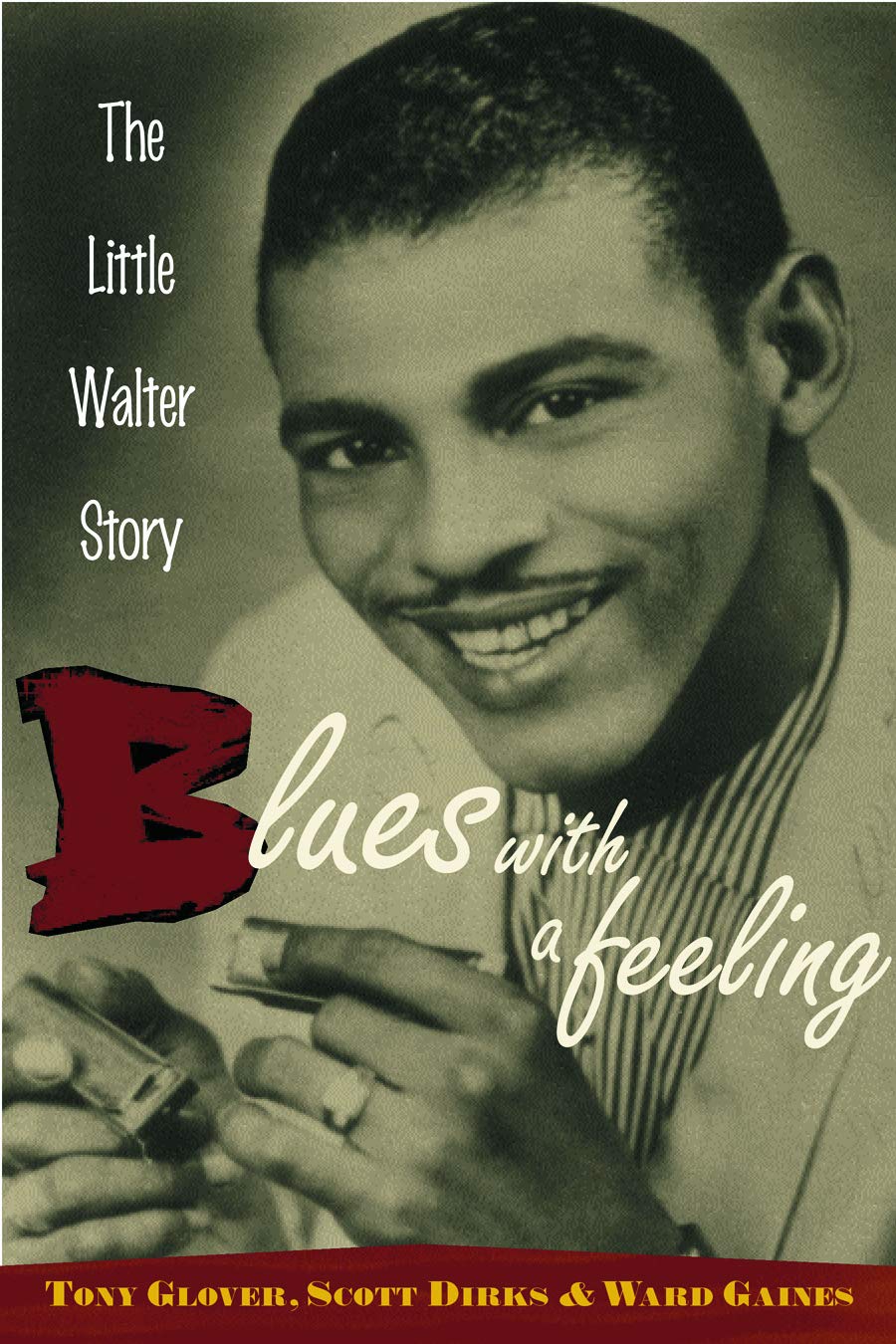
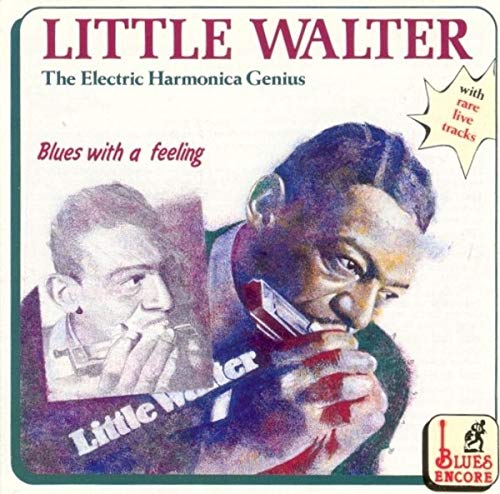
Blues With a Feeling - The Little Walter Story
Selected Discography