Introduction
“Okie Dokie Stomp” is among the defining instrumental recordings in the catalogue of Clarence “Gatemouth” Brown (1924–2005), a guitarist, fiddler, singer and multi-instrumentalist whose music bridged Texas blues, swing, jazz, Cajun, country and rhythm & blues. Originally issued by Peacock Records in 1954, the track became Brown’s signature instrumental and one of the foundational electric-guitar instrumentals of postwar Gulf Coast rhythm and blues.
The performance is notable for its relentless momentum, sharply articulated guitar attack, horn-driven arrangement, and hybrid musical language that merges jump blues, Texas swing, jazz phrasing and proto-rock guitar vocabulary.
Historical Context
By the early 1950s, Brown had already established himself as a major regional rhythm-and-blues artist after his breakthrough association with Houston impresario Don Robey and Peacock Records. Brown had first gained attention after stepping in during a T-Bone Walker performance at Houston’s Bronze Peacock nightclub in 1947, eventually recording for Aladdin before Robey launched Peacock Records partly to showcase Brown’s talent.
Unlike many blues guitarists of the period, Brown resisted stylistic purity. He rejected the label “bluesman” and preferred a broad conception of American roots music. “Okie Dokie Stomp” demonstrates this philosophy clearly: the piece is neither a standard blues shuffle nor a jazz instrumental, but a hybrid dance record designed for rhythm-and-blues audiences while retaining country swing sophistication.
The Original Recording Session (1954)
Date and Place
The best available evidence places the original recording in Houston, Texas, in May 1954, during Brown’s Peacock period.
Label and Release
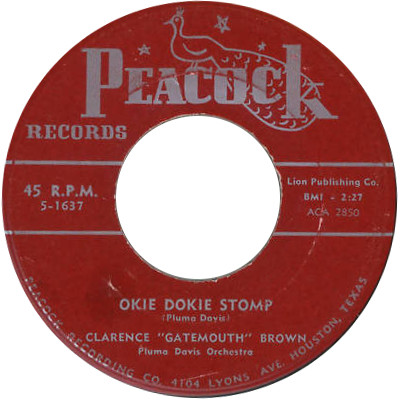
- Label: Peacock Records
- Catalogue number: Peacock 1637
- Release date: July 1954 (78 rpm single)
- B-side: “Depression Blues”
Producer
No formal session producer is consistently credited on surviving documentation. In practice, the recording would almost certainly have been supervised by Don Robey, founder of Peacock Records and Brown’s manager/producer in Houston.
As with many independent R&B labels of the era, producer credits were inconsistently documented and session paperwork is incomplete.
Composer and Arrangement
The composition is generally credited to Pluma Davis, trombonist and bandleader of the accompanying ensemble.
The title reportedly referenced New Orleans radio personality James “Okey Dokey” Smith of WBOK, reflecting a common 1950s practice of naming records to curry favor with influential radio disc jockeys.
Session Personnel
Confirmed Personnel
The strongest documented evidence identifies the backing group as the Pluma Davis Orchestra, with Brown featured as lead guitarist.
Confirmed:
- Clarence “Gatemouth” Brown — electric guitar (lead)
- Pluma Davis Orchestra — backing ensemble / horn section
Probable Personnel
Exact surviving personnel sheets for the session appear not to survive publicly. Based on Peacock-era recording practices and the audible arrangement, the ensemble almost certainly included:
- trombone (likely Pluma Davis)
- tenor and/or baritone saxophone
- trumpet
- piano
- upright bass
- drums
Because surviving documentation is fragmentary, these assignments should be treated cautiously unless supported by future archival evidence.
Musical Analysis
Structure
“Okie Dokie Stomp” is concise, approximately two-and-a-half minutes long, reflecting the limitations of 78 rpm singles.
Rather than relying on verses and choruses, the track unfolds as a tightly structured instrumental performance built around repeated riff cycles and escalating guitar improvisation.
The arrangement works in waves:
- horn introduction establishing rhythmic momentum
- Brown’s entrance with lead guitar statements
- alternating ensemble punctuations and solo passages
- intensified rhythmic drive toward a climactic finish
The form reflects jump blues and small-band swing traditions rather than Delta blues structures.
Harmony
The piece broadly draws on a blues-derived harmonic framework, though Brown treats harmony elastically.
Instead of dwelling on slow blues cadences, the performance emphasizes movement, syncopation and rhythmic propulsion. The harmonic interest comes less from chord complexity and more from melodic variation and rhythmic attack.
Rhythm
The rhythmic feel is central to the track’s success.
The groove combines:
- jump blues shuffle momentum
- western swing drive
- jazz horn accents
- early rock-and-roll energy
The rhythm section pushes constantly forward, creating the sensation of perpetual motion.
Guitar Technique
Brown’s guitar playing is the centerpiece.
Key characteristics include:
1. Pickless articulation
Brown frequently played without a plectrum, using finger attack for speed and dynamic nuance. The resulting tone is sharp but warm, highly percussive and rhythmically precise.
2. Swing phrasing
Instead of blues repetition, Brown phrases melodically in a way closer to jazz soloists and Texas swing players.
3. Horn-like melodic design
Many phrases imitate brass articulation. Brown’s attack often resembles trumpet or saxophone phrasing rather than conventional blues guitar.
4. Staccato precision
Short, clipped phrases give the performance extraordinary momentum.
5. Continuous soloing
One of the track’s most unusual qualities is the near-continuous lead guitar performance. Brown remains in front almost throughout, with the horns acting as punctuation.
Relationship to Texas and Gulf Coast Music
“Okie Dokie Stomp” stands at a crossroads between multiple traditions:
| Influence | Contribution |
|---|---|
| Texas blues | electric guitar attack |
| Western swing | rhythmic bounce and sophistication |
| Jump blues | danceable horn riffs |
| Jazz | improvisational phrasing |
| Early rock & roll | aggressive energy |
The result anticipates later guitar-driven instrumental styles that would become central to rock and blues-rock.
Influence and Legacy
The recording became Brown’s signature instrumental and remains among the most celebrated titles from his Peacock years.
Its influence can be heard in later Texas electric guitar traditions and in rhythm-and-blues instrumental language more broadly.
The song was later recorded by guitarist Cornell Dupree during the 1970s, helping reintroduce the composition to new audiences.
Brown continued to perform the piece live for decades, and it became synonymous with his stage identity.
Later Recordings and Performances
1. Original Studio Recording (1954)
The definitive version recorded for Peacock Records in Houston.
Characteristics:
- concise arrangement
- prominent horn ensemble
- compressed 78 rpm production sound
- nonstop guitar lead
2. Live Versions (1970s–2000s)
Brown frequently revisited the piece in concert.
Later performances generally expanded the arrangement and often included:
- longer improvisations
- heavier groove emphasis
- broader stylistic fusion incorporating jazz and Cajun inflections
- more polished ensemble interplay
Personnel naturally varied according to Brown’s touring bands.
3. Anthology and Compilation Releases
The recording later appeared on multiple compilations of Brown’s Peacock material and career retrospectives, including archival reissues that preserved the original master.
Examples include:
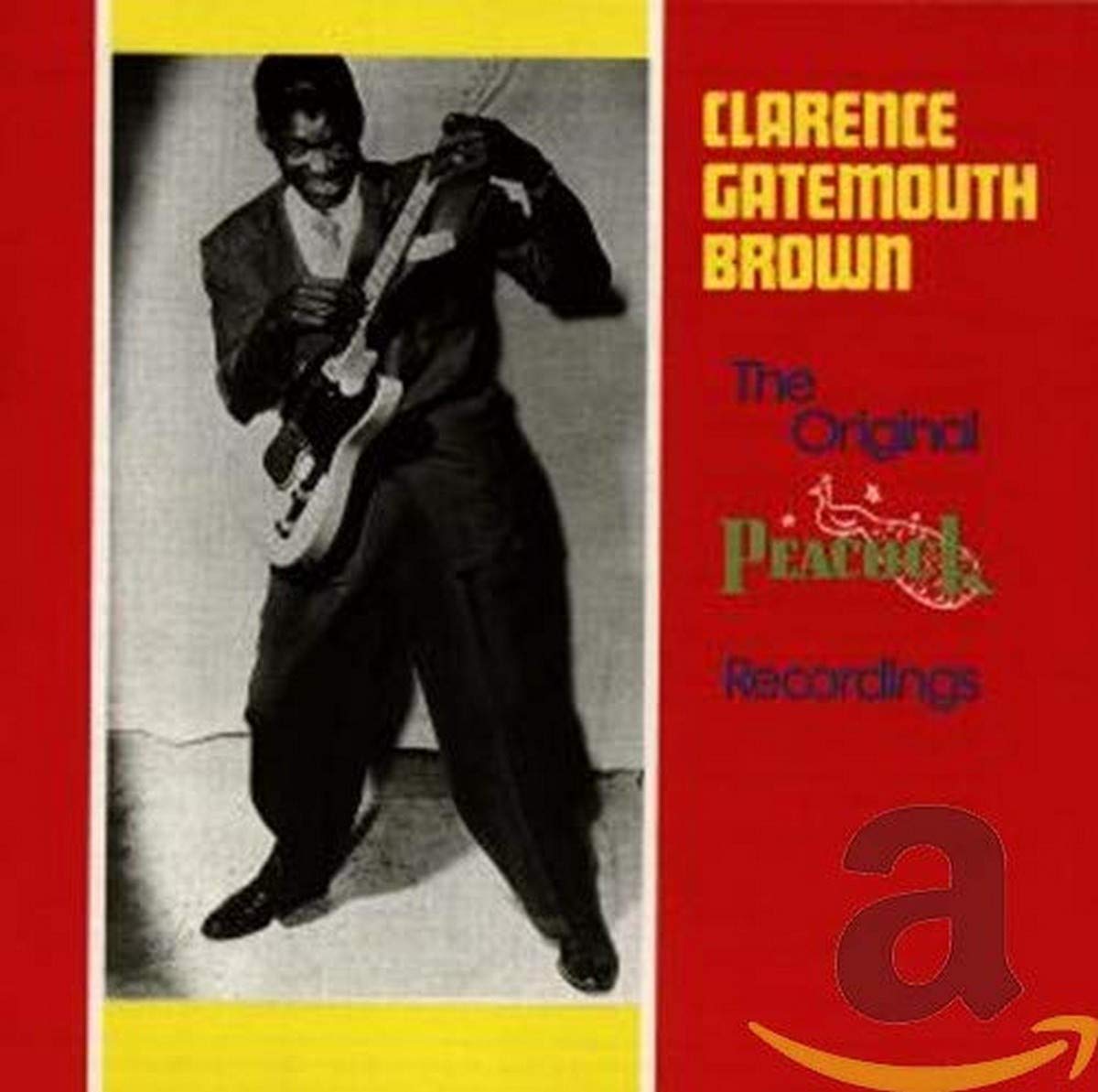 The Original Peacock Recordings (1990)
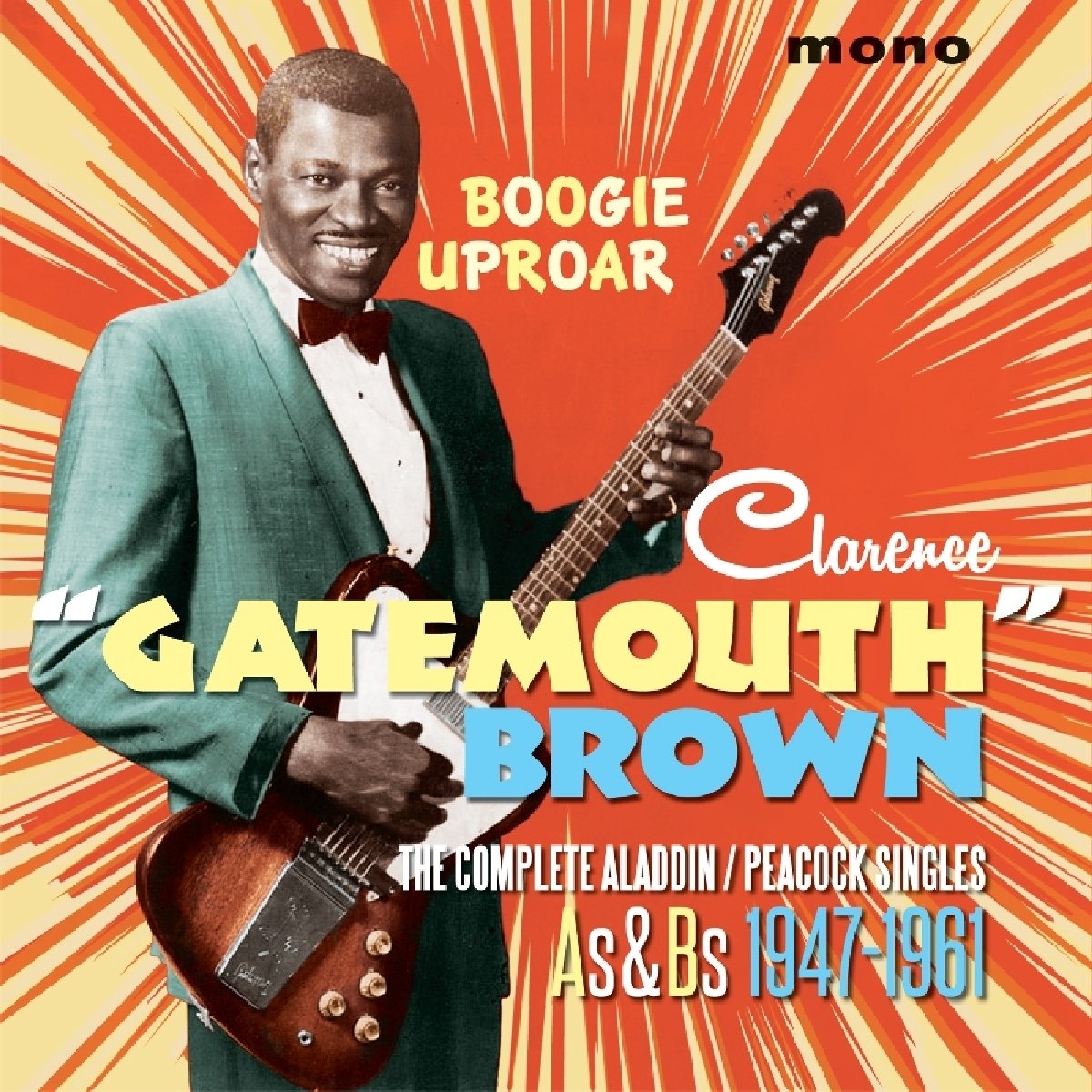 Boogie Uproar: The Complete Aladdin/Peacock Singles As & Bs 1947–1961 (2017)
- later retrospective collections using the title Okie Dokie Stomp
Recording and Production Characteristics
The original session reflects independent Houston rhythm-and-blues production aesthetics:
- close, dry mono sound
- minimal studio ambience
- heavy emphasis on rhythmic immediacy
- horn-forward ensemble balance
- guitar placed prominently in the mix
The sound prioritizes dance-floor energy over sonic polish.
Why “Okie Dokie Stomp” Matters
“Okie Dokie Stomp” matters because it illustrates how Brown transcended genre categories.
The recording is simultaneously:
- a blues instrumental
- a swing performance
- a proto-rock guitar showcase
- a jump-band dance number
- a statement of Gulf Coast musical hybridity
Its significance lies not simply in virtuosity but in vocabulary: Brown assembled multiple regional American traditions into a coherent electric-guitar language years before genre fusion became common.
For this reason, “Okie Dokie Stomp” remains one of the landmark instrumental recordings of postwar Texas rhythm and blues.