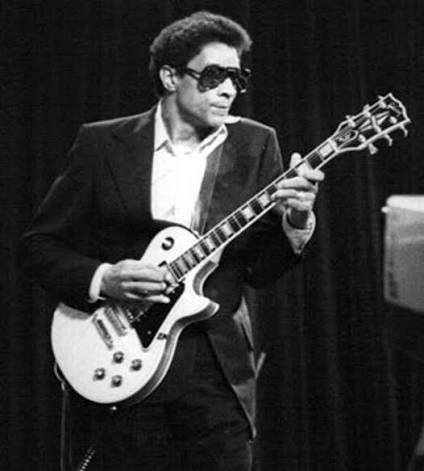
Few musicians have had a greater impact on the development of modern blues and rock guitar than T-Bone Walker. Long before electric blues became synonymous with Chicago, Walker transformed the guitar from a rhythmic accompaniment instrument into a lead voice capable of expressing sophistication, emotion, and dazzling virtuosity. His elegant phrasing, jazzy chord voicings, and groundbreaking stagecraft laid the foundation for generations of blues, rhythm and blues, and rock guitarists.
From his early days in Dallas to his influential recordings in Los Angeles and beyond, Walker's career spans some of the most important developments in twentieth-century American music.
Early Life and Musical Beginnings
Aaron Thibeaux Walker was born on May 28, 1910, in Dallas, Texas. Raised in a musical family, he was exposed to blues, ragtime, and spiritual music from an early age. His parents were both musicians, and their home became a gathering place for traveling performers.
As a child, Walker became associated with the legendary bluesman Blind Lemon Jefferson. Too young to drive, Jefferson often employed Walker as a guide through the streets of Dallas. In exchange, Walker absorbed the older musician's repertoire and performance techniques.
By his teenage years, Walker was already performing professionally throughout Texas. He learned not only guitar but also banjo, ukulele, piano, and bass. This broad musical education would later distinguish him from many of his contemporaries.
The Texas Blues Scene
During the 1920s and early 1930s, Walker worked throughout Texas in medicine shows, dance bands, and traveling entertainment troupes. Unlike many country blues performers who played solo, Walker developed within an ensemble setting.
One of the most important influences on his development was bandleader Terrence Holder, whose orchestra exposed Walker to sophisticated jazz arrangements. He also absorbed the guitar styles of jazz innovators such as Charlie Christian.
This combination of blues feeling and jazz sophistication became Walker's signature style.
The Move Toward Electric Guitar
In the 1930s, Walker relocated to Los Angeles, where opportunities for musicians were expanding rapidly. The city's vibrant club scene encouraged experimentation and innovation.
Walker began using amplified guitars at a time when most blues performers still relied on acoustic instruments. Rather than merely making the guitar louder, he discovered how amplification could expand its expressive possibilities.
His smooth single-note runs, bent notes, and horn-like phrasing transformed blues guitar playing. The electric guitar became a lead instrument capable of carrying melodies with the same authority as a saxophone or trumpet.
Recording Style and Musicianship
T-Bone Walker's greatest achievement may have been his creation of a new musical language for the electric guitar. While many blues musicians of the 1930s and 1940s were exceptional performers, few fundamentally changed the way an instrument was played. Walker did exactly that. His recordings reveal a musician who combined the emotional directness of the blues with the harmonic sophistication of jazz and the professionalism of the big-band era.
What emerged was a style that sounded modern decades before the electric guitar became the dominant instrument in popular music.
Guitar Technique: Reinventing the Blues Guitar
Prior to Walker, most blues guitarists functioned primarily as accompanists. Even highly influential figures such as Blind Lemon Jefferson, Charley Patton, and Son House generally used the guitar to support their singing. Walker changed this relationship entirely. His guitar became a second voice—sometimes answering the vocal, sometimes anticipating it, and often taking over the emotional narrative of a song altogether.
Single-String Soloing
One of Walker's most important innovations was his extensive use of single-string melodic lines. This approach was heavily influenced by jazz horn players and particularly by the work of saxophonists active in the swing era. Rather than strumming chords continuously, Walker constructed melodic statements that unfolded like spoken sentences. His solos possessed clear beginnings, developments, climaxes, and resolutions. This style became the foundation of virtually all modern blues guitar playing.
Bending and Vibrato
Although string bending existed before Walker, he refined the technique into a highly expressive art form. His bends were controlled and precise and closely connected to vocal phrasing. He used them to create emotional tension and often employed them to imitate the human voice.
Equally important was his vibrato. Unlike the aggressive vibrato later associated with players such as Albert King, Walker's vibrato was smooth, elegant, and carefully measured. This characteristic deeply influenced B.B. King, who often acknowledged Walker as his principal inspiration.
Jazz Harmony and Chord Voicings
Walker possessed a more sophisticated understanding of harmony than many blues musicians of his generation. His chord vocabulary included Ninth chords, Thirteenth chords, Diminished chords, Altered dominant harmonies and Jazz-inspired substitutions.
These harmonic choices gave his recordings a richness rarely heard in blues music of the 1940s. Many later guitarists adopted Walker's harmonic concepts, often without realizing their origin.
Tone and Amplification
Perhaps Walker's most revolutionary contribution was his use of amplified tone. Unlike later blues guitarists who embraced distortion and overdrive, Walker pursued clarity and warmth. His tone was Smooth, Singing, Articulate, Dynamic and Highly responsive to touch
This allowed subtle nuances in phrasing to become part of the musical expression. The concept of guitar tone as a personal artistic signature begins in large part with Walker.
Vocal Style
Walker's singing was every bit as distinctive as his guitar playing. Unlike the rough vocal approaches associated with Delta blues performers, Walker sang with remarkable smoothness and control. His style reflected elements of Blues tradition, Jazz crooning, Popular ballad singing and Big-band vocal techniques.
His relaxed delivery made even complex songs sound effortless. On recordings such as "Call It Stormy Monday," his voice projects resignation, sophistication, and emotional depth without resorting to dramatic exaggeration. This understated approach became a defining characteristic of West Coast blues.
Songwriting and Composition
Walker was not merely a performer but also a gifted songwriter. His compositions often expanded the emotional and harmonic possibilities of blues music.
Unlike many earlier blues songs rooted in rural experiences, Walker's work reflected the realities of modern city life.
Songs such as "T-Bone Shuffle," "Cold Cold Feeling," and "Stormy Monday" demonstrated that blues could be sophisticated without losing its emotional authenticity.
Revolutionary Stage Performance
While T-Bone Walker revolutionized blues guitar in the recording studio, he was equally innovative on stage. Long before the emergence of rock and roll, Walker transformed the blues performance from a largely static presentation into a theatrical spectacle. Many of the stage techniques later associated with rock guitar heroes originated with him.
Blues Performance Before Walker
During the 1920s and 1930s, most blues performers remained relatively stationary on stage. Whether performing in juke joints, theaters, or dance halls, musicians generally focused on singing and playing rather than visual presentation. The emphasis was on musical communication rather than physical showmanship. Walker recognized that audiences wanted more. He understood that a performance could be both musically sophisticated and visually exciting.
The First Guitar Showman
By the early 1940s Walker had developed a stage act unlike anything audiences had previously witnessed. His performances often included playing behind his head, performing dramatic splits, dancing while soloing, walking into the audience, playing the guitar with his teeth and balancing the instrument in unusual positions. These techniques were decades ahead of their time. Contemporary accounts frequently describe audience members being astonished by Walker's athleticism and confidence.
A New Relationship with the Audience
Perhaps Walker's most important contribution as a performer was his redefinition of the relationship between musician and audience. He treated performance as a complete entertainment experience. Audiences were not merely observers but participants. By moving through the venue, making eye contact, interacting with dancers, and incorporating visual drama into his act, Walker anticipated many of the techniques later employed by rhythm-and-blues, soul, and rock performers. In this sense, he was not merely a guitarist but one of the first modern popular-music entertainers.
Imperial Records and the 1950s
The 1950s represented a transitional period both for T-Bone Walker and for American popular music. The rise of rhythm and blues, the emergence of rock and roll, and changing audience tastes created new opportunities and new challenges for established blues artists. Walker's recordings for Imperial Records demonstrate how he adapted to these changes while preserving the sophistication that had made him famous.
Joining Imperial Records
Founded in Los Angeles in 1947, Imperial Records became one of the most important independent labels of the post-war era. The company recorded artists across multiple genres, including rhythm and blues, country, and early rock and roll. For Walker, the label offered an opportunity to remain commercially relevant during a rapidly changing musical landscape. By the early 1950s, younger audiences increasingly favored harder-edged rhythm and blues styles. Walker responded by modernizing aspects of his sound without abandoning his musical identity.
The West Coast Sound Evolves
Walker's Imperial recordings reveal a noticeable shift from the highly polished Black & White sessions. The music became more rhythmically aggressive and more closely aligned with emerging R&B. It was also less dependent on swing-era arrangements and more focused on groove and danceability. Nevertheless, Walker's guitar remained unmistakable. His elegant phrasing and sophisticated harmonic sense continued to distinguish him from many contemporaries.
"Cold Cold Feeling"
Among the most important recordings of this period was "Cold Cold Feeling."
The song exemplifies Walker's mature style. Its performance combines his powerful blues vocals with his refined guitar work. It showcases atmospheric arrangement and an emotional restraint. The guitar solo demonstrates Walker's remarkable ability to communicate deep feeling through relatively few notes.
Many blues historians consider it one of the finest examples of post-war electric blues.
 Cold Cold Feeling Buy from Amazon
"The Hustle Is On"
Recorded during the Imperial years, "The Hustle Is On" became another major addition to Walker's catalogue.
The song's title reflects post-war urban life and the economic realities facing working-class Americans. Musically it has a Strong rhythmic drive with memorable guitar fills. It showcases sophisticated songwriting and an excellent ensemble interaction.
The recording highlights Walker's ability to remain contemporary while retaining his artistic identity.
Instrumental Recordings
The Imperial years also produced a number of notable instrumentals. These recordings allowed Walker greater freedom to explore his guitar technique in pieces such as "Strollin' with Bones". Such recordings helped establish the electric blues instrumental as an important format.
The Legacy of the Imperial Years
Although the Imperial recordings did not always achieve the commercial impact of his Black & White classics, they occupy a crucial place in Walker's artistic development.
They document: the maturation of electric blues, the evolution of rhythm and blues, the transition toward rock and roll and Walker's continuing creative growth.
Most importantly, they reveal an artist who refused to stand still. Even as younger musicians entered the spotlight, T-Bone Walker continued to refine and expand the possibilities of electric blues, ensuring that his influence would extend far beyond his own generation.
The Blues Revival
By the beginning of the 1960s, T-Bone Walker occupied a curious position within American music. Among musicians he was widely respected as one of the architects of electric blues, yet his commercial prominence had diminished significantly. The musical landscape had changed dramatically since his breakthrough years at Black & White and Imperial Records. Rock and roll dominated the charts, rhythm and blues was evolving rapidly, and many younger listeners were unfamiliar with the pioneers who had helped create the music they enjoyed.
Ironically, it was during this period of relative commercial decline that Walker's reputation as a foundational figure in American music began to grow.
The Changing Musical Climate
The late 1950s and early 1960s saw the emergence of a new generation of blues-influenced performers who achieved greater commercial success than many of their predecessors. Artists such as B.B. King, Freddie King and Albert King were developing styles that owed a tremendous debt to Walker's innovations. At the same time, younger audiences increasingly associated electric guitar music with rock and roll rather than blues. For many veteran blues musicians, this transition resulted in reduced recording opportunities and fewer high-profile performances. Walker continued to work steadily, particularly in clubs and theaters, but the recording industry's focus had shifted elsewhere.
The Folk Revival and Rediscovery of the Blues
A major turning point arrived through the American folk revival of the late 1950s and early 1960s. Young listeners and collectors began seeking out older recordings by blues musicians whose work had often been overlooked by mainstream audiences. Organizations, scholars, and enthusiasts started documenting the history of blues music with unprecedented seriousness. Writers and researchers increasingly recognized that modern popular music could not be understood without acknowledging the contributions of artists such as Walker. This growing scholarly interest helped preserve and elevate his legacy.
The British Blues Boom
Perhaps no development contributed more to Walker's renewed visibility than the British blues explosion. Young British musicians became fascinated with American blues recordings and treated blues artists with a level of reverence often lacking in the United States. Among the musicians who studied Walker's recordings were Eric Clapton, Peter Green, Jeff Beck and Mick Taylor. These players carefully analyzed Walker's phrasing, chord voicings, vibrato, and melodic construction. Many later acknowledged him as one of the principal architects of modern electric guitar. As British bands introduced blues-based music to international audiences, interest in the original American performers increased dramatically.
European Tours
Beginning in the 1960s, Walker benefited from a growing European appetite for authentic blues performances. European audiences often regarded American blues musicians as cultural treasures. Festivals, concert promoters, and broadcasters actively sought performers who had helped shape the history of the genre. Walker appeared at numerous concerts and festivals across Europe, where audiences responded enthusiastically to his music. These appearances introduced him to listeners who had previously known his work only through records. European critics frequently described Walker as one of the most elegant and sophisticated blues performers they had ever witnessed.
Influence on the New Generation
During the revival years, Walker's role increasingly shifted from active innovator to revered elder statesman. Younger guitarists sought him out not only as a performer but also as a living link to the origins of electric blues. His influence could be heard in virtually every major blues guitarist of the period. The revival years therefore served not merely to preserve Walker's reputation but to solidify his place in the lineage of modern guitar.
BluesWay Records and Later Career
The most significant artistic renaissance of Walker's later years began when he signed with BluesWay Records in the late 1960s. For many veteran blues artists, the decade represented an opportunity to reach new audiences through improved recording technology, growing critical appreciation, and the expanding blues revival movement. For Walker, it resulted in some of the finest recordings of his later career.
BluesWay Records and the Revival Era
Founded as a blues-focused division of ABC Records, BluesWay assembled an impressive roster of established artists. The label became a crucial outlet for performers whose contributions were finally receiving the recognition they deserved. Unlike some earlier record companies that viewed blues as a niche market, BluesWay often presented its artists as major cultural figures. This approach suited Walker perfectly. The label allowed him to revisit his classic repertoire while benefiting from modern production standards and renewed public interest.
Stormy Monday Blues (1968)
One of Walker's earliest and most important BluesWay releases was Stormy Monday Blues.
The album served as both a retrospective and a reaffirmation of his artistic relevance. Rather than attempting to imitate contemporary trends, Walker embraced the strengths that had made him influential. The recording featured elegant guitar performances, mature vocal interpretations, refined arrangements and high-quality production. Listeners could hear the direct connection between Walker's pioneering work of the 1940s and the blues revival of the 1960s.
The album reinforced the enduring power of his music.
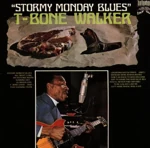 Stormy Monday Blues Buy from Amazon
T-Bone Blues (1968)
Often regarded as one of Walker's strongest late-career recordings, T-Bone Blues showcased a musician whose technical abilities remained remarkably intact.
The album contains performances characterized by confident phrasing, strong melodic development, sophisticated harmonic thinking and relaxed but authoritative vocals. Rather than relying solely on nostalgia, Walker demonstrated that his musical ideas remained vital and relevant.
Many critics viewed the album as evidence that the original architects of electric blues could still compete artistically with much younger performers.
 T-Bone Blues Buy from Amazon
Good Feelin' (1969)
The crowning achievement of Walker's later career arrived with Good Feelin'.
Widely regarded as one of the finest albums he ever recorded, it successfully balanced tradition and modernity. The performances reveal an artist fully comfortable with his legacy yet still capable of creative growth.
The album received widespread critical acclaim and earned Walker a Grammy Award for Best Ethnic or Traditional Recording. The honor represented one of the most significant recognitions of his career.
For many listeners, Good Feelin' served as an introduction to Walker's music and encouraged exploration of his earlier recordings.
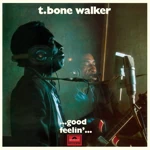 Good Feelin' Buy from Amazon
Collaborations and Festival Appearances
During the late 1960s and early 1970s, Walker became a frequent participant in blues festivals and special concert events. These appearances often placed him alongside both longtime contemporaries and younger musicians influenced by his work. Festival audiences increasingly viewed him as a foundational figure whose contributions stretched across multiple generations. His performances demonstrated that the techniques and ideas he had introduced decades earlier remained remarkably fresh.
Final Years and Death
The final years of T-Bone Walker's life were marked by declining health, continued artistic respect, and growing recognition of his enormous influence on modern music.
Although physical challenges increasingly limited his activities, his reputation continued to expand.
Health Problems
Throughout the early 1970s Walker experienced a number of serious health difficulties. Years of constant touring and performing had taken a toll. These health concerns gradually reduced his ability to maintain the demanding schedule that had characterized much of his career. Nevertheless, Walker remained committed to music whenever circumstances allowed. Friends and colleagues frequently noted that his passion for performance never disappeared, even as his physical condition deteriorated.
Continued Performances
Despite his health struggles, Walker continued making select appearances during the early 1970s. Audiences increasingly attended these performances with a sense of historical appreciation. Many younger musicians regarded the opportunity to see Walker perform as a chance to witness one of the creators of modern electric guitar. Even when his technical powers were not quite what they had been during his prime, his phrasing, musical intelligence, and stage presence remained unmistakable.
Growing Recognition
One of the most significant developments of Walker's final years was the growing acknowledgment of his place in music history. By this point, artists across multiple genres had publicly cited him as an influence. Their success helped bring renewed attention to Walker's pioneering achievements. What had once been recognized primarily by fellow musicians was becoming common knowledge among critics and fans.
The Final Years in Los Angeles
Walker spent much of his later life in Los Angeles, the city that had played such an important role in his musical development. It was there that he had helped create the West Coast blues sound and establish the electric guitar as a central voice in popular music. Los Angeles remained his home as his health continued to decline. Despite the challenges he faced, he remained a respected and admired figure within the music community.
Death
T-Bone Walker died on March 16, 1975, in Los Angeles, California, at the age of sixty-four.
His passing marked the loss of one of the most important innovators in the history of American music.
Although he had not always received the commercial rewards enjoyed by some of the artists he influenced, his impact on the development of blues, rhythm and blues, and rock music was already widely acknowledged.
Posthumous Reputation
In many ways, Walker's stature has grown even larger since his death. Subsequent generations of historians, musicians, and critics have increasingly recognized the scope of his contributions. His recordings remain essential documents in the history of electric blues. Major honors and recognitions followed, including induction into the Rock and Roll Hall of Fame as an Early Influence and continued celebration by blues organizations around the world.
Legacy
T-Bone Walker occupies a unique position in music history. He was neither the first blues guitarist nor the first musician to use an electric guitar. What distinguished him was his ability to imagine entirely new possibilities for the instrument.
Before Walker, blues guitar was largely rhythmic and supportive. After Walker, it became expressive, virtuosic, and central to popular music.
His recordings—particularly "Call It Stormy Monday," "T-Bone Shuffle," and "Mean Old World"—remain essential listening for anyone seeking to understand the development of electric blues. His elegant fusion of Texas blues, jazz sophistication, and technical innovation helped create the language of modern guitar.
Few artists can claim to have altered the course of musical history. T-Bone Walker did precisely that. Every blues solo, every soaring rock guitar lead, and every expressive bend played on an electric guitar carries some trace of the path he forged.
Suggested Reading
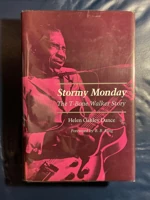 Stormy Monday: The T-Bone Walker Story Buy from Amazon