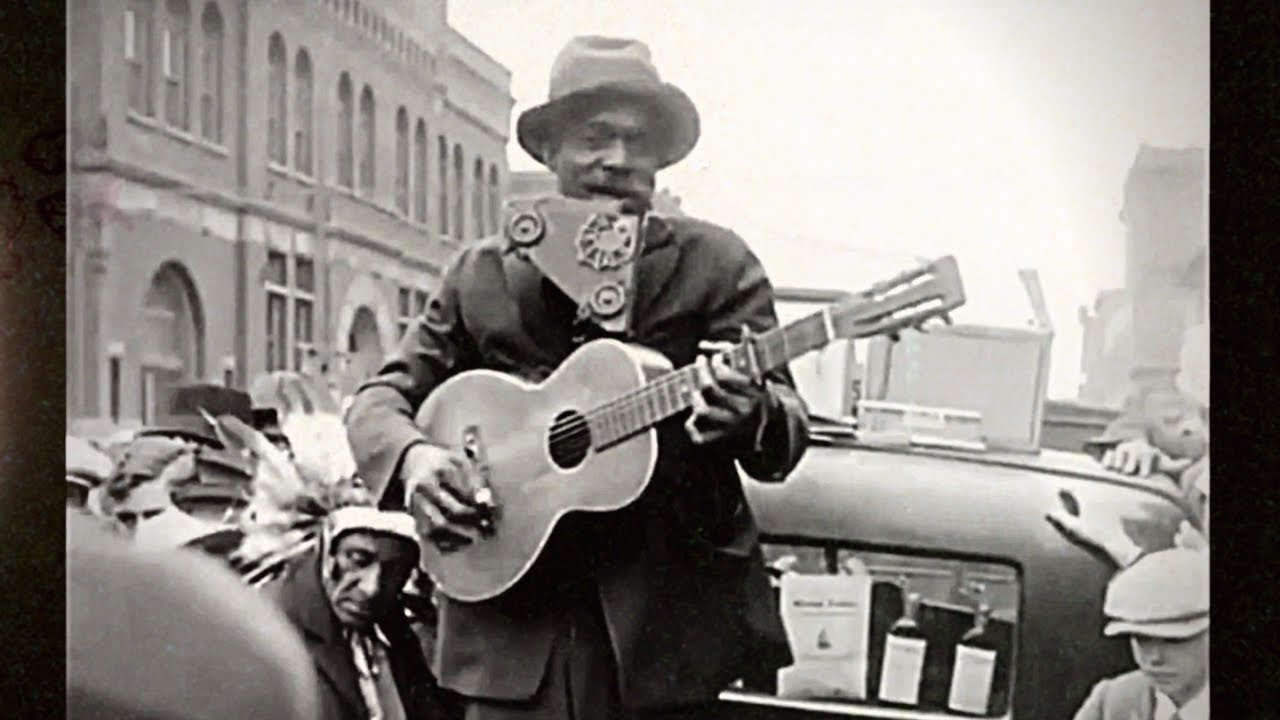
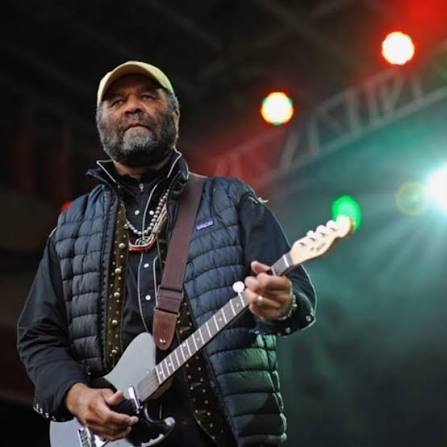
Otis Rush Jr. (April 29, 1934 – September 29, 2018) stands as one of the most influential figures in Chicago blues history. A left-handed guitarist and powerful singer known for his slow-burning intensity, expressive bent notes, and emotionally charged delivery, Rush helped pioneer the "West Side Chicago blues" sound alongside peers like Magic Sam and Buddy Guy. His innovative style—fusing Delta roots with urban R&B energy—profoundly impacted rock and blues guitarists from Eric Clapton and Peter Green to Stevie Ray Vaughan and Carlos Santana.
Early Life
Born during the Great Depression near Philadelphia, Mississippi, to sharecroppers Julia Campbell Boyd and Otis C. Rush, Otis was one of seven children. He grew up working the cotton fields, often pulled from school to help with harvests. These hardships instilled a deep soulfulness that later infused his music.
Rush was self-taught, picking up guitar and harmonica as a child. He moved to Chicago in 1948 or 1949 (sources vary slightly on the exact year) at around age 14, seeking better opportunities. He worked in stockyards, steel mills, and as a coal wagon driver while immersing himself in the city's vibrant blues scene. A pivotal moment came when his sister took him to see Muddy Waters perform; the experience convinced him to pursue music professionally. He initially performed as "Little Otis" in South and West Side clubs, absorbing influences from Muddy Waters, Howlin’ Wolf, B.B. King, T-Bone Walker, and others.
Rise to Prominence and the Cobra Records Era (1956–1958)
Rush’s breakthrough came in 1956 when Willie Dixon spotted him performing at the 708 Club on Chicago’s South Side and arranged an audition with Eli "Toscano" (Elias P. Toscano), owner of the newly founded Cobra Records. Cobra was launched in mid-1956 by Toscano (a record store and TV repair shop owner on the West Side) with promoter Howard Bedno, evolving from a prior partnership in the short-lived Abco label. Dixon, who had recently left Chess Records, served as Cobra’s de facto producer, arranger, bassist, and key songwriter.
The debut session on July 11, 1956, at Boulevard Studio produced Cobra’s very first release: “I Can’t Quit You Baby” b/w “Sit Down Baby” (Cobra 5000). The A-side, a haunting Willie Dixon composition, captured Rush’s feverish, impassioned vocals and signature guitar work. It became a major hit, reaching No. 6 on the Billboard R&B chart, spending weeks on the charts, and launching both Rush’s career and the label’s brief but influential run.
Between 1956 and 1958, Rush recorded approximately 16 sides (eight singles) for Cobra across several sessions. Dixon and Rush split songwriting duties roughly evenly, with Dixon contributing enduring classics and Rush delivering powerful originals and interpretations. These recordings, often at Universal Recording or similar Chicago studios, captured him at his creative peak and helped define the raw, intense West Side Chicago blues sound.
Key Cobra singles and standout recordings include:
- “I Can’t Quit You Baby” / “Sit Down Baby” (1956, Cobra 5000) — The label’s debut and Rush’s breakthrough hit.
- “Violent Love” / “My Love Will Never Die” (1956, Cobra 5005) — The latter a devastating slow blues with sultry moaning that foreshadowed 1960s soul.
- “Groaning the Blues” / “If You Were Mine” (1957, Cobra 5010).
- “Jump Sister Bessie” / “Love That Woman” (1957, Cobra 5015).
- “She’s a Good ‘Un” / “Three Times a Fool” (1957, Cobra 5023).
- “It Takes Time” / “Checking on My Baby” (1958, Cobra 5027).
- “Double Trouble” / “Keep On Loving Me Baby” (1958, Cobra 5030) — A minor-key masterpiece; Ike Turner contributed fiery second guitar (and possibly the iconic solo on some accounts) on “Double Trouble.”
- “All Your Love (I Miss Loving)” / “My Baby’s a Good ‘Un” (1958, Cobra 5032) — A rhumba-flavored, Earl Hooker-inspired gem; Rush reportedly wrote “All Your Love” in the car en route to the studio.
Musicians on the Cobra sessions were a who’s who of Chicago blues talent:
- Harmonica: Little Walter Jacobs and Big Walter Horton.
- Sax: Red Holloway, Harold Ashby, Eddie Jones, Carlson Oliver, Jackie Brenston (baritone).
- Piano: Little Brother Montgomery, Lafayette Leake, Harold Burrage.
- Drums: Al Duncan, Odie Payne, Freddie Below.
- Guitar: Wayne Bennett, Jody Williams, Louis Myers, and notably Ike Turner on key late sessions with members of his Kings of Rhythm band. Willie Dixon anchored on bass.
Rush’s Cobra output is characterized by intense minor-key blues, dynamic expressive guitar leads full of sustained bends, shimmering vibrato, and raw emotional depth. These tracks remain his most celebrated work and are compiled in essential collections like The Essential Otis Rush: The Classic Cobra Recordings 1956–1958 (which presents the singles in chronological order).
Cobra boosted not only Rush but also helped launch Magic Sam (on Rush’s recommendation in 1957) and Buddy Guy (in 1958, with Rush sometimes contributing rhythm guitar). The label’s success was short-lived. Eli Toscano, reportedly a gambler, lost control; Cobra folded around 1958–1959, with Toscano’s death in 1967 (some accounts note gangland connections) marking its end. Despite limited commercial scale, Cobra’s output had an outsized influence on the West Side sound and future generations.
Selected Discography
 Otis Rush 1956-1958 Cobra Recordings Buy from Amazon
Later Career and Recordings
After Cobra folded, Rush’s recording career became marked by label instability, missed opportunities, and inconsistent promotion, though he continued to deliver strong material and maintained a loyal following through live performances.
In 1960, he followed Willie Dixon to Chess Records, recording eight tracks. Chess released only one single, the classic minor-key slow blues “So Many Roads, So Many Trains” (1960), which became another enduring standard. The remaining tracks appeared later on the 1969 compilation Door to Door (shared with Albert King). Unhappy with Chess’s limited support, Rush moved on.
He signed with Duke Records in the early 1960s, where a 1962 session yielded the soulful single “Homework” b/w “I Have to Laugh” — a regional hit with a horn-driven arrangement featuring Lafayette Leake on organ. However, Duke issued only this one single from the session, further stalling his momentum.
In 1965–1966, Rush contributed to the influential Vanguard compilation series Chicago/The Blues/Today! Vol. 2, recording tracks like the instrumental “Rock.” He also performed at the American Folk Blues Festival in Europe in 1966, gaining international exposure.
The late 1960s brought a notable collaboration with Mike Bloomfield and Nick Gravenites, resulting in the 1969 album Mourning in the Morning (Cotillion/Atlantic), recorded in Muscle Shoals with the house rhythm section. It featured a mix of blues and soul elements, including a powerful remake of “My Love Will Never Die” and the original “It Takes Time,” but it fell short of commercial expectations.
 Mourning in the Morning Buy from Amazon
In 1971, Rush recorded what many consider one of his finest later works, Right Place, Wrong Time, produced by Nick Gravenites for Capitol Records. Despite its excellence—with strong originals and covers—the major label shelved it. It finally saw release in 1976 on the small Bullfrog label (later reissued by HighTone), robbing Rush of timely momentum. A 1975 Delmark album, Cold Day in Hell, offered solid but uneven studio material, while live recordings from Japan and Europe helped sustain his profile.
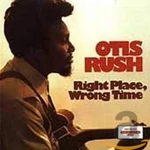 Right Place, Wrong Time Buy from Amazon
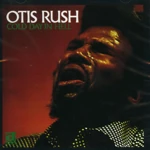 Cold Day in Hell Buy from Amazon
Throughout the 1970s and 1980s, Rush focused heavily on touring, appearing at major festivals and clubs in the U.S. and abroad. Notable live releases include All Your Love (I Miss Loving): Live at the Wise Fools Pub (1976, Delmark) and various European concert albums. He performed at events like the Ann Arbor Blues Festival and maintained a reputation for intense, emotional shows.
A strong comeback arrived in the 1990s. In 1994, Ain’t Enough Comin’ In (Mercury/This Way Up), produced by John Porter with a top-notch band (including members from Buddy Guy’s sessions), showcased Rush’s still-potent voice and guitar on a mix of covers (B.B. King, Ray Charles, Sam Cooke) and originals. It earned critical acclaim. Two years later, Any Place I’m Going (1998, House of Blues), produced by Willie Mitchell in Memphis, won a Grammy Award for Best Traditional Blues Album.
 Any Place I’m Going Buy from Amazon
Additional highlights include live sets such as Otis Rush & Friends: Live at Montreux 1986 (with Eric Clapton and Luther Allison) and Live and in Concert from San Francisco (1999/2006). Rush contributed to tribute albums and appeared in films like The Devil’s Rejects (using his Cobra track).
Guitar Style and Musical Innovations
Otis Rush developed a highly distinctive and influential guitar style that became a cornerstone of the West Side Chicago blues sound. Largely self-taught with no formal training, he created an unorthodox approach that perfectly complemented his emotionally raw vocals.
Left-Handed Technique and Setup
Rush was left-handed and played right-handed guitars without restringing them in the conventional manner. He flipped the guitar upside down, so the low E string was at the bottom (closest to the floor). This inverted orientation allowed him to bend strings downward toward the floor rather than pushing them upward, providing superior leverage, control, and sustain for big, expressive bends—especially multi-step and chordal bends. He often curled his little finger under the low E string for better positioning and stability.
This setup contributed significantly to his signature “wailing” and crying tone, giving his leads a vocal-like quality that felt both urgent and deeply melancholic. Many guitarists, including those influenced by Albert King (who used a similar approach), note that pulling downward offers better hand positioning and power for the heavy string bending central to blues expression.
Core Techniques
- String Bending and Vibrato: Rush was renowned for long, sustained bends and a patented, slow, sultry vibrato that could make a single note or entire chord shimmer and pulsate with emotion. His vibrato was wide, controlled, and hand-driven (not amp tremolo), often mimicking slide guitar effects without using a slide. He combined slide-like harshness (inspired by Earl Hooker) with B.B. King’s articulate phrasing.
- Phrasing and Dynamics: His playing was “slow-burning”—lyrical, spacious, and full of tension and release. He excelled at melodic, vocal-like lines with tasteful use of space, hammer-ons, pull-offs, slides, and subtle double-stops. Minor-key blues were his forte, where his guitar seemed to weep and groan in response to the lyrics.
- Tone and Attack: Rush achieved a bright yet piercing tone through fingers or light pick attack, often with amps set for natural breakup. His sound blended Delta roots with modern R&B and jazz influences, creating a more sophisticated yet still raw urban blues feel compared to earlier Chicago players.
Innovations and Impact on the Genre
Rush helped pioneer a more modern, emotionally intense West Side sound characterized by minor-key vamps, impassioned gospel-tinged vocals, and explosive yet controlled guitar bursts. Tracks like “All Your Love (I Miss Loving),” “Double Trouble,” and “So Many Roads” exemplified his ability to make the guitar convey deep heartache and longing. He was among the first to fully explore the electric guitar’s potential to “cry” through extended bent notes and dynamic phrasing, influencing the shift from ensemble-driven to more guitar-centric blues.
His innovations bridged traditional Delta blues with the electrified, R&B-infused energy of 1950s Chicago, paving the way for the British Blues Boom and Texas blues revival.
Legacy in Guitar Playing
Rush’s style profoundly shaped generations of guitarists:
- Eric Clapton, Peter Green, and Jimmy Page drew heavily from his phrasing and emotional intensity.
- Stevie Ray Vaughan cited him as a major influence and performed with him.
- Others influenced include Michael Bloomfield, Carlos Santana, Jeff Beck, Rory Gallagher, and modern players like Kirk Fletcher.
Rush’s approach emphasized feel, soul, and originality over technical flash: “My style comes from a lot of feeling. If I don’t feel it, I don’t play it.” This philosophy, combined with his unorthodox technique, made his playing instantly recognizable and endlessly inspiring. His recordings and live performances remain essential study material for any serious blues guitarist seeking authenticity and expressive depth.
Personal Life and Later Years
Rush was known for a sometimes volatile temperament and faced personal and professional struggles, including bad management deals and health issues. He suffered a major stroke in 2003 that severely limited his performing and recording. His wife, Masaki Rush, became a key supporter and manager in his later years. In 2016, Chicago declared "Otis Rush Day" during a Blues Festival appearance.
He passed away on September 29, 2018, at age 84 from complications of the earlier stroke.
Influence and Legacy
Otis Rush’s impact extends far beyond traditional blues. He influenced:
- British blues-rock pioneers (Eric Clapton, Peter Green of Fleetwood Mac, Jimmy Page).
- American rock and blues revivalists (Michael Bloomfield, Stevie Ray Vaughan, Luther Allison).
- Broader figures like Carlos Santana and Jimi Hendrix (through stylistic echoes).
His songs have been covered by Led Zeppelin (“I Can’t Quit You Baby”), Clapton, and many others. Rush helped bridge Delta blues traditions with the electrified, emotionally direct sound that fueled the 1960s blues boom and subsequent rock generations. Though he never achieved the mainstream commercial success of some peers, critics and fellow musicians regard him as one of the true masters of electric blues guitar.
Otis Rush’s music remains a benchmark for expressive, soulful playing—testament to a man who channeled the struggles of the Mississippi Delta and Chicago’s streets into timeless, heart-wrenching art. His recordings continue to inspire new generations seeking authenticity and raw emotional power in the blues.
Suggested Further Reading
 Buy from Amazon Otis Rush: Double Trouble: The Guitarist Everyone Stole From