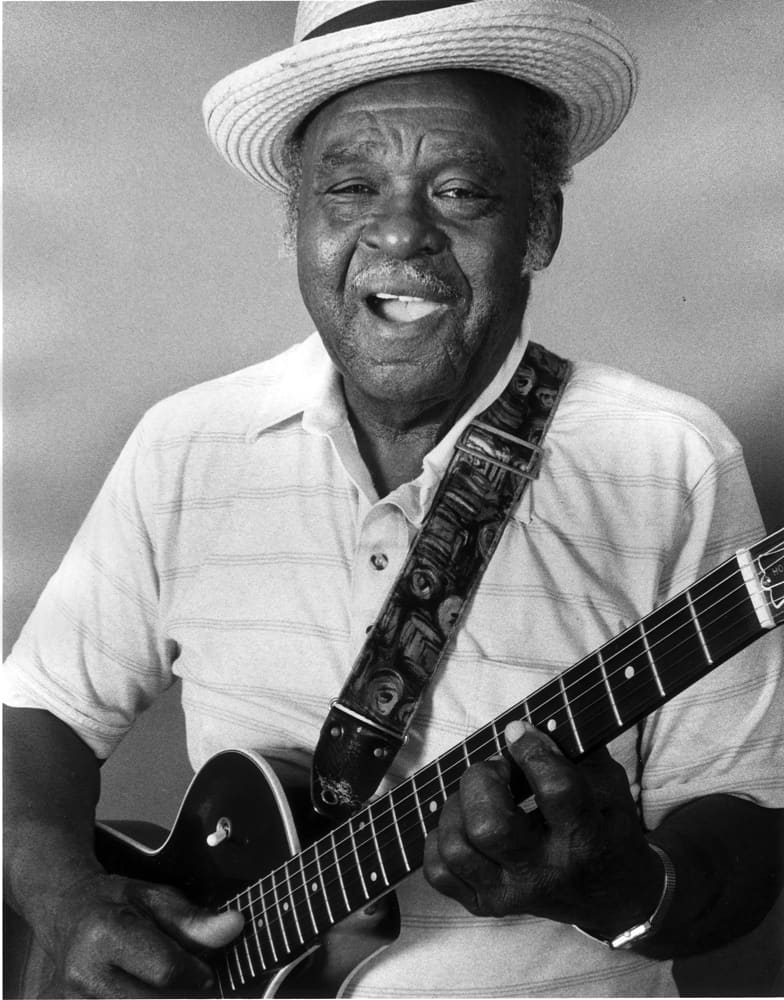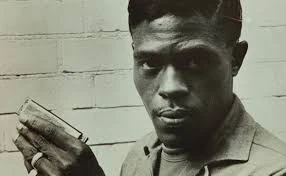
Early Life and Roots
Junior Wells was born Amos Wells Blakemore Jr. on December 9, 1934, in Memphis, Tennessee (some sources note Marion, Arkansas influences from his family farm). He moved to Chicago as a teenager around 1946–1947 with his mother, entering the vibrant post-war South Side blues scene.
Wells was drawn to the harmonica early. Self-taught, he absorbed influences from Sonny Boy Williamson I and II, Little Walter, and Junior Parker. By his early teens, he was performing on Chicago streets and in clubs. At around 14–16, he recorded as a sideman and briefly replaced Little Walter in Muddy Waters' band, a pivotal early gig that immersed him in the electrified Chicago sound.
His stage name "Junior Wells" came from his youth and admiration for older players. Small in stature but larger-than-life in presence, Wells developed a bold, cocky persona—strutting, shouting, and delivering harp lines with dramatic flair, sexual moans, and humorous asides.
Recording Career and Key Releases (1950s–1960s)
Wells began recording under his own name in the early 1950s. His first notable sides appeared on the States label (1953–1954), including early versions of material that would define him.
- 1950s singles: Tracks like “Hoodoo Man Blues” (early version), “Junior’s Wail,” and others on States and Chief/Profile labels under producer Mel London.
- 1959: “Little by Little” (Profile/Chief) — a national R&B hit featuring Willie Dixon on harmony vocals.
- 1960: “Messin’ with the Kid” (Chief) with Earl Hooker on guitar — one of his signature songs and a Chicago club staple that became a blues standard.
His breakthrough album came in 1965:
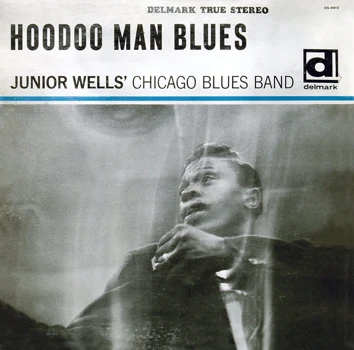 Hoodoo Man Blues (Delmark DS-961, recorded 1965) — widely regarded as one of the greatest Chicago blues albums ever. Recorded with Buddy Guy (credited as “Friendly Chap” due to contractual issues) on guitar, it captured the raw, live energy of West Side clubs. Standout tracks: “Hoodoo Man Blues,” “Good Morning Schoolgirl,” “Early in the Morning,” and “Junior’s Wail.” It remains a cornerstone of the genre.
Wells and Buddy Guy formed one of the most dynamic duos in blues history. Key joint releases include:
 It's My Life, Baby! (1966)
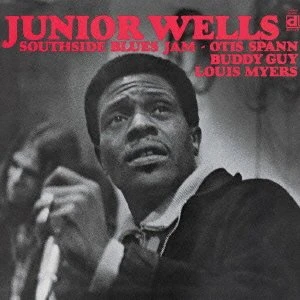 South Side Blues Jam (1970)
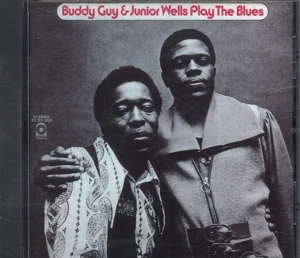 Buddy Guy & Junior Wells Play the Blues (Atco, 1972) — featuring Eric Clapton and others.
Later Career and Recordings (1970s–1990s)
Wells maintained a prolific output while continuing to headline Chicago clubs and tour internationally.
 1975: On Tap (Delmark) — strong live-in-studio set showcasing his maturing style.
 1979: Pleading the Blues (Sonet) — another acclaimed release.
- 1980s–1990s: Albums such as Come On in This House (Telarc, 1997), Blues Hit Big Town (Delmark reissues), and various live recordings. He also appeared on compilations and tributes.
He recorded with artists including Muddy Waters, Earl Hooker, Magic Sam, and later rock-influenced projects. His total discography includes over 30 albums as leader or co-leader, plus dozens of singles and sideman appearances spanning 1953–1997.
Signature songs across his career: “Messin’ with the Kid,” “Hoodoo Man Blues,” “Little by Little,” “Come On in This House,” and high-energy versions of classics like “Help Me” and “It Hurts Me Too.”
Harmonica Style and Technique
Junior Wells developed one of the most distinctive and influential amplified harmonica styles in Chicago blues. While deeply rooted in the tradition of Little Walter (whom he briefly succeeded in Muddy Waters’ band), Wells forged a more aggressive, vocal, and theatrical approach that emphasized power, drama, and audience engagement over pure technical sweetness.
Core Elements of His Technique:
- Tone and Amplification: Wells favored a raw, gritty, and highly amplified sound. He used microphones and amplifiers aggressively to achieve a distorted, horn-like projection that could cut through loud club noise. His tone was bigger and more forceful than Walter’s, often described as “shouting” through the harp.
- Bending and Expression: He was a master of deep, expressive bends, especially on the lower draw notes, creating wailing, crying, and moaning effects that mirrored his vocal delivery. He combined precise single-note playing with broad chordal bursts for dynamic contrast.
- Tongue Blocking and Articulation: Wells excelled at tongue-blocking techniques, allowing him to produce clean single notes alongside rich chords and octaves. He frequently used “warble” (rapid alternating between two holes) and rhythmic chugging patterns that drove the band.
- Vocal-Like Phrasing and Call-and-Response: One of his signatures was treating the harmonica like a second voice. He would growl, whoop, holler, and talk through the instrument, creating direct call-and-response with his singing and the guitar. This theatricality made his performances feel like conversations or sermons.
- Dynamics and Showmanship: Wells had exceptional control of volume and intensity. He could shift from soft, melodic, almost tender passages to explosive, overdriven attacks. On stage, he would strut, crouch, or hold the mic in dramatic ways to enhance the visual and sonic impact.
- Influences and Innovation: Building on Little Walter’s fluidity and Sonny Boy Williamson’s storytelling, Wells added a funkier, more soulful edge in the 1960s–70s, incorporating rhythmic elements that bridged blues and R&B. Later in his career he occasionally experimented with chromatic harp for jazzier flavors.
Critics and musicians often note that while Little Walter was the supreme technician, Wells was the ultimate showman and emotional communicator. His style influenced generations of players, including Sugar Blue, Billy Branch, Kim Wilson, and many rock harmonicaists.
Influence and Legacy
Junior Wells was a bridge between the golden age of Chicago blues and later generations. His powerful, emotive harmonica technique—less "sweet" than Little Walter, more aggressive and theatrical—influenced players like Sugar Blue, Billy Branch, and rock harpists. He helped bring electric Chicago blues to international audiences in the 1960s–70s alongside Buddy Guy.
Rock artists drew from him: the Rolling Stones (who took their name from a Muddy Waters song but toured with Wells/Guy), Eric Clapton, and others. His swaggering stage presence and R&B-blues fusion impacted soul and rock. He was called one of the rare survivors of the blues' golden age.
Wells battled health issues, including cancer. He died on January 15, 1998, in Chicago at age 63 from lymphoma complications following a heart attack. He is buried in Oak Woods Cemetery.
Conclusion
Junior Wells didn't chase mainstream fame but stayed true to the blues. A larger-than-life showman with a harp that could cut through any room, he embodied Chicago's tough, soulful sound. Albums like Hoodoo Man Blues remain essential listening, and his influence echoes in every modern blues harmonica player and rock band that draws from the Chicago well. He helped keep the blues alive and relevant for new generations.
Suggested Listening
- Hoodoo Man Blues (Delmark, 1965) — definitive masterpiece with Buddy Guy.
- Singles: “Little by Little” (1959), “Messin’ with the Kid” (1960).
- On Tap (Delmark, 1975).
- Buddy Guy & Junior Wells Play the Blues (Atco, 1972).
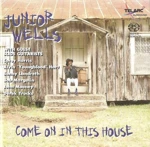 Come On in This House (Telarc, 1997) — late-career highlight.