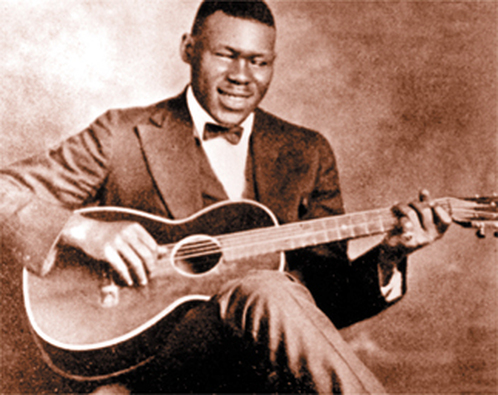
Blind Blake (real name Arthur Blake, c. 1896 – December 1, 1934) is one of the most talented yet enigmatic figures in the history of American blues and ragtime guitar. Despite his significant influence and prolific recording output, verifiable biographical details remain remarkably scarce, making him a figure of enduring mystery.
Birth and Origins
According to his 1934 death certificate (discovered and published by researchers in 2011), Arthur Blake was born in 1896 in Newport News, Virginia, to Winter Blake and (possibly) Alice Blake. This document provided the first concrete documentary evidence of his existence and corrected earlier assumptions. Paramount Records promotional materials from the 1920s had listed his birthplace as Jacksonville, Florida, and many early accounts placed him in that area. He may have spent significant time in Jacksonville and other parts of Florida and Georgia, which explains the conflicting reports.
Blake was blind from birth or early childhood. Like many blind musicians of the era, music became both a passion and a practical means of survival in a time when opportunities for the visually impaired were extremely limited.
Formative Years and Musical Development
Little is known about Blake’s childhood or how he learned to play guitar. He likely taught himself or learned from local musicians in the Virginia or Florida regions. He traveled extensively as a young man, performing on street corners, at fish fries, country suppers, medicine shows, and juke joints across the Southeast. He was known to have spent time in Atlanta, Jacksonville, and other Southern cities before heading north.
Researchers have speculated connections to the Georgia Sea Islands based on his occasional use of Gullah dialect in spoken interludes (most notably on “Southern Rag”). He may also have performed with traveling medicine shows or minstrel troupes, common venues for talented Black entertainers in the early 20th century.
Personal Life
Blake married a woman named Beatrice around 1931. By the early 1930s, the couple had settled in Milwaukee, Wisconsin. This move north aligned with many Southern musicians seeking work during the Great Migration and the declining recording industry amid the Great Depression.
Recording Career (1926–1932)
Blind Blake’s recording career was remarkably concentrated yet highly influential. Between 1926 and 1932, he recorded approximately 80–84 sides for Paramount Records, making him one of the label’s most prolific and commercially successful male artists alongside Blind Lemon Jefferson. All of his solo recordings were made for Paramount, primarily in Chicago and later at their facility in Grafton, Wisconsin. He also provided guitar accompaniment on sessions for other artists, including Ma Rainey, Ida Cox, Papa Charlie Jackson, and Gus Cannon.
His debut session in August 1926 produced an instant classic:
- “Early Morning Blues” / “West Coast Blues” (Paramount 12320) “West Coast Blues” is a dazzling instrumental masterpiece that established Blake as the “King of Ragtime Guitar.” The piece features incredibly intricate fingerpicking, with a propulsive alternating bass, syncopated treble lines, and a joyful, piano-like bounce. It became one of his signature pieces and a benchmark for Piedmont-style guitar playing. The A-side, “Early Morning Blues,” is a more introspective vocal performance showcasing his smooth, engaging singing style.
Subsequent sessions produced a string of strong releases that highlighted his versatility:
- “Police Dog Blues” / “Diddie Wa Diddie” (Paramount 12921, 1929) “Diddie Wa Diddie” is one of Blake’s most famous and enduring recordings — a high-spirited hokum/ragtime number filled with playful, double-entendre lyrics and infectious energy. The guitar work is exceptionally lively and syncopated. “Police Dog Blues” is a humorous travel narrative with a driving rhythm and witty storytelling, demonstrating Blake’s ability to blend entertainment with technical brilliance.
- “Southern Rag” (1929) A tour-de-force instrumental that showcases Blake’s command of ragtime-blues. He even inserts a spontaneous spoken recitation in Gullah dialect, adding a unique cultural flavor.
- “Too Tight” and “Too Tight Blues No. 2” Up-tempo dance numbers that highlight his rhythmic precision and ability to create complex, band-like textures with just one guitar.
- “Skeedle Loo Doo Blues”, “Rope Stretching Blues”, and “That’ll Never Happen No More” These tracks demonstrate his range — from light-hearted dance tunes to more reflective blues with strong narrative elements.
Blake also recorded in duet or ensemble settings, most notably with pianist Charlie Spand and with jug band-style accompaniment. His final known sessions occurred in 1932 as Paramount faced severe financial difficulties during the Great Depression. The label’s declining quality control and use of lower-grade materials unfortunately affected the sound of some later pressings.
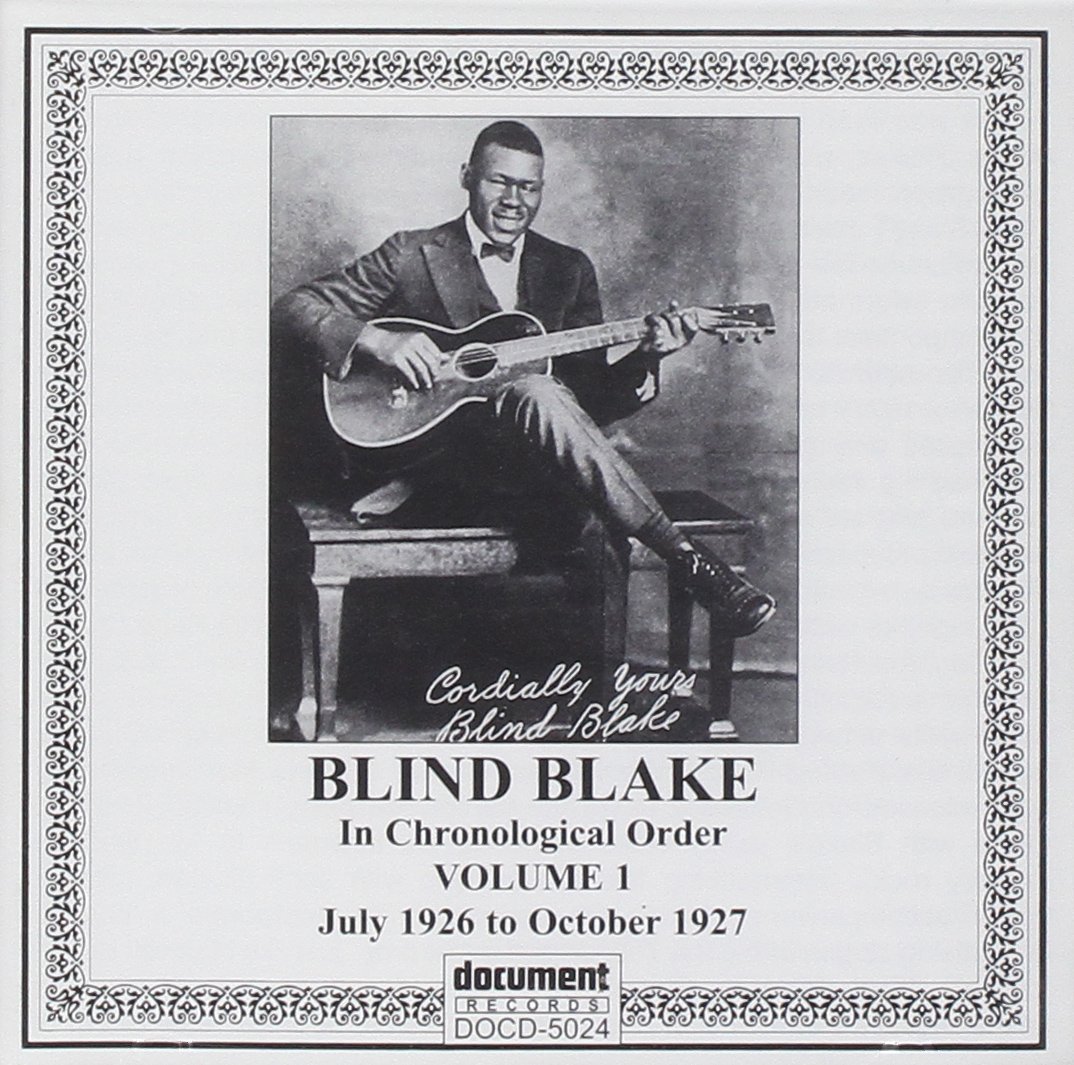
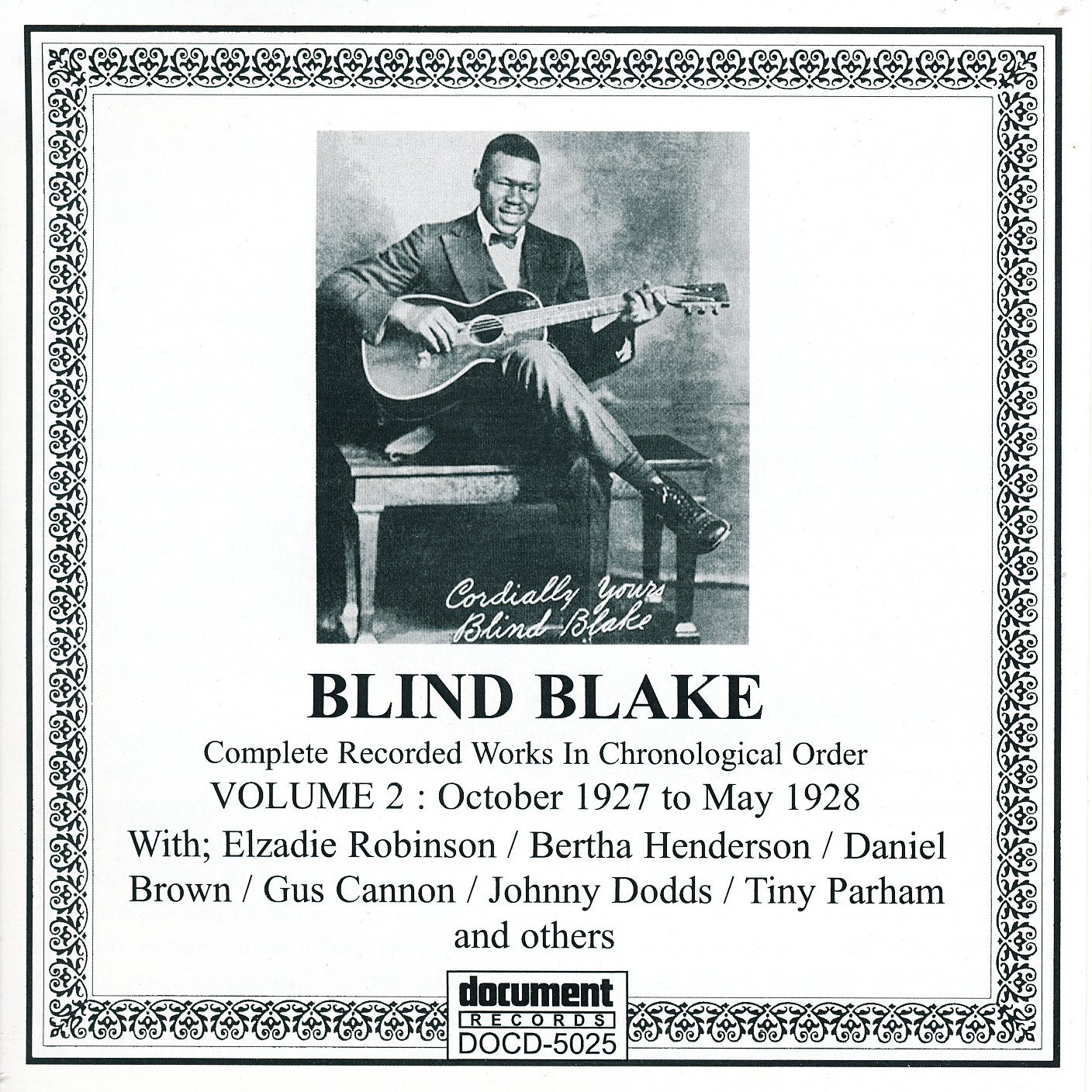
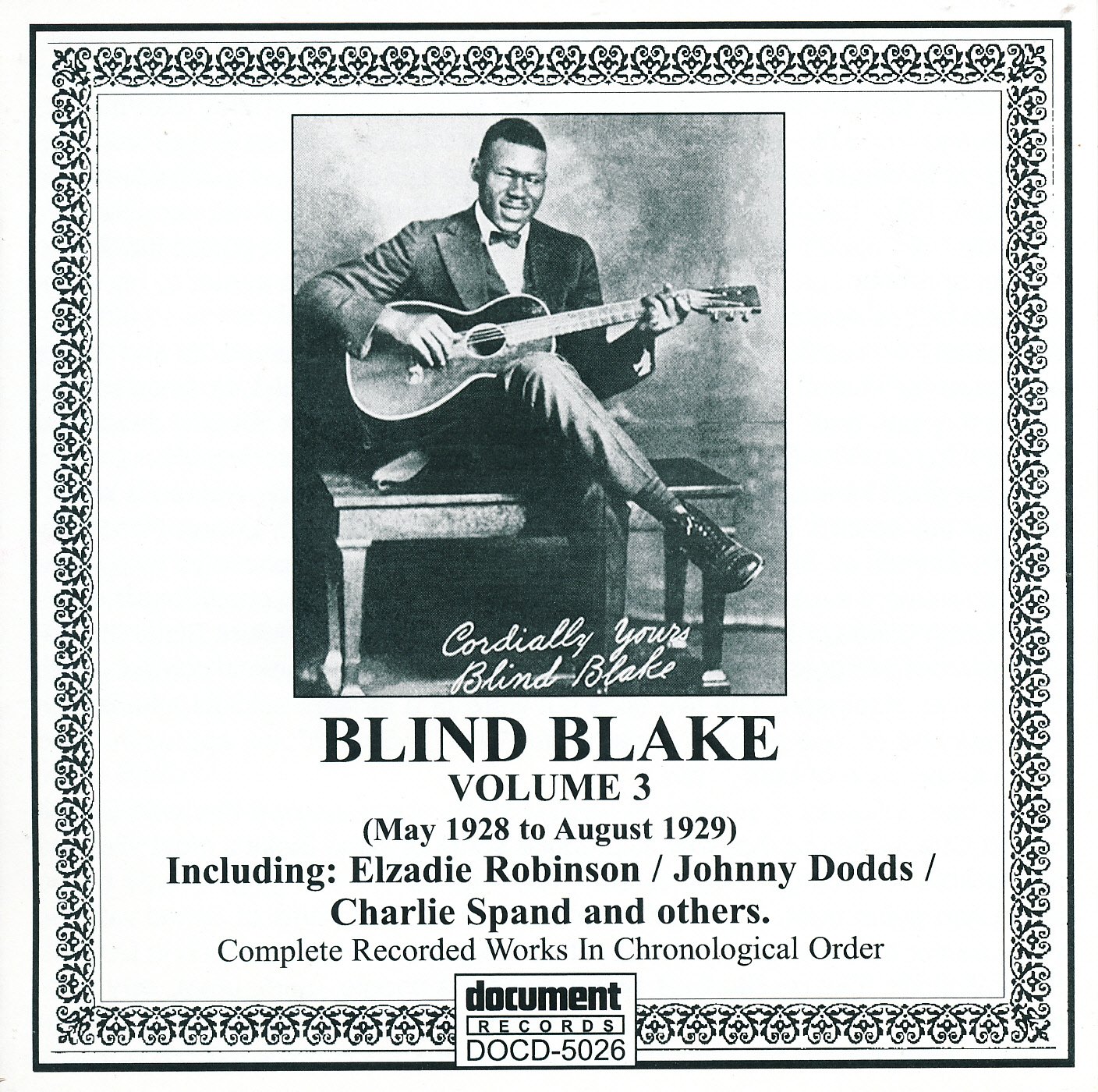
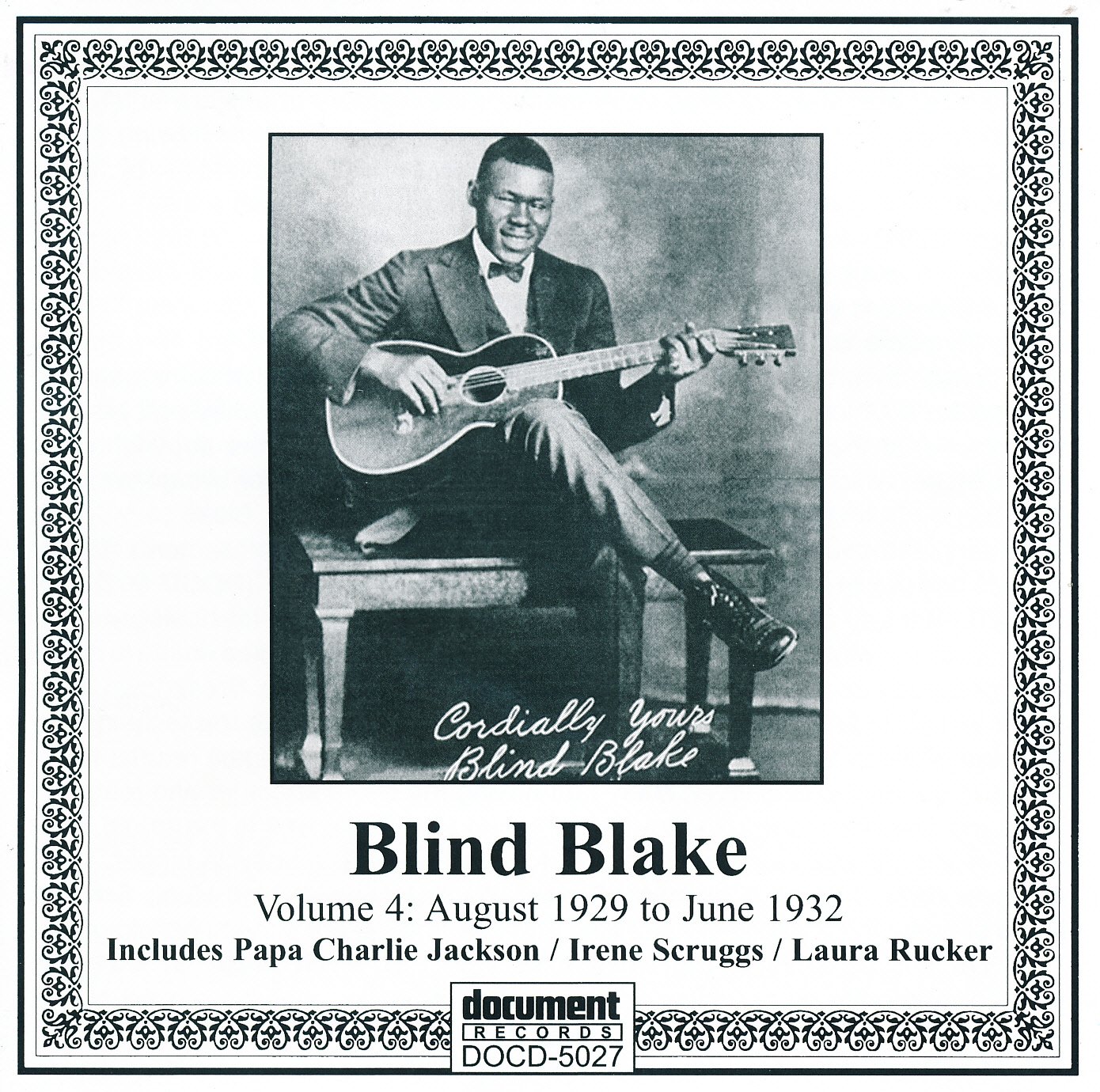
Despite the technical limitations of the era and Paramount’s inconsistent recording and pressing standards, Blake’s guitar playing cuts through with remarkable clarity and vitality. His complete works have been meticulously compiled by Document Records across multiple volumes, preserving his legacy for modern listeners.
This relatively short but dazzling recording window cemented Blind Blake’s reputation as one of the most innovative and entertaining guitarists of the pre-war era.
Musical Style and Technique
Blind Blake is widely regarded as one of the greatest and most innovative fingerstyle guitarists in the history of American music. Nicknamed the “King of Ragtime Guitar,” his playing combined the syncopated bounce of ragtime piano with the emotional depth of blues, creating a light, joyful, yet technically dazzling sound that defined the Piedmont/East Coast blues tradition.
Overall Approach and Philosophy
Blake treated the guitar like a complete orchestra. His style is highly rhythmic and propulsive, designed for dancing and entertainment rather than introspection. Unlike the heavy, slide-dominated Delta blues sound, Blake’s playing is clean, precise, and multi-layered. He emphasized syncopation, bounce, and the illusion of multiple instruments playing simultaneously.
He played almost exclusively in standard tuning (sometimes with a slight drop for tone), relying on sophisticated chord shapes, walking bass lines, and independent bass/treble voices.
Core Technical Elements
1. Alternating Thumb Bass (The Foundation) Blake’s right-hand thumb provided a steady, driving alternating bass pattern (typically on the 6th and 5th or 5th and 4th strings). This created a strong rhythmic foundation similar to ragtime piano left-hand patterns. His thumb was exceptionally accurate and powerful, rarely missing the downbeat.
2. Signature “Double Thumbing” or “Stumble Thumb” Technique One of Blake’s most distinctive and challenging innovations. In pieces like “West Coast Blues” and “Too Tight Blues No. 2”, he inserts an extra bass note (often a sympathetic or passing tone) an eighth-note before the main downbeat. This creates a syncopated “stumble” or roll in the bass line that gives his playing its unique bounce and forward momentum. It is often described as “double thumbing” — hitting two bass notes in quick succession with the thumb.
This technique is rhythmically complex and difficult to replicate cleanly at speed. It adds a playful, swinging feel that distinguishes Blake from more straightforward alternating-thumb players.
3. Fingerpicking and Treble Work While the thumb handled the bass, Blake’s index, middle, and sometimes ring fingers delivered intricate melodies, fills, and chordal stabs in the treble. He created rich contrapuntal textures — the bass and treble lines often moved independently, mimicking the interplay in piano rags.
4. Syncopation and Rhythmic Sophistication Blake was a master of rhythmic displacement. He frequently played ahead of or behind the beat for expressive effect, while maintaining an overall rock-solid pulse. His playing has a light, dancing quality even on slower numbers.
5. Tone and Attack
- Bare fingers (no pick) for a warm, percussive attack.
- Strong, crisp articulation that cuts through the primitive recording technology of the 1920s.
- Dynamic control: He could shift from loud, driving passages to softer, more delicate ones.
- Occasional use of slides or hammer-ons/pull-offs for expressive vocal-like phrasing.
6. Harmonic and Structural Elements Blake favored keys like C and G. He used full chord voicings, turnarounds, and passing chords with great sophistication. His instrumentals often follow loose ragtime structures rather than strict 12-bar blues forms, allowing room for improvisation and variation.
Later Life and Death
After his recording career ended, Blake’s trail becomes murky. He lived in Milwaukee, Wisconsin, in the early 1930s with his wife Beatrice. On December 1, 1934, he died at approximately age 38. His death certificate lists the cause as complications from tuberculosis and pneumonia. He was buried in Milwaukee, with no contemporary newspaper coverage.
Rumors of a violent death (streetcar accident, murder, or alcohol-related) circulated for decades, but documentary evidence supports a more ordinary, if tragic, end amid the hardships of the Depression.
The Mystery Surrounding His Life
For decades, almost nothing was known about Blake beyond his recordings. Rumors and conflicting stories abounded:
- Some claimed his real name was Arthur Phelps (based on a recollection by Blind Willie McTell).
- Others suggested he used pseudonyms like Billy James or Blind George Martin.
- Speculation about his death included being struck by a streetcar, murdered in a gambling dispute, or dying from alcoholism.
The 2011 discovery of his death certificate finally clarified key facts: he died in Milwaukee at approximately age 38 from complications of pulmonary tuberculosis and pneumonia. A coroner’s report confirmed the cause. Beatrice, unable to afford a proper burial, had him interred at a pauper’s grave. No contemporary newspapers reported his death, and his grave remained unmarked for many years.
This combination of sparse documentation, conflicting oral histories, and the passage of time has made Blind Blake one of the most mysterious major figures in pre-war blues. What we do know with certainty is that in a short window between 1926 and 1932, this blind guitarist from the South produced some of the most joyful, technically brilliant, and rhythmically sophisticated music ever recorded on guitar.
Influence and Legacy
Despite his short career and mysterious life, Blind Blake’s impact was profound:
- Direct influence on Piedmont blues artists such as Blind Boy Fuller, Josh White, Buddy Moss, and Reverend Gary Davis (who called him one of the greatest guitarists on record).
- Later generations: Ry Cooder, Jorma Kaukonen, Ralph McTell, Merle Travis (via the Travis picking lineage), and many others studied his technique.
- His ragtime-blues approach helped shape country, folk, and rock guitar styles.
- Songs like “Diddie Wa Diddie” became standards covered by countless artists.
Blind Blake was inducted into the Blues Hall of Fame and remains a benchmark for acoustic blues guitar. His recordings have been reissued on Document Records (complete works), Yazoo, and other labels. He is remembered as one of the most dazzling and innovative guitarists of the pre-war era — a true pioneer whose music still sounds fresh and exhilarating nearly a century later.
Recommended Listening:
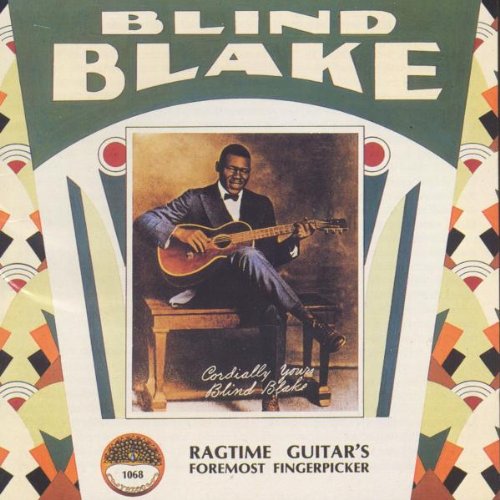 Ragtime Guitar’s Foremost Fingerpicker (Yazoo)
- Document Records Complete Recorded Works volumes (4 CDs)
Blind Blake’s story is a testament to the brilliance that could emerge from the shadows of early 20th-century America — a blind genius who lit up the guitar world with unmatched skill and joy.