Lizzie Douglas (June 3, 1897 – August 6, 1973), known professionally as Memphis Minnie, was one of the most influential and enduring figures in American blues history. A masterful guitarist, powerful vocalist, and prolific songwriter, she recorded around 200 sides over more than three decades, bridging country blues, urban blues, and the transition to electric Chicago blues. Often called the “Queen of the Blues,” she stood out as a dominant female voice in a male-dominated genre, renowned for her assertive lyrics, intricate fingerstyle and slide guitar work, and tough, independent persona.
Early Life
Born Lizzie Douglas in Tunica County, Mississippi (though she often claimed Algiers, Louisiana, as her birthplace for poetic flair), she was the eldest of 13 children in a sharecropping family. Raised primarily in Walls, Mississippi, near Memphis, Tennessee, she earned the nickname “Kid” early on for her spirited nature. She received her first guitar as a Christmas gift around age eight and quickly developed her skills.
At just 13, the adventurous Minnie ran away from home to pursue music full-time on Beale Street in Memphis. She busked with jug bands and string groups, performed in Church Park, and even toured with the Ringling Brothers Circus for a time. Her early experiences in the vibrant Memphis music scene shaped her resilient, street-smart style.
Career Breakthrough and Marriages
Minnie’s recording career began in 1929 when she teamed up with guitarist Kansas Joe McCoy (whom she married that same year). Their first session for Columbia Records in New York on June 18, 1929, produced classics like “When the Levee Breaks”—a response to the devastating Great Mississippi Flood of 1927. The song, credited to both but largely driven by Minnie’s perspective and performance, later gained massive fame through Led Zeppelin’s 1971 version on Led Zeppelin IV.
Settlement and Early Chicago Years (1930s)
Minnie and Kansas Joe quickly integrated into Chicago’s vibrant Black music community, performing at venues like the DeLisa and Music Box. They continued recording as a duo for labels including Vocalion and Decca until their divorce around 1935. Even after the split, Minnie remained in Chicago and began recording more frequently as a solo artist or with new accompanists.
In 1935, she recorded for Bluebird and returned to Vocalion, sometimes collaborating with artists like Casey Bill Weldon. By the mid-to-late 1930s, she aligned with influential producer and talent scout Lester Melrose, who supplied artists to major labels. This connection led to sessions featuring fuller band arrangements, including piano (e.g., Black Bob), bass, and occasional horns or drums—sounds that moved away from pure country duets toward a more polished, ensemble-driven style.
Key recordings from this transitional phase include swinging numbers like “Good Morning” (1936) and “Hot Stuff” (1937), where her guitar work shifted emphasis from intricate solo fingerpicking to more focused lead lines and rhythmic support within the band.
Partnership with Little Son Joe and the 1940s Peak
Around 1939, Minnie married guitarist Ernest “Little Son Joe” Lawlars, who became her primary musical partner and collaborator for the rest of her active career. Their first joint sessions for Vocalion in 1939–1940 produced some of her most enduring work.
Standout tracks from the Chicago era include:
- “Me and My Chauffeur Blues” (1941): Her biggest commercial hit, recorded with electric guitar. This assertive, uptempo anthem of female independence and desire became a blues standard.
- “Nothing in Rambling” (1940) and “In My Girlish Days” (autobiographical gems showcasing her storytelling prowess).
- Other notables: “Looking the World Over,” “Black Rat Swing,” “Hoodoo Lady,” and various sides for Okeh, Bluebird, and Vocalion throughout the 1940s.
She recorded prolifically, often in Chicago studios, adapting to the demands of juke joints and dance halls. By 1941, Minnie had fully embraced the electric guitar, purchasing a National electric archtop and becoming one of the earliest blues artists to amplify her sound effectively. This innovation placed her at the forefront of the shift from acoustic Delta styles to the louder, more dynamic Chicago blues sound.
Later Career and Retirement
Minnie remained active through the 1940s and into the 1950s, recording with artists like Sunnyland Slim and Little Walter. Health issues, including strokes, forced her retirement in the late 1950s. She and Lawlars returned to Memphis, where she lived quietly. Lawlars died in 1961.
In her final years, Minnie suffered further strokes and was cared for in nursing homes. Blues enthusiasts and musicians rallied to support her; notably, Bonnie Raitt helped fund her headstone.
Key Recordings and Musical Style
Memphis Minnie’s discography reflects the evolution of blues from rural roots to electrified urban forms:
- “Bumble Bee” (1930, Vocalion): One of her biggest early hits, recorded multiple times. Its playful, risqué lyrics about a lover’s “stinger” became a blues standard, later covered widely.
- “When the Levee Breaks” (1929): Social commentary rooted in real disaster, with driving rhythm and expressive vocals.
- “Me and My Chauffeur Blues” (1941): Her biggest commercial hit, recorded with electric guitar—an assertive anthem of independence and desire.
- “Black Rat Swing,” “Looking the World Over,” “Hoodoo Lady,” “Nothing in Rambling,” and “What’s the Matter with the Mill?”: These tracks highlight her versatile songwriting, from supernatural themes to everyday struggles and celebrations.
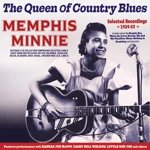 The Queen Of Country Blues: Selected Recordings 1929-53 Buy from Amazon
Minnie was a virtuosic guitarist, excelling in fingerpicking, bottleneck slide, and rhythmic drive. She often performed with bands, incorporating piano, bass, and drums, which helped pave the way for the fuller Chicago blues sound. By the early 1940s, she had embraced the electric guitar, recording some of the earliest electric blues sides. Her voice was strong and commanding, capable of both raw power and nuanced expression.
Live Performances and Cultural Impact
Minnie was a commanding live performer. In the early 1940s, she led bands at clubs like Ruby Lee Gatewood’s Tavern (famous Blue Monday parties) and the 230 Club. Poet Langston Hughes famously described a New Year’s Eve 1942 performance at the 230 Club: “Memphis Minnie sits on top of the icebox at the 230 Club in Chicago and beats out blues on an electric guitar.” He likened her amplified sound to “a musical version of electric welders plus a rolling mill,” highlighting her powerful, modern presence.
She joined the musicians’ union, maintained a professional image, and built a reputation for toughness and excellence in a male-dominated scene.
Musical Style and Contributions to Chicago Blues
Minnie’s Chicago-era playing blended her Mississippi roots—strong rhythms, bottleneck slide influences, and expressive vocals—with urban swing, jump blues elements, and electric amplification. She moved from complex solo guitar (bass, rhythm, and treble all in one) to a more integrated band role, emphasizing soulful bends, rhythmic drive, and dynamic leads.
Her experiments with electric guitar and band formats helped lay groundwork for postwar Chicago blues. She influenced (directly or indirectly) artists like Muddy Waters, Jimmy Rogers, and the broader electrified scene at Chess Records. In 1952–1953, she recorded electric sides for Checker (a Chess subsidiary), extending her pioneering role.
Legacy of the Chicago Period
Memphis Minnie’s time in Chicago solidified her status as the “Queen of the Blues.” It demonstrated women’s central role in blues evolution and showed how rural traditions could fuel urban innovation. Her recordings from this era remain essential listening for understanding the bridge between prewar country blues and the electric Chicago sound that dominated the 1950s.
Health issues in the late 1950s led to her retirement and return to Memphis, but the Chicago years represent the heart of her artistic maturity and commercial success. Her influence echoes in rock (via covers like Led Zeppelin’s “When the Levee Breaks”) and in generations of female and male blues artists who followed her trailblazing path.
Conclusion
Minnie was inducted into the Blues Hall of Fame and the Memphis Music Hall of Fame. A full-length biography, Woman with Guitar: Memphis Minnie’s Blues by Paul and Beth Garon (1992/2014), and tribute albums (e.g., Maria Muldaur’s 2012 release) have helped preserve her story.
Her grave in Walls, Mississippi, and a Mississippi Blues Trail marker honor her roots. Memphis Minnie embodied resilience, creativity, and excellence—rising from sharecropper’s fields and Beale Street corners to become one of the most recorded and respected blues artists of all time. Her music remains a vital link in the chain of American roots music, as powerful and relevant today as it was nearly a century ago.
Suggested Reading
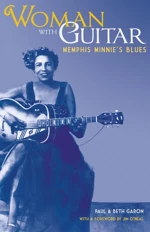 Woman with Guitar: Memphis Minnie's Blues Buy from Amazon