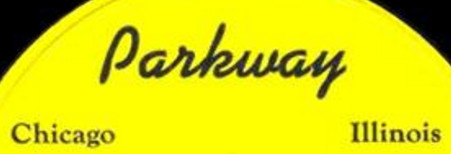
Parkway Records was a short-lived but highly significant independent blues and rhythm-and-blues label based in Chicago. Active primarily in early 1950, it operated for only a few months yet produced some of the most intense and influential recordings of the postwar Chicago blues explosion. Its tiny output—roughly two dozen sides, of which only a handful appeared on the Parkway label itself—has earned it legendary status among blues collectors and historians for capturing the raw energy of the city’s emerging electric blues scene.
Founding and Ownership
Monroe B. Passis (1914–2004), a record distributor, founded Parkway. Born in Racine, Wisconsin, Passis had worked in distribution for Columbia Records in the late 1930s and later claimed involvement as an associate producer on Bing Crosby’s “White Christmas.” By the late 1940s he headed Chord Distributors (also referred to in some accounts in connection with Hit Record Distributors) at 2320 South Michigan Avenue on Chicago’s Record Row.
In August 1949 Passis brought in two African-American brothers, George and Ernie Leaner, as managers. Ernie handled artists and repertoire; George oversaw sales and promotion. A Billboard announcement dated January 28, 1950, formally introduced Parkway as a blues and rhythm label operated as a subsidiary under Passis’s distribution business. Passis served as president. The label was intended exclusively for “race” (Black) music, focusing on blues and R&B.
Recording activity was concentrated in January–April 1950, mostly at Universal Recording Studio or possibly even at the Chord Distributors premises. The Leaners left relatively quickly to form their own successful United Record Distributors, weakening the operation. Passis then worked closely with Fred Mendelsohn of the New Jersey-based Regal Records; many Parkway masters were leased or sold to Regal (and later reissued on Herald and Savoy). The label effectively ceased operations by mid-to-late 1950, though some related sessions and releases stretched the connection into 1951. Original Parkway 78s are extremely rare and highly sought after by collectors.
Recordings and Sessions
Parkway produced only about 23 recordings during its brief life, with roughly 14 released contemporaneously. Just four (or possibly six) singles are known to have appeared on the actual Parkway label. The rest of the material surfaced on Regal, Herald, or later reissues. The sessions featured core members of the early Muddy Waters band and other leading Chicago blues figures, often in informal, high-energy settings that emphasized the raw, amplified sound then transforming the blues.
Notable Artists and Recordings
Baby Face Leroy Foster (vocals, drums, guitar) and the Baby Face Leroy Trio Leroy Foster (1923–1958), a Mississippi native who arrived in Chicago in 1945, was a versatile multi-instrumentalist and a key early member of Muddy Waters’ band. The January 1950 session that produced the label’s most celebrated sides featured Foster with Muddy Waters (guitar) and Little Walter (harmonica).
The standout release is the two-part “Rollin’ and Tumblin’” (Parkway 501, March 1950). Part 1 is largely wordless—moans, hums, yelps, and chants over driving slide guitar and harmonica—while Part 2 adds Foster’s vocals on traditional verses. Reviewers and later critics have described it as having the sound of an African chant or a field recording transplanted to Chicago; it ranks among the most exhilarating documents of the postwar bar-band blues. Leonard Chess of Chess/Aristocrat Records, who had Muddy under exclusive contract, quickly had Waters cut his own competing version to “kill” the Parkway release. Other sides from the session include “Boll Weevil” and “Red Headed Woman.”
Little Walter (harmonica, vocals) and the Little Walter Trio Marion “Little Walter” Jacobs, already a rising star, recorded several sides at the same January 1950 session (with Foster and Waters). Notable tracks include “Just Keep Lovin’ Her” (sometimes titled “Just Keep Lovin’ You”), “Moonshine Blues,” “Bad Actin’ Woman,” and “Take a Walk with Me.” These early efforts showcase Walter’s emerging harmonica virtuosity and vocal style before his major Chess hits. Some of these sides later appeared on Regal and were reissued under Walter’s name on Herald.
Memphis Minnie (vocals, guitar) The pioneering blueswoman Lizzie “Memphis Minnie” Douglas recorded a session (likely around the same time as the Foster/Walter date) with support that included her husband Little Son Joe (Ernest Lawlars) on guitar, Jimmy Rogers (vocals/guitar on some tracks), Little Walter (harmonica), Sunnyland Slim (piano), Ernest “Big” Crawford (bass), and Leroy Foster (drums). Known titles include “Down Home Girl,” “Night Watchman Blues,” “Why Did I Make You Cry,” “Kidman Blues,” and “Ludella” (the latter associated with Jimmy Rogers). Two sides were released on Regal while Parkway was still active.
Sunnyland Slim (piano, vocals) Albert “Sunnyland Slim” Luandrew cut a late-January 1950 session featuring Oliver Alcorn (tenor sax), Robert Jr. Lockwood (guitar), Ernest “Big” Crawford (bass), and Alfred “Fat Man” Wallace (drums). Titles include “I Done You Wrong,” “Orphan Boy Blues,” “When I Was Young (Shake It Baby),” and “(Low Down) Sunnyland Train.” These sides later appeared on various reissues.
Robert Jenkins (harmonica) Little-known harmonica player Robert Jenkins recorded “Steelin’ Boogie” Parts 1 and 2 (Parkway 103) with guitarists including Gene Pierce. These raw, boogie-oriented sides are among the few actual Parkway releases and have seen limited reissue interest.
Other associated artists and material Jimmy Rogers participated in the Memphis Minnie session. Later or related sessions involving Roosevelt Sykes, Essie Sykes, Eddie Boyd, St. Louis Jimmy, and others were tied to Passis’s activities and often released on Regal. An April 10, 1950, session by jazz trombonist Bennie Green (with Willie Jones on piano and Gene Wright on bass) yielding “Pennies from Heaven” and other titles remained unissued and may be lost.
Decline and Legacy
The combination of limited financing, the departure of the Leaner brothers, competition from established labels (especially Chess’s response to the “Rollin’ and Tumblin’” sides), and the challenges of independent distribution doomed the venture. By September 1950 Mendelsohn was already releasing Parkway material on Regal. Passis’s distribution business also faltered; he later moved into trade shows. The masters survived largely through Mendelsohn’s connections and have been reissued on labels such as Delmark, Biograph, Blues Classics, and various compilations documenting early Chicago blues.
Despite its brevity, Parkway captured a pivotal moment when country blues traditions met amplified urban energy. The “Rollin’ and Tumblin’” sides in particular remain touchstones of postwar Chicago blues intensity and influence later generations of musicians and collectors.
Note on the other Parkway Records: An entirely separate and much better-known Parkway label existed in Philadelphia from 1958 as a subsidiary of Cameo Records (collectively Cameo-Parkway). Founded by Bernie Lowe and Kal Mann, it specialized in teen dance-craze hits by artists such as Chubby Checker (“The Twist”), the Dovells, the Orlons, Dee Dee Sharp, and the Tymes. That catalog is now owned by ABKCO and has no connection to the Chicago blues imprint.