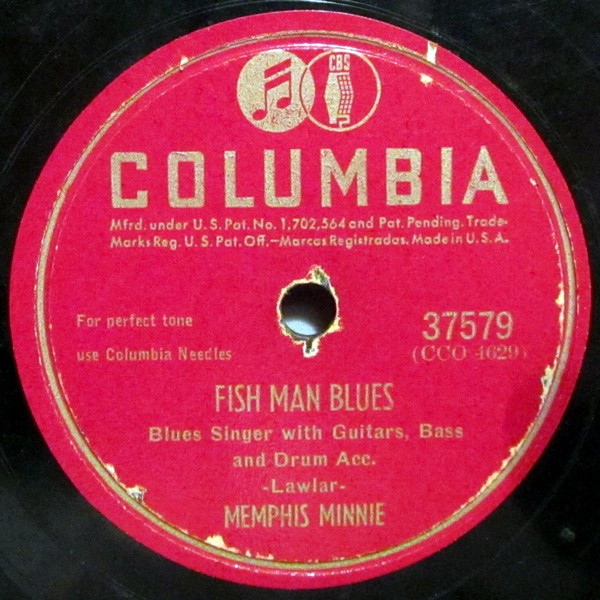
"Fish Man Blues" is a lively, humorous Chicago blues track by Memphis Minnie (Lizzie Douglas, 1897–1973), one of the greatest female blues artists and a pioneering guitarist and songwriter. Recorded in the mid-1940s, it showcases her witty lyricism, strong vocals, and sharp guitar playing, reflecting everyday urban life with a playful twist.
Recording Sessions
Memphis Minnie recorded "Fish Man Blues" (along with related takes) in Chicago during sessions in the mid-to-late 1940s, likely around 1946–1947 for labels like Columbia or associated imprints. This period marked her later career phase, with electric guitar and fuller band support as she adapted to postwar Chicago blues trends. Multiple takes exist, indicating studio refinement. Her husband, Kansas Joe McCoy (earlier collaborator), was no longer with her by this time, but she worked with various session musicians.
Producer: Details are sparse for these indie sessions, but Chicago producers like those at Columbia or local studios oversaw them, focusing on commercial viability with electric instrumentation.
Songwriters
Memphis Minnie (Lizzie Douglas) is the primary songwriter and a prolific composer throughout her career. "Fish Man Blues" exemplifies her skill in crafting narrative-driven, humorous blues that draw directly from everyday urban life. The lyrics use the figure of the fish peddler—a common street vendor in mid-20th-century cities—as a metaphor for a charming but unreliable man ("fish man" carrying double meaning for a smooth talker or someone "slippery" like a fish). Minnie employs clever wordplay, double entendres, and conversational storytelling, turning a simple complaint into an entertaining, relatable vignette.
Her songwriting often reflected the experiences of Black women in the North during the Great Migration—independence, romance, hardship, and street smarts. Unlike many blues artists who relied on male songwriters or traditional material, Minnie wrote or co-wrote much of her repertoire, giving her work a distinctive female perspective that was bold, sassy, and unapologetic. "Fish Man Blues" fits this pattern: witty, pointed, and full of personality. The repetitive structure and catchy phrases make it memorable and adaptable for live performance. Her authorship highlights her as one of the most important and independent songwriters in pre-war and postwar blues.
Musicians
The track features Memphis Minnie with a small Chicago blues combo:
- Memphis Minnie – vocals, electric guitar (her amplified playing provides rhythmic drive and sharp leads)
- Supporting musicians: Likely included bass, drums, and possibly piano or additional guitar from session players common in 1940s Chicago studios.
Her guitar work—rhythmic chording and stinging single notes—anchors the groove, while her strong, expressive vocals lead the charge. The sound is full-bodied electric blues with swing and humor.
Musical Style and Analysis
"Fish Man Blues" is a lively up-tempo Chicago electric blues with a swinging, danceable groove that showcases Memphis Minnie's powerful vocals and pioneering guitar work. The track clocks in at a concise, radio-friendly length while packing rhythmic energy and narrative drive.
Memphis Minnie’s electric guitar provides the rhythmic backbone and sharp leads. By the 1940s, she had fully embraced amplification, using it to cut through the band with incisive single-note lines, punchy chords, and rhythmic chording. Her style blends earlier Piedmont fingerpicking roots with the rawer, urban Chicago sound—strong attack, clear tone, and expressive phrasing that supports her storytelling. The guitar acts as both accompaniment and commentary, responding to the vocal lines with fills that add humor and emphasis.
Vocals: Minnie’s delivery is strong, confident, and expressive, with a slightly rough-edged tone that conveys sass and resilience. She sings with rhythmic precision and playful inflection, making the "fish man" character come alive through her phrasing. Her voice leads the band, using repetition and call-and-response elements to build engagement.
The supporting band (typical small Chicago combo of the era—bass, drums, possibly piano or additional guitar) supplies a solid, swinging rhythm section. The groove has a light shuffle feel with a pronounced backbeat, making it highly danceable. The arrangement is straightforward 12-bar blues but delivered with vitality and space for Minnie’s personality to shine. There are no long instrumental solos; the focus remains on the vocal narrative and tight ensemble interplay.
Overall, the song balances entertainment and social commentary. Minnie’s ability to blend humor, complaint, and groove makes it a perfect example of her entertaining yet substantive style. In the context of 1940s Chicago blues, it stands out for its female perspective and energetic performance, contributing to her reputation as a versatile, trailblazing artist who could hold her own with male contemporaries. The track’s lively spirit and relatable lyrics ensure its appeal in compilations and live tributes.
Other Versions
Memphis Minnie recorded multiple takes, and the song appears on compilations. It has been covered or referenced by later blues artists, though it is less widely known than her biggest hits. Its inclusion in reissues and anthologies keeps her legacy alive. Specific major rock covers are limited, but it fits into the broader Memphis Minnie tribute tradition.
Legacy
"Fish Man Blues" exemplifies Memphis Minnie's witty, street-smart songwriting and guitar prowess during her Chicago years. As one of the few prominent female blues stars who wrote much of her material and played lead guitar, she paved the way for women in the genre. The song contributes to her reputation as a versatile, entertaining performer who captured urban Black life. Her influence on blues, folk, and rock (via compilations and tributes) endures, with artists and historians celebrating her as a trailblazer. The track remains a delightful example of her humorous, resilient blues style.
Suggested Listening
 Buy from Amazon Queen Of The Delta Blues Vol.2