"Five Long Years" is a postwar Chicago blues standard written and first recorded by pianist and singer Eddie Boyd in 1952. A moderate-tempo twelve-bar blues that topped the Billboard R&B chart, it remains one of the most covered and enduring songs of the era, celebrated for its autobiographical working-class narrative and solid musical craft.
Recording Session
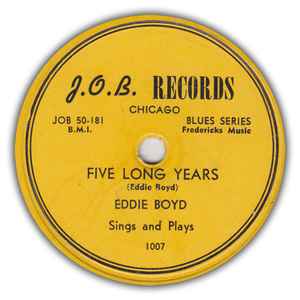
The original version was recorded on May 30, 1952 (sources also note the broader May–June 1952 period) at Modern Recording in Chicago. It was released in July 1952 on J.O.B. Records (catalog 1007) as the A-side, backed with “Blue Coat Man.” Boyd had produced demos and taken them to Joe Brown at J.O.B., who agreed to re-record the tracks. The single spent seven weeks at number one on the Billboard R&B chart, becoming Boyd’s biggest hit and one of the defining records of early-1950s Chicago blues. Boyd revisited the song multiple times later in his career, including studio and live versions.
Producer: The session was overseen in the context of J.O.B. Records under Joe Brown. Boyd himself played a strong role in bringing the material to the label after creating his own demos.
Songwriters
Eddie Boyd (Edward Riley Boyd) is the sole songwriter. The song is deeply autobiographical and rooted in his lived experience as a factory worker.
Boyd composed “Five Long Years” while working in a steel mill (specifically recalling the Harris-Hub Bed & Spring plant or a similar Cicero facility). He stated that he never wrote the lyrics down; the rhythm came directly from the sound of the power-brake machine he operated. The song grew on him until it felt ready, influenced by the style of established pianists such as Roosevelt Sykes. The narrative tells of a man who works five long years in a steel mill, “trucking steel like a slave,” and faithfully brings his paycheck home every Friday to a woman who ultimately puts him out. The central refrain—“Have you ever been mistreated? / Then you know just what I’m talking about”—frames the story as shared experience rather than isolated complaint.
The lyrics fuse industrial labor and domestic betrayal into a single, powerful image. The phrase “I worked five long years for one woman” collapses the worlds of the shop floor and the home; employer and spouse become interchangeable sources of exploitation. This dual meaning—economic hardship and romantic mistreatment—gave the song universal resonance for working-class listeners in the postwar urban North. Boyd’s writing is direct, conversational, and free of unnecessary ornament, which contributed to its lasting appeal as a true-to-life blues.
Musicians
The original J.O.B. session featured a tight Chicago ensemble:
- Eddie Boyd – vocals, piano
- Ernest Cotton – tenor saxophone
- L. C. McKinley – guitar
- Alfred Elkins – bass
- Percy Walker – drums
The arrangement balances Boyd’s piano and voice with supportive sax, guitar, and rhythm-section work, creating a full yet uncluttered sound typical of early-1950s independent-label Chicago blues.
Musical Style and Analysis
“Five Long Years” is a moderate-tempo twelve-bar blues, commonly notated in 12/8 time and often associated with the key of C. The groove sits in a rolling, slightly swinging feel that supports both the narrative and the danceable quality expected of a hit single.
Piano style: Boyd’s left hand supplies a strong, steady foundation with walking or rolling bass patterns, while his right hand delivers chords, fills, and melodic responses. The rhythmic drive is forceful—partly shaped by the industrial machine rhythms that inspired the song—yet remains controlled and musical rather than purely aggressive. His playing sits firmly in the postwar Chicago piano tradition, with clear articulation and a solid sense of swing.
Vocal delivery: Boyd sings with a clear, authoritative baritone and natural, conversational phrasing. He emphasizes the key lines of the story without excessive melodrama, allowing the lyrics’ working-class realism to land. The opening question—“Have you ever been mistreated?”—is delivered as a direct address to the listener, creating immediate identification.
Structure and arrangement: The song follows a classic 12-bar form with an AAB lyric pattern. The tenor sax provides sustained pads and occasional fills that thicken the texture, while the guitar adds rhythmic and melodic support. Bass and drums lock into a solid, mid-tempo pocket that gives the track its steady forward motion. At approximately 2:41, the original single is concise and radio-friendly, with no wasted space.
The overall effect is one of grounded realism. The industrial origin of the rhythm, the plainspoken narrative of labor and betrayal, and the balanced small-band arrangement combine to produce a blues that feels both personal and widely relatable. Retrospective assessments correctly identify it as one of the few postwar blues standards that has retained universal appeal.
Other Versions
Boyd himself re-recorded the song several times. Notable covers include:
- Junior Parker (1959) – reached number 13 on the R&B chart
- B. B. King (multiple studio versions)
- Eric Clapton (with the Yardbirds on Five Live Yardbirds, 1964, and later on From the Cradle)
- Buddy Guy (with Junior Wells and later solo)
- Muddy Waters, Long John Baldry, John Lee Hooker, and many others across blues, rock, and revival contexts
The song has remained a staple of live blues sets and appears on countless compilations.
Legacy
“Five Long Years” topped the Billboard R&B chart for seven weeks in 1952 and was inducted into the Blues Foundation Hall of Fame in 2011 as a Classic of Blues Recording. The Hall of Fame citation called it “a true-to-life blues in 1952 that hit home with many a working man.” Its combination of industrial authenticity, emotional directness, and solid musical construction made it a standard that transcended its original Chicago context. The song helped establish Eddie Boyd as a major voice in postwar blues and continues to be performed and recorded by artists across generations, confirming its status as one of the enduring anthems of working-class blues experience.
Suggested Listening
 Buy from Amazon The Singles Collection 1947-62