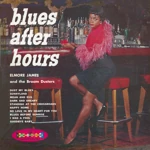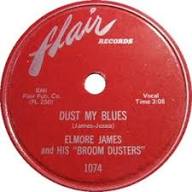
"Dust My Blues" is Elmore James’s 1955 reworking of his signature song “Dust My Broom.” Recorded for the Bihari brothers’ Flair label, it is essentially the same composition with a minor lyrical change (“blues” substituted for “broom”) and a fuller New Orleans rhythm section. The track stands as one of the strongest later versions of the riff that defined James’s career and helped shape electric slide guitar in blues and rock.
Recording Session
“Dust My Blues” was recorded in August or September 1955 at Cosimo Matassa’s J&M Studios in New Orleans. It was released on Flair 1074 (a Bihari brothers imprint), paired with “I Was a Fool.” The session came during James’s period with the Biharis (Meteor, Flair, and Modern labels) after his earlier Trumpet success with the original “Dust My Broom.” Producers frequently asked him to revisit the famous slide riff in slightly varied forms; “Dust My Blues” is the most direct and successful of these reworkings.
Producer: Joe Bihari. The Bihari brothers (Joe, Jules, and Saul) controlled the Modern/Flair/Meteor complex and regularly recorded James during the mid-1950s. Joe Bihari is specifically credited as producer on the session.
Songwriters
The song is credited in various sources to Elmore James and Joe Bihari, with Robert Johnson acknowledged as the primary source. It is a direct adaptation of James’s own 1951 “Dust My Broom,” which itself derived from Robert Johnson’s 1936 recording “I Believe I’ll Dust My Broom.”
The core idea—“I’m gonna get up in the morning / I believe I’ll dust my broom [or blues]”—is a classic blues expression of leaving a relationship or situation behind. “Dust my broom” was traditional slang for packing up and moving on. James retained the essential structure and most of the verses from his earlier hit while making the small title substitution that allowed the Biharis to issue it as a “new” side. Additional verses address mistreatment by a woman and the decision to leave, keeping the focus on independence and departure.
James did not invent the song from scratch; the melody and basic lyric template had circulated earlier (including piano versions by the Sparks Brothers in the 1930s and recordings by Arthur “Big Boy” Crudup and Robert Jr. Lockwood). What James contributed was the electrified, open-tuned slide-guitar treatment and the intense vocal delivery that turned the traditional material into a modern electric blues anthem. The repeated recording of the riff under slightly different titles was less about lack of originality than about refining and capitalizing on a proven, highly effective musical idea.
Musicians
The New Orleans session featured a strong local rhythm section:
- Elmore James – vocals, electric slide guitar
- Frank Fields – bass
- Earl Palmer – drums
- Edward Frank – piano
This lineup gave the track a fuller, more driving sound than the original 1951 Trumpet version (which featured Sonny Boy Williamson II on harmonica). Earl Palmer’s crisp, powerful drumming and the solid bass and piano support create a hard-driving foundation that complements James’s aggressive slide work.
Musical Style and Analysis
“Dust My Blues” is a mid-tempo electric Chicago/Delta blues built around James’s instantly recognizable open-tuning slide-guitar riff. The song follows a standard 12-bar blues form with an AAB lyric pattern.
Guitar style: James plays in open D or open E tuning with a glass slide. The signature opening riff is a high, swooping figure that rises a full octave in a continuous slide motion, delivered with fierce attack and sustain. He repeats and varies this riff throughout the track as both introduction, response to the vocal, and solo material. The tone is raw, amplified, and slightly overdriven—typical of James’s electric sound. Where Robert Johnson had played related figures fretted on acoustic guitar, James transformed the idea into a loud, sustained, electrified slide statement that became one of the most imitated guitar figures in blues history. Critics sometimes dismissed him as a “one-lick” player, but the repetition was purposeful: each version refined the riff’s intensity, timing, and interaction with the band.
Vocal delivery: James sings with a rough, urgent, almost shouting intensity. His phrasing is rhythmic and forceful, matching the drive of the guitar. He projects the lyrics of departure and independence with conviction rather than subtlety, reinforcing the song’s restless energy.
Structure and arrangement: The track opens with the famous slide riff, followed by verses in classic 12-bar form. The New Orleans rhythm section provides a solid, slightly swinging yet hard-driving groove. Piano adds chordal support and fills; bass and drums lock in a powerful pocket that gives the performance more weight and propulsion than the earlier harmonica-backed version. The overall feel is urgent and physical—James’s “unstoppable body rhythm” is fully present. At roughly three minutes, the recording is concise and impactful, with the slide riff functioning as both melodic hook and structural backbone.
The combination of the electrified slide figure, James’s intense vocal, and the strong New Orleans rhythm section makes “Dust My Blues” one of the most powerful later incarnations of the “broom” theme. It retains the raw Delta intensity of the original while benefiting from a tighter, more modern band sound.
Other Versions
James recorded the core song multiple times:
- Original “Dust My Broom” – August 5, 1951, Trumpet Records (with Sonny Boy Williamson II).
- Later versions for Fire/Enjoy in 1959 and 1963.
- “Dust My Blues” itself is the principal 1955 Flair reworking.
The song (under both titles) has been covered extensively by blues and rock artists, including the Yardbirds, Fleetwood Mac, Johnny Winter, ZZ Top, B.B. King, Howlin’ Wolf, and many others. The riff became a rite of passage for slide guitarists.
Legacy
“Dust My Blues” is a key document of Elmore James’s mid-1950s work and a strong example of how he repeatedly refined his signature sound. While the 1951 “Dust My Broom” remains the most celebrated recording (Grammy Hall of Fame, National Recording Registry), the 1955 “Dust My Blues” is widely regarded as one of the finest re-recordings—sometimes called the definitive later version because of its powerful New Orleans accompaniment. The slide riff James perfected on these sides became one of the most recognizable figures in electric blues and a foundational influence on rock guitarists. Through both titles, the song cemented James’s reputation as the king of the electric slide guitar and ensured the “dust my broom/blues” theme a permanent place in the blues and rock repertoire.