Meteor Records: A Memphis Blues and R&B Label of the 1950s was a significant independent record label based in Memphis, Tennessee. Active primarily in the early-to-mid 1950s, Meteor specialized in electric blues, R&B, and early rock ‘n’ roll. Closely associated with the Bihari brothers’ recording empire (which also included Modern, RPM, and Flair), Meteor served as an important outlet for Memphis talent during a golden era of Southern music. The label helped document the transition from postwar blues to the sounds that would fuel rock ‘n’ roll.
Founding and History
Meteor Records was founded in the early 1950s as part of the Bihari brothers’ network of labels. The Biharis (Jules, Saul, and Joe) were major independent producers who operated several imprints to maximize their reach in the “race records” market. Meteor focused on Memphis and Mississippi talent, recording at local studios and capitalizing on the city’s vibrant blues scene.
The label’s activity peaked in the early 1950s, releasing a series of influential singles. Like many Bihari labels, Meteor often used pseudonyms or shared masters across imprints to navigate contracts and market demand. By the mid-1950s, as the Biharis shifted focus and the industry changed, Meteor’s output slowed. The label’s catalog was later reissued and compiled, preserving its contributions to blues history.
Ownership and Business Practices
The Bihari brothers (primarily through their Modern Records operation) were the owners and driving force behind Meteor. They employed a flexible, multi-label strategy that allowed them to record artists under different imprints and maximize distribution. Recording sessions were often held in Memphis studios, with a focus on capturing raw, energetic performances suitable for jukeboxes and radio. The label’s business practices included aggressive promotion and licensing deals, typical of successful independents of the era.
Notable Artists and Recordings
Meteor Records built a focused catalog of electric blues, R&B, and early rock ‘n’ roll that captured the raw energy of the Memphis scene in the early 1950s. The label’s releases were primarily 45 rpm singles, often with driving rhythms, stinging guitar, and emotive vocals. Many sides were recorded quickly in local studios, emphasizing live feel over polish.
Elmore James
The slide guitar master and one of Meteor’s most important artists. James recorded several powerful sides for the label in the early 1950s, continuing the “Dust My Broom” sound that defined his style.
- “I Believe” / “I Held My Baby Last Night” (Meteor 5000, 1952): A strong early release showcasing James’ passionate vocals and fiery slide guitar. “I Believe” became a regional favorite and highlighted his emotional intensity.
- “Baby, What’s Wrong” / “Sinful Woman” (Meteor 5003, 1953): Another key single. “Baby, What’s Wrong” featured James’ signature slide work and pleading vocals, while the B-side added to his catalog of raw, heartfelt blues.
These recordings captured James at a creative peak, with his Broomdusters band providing tight support. Meteor’s releases helped solidify his reputation and influenced countless slide guitarists in blues and rock. Many of these sides were later compiled on reissues like The Original Meteor & Flair Sides.
Rosco Gordon
The pianist and singer brought a swinging, upbeat style to Meteor. His recordings often featured bouncy piano and catchy rhythms that bridged blues and early rock ‘n’ roll.
- Gordon’s Meteor sides included lively numbers that showcased his distinctive “Rosco’s Rhythm” and playful vocals. These releases added variety to the label’s catalog and appealed to dancers and jukebox audiences.
Rufus Thomas
The charismatic entertainer and vocalist recorded early material for Meteor, showcasing his energetic style and humorous delivery. Thomas’ sides for the label highlighted his versatility and helped establish him as a key figure in Memphis music before his major success on Stax. His Bobbin-era work (often overlapping with Meteor’s circle) captured the fun, danceable side of R&B and blues.
Little Milton
Little Milton (Milton Campbell) recorded material on Meteor during his early career. His powerful vocals and guitar work were evident on these sides, blending blues with soulful elements. These recordings helped build his reputation in the St. Louis and Memphis scenes before his breakthrough on Checker/Chess.
Fenton Robinson
The talented guitarist and singer contributed strong blues sides to Meteor. Robinson’s sophisticated playing and emotive vocals added depth to the label’s catalog. His Meteor recordings captured his early style and contributed to the label’s reputation for quality electric blues.
Other Notable Artists
Meteor’s roster included a range of Memphis and regional talent, contributing to the label’s mix of gritty blues and upbeat R&B.
- Various lesser-known blues artists and small combos recorded sides that captured the local club sound. The label’s output often featured tight horn sections, driving rhythms, and emotive singing.
- Additional releases included material by artists who performed in the vibrant Memphis scene, adding depth to the catalog.
Overall Significance of the Catalog
Meteor’s recordings were notable for their authenticity and connection to the Memphis sound — a blend of Delta roots, urban energy, and rock ‘n’ roll spirit. The label’s focus on local talent helped sustain the city’s blues scene during a transitional period. Its singles were primarily aimed at regional audiences but gained some national traction through distribution deals.
Today, Meteor releases are valued by collectors for their historical importance and raw quality. Compilations have preserved much of the catalog, ensuring that the contributions of Elmore James, Rosco Gordon, and others continue to be heard. Meteor Records stands as a vital chapter in the story of independent blues labels and Memphis music history
Suggested Listening
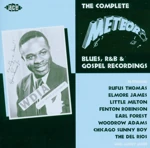 Buy from Amazon Complete Meteor Blues-R&B Gospel Recordings
Legacy and Impact
Meteor Records played a key role in documenting the Memphis blues scene during a transformative period. Its recordings by Elmore James and others helped spread the electric slide guitar style and contributed to the foundations of rock ‘n’ roll. Although smaller than Sun or Chess, Meteor’s catalog has been preserved through reissues and compilations, ensuring its place in blues history. The label exemplifies the importance of independent producers like the Biharis in capturing regional talent and shaping American music.
Today, Meteor releases are valued by collectors for their raw energy and historical significance. The label remains a vital chapter in the story of Memphis music and postwar electric blues.