
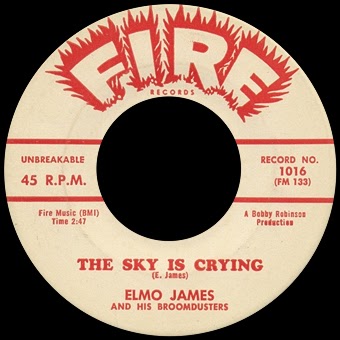
"The Sky Is Crying" is one of Elmore James's most enduring and beloved compositions, a slow blues classic that captures raw emotion through his signature slide guitar and powerful vocals. Recorded in 1959, it has become a cornerstone of the blues repertoire.
Recording Session
The song was recorded on November 3 or 4, 1959, in Chicago during a session for Fire Records (produced under Bobby Robinson's Fury/Fire umbrella). Legend has it that the song was inspired by a thunderstorm outside the studio, with James improvising lyrics on the spot about the "crying" sky. It was released as a single in 1960 (Fire 1016 or similar), billed to "Elmo James and His Broomdusters."
Producer: Bobby Robinson, a key figure in New York independent labels who worked with many blues and R&B artists. His productions emphasized raw energy and emotional directness.
Songwriters and Credits
Elmore James is the primary credited songwriter, though like many blues compositions of the era, it draws on traditional structures, common phrases, and personal improvisation. The song was reportedly conceived on the spot during the November 1959 session amid a heavy Chicago thunderstorm. James, known for his spontaneous creativity in the studio, channeled the weather into lyrics that metaphorically link the "crying" sky with personal heartbreak and longing ("The sky is crying, look at the tears roll down the street").
This poetic device—using natural phenomena to mirror emotional turmoil—is a hallmark of blues songwriting, but James makes it vivid and immediate. The narrative is straightforward: a man mourning a lost love, wondering where she is, and expressing deep sorrow. Repetition ("The sky is crying... I'm waiting in tears") builds hypnotic emotional intensity, a common technique in blues to drive the feeling home.
James's strength lay in adapting traditional 12-bar forms with personal flair. While not as complex lyrically as some Dixon or Wolf compositions, its strength is in its universality and raw honesty. The title and central image have become iconic, influencing countless covers and references in blues and rock. The song's simplicity allows performers to imbue it with their own emotion, contributing to its longevity as a standard.
Musicians (Broomdusters)
The core band for this era included:
- Elmore James – vocals, slide guitar (his slashing, amplified slide is the defining element)
- Sammy Myers or similar on harmonica (common in sessions)
- J.T. Brown – tenor saxophone (often present for horn support)
- Rhythm section: Bass and drums from the Broomdusters lineup (specific names like Homesick James or others varied, but the group provided tight, swinging support)
The sound is classic Chicago electric blues: raw, powerful slide leads cutting through a full band with saxophone accents.
Musical Style and Analysis
"The Sky Is Crying" is a quintessential slow-tempo electric Chicago blues (often around 60–70 BPM), distinguished by its mournful minor-key feel, atmospheric slide guitar, and emotional directness. The track follows a classic 12-bar blues structure but with a loose, expressive approach typical of James's style—emphasizing feel over rigid formality.
Elmore James's slide guitar is the undeniable star: played with a metal or glass bottleneck on an amplified acoustic or electric guitar (often a Gibson or similar with heavy amplification). His technique produces a piercing, "crying" tone—sustained notes with wide vibrato, aggressive attack, and fluid glissandos that mimic a human voice in pain. The slide work is both rhythmic (driving the beat) and melodic (weeping fills between vocal lines), creating a call-and-response dialogue. This amplified slide sound was revolutionary and highly influential, helping popularize the "Elmore James sound" that echoed through rock guitarists.
Vocals: James delivers with a powerful, pleading delivery—urgent yet soulful, with a slight rasp that conveys genuine anguish. His voice cuts through the band, matching the slide's intensity in the choruses.
Arrangement: The Broomdusters provide tight support—a steady, walking bass and drums lay down a somber groove with subtle swing. Tenor saxophone (J.T. Brown or similar) adds mournful, jazzy accents and pads that enhance the stormy atmosphere without cluttering the mix. The overall production by Bobby Robinson is raw and live-feeling, with natural dynamics that let the emotion breathe. There is minimal soloing beyond James's integrated guitar responses; the focus remains on the collective mood.
The song's power lies in its restraint and atmosphere: no flashy virtuosity, but a hypnotic build through repetition and dynamic swells. The thunderstorm inspiration is palpable—the "tears rolling down the street" imagery is reinforced by the weeping slide and rolling rhythm. At 2:47, it is perfectly concise for a single yet deeply affecting, making it ideal for radio play and live performance. This track exemplifies James's ability to transform personal and environmental experience into universal blues art, influencing artists from Stevie Ray Vaughan to modern slide players. Its emotional authenticity and sonic signature make it a timeless standard.
Chart Performance and Success
"The Sky Is Crying" was released as a single in 1960 (Fire Records) and reached #15 on Billboard's Hot R&B Sides chart. While it did not cross over significantly to the pop charts, it became one of Elmore James's most commercially successful and enduring releases—his last notable chart entry before his death in 1963. Its success helped solidify James's reputation during his Fire Records period and contributed to the broader popularity of amplified slide guitar blues in the late 1950s/early 1960s.
The single's impact was amplified through jukebox play and regional airplay, particularly in the Midwest and among blues audiences. Its chart performance underscored the commercial viability of raw electric blues at a time when R&B was evolving toward soul. Later reissues and covers (especially Stevie Ray Vaughan's version) kept the song in the public ear, boosting its legacy far beyond its original chart run. The track's emotional resonance ensured it became a blues standard rather than a fleeting hit.
Other Versions
- Stevie Ray Vaughan and Double Trouble (1985, posthumous title track of The Sky Is Crying album): A fiery, extended electric blues-rock interpretation that became hugely popular.
- Numerous covers by blues artists including Albert King, Eric Clapton (in various live settings), and many others. It is a staple in blues jam sessions and tribute albums.
Legacy
"The Sky Is Crying" reached #15 on the Billboard R&B chart in 1960, one of James's biggest hits and his last major chart entry before his death in 1963. It solidified his reputation as the "King of the Slide Guitar" and helped define post-war electric blues. The song's emotional depth and iconic slide work have made it a standard covered across generations, bridging Chicago blues to rock and modern blues-rock. Its influence is heard in the playing of Vaughan, Clapton, and beyond, and it remains a highlight of James's catalog and blues compilations. The track exemplifies how personal inspiration (the storm) can create timeless art.
Suggested Listening
 Buy from Amazon The Sky Is Crying: The History of Elmore James









