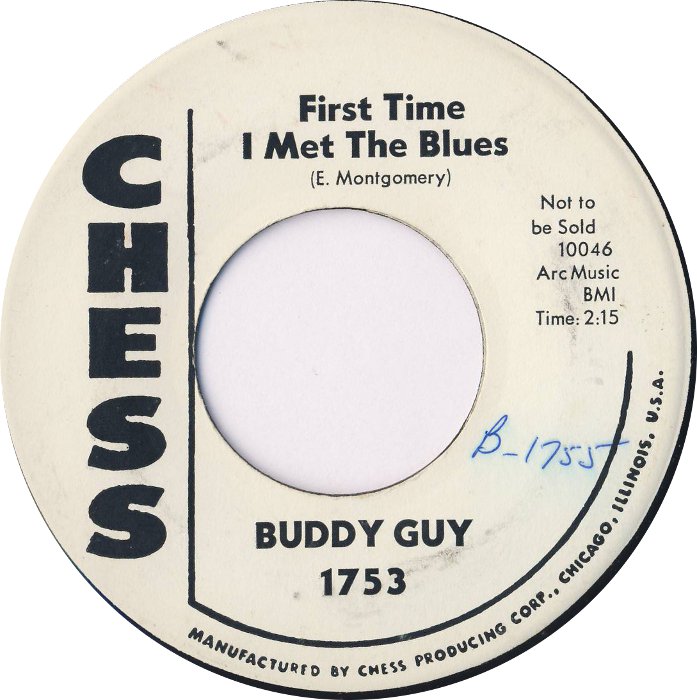
"First Time I Met the Blues" is a landmark recording in Buddy Guy's career and a quintessential example of early 1960s Chicago blues. Released in 1960, it introduced Guy's raw emotional intensity and expressive guitar style to a wider audience, becoming one of his signature songs.
Recording Session
"First Time I Met the Blues" was recorded in 1960 at Chess Studios in Chicago, during one of Buddy Guy's early sessions after signing with the label. This was a pivotal time for Guy, transitioning from smaller labels like Cobra/Artistic to the prestigious Chess roster, where he initially worked primarily as a session guitarist for established stars. The session that produced this track was part of Guy's push to establish himself as a solo artist under the guidance of Chess house producer Willie Dixon. Exact dates within 1960 vary slightly in discographies, but it was among his first notable Chess releases. The song was issued as a single (Chess 1753) and helped introduce Guy's distinctive sound to a wider audience.
Producer: Willie Dixon, the legendary bassist, songwriter, and A&R figure at Chess. Dixon not only produced but also shaped arrangements and provided the professional studio environment that allowed Guy's talent to shine. Dixon's involvement was crucial in bridging Guy's raw energy with the polished yet powerful Chess sound.
The session exemplified Chess's efficient, live-feeling recording style of the era—minimal overdubs, emphasis on groove and interplay, and capturing the musicians' natural chemistry. This approach gave the track an authentic, emotional immediacy that became a hallmark of Guy's best work.
Songwriters
The song was written by Eurreal Wilford "Little Brother" Montgomery (1906–1985), a highly respected pianist, composer, and singer from the classic blues era. Montgomery was a versatile musician with deep roots in the Mississippi and Louisiana blues scenes, known for his sophisticated piano style that blended boogie-woogie, stride, and traditional blues. He had a long career, recording as early as the 1930s and influencing many Chicago musicians.
Montgomery composed "First Time I Met the Blues" as a vehicle for emotional storytelling, drawing on themes of romantic disappointment and hardship common in the blues tradition. The lyrics are poetic and vivid, using the "first time" meeting the blues as a metaphor for profound personal loss and the harsh lessons of life. His composition provided a perfect canvas for Guy's expressive style—slow, minor-key, and full of space for improvisation and feeling. Montgomery not only wrote the song but also played piano on Guy's recording, adding authenticity and a direct link to earlier blues generations. This collaboration highlighted the passing of tradition from one era to the next. Montgomery's songwriting gift for memorable, emotionally resonant material helped make the track a standard in Guy's repertoire and a blues classic.
Musicians
The session featured top Chess talent:
- Buddy Guy – vocals, guitar
- Little Brother Montgomery – piano (the composer, adding authentic feel)
- Willie Dixon – bass (likely)
- Other Chess regulars on drums and possible additional instruments
The sparse yet powerful arrangement highlights Guy's stinging guitar and emotive vocals against Montgomery's rolling piano. This combination created a haunting, intimate sound that stood out even in the competitive Chicago scene.
Musical Style and Analysis
"First Time I Met the Blues" is a slow, minor-key Chicago blues that exemplifies the transition from 1950s ensemble blues to a more personal, guitar-centric style. The track runs approximately 2:30–3:00 and features a hypnotic, repetitive structure that allows space for emotional expression. The minor tonality and deliberate tempo create a brooding, melancholic atmosphere perfectly suited to the lyrics' theme of heartbreak and disillusionment.
Buddy Guy's Guitar Work: This recording captures Guy at a pivotal early stage, already displaying the hallmarks of his mature style. His guitar lines are stinging and vocal-like, with wide, precise string bends that "cry" and sustain. He uses dynamic picking attack—alternating between sharp, percussive notes and smoother, sustained tones—to build tension. Vibrato is wide and expressive, adding a quivering, human quality to held notes. Guy's phrasing is conversational and unpredictable, incorporating slides, hammer-ons, and subtle double stops that respond to the vocal line. His tone is bright yet biting, achieved through his amplifier settings and touch, cutting through the mix with clarity and emotion.
Vocals and Delivery: Guy's singing is raw and passionate, with a youthful urgency. He employs blue notes, melisma, and dynamic shading—moving from restrained verses to more intense, pleading choruses. His voice and guitar engage in a true dialogue, a hallmark of his best work.
Little Brother Montgomery's Piano: Montgomery provides a rolling, stride-influenced accompaniment with strong left-hand bass figures and right-hand fills that evoke older blues traditions. The piano acts as both rhythmic anchor and emotional commentator, leaving space for Guy's guitar interjections.
Overall Arrangement and Production: The sparse setup (voice, guitar, piano, bass, drums) emphasizes intimacy and interplay. Willie Dixon's production captures the live feel of the Chess studio, with natural ambience enhancing the track's haunting quality. The song builds gradually without a traditional solo, relying on cumulative emotional intensity rather than flash.
This track stands as an early masterpiece that announced Guy as a major voice in blues, blending technical innovation with deep feeling.
Other Versions and Covers
Guy has performed the song throughout his career, often as a centerpiece of live sets. Notable covers and interpretations appear on various blues compilations, though Guy's original remains the definitive version. It has been revisited by artists in the Chicago blues tradition and featured in documentaries and tributes to Guy.
Legacy
"First Time I Met the Blues" was a critical early success for Buddy Guy, helping establish him as a major talent at Chess and showcasing the emotional depth that would define his career. It remains a staple in his live repertoire and on compilations of his Chess years. The song highlighted Guy's ability to convey profound feeling through guitar and voice, influencing the next generation of blues and rock guitarists. It stands as a cornerstone of his catalog and a classic of Chicago electric blues.