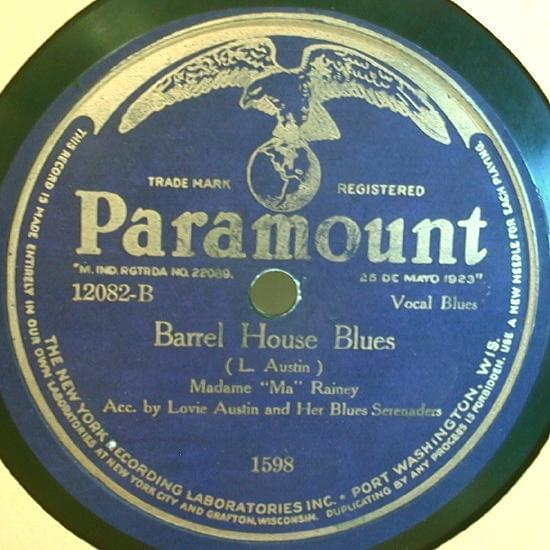
"Barrel House Blues" is a classic early recording by Ma Rainey, capturing the raw energy and social flavor of 1920s barrelhouse piano blues. Released in late 1923, it is one of her signature early Paramount sides and a prime example of her ability to blend vaudeville flair with authentic Southern blues.
Recording Session
"Barrel House Blues" was recorded in December 1923 in Chicago during one of Ma Rainey's first sessions for Paramount Records. This was part of her initial batch of recordings after signing with the label, marking her entry into the "race records" market as one of the earliest major female blues recording artists. The track was released on Paramount 12082, paired with "Those All Night Long Blues." These early sessions were crucial in establishing Rainey as a national star.
Producer: J. Mayo Williams, Paramount's key A&R man for race records, oversaw the session. Williams played a pivotal role in discovering and recording many early blues talents.
Songwriters
The song is credited to Ma Rainey (Gertrude Pridgett Rainey) herself, reflecting her skill as a songwriter. "Barrel House Blues" draws on the barrelhouse tradition—rowdy, piano-driven music played in Southern juke joints and barrelhouses—while Rainey adds her personal stamp with vivid, humorous lyrics about nightlife, drinking, and relationships. Her compositions often blended personal experience with traditional themes, making them relatable and commercially appealing.
Musicians
The December 1923 session for "Barrel House Blues" featured Lovie Austin and Her Blues Serenaders, a tight, swinging small group that perfectly complemented Rainey's style:
- Ma Rainey – vocals (her powerful, "moaning" delivery drives the track)
- Lovie Austin – piano and leader (a pioneering female pianist and composer whose rolling, barrelhouse-style playing provides the rhythmic backbone with strong left-hand bass lines and lively right-hand fills)
- Tommy Ladnier – cornet (his bright, punchy lines add jazz flavor and call-and-response energy)
- Jimmy O'Bryant – clarinet (contributes sharp, melodic accents and improvisational flair)
- Possible additional musicians from the Serenaders on banjo, drums, or other instruments, though the core sound is piano-led with horns.
This ensemble was known for its cohesive, dance-oriented sound, blending blues with early jazz elements. Lovie Austin's leadership and piano work were particularly significant, as female bandleaders were rare, and her collaboration with Rainey highlighted the important role of women in shaping 1920s blues. The musicians' interplay creates a lively, conversational feel that enhances the song's depiction of barrelhouse nightlife.
Musical Style and Analysis
"Barrel House Blues" is a vibrant, mid-tempo 12-bar barrelhouse blues that captures the energetic, social atmosphere of Southern juke joints and barrelhouses in the early 1920s. The song's structure is straightforward yet effective, allowing Rainey's commanding presence and the band's interplay to shine. Its danceable groove and playful lyrics make it both entertaining and culturally resonant, reflecting the rowdy, communal spirit of the venues where such music thrived. The track runs approximately 3 minutes, with a lively pace that contrasts with many of Rainey's slower, more introspective sides.
Ma Rainey's Vocal Performance: Rainey's voice is the focal point—deep, powerful, and full of character. She employs her signature "moaning" style, blending melodic phrasing with spoken-like delivery and expressive blue notes. Her vocals convey a mix of humor, defiance, and lived experience, particularly in lines celebrating the freedoms and excesses of barrelhouse life. She uses rhythmic variation, dynamic swells, and call-and-response techniques to engage the listener, making the song feel like a live performance captured in the studio.
Lovie Austin's Piano and the Ensemble: Lovie Austin provides a driving, rollicking piano foundation typical of barrelhouse style—strong left-hand bass patterns (often walking or boogie-inspired) and lively right-hand fills and tremolos that mimic the energy of a crowded joint. The horns (Tommy Ladnier on cornet and Jimmy O'Bryant on clarinet) add bright, punchy accents, creating a small jazz ensemble feel with call-and-response dialogue between instruments and vocals. This interplay gives the track a swinging, conversational quality, where the band responds to Rainey's phrasing like participants in a lively conversation.
Overall Arrangement and Mood: The production emphasizes groove and spontaneity, with natural interplay typical of Paramount's early race record sessions. The minor-to-major shifts and rhythmic drive create an upbeat yet gritty mood—celebrating the rough-and-tumble world of barrelhouses while hinting at the hardships behind the revelry. The song's structure builds through verses and instrumental breaks, culminating in a satisfying, danceable close. Rainey's delivery and the band's support make it a perfect example of how she fused vaudeville entertainment with authentic blues expression.
This recording stands out for its balance of raw power and sophisticated ensemble work, highlighting Rainey's role in popularizing barrelhouse blues on record.
Other Versions and Covers
Rainey's version is the definitive early recording. The song has been covered and interpreted by later blues artists, often in piano-driven or ensemble settings. It appears in various compilations of classic blues and has been revisited in modern tributes to Rainey.
Legacy
"Barrel House Blues" helped establish Ma Rainey as the "Mother of the Blues" and demonstrated her ability to popularize barrelhouse and juke joint styles on record. It contributed to the commercial success of Paramount's race record series and influenced the development of Chicago and classic blues. The track remains a staple in Rainey retrospectives and highlights her role in preserving and popularizing Southern blues traditions. Its energetic spirit continues to embody the vibrant, resilient culture of early 20th-century Black entertainment.
Suggested Listening
 Buy from Amazon Ma Rainey: The Definitive Collection 1924-28