
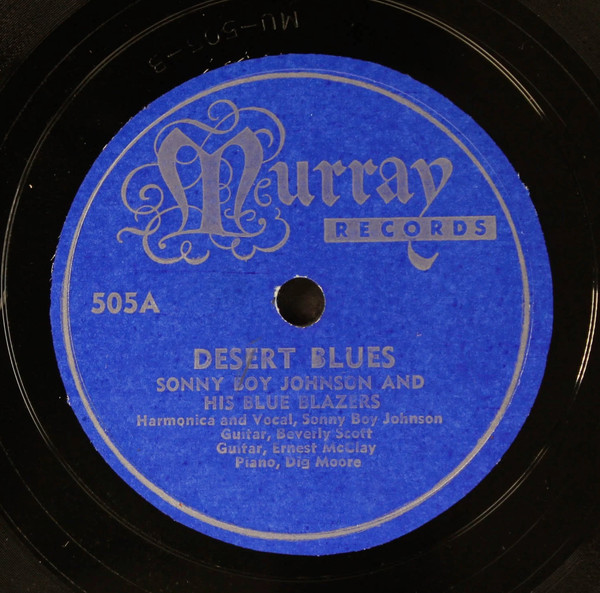
"Desert Blues" is a raw, down-home West Coast blues track by the obscure harmonica player and singer Sonny Boy Johnson (real name and biographical details largely unknown). It exemplifies the post-WWII Los Angeles blues scene's blend of country blues roots with urban energy.
Recording Session
The song was recorded in 1948 in Los Angeles for the small, shadowy Murray Records (Murray 505), paired with "Come and Go With Me." Murray was a short-lived indie label possibly tied to a grocery store operation on or near Central Avenue. Sessions were low-budget and local, often featuring musicians who played on each other's sides.
Producer: Details are scarce; John R. Fullbright distributed some material but was not a partner. The label's operations were informal, and little is known about production oversight beyond basic studio capture.
Songwriters: Credited to Sonny Boy Johnson himself. Like many blues artists of the era, he likely drew from traditional structures and personal experience, adapting country blues forms to a West Coast context. No co-writers are documented.
Musicians:
- Sonny Boy Johnson – vocals, harmonica
- Backing likely included Beverly Scott (guitar) and Ernest McClay (guitar), who collaborated on Murray sessions around the same time. Pianist Dig Moore or Louis Jackson may have been involved in related tracks. The small combo sound is typical of down-home West Coast blues.
The track has a raw, intimate feel—harmonica-driven with sparse guitar accompaniment—capturing the migration of Southern blues styles to California.
Musical Style and Analysis
"Desert Blues" is a classic slow-to-mid-tempo country blues, evoking isolation and hardship (the "desert" metaphor for emotional or literal desolation in the Southwest). Johnson's harmonica playing channels John Lee "Sonny Boy" Williamson influences—wailing, expressive lines with strong rhythmic drive. His vocals are heartfelt and direct, fitting the down-home aesthetic. The arrangement is sparse, emphasizing feel and storytelling over polish, with guitar providing steady rhythm and occasional fills. It stands as a fine example of 1940s West Coast down-home blues, bridging Delta traditions with local scenes.
Other Versions
No major commercial covers or alternate takes are widely documented. The song appears on compilations like West Coast Down Home Blues, Hollywood Blues, and Down Home Blues Classics: California & The West Coast. Its obscurity limits re-recordings, though it has been reissued for collectors of regional blues.
Legacy
Sonny Boy Johnson remains a footnote in blues history—a "forgotten hero" of the West Coast scene. "Desert Blues" and his handful of Murray sides preserve the sound of post-war Los Angeles blues clubs and small labels. His work highlights the migration of Southern musicians and styles to California, contributing to the rich tapestry alongside artists like Beverly Scott, Ernest McClay, and others on obscure imprints.
While not a chart success or major influence like contemporaries on bigger labels, tracks like this are valued by researchers and fans for their authenticity. They appear in anthologies documenting California's blues heritage, ensuring Johnson's brief recording career endures as part of the broader story of American blues diversification in the 1940s. His adoption of the "Sonny Boy" moniker nods to the harmonica tradition, linking him to earlier giants.
Overall, "Desert Blues" is a gem of raw, regional blues—testament to the vibrant, under-recorded LA scene of the era.
Suggested Listening
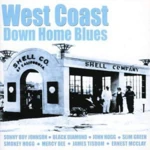 Buy from Amazon West Coast Down Home Blues - Various Artists - includes "Desert Blues" by Sonny Boy Johnson









