By the late 1960s, blues music was changing rapidly.
British rock bands were rediscovering Chicago electric blues, younger audiences were buying records by Muddy Waters and Howlin’ Wolf, and the “blues revival” was creating a new market for older artists whose careers had originally been built in the 1950s.
But few artists navigated this changing landscape as gracefully as Little Junior Parker.
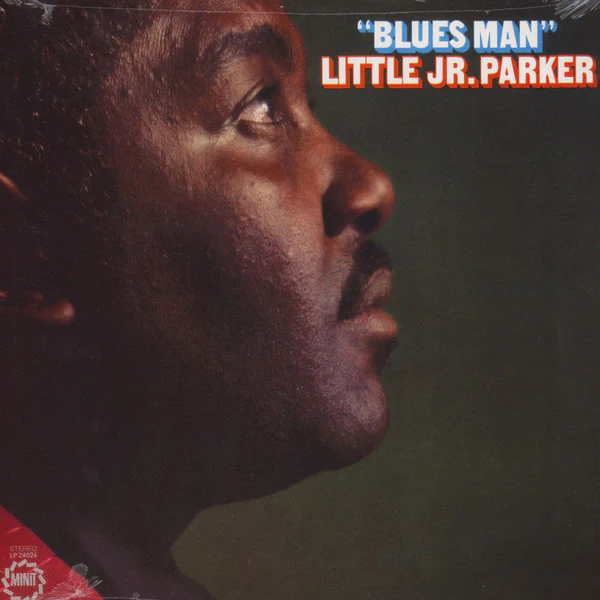
Released in 1969 on Minit Records, Blues Man stands as one of the finest late-career recordings in Parker’s catalog—a deeply sophisticated blend of Memphis blues, soul-blues, and classic electric blues traditions. Unlike the rawer harmonica-driven records of his Sun and Duke years, Blues Man presents Parker as a mature stylist: relaxed, emotionally controlled, and vocally elegant.
The album captures an artist who no longer needed to prove his intensity. Instead, Parker relied on phrasing, atmosphere, and subtle emotional shading.
In many ways, Blues Man represents the culmination of everything Parker had learned over nearly two decades in blues music.
Junior Parker Before Blues Man
Born Herman Parker Jr. in Mississippi in 1932, Junior Parker emerged during the early 1950s Memphis and West Memphis blues scene. Early recordings for Sun Records and Duke Records established him as one of the smoothest vocalists in blues history.
Unlike more aggressive blues shouters, Parker possessed what critics often described as a “velvet-smooth” voice. He could sound heartbreakingly weary without ever raising his volume.
His early classics included:
-
“Mystery Train”
-
“Feelin’ Good”
-
“Next Time You See Me”
-
“Driving Wheel”
By the 1960s, Parker increasingly moved toward soul-blues arrangements that blended traditional blues structures with contemporary R&B production. According to Bear Family Records, producer Sonny Lester later guided Parker further toward sophisticated soul-blues and pop-oriented arrangements while preserving his distinctive vocal style.
That evolution reaches full maturity on Blues Man.
The Album and Its Sessions
Blues Man was released in 1969 on Minit Records, a label associated with soul, R&B, and blues releases during the late 1960s. The album was produced during a period when Parker was balancing traditional blues material with more polished soul-oriented production aesthetics.
Although complete surviving session logs remain fragmentary, the album appears to have been assembled from late-1960s studio sessions featuring highly professional Southern session musicians working within the Memphis soul-blues circuit.
Producer Sonny Lester played a significant role in shaping Parker’s late-career sound during this era. Lester emphasized smoother arrangements, cleaner production, and crossover accessibility while allowing Parker’s blues roots to remain central.
The musicians on Blues Man reflect the polished professionalism common to Memphis and Southern R&B studios of the era:
-
Electric guitar
-
Piano and organ
-
Tight rhythm sections
-
Horn arrangements on select tracks
-
Subtle background accompaniment
Unlike Parker’s earlier raw harmonica-heavy recordings, the harmonica is used sparingly here. The focus is overwhelmingly on Parker’s singing.
And that voice had never sounded richer.
The Sound of Blues Man
The album occupies a fascinating middle ground between:
-
Traditional Memphis blues
-
Soul-blues
-
Urban electric blues
-
Late-1960s Southern R&B
Parker avoids the dramatic vocal explosions associated with many blues singers. Instead, he sings with restraint and conversational intimacy.
That understated delivery becomes the emotional center of the album.
The arrangements are sophisticated but never excessive. Guitar fills remain tasteful, rhythm sections stay relaxed, and the production leaves space around Parker’s vocals.
This restraint gives the record its emotional depth.
Track-by-Track Breakdown
1. “Worried Life Blues”
Songwriter: Big Maceo Merriweather
Originally recorded in 1941 by Big Maceo, “Worried Life Blues” had already become one of the great standards of postwar blues by the time Parker recorded it.
Parker’s interpretation slows the emotional temperature compared to earlier Chicago versions. Rather than emphasizing desperation, he delivers the lyrics with exhausted resignation.
The session arrangement is sparse:
-
Slow blues rhythm
-
Tasteful electric guitar fills
-
Light piano accompaniment
-
Minimal percussion emphasis
The musicians deliberately avoid overpowering Parker’s vocal phrasing.
His delivery transforms the song from a dramatic lament into something deeply reflective.
2. “Let the Good Times Roll”
Songwriters: Sam Theard, Fleecie Moore
This classic jump-blues standard receives a smoother, more relaxed treatment than the upbeat Louis Jordan-style versions associated with the song.
Parker turns the track into a late-night blues-soul groove.
The rhythm section plays with remarkable restraint:
-
Walking bass
-
Gentle shuffle rhythm
-
Light guitar comping
-
Organ textures underneath the vocal
Rather than sounding celebratory, Parker’s version feels bittersweet—as though the “good times” are already slipping away.
That emotional ambiguity becomes one of the album’s defining qualities.
3. “Every Night and Every Day”
Songwriter: Junior Parker
One of the album’s strongest examples of Parker’s mature songwriting style.
The track blends blues structure with soul phrasing and features:
-
Slow-burning rhythm guitar
-
Subtle horn textures
-
Smooth vocal layering
-
Memphis-style groove
Parker’s vocal control is extraordinary here. He never oversings the material, allowing emotional nuance to emerge through timing and phrasing rather than power.
This was one of Parker’s greatest strengths throughout his career.
4. “Drivin’ Wheel”
Songwriter: Roosevelt Sykes
Perhaps Parker’s most famous blues performance, “Drivin’ Wheel” had already become strongly associated with him long before Blues Man appeared.
This version revisits the song with greater polish and maturity.
Compared to his earlier Duke recording:
-
The tempo is steadier
-
The arrangement is smoother
-
The rhythm section is more soul-oriented
-
The vocal phrasing is more relaxed
Parker no longer sounds hungry or ambitious.
He sounds experienced.
That difference changes the emotional meaning of the song entirely.
5. “I Just Got to Know”
Songwriter: Junior Parker
This track leans furthest toward soul-blues.
The production features:
-
Memphis-style electric piano
-
Tight snare drum accents
-
Smooth guitar fills
-
Layered rhythm textures
Parker’s vocal delivery almost anticipates the sophisticated blues-soul crossover styles later perfected by artists such as Bobby “Blue” Bland.
The emotional tone is conversational rather than confrontational.
Even in heartbreak, Parker remains controlled.
6. “Next Time You See Me”
Songwriters: Earl Forest, Bill Harvey
One of Parker’s signature songs receives another reinterpretation here.
Originally a major Duke Records hit during the 1950s, “Next Time You See Me” helped establish Parker as one of the most commercially successful blues vocalists of his era.
The Blues Man version slows the groove slightly and emphasizes:
-
Richer bass tones
-
Cleaner guitar production
-
Fuller rhythm arrangements
Parker’s vocal maturity transforms the song.
The youthful confidence of the original becomes older, wiser heartbreak.
7. “Get Away Blues”
Songwriter: Junior Parker
This track returns more directly to blues structure.
The session musicians create a restrained but highly effective groove:
-
Rolling bass line
-
Clean electric guitar
-
Light shuffle drumming
-
Sparse piano accompaniment
Parker’s harmonica appears more prominently here than elsewhere on the album, though still used sparingly.
The restraint is crucial.
By limiting the harmonica, Parker ensures every phrase carries emotional weight.
8. “How Long Can This Go On”
Songwriter: Leroy Carr
One of the album’s emotional high points.
Leroy Carr compositions always demanded subtlety rather than vocal force, making Parker an ideal interpreter.
The arrangement emphasizes:
-
Minor-key tension
-
Slow tempo
-
Atmospheric guitar phrasing
-
Spacious production
Parker’s voice sounds almost conversational, which makes the emotional pain feel even more intimate.
This performance demonstrates why Parker remains one of the most underrated blues vocalists in history.
9. “In the Dark”
Songwriters: Lil Green, Allen Bunn
Originally associated with Lil Green, this song allows Parker to move even further into blues-jazz territory.
The arrangement features:
-
Lounge-style piano
-
Soft drum brushes
-
Elegant guitar accompaniment
-
Smoky nightclub atmosphere
Parker sings with remarkable delicacy.
The performance reveals how strongly jazz phrasing influenced his vocal style during the late 1960s.
10. “I Found a Good Thing”
Songwriter: Junior Parker
The album closes on one of its warmest and most optimistic performances.
The groove is relaxed and soulful:
-
Mid-tempo rhythm
-
Memphis soul guitar textures
-
Warm bass presence
-
Gentle percussion
Parker’s voice sounds content rather than wounded—a rare emotional mood for a blues album.
Ending the record this way gives Blues Man a feeling of emotional resolution rather than despair.
Sonny Lester’s Production
Producer Sonny Lester deserves substantial credit for the album’s coherence.
Lester understood that Parker’s greatest strength was not raw blues intensity but elegance. Rather than forcing Parker into louder or more aggressive contemporary blues-rock styles, Lester built arrangements around:
-
Vocal clarity
-
Emotional subtlety
-
Groove
-
Sophisticated pacing
The production never sounds dated or gimmicky.
Instead, it preserves Parker’s mature artistry while updating the sonic environment around him.
The Musicians and Ensemble Playing
Although complete session documentation remains incomplete, the musicians throughout Blues Man display the hallmarks of elite Southern studio professionals:
-
Tight rhythmic discipline
-
Economical phrasing
-
Soul-influenced blues accompaniment
-
Dynamic restraint
Nobody overplays.
That professionalism gives Parker enormous emotional space.
The album succeeds because every musician understands the same central principle: the voice comes first.
The Legacy of Blues Man
Blues Man never achieved the commercial visibility of Parker’s 1950s hits, but its reputation has steadily grown among blues collectors and historians.
Today, many listeners consider it one of Parker’s finest late-career statements because it captures:
-
His extraordinary vocal maturity
-
The transition between blues and soul-blues
-
The refinement of Memphis electric blues
-
The elegance of late-1960s Southern studio production
The album also demonstrates something increasingly rare in blues music:
confidence through restraint.
Junior Parker never needed to shout.
He could communicate heartbreak, exhaustion, tenderness, and resilience with little more than timing, phrasing, and tone.
That ability made him one of the great stylists in blues history.
And Blues Man may be the purest expression of that artistry ever recorded.