Overview and Historical Context
In Session is a landmark live blues album featuring the only known recorded collaboration between blues guitar titans Albert King (1923–1992) and Stevie Ray Vaughan (1954–1990). Recorded on December 6, 1983, at CHCH-TV studios in Hamilton, Ontario, Canada, it was originally produced for a television special. The audio was later released by Stax Records on August 17, 1999, and has since seen deluxe reissues (including a 2024 expanded edition with additional tracks and a full concert presentation).
At the time, Albert King was 60 years old and a seasoned blues legend known for his powerful, expressive left-handed (upside-down) playing on a right-handed Gibson Flying V. Stevie Ray Vaughan was 29, riding high on the success of his debut album Texas Flood (1983) and emerging as the leading figure in the blues revival. King had previously jammed with a young Vaughan in Texas, and their on-stage chemistry reflects a mentor-protégé dynamic filled with mutual respect, banter, and fiery guitar duels.
The session captures an intimate, live-in-the-studio atmosphere with minimal overdubs, emphasizing raw interplay between the two guitarists.
The Sessions
The performance was taped live for television in a single day at CHCH-TV studios. It features a relaxed, conversational format with spoken "pep talks" and storytelling between songs, giving it the feel of a private jam session rather than a formal concert. The band played tightly behind the two stars, allowing space for extended improvisations and guitar battles.
Producer: Ian Anderson (original recordings) and Bill Belmont (producer for the album release). Engineer: Doug McClement. Remixing (later editions): Stephen Hart.
The 2024 deluxe edition includes previously unreleased audio tracks and offers the complete show for the first time.
Musicians
- Albert King – Electric guitar, vocals (primary lead vocalist on most tracks)
- Stevie Ray Vaughan – Electric guitar, vocals on "Pride and Joy"
- Tony Llorens – Piano, organ
- Gus Thornton – Bass
- Michael Llorens – Drums
This core rhythm section provided a solid, swinging foundation typical of King's working bands.
Songwriters and Style
The set list blends classics from the blues canon with signature songs from both artists. Songwriters include legends like T-Bone Walker, Blind Lemon Jefferson, and Albert King himself. The music is rooted in electric blues with elements of soul, R&B, and Texas/Chicago styles. Extended improvisations and guitar call-and-response are highlights, showcasing King's stinging, vocal-like bends against Vaughan's faster, more Texas-flavored Stratocaster attack.
Track-by-Track Breakdown (Standard 1999 Release)
1. Call It Stormy Monday (Aaron “T-Bone” Walker) – 8:59
Songwriter: Aaron “T-Bone” Walker (1947 classic). A slow, atmospheric 12-bar blues shuffle in a relaxed minor-to-major feel. Albert King opens with his signature deep, commanding vocals and stinging, vocal-like guitar phrases played on his left-handed Gibson Flying V (strung upside-down). Stevie Ray Vaughan responds with tasteful, supportive fills and then takes a fluid, Texas-flavored solo full of expressive bends and vibrato on his Stratocaster. The interplay is elegant and respectful rather than competitive. Tony Llorens’ piano adds jazzy touches, while Gus Thornton’s bass and Michael Llorens’ drums maintain a laid-back, swinging groove. This track beautifully sets the tone for the mentor-protégé dynamic.
2. Old Times [talk] – 1:15
Spoken interlude featuring warm conversation between Albert King and Stevie Ray Vaughan. King reminisces about first meeting a young Vaughan in Texas clubs (such as Antone’s in Austin) and praises his talent. Vaughan responds with humility and admiration. This segment humanizes the session, showing genuine affection and breaking down generational barriers. No music, purely dialogue that adds emotional context to the performances.
3. Pride and Joy (Stevie Ray Vaughan) – 5:57
Songwriter: Stevie Ray Vaughan. The only track on which Vaughan takes full lead vocals. A brisk, upbeat Texas shuffle from his 1983 debut album Texas Flood. Vaughan delivers energetic vocals and unleashes his signature fiery riffs and fast solos. Albert King provides rhythmic support on guitar and offers enthusiastic spoken encouragement (“Yeah, play it, little brother!”). The rhythm section locks in tightly, with Tony Llorens’ organ adding soulful swells. This performance captures Vaughan at the height of his early breakthrough, performing his breakout hit in front of his idol.
4. Ask Me No Questions (Albert King) – 5:02
Songwriter: Albert King. A solid, mid-tempo straight blues. King handles lead vocals with powerful, authoritative delivery. Both guitarists engage in interactive call-and-response fills throughout the verses. Vaughan’s solos show clear influence from King while adding his own sharper attack. The band maintains a steady, danceable pocket. This track highlights King’s strength as a songwriter and bandleader.
5. Pep Talk [talk] – 0:51
Brief, light-hearted spoken segment. Albert King gives encouragement to the band and Vaughan, urging everyone to keep the energy high. It reinforces the informal, rehearsal-like atmosphere of the television taping and King’s role as the session’s guiding figure.
6. Blues at Sunrise (Albert King) – 15:08
Songwriter: Albert King. The undisputed centerpiece and longest track. A slow, brooding minor blues that becomes an extended epic jam. King opens with expressive vocals and guitar, then the two guitarists launch into prolonged, intense call-and-response soloing. Vaughan pushes the intensity with rapid-fire lines and deep bends, while King answers with soulful, vocal-mimicking phrases and wide vibrato. The rhythm section provides a rock-solid foundation that gradually builds in dynamics. Often cited as the session’s musical and emotional climax, this track showcases raw improvisation and the passing of the blues torch.
7. Turn It Over [talk] – 0:51
Short transitional banter. King gives a quick cue to the band to shift gears into the next up-tempo number, maintaining the live, conversational flow of the original television recording.
8. Overall Junction (Albert King) – 8:19
Songwriter: Albert King. A driving, up-tempo instrumental (sometimes called “Overall Junction Blues”). This is a high-energy showcase for the full band. King and Vaughan trade quick, rhythmic guitar licks and short solos over a swinging shuffle. Tony Llorens’ piano is particularly prominent here, adding boogie-woogie flavor. The track demonstrates both guitarists’ rhythmic precision and ability to push each other in a faster context.
9. Match Box Blues (Blind Lemon Jefferson) – 7:38
Songwriter: Blind Lemon Jefferson (1927 original). A modern electric update of the classic country-blues standard. King leads with gritty vocals and slide-influenced phrasing. Vaughan adds creative, rocking solos that blend Chicago and Texas influences. The rhythm section swings hard, turning the old tune into a lively ensemble piece. This track pays homage to the deep roots of the blues while showcasing how both artists modernized the tradition.
Additional Notes on the Original Release
Some editions of the 1999 release also include a short “Who Is Stevie?” banter track, where King playfully introduces or teases Vaughan. The original version focused on a concise, high-impact listening experience (approximately 60 minutes) rather than the complete raw session. The 2024 Deluxe Edition later added “Born Under a Bad Sign,” “Texas Flood,” “I’m Gonna Move to the Outskirts of Town,” and more banter for the full unedited show.
Additional tracks in deluxe editions include:
- Born Under a Bad Sign (Booker T. Jones / William Bell) –
Albert King’s signature anthem and a powerful opener. King delivers gritty, authoritative vocals with his trademark stinging, vocal-like guitar bends on the Flying V. Vaughan jumps in with fiery Texas Stratocaster solos, showing deep influence while adding his own intensity. The rhythm section drives a solid shuffle. This marks the audio debut of the full track.
- Texas Flood (Larry Davis / Joseph Scott) –
A monumental, extended slow blues. Vaughan takes center stage on his signature song with passionate, expressive playing full of deep bends and vibrato. King shares memories of jamming with a young “Little Stevie” in Texas clubs like Antone’s. The nearly 20-minute runtime allows for epic guitar trading and emotional depth. Another audio debut from the session.
- I’m Gonna Move to the Outskirts of Town (Casey Bill Weldon) –
A slow-burning, extended jam (one of the longest in the set). Features deep emotional playing and more guitar dueling. Another audio debut, highlighting the session’s exploratory nature.
Buy this Album on Amazon
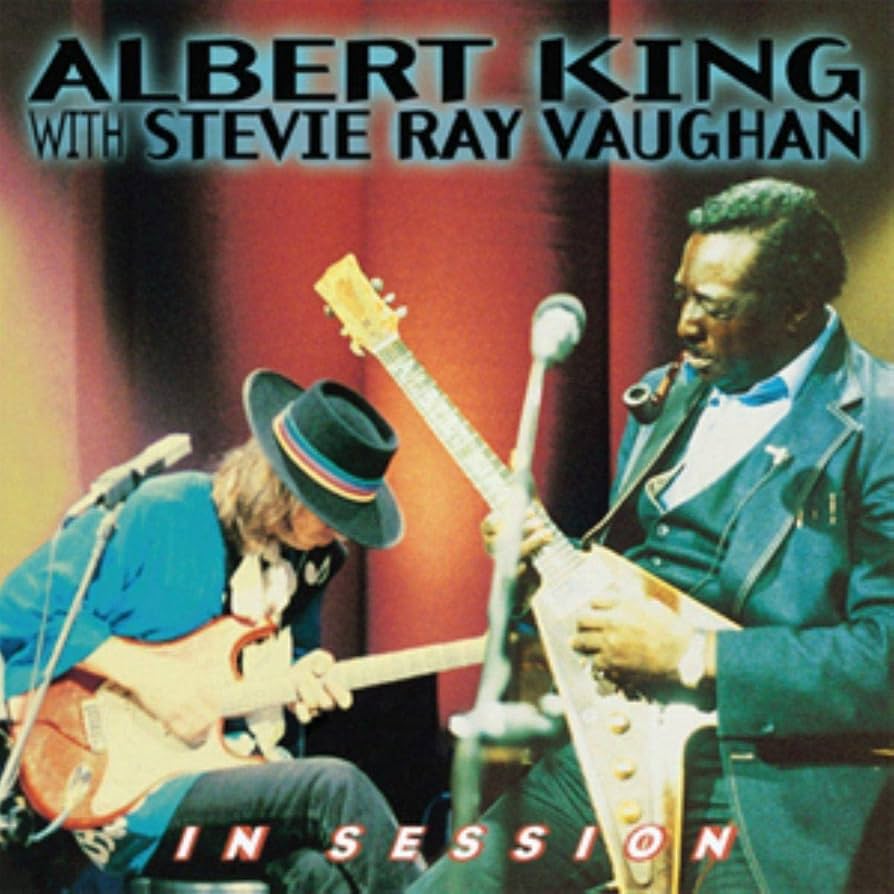 In Session: Albert King and Stevie Ray Vaughan (Deluxe Edition)
In Session: Albert King and Stevie Ray Vaughan (Standard Edition)
Summary of Musical Approach
The musical approach on In Session is defined by spontaneous interplay, respectful dialogue, and complementary contrasting styles rather than competition. Albert King’s style emphasizes economy, deep emotional expression, wide vibrato, and vocal-like guitar phrasing delivered with stinging attack on his upside-down Flying V. Stevie Ray Vaughan brings faster, more technically flashy Texas Stratocaster techniques — rapid-fire lines, aggressive bends, and high-energy shuffle rhythms — while always deferring to King’s lead.
The rhythm section (Llorens brothers and Thornton) provides a consistent, swinging foundation that stays in the pocket, allowing the guitarists space for extended improvisation. Arrangements favor long-form jams (especially on slow blues) over rigid structures, with frequent call-and-response exchanges that mirror a conversation. The inclusion of spoken “pep talks” and reminiscences creates an intimate, documentary-like feel, blending performance with mentorship.
This approach has made In Session a benchmark for blues collaboration and an essential document of 1980s blues revival energy.
Legacy and Influence
In Session stands as a testament to the passing of the blues torch from one generation to the next. King as the seasoned master sharing wisdom, Vaughan as the respectful heir injecting youthful fire. It humanizes both legends through their genuine rapport and delivers masterful music that continues to inspire guitarists and blues fans. The result is authentic, unpolished electric blues that prioritizes feel, dynamics, and genuine musical communication over studio perfection. Deluxe editions have made the full historical document available, cementing its status as essential listening.