When I Lay My Burden Down: Fred McDowell and Friends – A Testament to Delta Blues Tradition
Overview and Historical Context
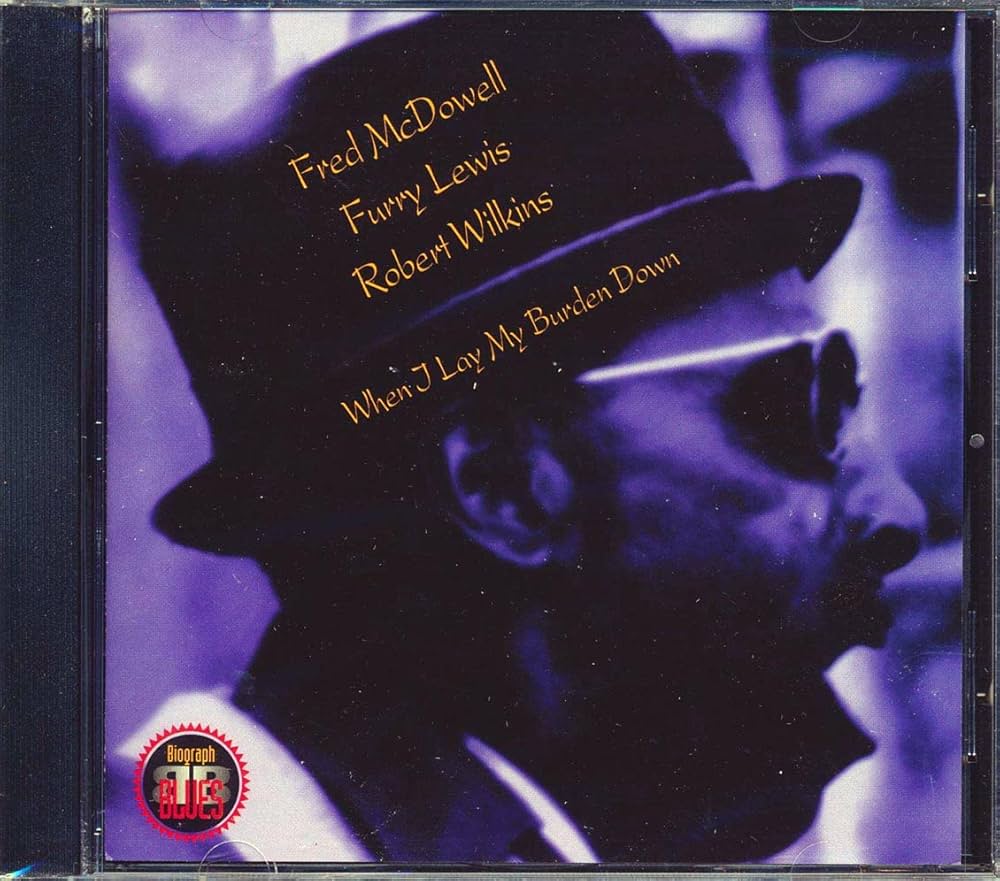
When I Lay My Burden Down is a 1970 compilation album (originally on Testament Records, later reissued on Biograph and other labels) showcasing the deep Delta blues and spiritual traditions of Mississippi. It primarily features Mississippi Fred McDowell (1904–1972), with additional tracks by fellow bluesmen Furry Lewis and Rev. Robert Wilkins. The album title comes from McDowell's powerful gospel-blues performance of the traditional song "(Glory, Glory Hallelujah) When I Lay My Burden Down."
This release captures the raw, intimate style of the 1960s blues revival, when field recordings and home sessions brought authentic Mississippi artists to wider audiences. It bridges secular blues and sacred spirituals, reflecting McDowell's own deep-rooted connection to both.
Sessions, Producer, and Musicians
The core sessions for McDowell's contributions were recorded by Chris Strachwitz (founder of Arhoolie Records) on February 13, 1964, at Fred McDowell's home near Como, Mississippi. Strachwitz, a key figure in documenting traditional blues, captured McDowell in a natural, unpolished setting with minimal equipment. Additional material on related releases comes from 1965 sessions.
- Producer/Recorder: Chris Strachwitz (field recordings, liner notes, photography).
- Musicians (McDowell tracks):
- Fred McDowell – Vocals, acoustic guitar (bottleneck/slide style, often in open tunings like Open E or Open D).
- Annie Mae McDowell (Fred's wife) – Vocals on the title track "When I Lay My Burden Down."
- Other artists on the compilation (Furry Lewis and Robert Wilkins) were recorded in separate Memphis-area sessions around the late 1960s/early 1970s.
The sound is intimate and direct: solo guitar and voice with strong rhythmic drive, percussive slide work, and emotional delivery. No full band — pure solo Delta style.
Songwriters
Most tracks are traditional or adapted by the artists (public domain or arranged). McDowell often claimed or personalized traditional material. Publishing typically credits Tradition Music Co. (associated with Strachwitz/Arhoolie).
Detailed Track-by-Track Breakdown
Track listings vary slightly by edition, but the following represents the standard Testament/Biograph sequence with McDowell-focused material. All McDowell tracks below were recorded February 13, 1964, at his home in Como, Mississippi, unless noted otherwise.
1. If You See My Baby (Fred McDowell) – ~2:16 Recorded February 13, 1964. An upbeat, rhythmic blues with McDowell’s percussive guitar and confident vocal. The home recording captures natural reverb and his signature driving slide work. Strachwitz’s production keeps the focus on raw energy.
2. John Henry (Traditional) – ~2:57 Recorded February 13, 1964. Classic folk-blues ballad. McDowell’s bottleneck slide creates dramatic tension, evoking work-song roots. His strong rhythmic foot-tapping is audible, adding percussive depth in the intimate setting.
3. Louise (Fred McDowell) – ~3:58 Recorded February 13, 1964. One of McDowell’s most personal and haunting signature songs. Expressive slide guitar with a hypnotic, droning quality. His plaintive vocals convey deep melancholy, making this a standout emotional performance from the home session.
4. 61 Highway (Fred McDowell / Traditional) – ~3:06 Recorded February 13, 1964. Referencing U.S. Highway 61 in Mississippi. Up-tempo blues with strong bottleneck slide and rhythmic drive. A live staple for McDowell, captured here with infectious energy typical of his party-playing style.
5. Big Fat Mama (Fred McDowell / Traditional) – ~2:08 Recorded February 13, 1964. Playful, humorous blues number. McDowell’s guitar is bouncy and confident, showcasing his versatility in lighter material alongside deeper blues.
6. When I Lay My Burden Down (Traditional, arr. Fred McDowell) – 2:40 Recorded February 13, 1964. The title track and emotional centerpiece. A gospel-spiritual featuring call-and-response with Annie Mae McDowell on harmony vocals. McDowell’s slide is sparse and poignant, emphasizing spiritual fervor. This track beautifully illustrates the sacred-secular overlap in his music.
7. Dankin’ Farm (Fred McDowell) – ~2:53 Recorded February 13, 1964. Narrative blues reflecting rural life. Strong vocal storytelling paired with rhythmic slide guitar in the home environment.
8. Jesus Is On The Main Line (Traditional) – ~3:xx Recorded February 13, 1964. Uplifting gospel-blues with call-and-response urgency. McDowell’s voice and steady guitar create an almost church-like intensity despite the domestic setting.
9. See What My Lord Has Done (Traditional) – ~xx Recorded February 13, 1964. Devotional spiritual showcasing McDowell’s expressive vocals and subtle slide embellishments. Highlights his deep gospel roots.
Subsequent Tracks (Non-McDowell): Typically include Furry Lewis pieces such as “Casey Jones (Ramblin’ Mind)” and Rev. Robert Wilkins material, recorded in separate Memphis sessions around 1968–1970.
Summary of Musical Approach and Legacy
Fred McDowell’s performances on When I Lay My Burden Down exemplify the distinctive North Mississippi hill country blues style — a hypnotic, trance-like approach that differs from the more structured Delta blues of artists like Charley Patton or Robert Johnson. His musical approach is defined by several key elements:
- Slide Guitar Technique: McDowell was a master of bottleneck slide, often played in open tunings (Open E and Open D being favorites). His phrasing is melodic yet percussive, with a droning, sustained quality that creates a hypnotic effect. He frequently used the slide to mimic vocal inflections, producing a “talking guitar” sound.
- Rhythmic Drive: Even in solo performance, McDowell maintained a powerful rhythmic foundation through heavy foot-tapping (clearly audible in Strachwitz’s home recordings) and strumming patterns that function almost like a drum. This gives his music a danceable, propulsive quality suitable for both juke joints and church settings.
- Vocal Style: His voice moves seamlessly between gritty blues moans and fervent gospel exhortations. On sacred tracks like “When I Lay My Burden Down” and “Jesus Is On The Main Line,” he employs call-and-response patterns rooted in African American church traditions.
- Recording Aesthetic: Chris Strachwitz’s field-recording approach on February 13, 1964, preserved the music in its most authentic form — no overdubs, minimal microphones, and the natural ambiance of McDowell’s living room. This creates an intimate, documentary-like listening experience that feels like sitting in on a private performance.
Legacy: Released in 1970 during the height of the folk-blues revival, the album played a significant role in introducing McDowell’s music to a new generation of listeners and musicians. It helped cement his status as one of the most important “rediscovered” artists of the 1960s. The Rolling Stones famously covered McDowell’s “You Gotta Move” (from a different session) on their 1971 album Sticky Fingers, bringing his influence into mainstream rock. Other artists such as Bonnie Raitt, Ry Cooder, and Eric Clapton have cited McDowell as a major inspiration for their slide guitar techniques and approach to traditional material.
When I Lay My Burden Down remains a cornerstone document of living Mississippi blues tradition in the post-WWII era. It illustrates how blues and gospel coexisted in the daily life of Southern Black musicians, blurring sacred and secular boundaries. The album’s raw honesty continues to influence modern hill country blues practitioners (such as R.L. Burnside and Junior Kimbrough’s successors) and roots-oriented artists worldwide. It stands as both a personal portrait of McDowell in his natural environment and a vital cultural artifact preserving a rich oral tradition that might otherwise have faded.
For enthusiasts and scholars, these 1964 recordings offer one of the purest windows into the uncommercialized sound of traditional Mississippi blues just before wider electrification and modernization changed the landscape.