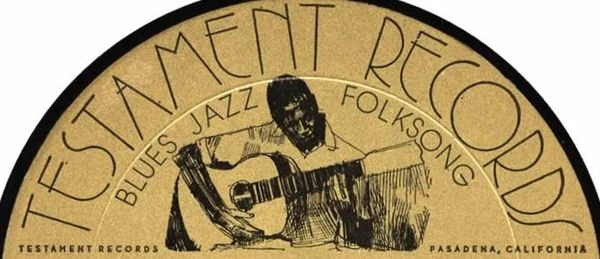
Testament Records was a small but influential independent American label specializing in authentic blues, gospel, and other American roots music. Active primarily from 1963 to the mid-1970s, it documented both rediscovered pre-war legends and active post-war Chicago and Delta musicians during the height of the 1960s folk-blues revival. With around 30 LPs released, Testament prioritized field recordings, raw performances, and cultural preservation over commercial polish.
History and Ownership
Pete Welding (1935–1995), a Philadelphia-born journalist, editor for Down Beat magazine, and blues historian, founded Testament Records in 1963. Inspired by Bob Koester and Delmark Records after moving to Chicago in 1962, Welding established the label to issue his own field and studio recordings of blues and Black folk music. The label operated from bases in Philadelphia, Chicago, and later Pasadena, California.
Welding served as the primary owner, producer, and driving force. He was known for discovering and recording talent in unconventional settings, such as street performers. Big Joe Williams acted as a key talent scout, helping organize sessions and recruiting other musicians. Testament maintained a low-profile, scholarly approach with detailed liner notes, reflecting Welding’s background as a writer and archivist.
Field Recording Practices
Welding began his recording work in Philadelphia around 1961–62, initially focusing on street musicians. He soon discovered that studio environments intimidated many performers and produced less natural results. He shifted to recording in musicians’ homes or informal settings, which allowed for greater comfort and spontaneity.
He favored portable tape recorders (common in the era, likely reel-to-reel models) suitable for field use. While specific microphone models are not extensively documented in public sources, his techniques aligned with best practices of the time: placing microphones to capture the full acoustic character of voice, guitar, and other instruments without heavy processing. Sessions often featured minimal intervention, preserving the natural ambiance, room sound, and performance energy characteristic of traditional blues.
Key elements of his fieldwork:
- Talent Scouting and Collaboration: Big Joe Williams served as a key scout, helping organize sessions and recruit artists. Welding also incorporated field recordings made by others (e.g., David Evans’ Mississippi fife and drum bands, George Mitchell’s Peg Leg Howell sides, and Bill Koon’s Eddie Lee “Mustright” Jones recordings), demonstrating a collaborative, network-based approach to archiving.
- Spontaneity and Context: Sessions captured not just polished performances but conversations, stories, and cultural insights. He conducted numerous interviews alongside musical recordings, preserving oral history.
- Releasing Others’ Material: Welding actively sought to disseminate important archival tapes, notably releasing Alan Lomax’s 1940s Stovall’s Plantation recordings of Muddy Waters on Testament (Muddy Waters: Down on Stovall’s Plantation, T-2210, 1966), with proper credit to the Library of Congress.
Documentation and Liner Notes
A hallmark of Welding’s archival technique was meticulous documentation. Testament albums featured detailed liner notes providing biographical information, historical context, lyrics (where applicable), and session details. These notes reflected his background as a Down Beat editor and blues historian, elevating the releases beyond mere recordings to scholarly resources.
He maintained comprehensive records: tape boxes often included handwritten notes, dates, locations, and performer details. Many of his photographs (black-and-white prints, negatives, and color slides) documented musicians in their environments, adding a visual archive to the audio one.
The Pete Welding Collection at the Library of Congress
Welding’s lifelong commitment to archiving culminated in his vast personal collection, acquired by the American Folklife Center at the Library of Congress (AFC 2011/053) in 2011. It includes:
- Over 800 sound tape reels (blues, jazz, interviews).
- Hundreds of photographs and negatives.
- Manuscript materials: articles, drafts, liner notes, and performer files.
- Extensive correspondence and research notes.
The collection is meticulously organized into series (e.g., writings, Testament Records materials, sound recordings by artist or event), with detailed inventories, engineer’s notes from digitization, and cross-references. This structure ensures accessibility for researchers while preserving original context. Welding’s habit of thorough labeling and note-taking on tape boxes facilitated this archival processing.
The label ceased new releases around 1977. In 1994, Hightone Records acquired the catalog and reissued nearly all albums on CD, often with bonus tracks. Many recordings and related materials are preserved in the Pete Welding Collection at the Library of Congress. Welding was posthumously inducted into the Blues Hall of Fame in 1996 for his production and media contributions.
Key Artists and Recordings
Testament Records emphasized raw, authentic performances captured in informal sessions, homes, clubs, and field settings. Pete Welding’s production style favored spontaneity and cultural context, with detailed liner notes. Many albums were later reissued by Hightone Records on CD with bonus tracks.
Mississippi Fred McDowell: One of Testament’s most acclaimed releases was My Home Is in the Delta (T-2201, 1960s), showcasing his hypnotic slide guitar and country-blues mastery. Another highlight is Amazing Grace (T-2219), featuring sacred and secular material, often with his wife Annie Mae McDowell. McDowell’s Testament sides highlight his powerful voice, rhythmic drive, and deep Mississippi roots, making him a cornerstone of the label’s country blues output.
Big Joe Williams: A central figure and talent scout for the label, Williams recorded multiple albums and helped organize sessions. Key releases include A Man Amongst Men, Back to the Country (T-2205), and These Are My Blues. His raw, nine-string guitar style and gritty Delta vocals shine through in spontaneous, storytelling performances. Welding funded Williams-led recording trips that captured additional artists.
Robert Nighthawk: His album Bricks in My Pillow stands as one of Testament’s finest. Recorded with Johnny Young and Big John Wrencher, it features masterful slide and standard guitar work on tracks like “Bricks in My Pillow,” “Black Angel Blues,” and “Crying Won’t Help You.” Welding described it as possibly his favorite session, praising Nighthawk’s smooth, inventive phrasing and postwar bottleneck mastery.
Johnny Shines: A Robert Johnson associate, Shines delivered powerful Delta blues on Standing at the Crossroads and The Johnny Shines Band. His commanding voice and expressive guitar work brought authentic pre-war Delta traditions to 1960s recordings.
J.B. Hutto and His Hawks: Captured the raw energy of Chicago slide blues in gritty, club-style performances. Albums showcase Hutto’s fiery slide guitar and passionate vocals, representing the electrified Chicago scene.
Otis Spann: Muddy Waters’ longtime pianist offered sophisticated yet deeply emotional Chicago blues on Otis Spann’s Chicago Blues (T-2211). Solo and ensemble sessions highlight his barrelhouse piano, rich vocals, and interplay with other musicians.
Doctor Isaiah Ross (Doctor Ross): The one-man band impressed with his multi-instrumental virtuosity—harmonica, guitar, and foot percussion—on Call the Doctor. His energetic, versatile performances blended blues, boogie, and showmanship.
David “Honeyboy” Edwards: Delta legend whose autobiographical and traditional tracks preserved early 20th-century styles in intimate settings.
Sleepy John Estes: Featured in recordings highlighting his distinctive high-pitched vocals, narrative songs, and collaborations with partners like Yank Rachell or Hammie Nixon.
Other Significant Artists and Releases:
- Peg Leg Howell: Early release of pre-war style country blues.
- Blind Connie Williams: Street singer with poignant performances.
- Johnny Young: Mandolin and guitar player featured in various sessions and compilations.
- Floyd Jones and Eddie Taylor: Strong electric Chicago blues outings.
- Houston Stackhouse, Bud Spires, Jimmy Walker (boogie-woogie pianist), Carl Martin (rediscovered Piedmont bluesman), Big John Wrencher, and Maxwell Street Jimmy.
- The Chicago String Band: Old-time quartet blending blues with string-band traditions.
Notable Compilations and Special Projects:
- Can’t Keep from Crying: Topical Blues on the Death of President Kennedy (1964): Urgent, socially conscious performances by Big Joe Williams, Otis Spann, Johnny Young, John Lee Granderson, and others.
- Modern Chicago Blues and other anthologies showcasing the vibrant 1960s scene.
- Fife and drum band collections from Mississippi (e.g., involving Otha Turner influences), blending blues with Southern folk traditions.
- Muddy Waters: Down on Stovall’s Plantation — Historic Alan Lomax field recordings from the 1940s, made available through Welding’s efforts.
These recordings, often made with minimal production, captured a transitional era in blues—preserving rural traditions while documenting urban evolution. They remain valued by collectors, scholars, and fans for their honesty and historical importance. Many are available via Hightone CD reissues.
Selected Discography
 Testament Records Sampler Buy from Amazon
Legacy
Though small-scale, Testament Records filled an important niche by documenting living traditional blues artists at a time when major labels focused elsewhere. Its recordings captured the transition from rural to urban blues and preserved styles that influenced the folk revival, British blues boom, and rock. Hightone’s CD reissues brought the catalog to new audiences, and many titles remain valued by collectors and scholars.
Pete Welding’s work as a producer, writer, and archivist—alongside his Testament output—left a lasting mark on blues documentation. The label exemplified the dedicated, non-commercial spirit of 1960s roots revivalism and continues to serve as a rich resource for understanding mid-20th-century American blues.