Folkways Records, founded in 1948 by Moses “Moe” Asch, was never a conventional commercial label. Its mission was to create a comprehensive “sound encyclopedia of the world,” documenting folk, traditional, and vernacular musics with an emphasis on cultural preservation over profit. Blues formed a cornerstone of this vision. Through field recordings, studio sessions, and reissues of earlier material, Folkways captured both pre-war legends and post-war performers, preserving raw, authentic performances that influenced the folk-blues revival and beyond.
History, Ownership, and Blues Focus
Moses Asch (1905–1986), drawing from his earlier Asch and Disc labels where he had already recorded Lead Belly, partnered with Marian Distler to launch Folkways in New York. Asch’s philosophy ensured no title was ever deleted from the catalog—a policy maintained today by the Smithsonian Institution, which acquired the entire Folkways catalog in 1987 after Asch’s death. The Smithsonian Folkways Recordings continues to reissue and expand the blues holdings while keeping every album available.
Unlike major labels chasing hits, Folkways prioritized context: albums featured extensive liner notes, lyrics, photographs, and historical essays. Blues scholar Samuel Charters, along with others like Alan Lomax and Harry Smith, played key roles in curating blues material. The label released hundreds of blues-related recordings across solo artists, duos, ensembles, and anthologies, spanning Delta, Piedmont, Chicago, and Texas styles.
Key Blues Artists and Recordings
Folkways’ blues catalog is deep and diverse, emphasizing traditional and acoustic styles that might otherwise have been lost to commercial trends.
Lead Belly (Huddie Ledbetter): A cornerstone artist whose extensive recordings with Moses Asch formed the foundation of Folkways’ blues holdings. Many 1940s sessions from Asch’s earlier labels were reissued or expanded on Folkways. Key releases include Leadbelly Sings Folk Songs and the monumental 5-CD box set Lead Belly: The Smithsonian Folkways Collection (2015), which compiles 108 tracks (including 16 previously unreleased) spanning over five hours of music. Standout songs feature enduring classics such as “Goodnight Irene,” “The Midnight Special,” “The Bourgeois Blues,” “Fannin’ Street,” and “Black Girl (Where Did You Sleep Last Night).” These capture Lead Belly’s powerful 12-string guitar work, deep baritone voice, and vast repertoire blending blues, folk, spirituals, and work songs.
Big Bill Broonzy: A pivotal bridge between rural country blues and urban Chicago styles, Broonzy received sympathetic treatment on Folkways during the folk revival. Major albums include Big Bill Broonzy Sings Folk Songs (recorded 1962, reissued on vinyl), featuring strong performances of traditional blues, gospel, and folk numbers like “Mule-Ridin’ Blues,” “John Henry,” and “Glory of Love.” Another key release is the 2-CD set Trouble in Mind (2000 reissue of 1956–57 sessions), showcasing his authoritative guitar and vocals. Broonzy also appeared in Charters’ anthologies and collaborative sessions with Sonny Terry and Brownie McGhee.
Sonny Terry & Brownie McGhee: The popular Piedmont-style duo brought energetic harmonica-and-guitar blues to wide audiences. Their Folkways debut, Brownie McGhee and Sonny Terry Sing (1958), highlighted a range of down-home blues, spirituals, and Americana. Additional releases and appearances on anthologies, including joint sessions with Big Bill Broonzy, captured their tight interplay and crowd-pleasing style. Tracks like “Old Cotton Fields at Home” exemplify their accessible yet roots-deep sound.
Lightnin’ Hopkins: Texas poet of the blues, rediscovered and recorded by Charters in 1959 after a period of relative inactivity. The self-titled Lightnin’ Hopkins album on Folkways marked a major revival moment, presenting raw, spontaneous solo and small-group performances that blended personal storytelling with intricate guitar work. Hopkins also featured prominently in Charters’ compilations such as The Rural Blues.
Memphis Slim (Peter Chatman): The urbane Chicago pianist and vocalist appeared on Folkways with tracks like the rollicking “Joggie Boogie,” demonstrating his sophisticated yet deeply rooted barrelhouse style. His work complemented the label’s mix of rural and city blues.
Elizabeth Cotten: Best known for her innovative fingerpicking guitar style (often called “Cotten picking”), her 1958 album Folksongs and Instrumentals with Guitar introduced the instrumental masterpiece “Freight Train” along with other blues-infused originals and traditional songs. Though frequently placed in the folk category, her blues sensibilities and rhythmic drive made her a major influence on guitarists across genres.
Furry Lewis: Memphis legend captured vividly by Charters in 1960 field recordings. His album Furry Lewis showcases expressive slide guitar and storytelling in a relaxed, intimate setting. Lewis also appeared on the soundtrack The Blues: Music from the Film by Sam Charters (1967), performing “John Henry.”
Sleepy John Estes: Tennessee country bluesman featured in Charters’ film soundtrack and anthologies. His distinctive high-pitched vocals and guitar work, often with partner Yank Rachell or Hammie Nixon, appear on The Blues soundtrack and related releases.
Other Significant Blues Artists and Releases:
- Rev. Gary Davis: Virtuosic fingerstyle guitarist and singer whose sacred and secular recordings added depth to the catalog.
- Pink Anderson, Baby Tate, and J.D. Short: South Carolina and Mississippi artists prominently featured on The Blues soundtrack, with raw field performances capturing living traditions in the early 1960s.
- Willie Dixon, Champion Jack Dupree, Lonnie Johnson, Fred McDowell, Mance Lipscomb, Henry Townsend, Roosevelt Sykes, Big Joe Williams, K.C. Douglas, Homesick James, and others.
- Vera Hall: Powerful a cappella and traditional vocalist whose haunting style appears on compilations.
Compilations and Series:
- Classic Blues from Smithsonian Folkways Recordings (recently reissued on vinyl as a 2-LP set): A 26-track overview spanning decades and regions, featuring the above artists plus Charley Patton, Blind Lemon Jefferson influences, and more.
- Samuel Charters-curated anthologies, including ties to The Country Blues and The Rural Blues.
- The Asch Recordings series (1939–1947), with volumes dedicated to blues, gospel, and jazz featuring Lead Belly and others.
- Harry Smith’s Anthology of American Folk Music (1952): Though broader, its blues selections (e.g., Delta and country blues tracks) were profoundly influential on the folk revival and artists like Bob Dylan.
Folkways also documented live and field recordings, interviews, and spoken-word blues contexts, adding rich cultural depth.
Samuel Charters’ Blues Anthologies: Pioneering Compilations That Shaped the Revival
Samuel Barclay Charters IV (1929–2015) was a towering figure in blues scholarship, field recording, and production. A music historian, writer, poet, and producer, Charters played a pivotal role in the 1950s–1960s folk-blues revival through his books, field work, and especially his curated anthologies. His compilations for Folkways Records (and the related RBF imprint) introduced pre-war country blues to new generations, emphasizing raw acoustic styles, cultural context, and historical depth over commercial polish.
The Landmark: The Country Blues (1959, Folkways/RBF RF 1)
Charters’ most influential anthology accompanied his groundbreaking book of the same name—the first major history of the blues. Compiled from scarce 78-rpm records (many from private collections), it featured 14 tracks showcasing a range of country blues styles from the late 1920s to early 1930s.
Notable Tracks and Artists:
- Blind Lemon Jefferson – “Matchbox Blues”
- Lonnie Johnson – “Careless Love”
- Blind Willie McTell – “Statesboro Blues”
- Cannon’s Jug Stompers – “Walk Right In”
- Peg Leg Howell – “Low Down Rounder’s Blues”
- Blind Willie Johnson – “You Gonna Need Somebody on Your Bond”
- Leroy Carr – “Alabama Woman Blues”
- Sleepy John Estes – “Special Agent”
- Big Bill Broonzy – “Key to the Highway”
- Bukka White – “Fixin’ to Die”
- Robert Johnson – “Preachin’ Blues” (a test pressing)
- Tommy McClennan, Washboard Sam, and others.
The album highlighted solo guitar-accompanied singers from the Delta, Piedmont, and Texas traditions, many of whom were obscure at the time. It succeeded in bringing this music back into circulation during the folk revival, influencing artists like Bob Dylan (who covered Bukka White’s “Fixin’ to Die”). Extensive liner notes provided biographical and historical context, a hallmark of Charters’ work.
The Country Blues Volume Two (1964, RBF/Folkways)
Charters followed up with this sequel, continuing to mine pre-war recordings for deeper cuts and regional variety. It maintained the same focus on authentic country blues with scholarly annotation.
The Rural Blues (1964, RBF/Folkways)
Another key RBF release compiled and annotated by Charters, emphasizing rural Southern styles. Like its predecessors, it drew from 78s and aimed to document the roots of the music.
The Blues: Music from the Film by Samuel Charters (1967, Folkways)
This soundtrack album complemented Charters’ 1962 documentary film The Blues, shot during field trips through the South (St. Louis, Memphis, Louisiana, South Carolina). It featured living traditional artists recorded in the early 1960s, bridging older recorded legacies with contemporary performances.
Featured Artists and Highlights:
- J.D. Short
- Memphis Willie B.
- Pink Anderson
- Furry Lewis (“John Henry”)
- Baby Tate
- Sleepy John Estes
- Others, with spoken introductions and field context.
The album captured the visual and performative elements Charters felt records alone couldn’t convey, including guitar techniques and cultural settings.
Broader Contributions and RBF Series
Through the RBF (Record, Book, Film) imprint tied to Folkways/Moses Asch, Charters produced or contributed to additional compilations, including ragtime sets and other vernacular music anthologies. He also produced individual artist albums (e.g., Lightnin’ Hopkins, Furry Lewis) that complemented the broader surveys. His work often overlapped with Folkways’ mission of cultural preservation, providing detailed liner notes, photographs (often by his wife Ann Charters), and biographical insights.
Legacy
Folkways’ blues recordings provided an alternative to commercial blues labels, preserving unpolished, traditional performances at a time when electric Chicago blues dominated. These releases fueled the 1950s–60s folk revival, inspiring British blues boom bands, American folk-rock, and generations of musicians. The Smithsonian’s stewardship ensures ongoing accessibility through reissues, digital releases, and educational resources.
Today, the Folkways blues catalog remains an essential scholarly and listening resource—raw, honest, and deeply human. It embodies Asch’s belief that these sounds belong to the people and should remain available forever, continuing to educate and inspire new audiences about the roots of American music.
Suggested Reading
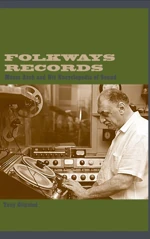 Folkways Records: Moses Asch and His Encyclopedia of Sound Buy from Amazon