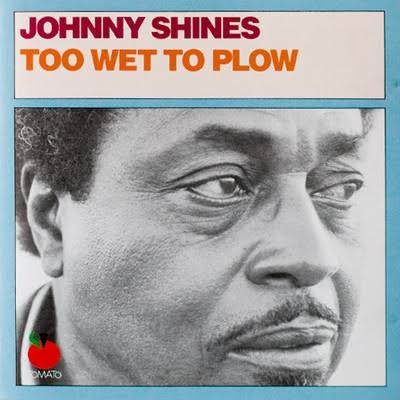
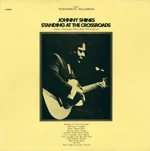
Standing at the Crossroads by Johnny Shines is a landmark album in the acoustic Delta blues revival, recorded for Pete Welding's Testament Records and released in 1970 (catalog number T-2221). It stands as one of the definitive solo acoustic blues albums of the era, capturing Shines at age 55 in a stripped-down, intimate setting that harkened back to his roots traveling with Robert Johnson in the 1930s.
Recording Sessions & Production
The album was recorded on November 11 and 17, 1970 in Altadena, California — at producer Pete Welding's home.
This was a deliberate choice by Welding, who wanted to capture Shines in an intimate, relaxed environment rather than a formal studio. The sessions were supervised by Bruce Bromberg and Frank Scott, with Welding serving as producer, recording engineer, and author of the original liner notes.
Pete Welding was the founder of Testament Records and one of the most important producers of the 1960s blues revival. He had previously recorded Shines in electric band settings (including the 1966 Masters of Modern Blues sessions with Big Walter Horton, Otis Spann, Lee Jackson, and Fred Below), but for this album, he made the crucial decision to record Shines completely solo — just voice and acoustic guitar.
The sound was later remastered by Ray Staff at Air Mastering in London for the 2013 Pure Pleasure vinyl reissue, and the original mastering was done by Jack Andrews. Photography for the cover was by Brad Barrett, with liner notes photos by Ray Flerlage.
Musicians
This is a solo album — there are no other musicians. The only performer is:
-
Johnny Shines — vocals, acoustic guitar, and slide guitar
This was a deliberate artistic choice. Unlike his previous Testament recordings which featured full electric bands, Standing at the Crossroads placed Shines alone with his guitar, returning to the format he had used as a young man traveling with Robert Johnson through the American South and Canada in 1935-1937.
Songwriting & Sources
The album consists of traditional Delta blues material, songs from the public domain, and compositions by blues masters. As noted in reviews, "the material is unaccredited; it is just from the blues 'domain', traditional or reshaped."
Many of these songs were part of the repertoire Shines had absorbed during his years with Robert Johnson, and several are associated with Johnson's catalog.
The original LP contained 11 tracks, while the 1995 CD reissue (Testament TCD-5022) added 5 bonus tracks, including two alternate takes.
Track-by-Track Breakdown
Side A
1. "Standing at the Crossroads" (2:52-2:54)
-
Songwriter: Elmore James and Joe Josea (credited as composers on the track)
-
Recording: November 11 or 17, 1970, Altadena, CA
-
Musician: Johnny Shines (vocals, guitar)
-
Notes: This is the title track and a reworking of the famous blues standard. While Robert Johnson recorded the definitive "Cross Road Blues," this version is credited to Elmore James and his manager Joe Josea, reflecting the post-war electric blues adaptation. Shines' acoustic reading brings it back to its Delta roots.
2. "Milk Cow's Troubles" (2:54)
-
Songwriter: Traditional / Public Domain
-
Recording: November 11 or 17, 1970, Altadena, CA
-
Musician: Johnny Shines (vocals, guitar)
-
Notes: A variant of the "Milk Cow Blues" tradition, recorded by numerous blues artists including Sleepy John Estes and Kokomo Arnold. Shines' version features his intricate fingerpicking and slide work.
3. "Death Hearse Blues" (3:27)
-
Songwriter: Traditional / Johnny Shines (arrangement)
-
Recording: November 11 or 17, 1970, Altadena, CA
-
Musician: Johnny Shines (vocals, guitar)
-
Notes: A haunting meditation on mortality and the blues tradition of funeral imagery. The extended running time allows for more elaborate guitar work. An alternate take appears as a CD bonus track.
4. "Drunken Man's Prayer" (3:22-3:24)
-
Songwriter: Traditional / Public Domain
-
Recording: November 11 or 17, 1970, Altadena, CA
-
Musician: Johnny Shines (vocals, guitar)
-
Notes: A traditional blues prayer-form song, showcasing Shines' expressive vocal delivery and his ability to convey deep emotion with minimal accompaniment.
5. "Hoo-Doo Snake Doctor's Blues" (3:24)
-
Songwriter: Traditional / Johnny Shines (arrangement)
-
Recording: November 11 or 17, 1970, Altadena, CA
-
Musician: Johnny Shines (vocals, guitar)
-
Notes: One of the most vivid and narrative tracks on the album, featuring imagery of hoodoo (African American folk magic) and a snake doctor. The lyrics include the memorable lines about seeing "the old Doc was holdin' her down" and realizing "the Doc was a hoodoo man when I saw a huge snake layin' in her lap."
6. "It's a Lowdown Dirty Shame" (3:24)
-
Songwriter: Traditional / Public Domain
-
Recording: November 11 or 17, 1970, Altadena, CA
-
Musician: Johnny Shines (vocals, guitar)
-
Notes: A classic blues lament in the Delta tradition, featuring Shines' trademark combination of powerful vocals and intricate guitar patterns.
Side B
7. "Your Troubles Can't Be Like Mine" (3:24)
-
Songwriter: Traditional / Johnny Shines (arrangement)
-
Recording: November 11 or 17, 1970, Altadena, CA
-
Musician: Johnny Shines (vocals, guitar)
-
Notes: A standout track that has been featured on various blues compilations and playlists. It exemplifies the "personalized acoustic blues" approach of the album.
8. "Kind-Hearted Woman" (2:52-3:24)
-
Songwriter: Robert Johnson
-
Recording: November 11 or 17, 1970, Altadena, CA
-
Musician: Johnny Shines (vocals, guitar)
-
Notes: Shines' interpretation of Robert Johnson's "Kind Hearted Woman Blues." AllMusic reviewer Eugene Chadbourne called it "the musical equivalent of an absolutely perfect chopped-barbecue sandwich with sauce the way they do it in Tuscaloosa."This track demonstrates the direct line from Johnson's repertoire to Shines' mature interpretation.
9. "Baby Sister Blues" (3:24)
-
Songwriter: Johnny Shines (credited as composer)
-
Recording: November 11 or 17, 1970, Altadena, CA
-
Musician: Johnny Shines (vocals, guitar)
-
Notes: One of the few tracks on the album with a confirmed Johnny Shines songwriting credit. It features his characteristic vocal power and detailed guitar work.
10. "My Rat" (3:24)
-
Songwriter: Traditional / Johnny Shines (arrangement)
-
Recording: November 11 or 17, 1970, Altadena, CA
-
Musician: Johnny Shines (vocals, guitar)
-
Notes: A blues with animal imagery, common in the Delta tradition. The title refers to a "rat" in the blues sense — often a metaphor for a no-good partner or troublemaker.
11. "Don't Take a Country Woman" (3:24)
-
Songwriter: Traditional / Johnny Shines (arrangement)
-
Recording: November 11 or 17, 1970, Altadena, CA
-
Musician: Johnny Shines (vocals, guitar)
-
Notes: A traditional blues warning about relationships, featuring Shines' mature vocal delivery and complex guitar patterns.
CD Bonus Tracks (1995 Testament TCD-5022)
12. "How Long"
-
Songwriter: Traditional / Public Domain
-
Recording: November 11 or 17, 1970, Altadena, CA
-
Musician: Johnny Shines (vocals, guitar)
13. "Crying Black Angel"
-
Songwriter: Traditional / Johnny Shines (arrangement)
-
Recording: November 11 or 17, 1970, Altadena, CA
-
Musician: Johnny Shines (vocals, guitar)
14. "Down in Spirit"
-
Songwriter: Traditional / Johnny Shines (arrangement)
-
Recording: November 11 or 17, 1970, Altadena, CA
-
Musician: Johnny Shines (vocals, guitar)
15. "Kind-Hearted Woman" (Alternate Take)
-
Songwriter: Robert Johnson
-
Recording: November 11 or 17, 1970, Altadena, CA
-
Musician: Johnny Shines (vocals, guitar)
16. "Death Hearse Blues" (Alternate Take)
-
Songwriter: Traditional / Johnny Shines (arrangement)
-
Recording: November 11 or 17, 1970, Altadena, CA
-
Musician: Johnny Shines (vocals, guitar)
 Buy from Amazon Johnny Shines Standing at the Crossroads
Critical Assessment
Standing at the Crossroads is widely regarded as one of the masterpieces of acoustic country blues. The AllMusic review by Eugene Chadbourne called it "one of several albums this artist made in the early '70s that stand as a masterpiece of the acoustic country blues genre," noting that Shines "reinvented himself" with "pristine and flawless acoustic slide guitar pieces complete with shuffling, stuttering, and stimulatingly complicated tempos."
The Penguin Guide to Blues Recordings awarded it four stars and a crown — one of their highest recommendations.
The album's significance lies in its demonstration that Shines, after years of electric band recordings, could return to his Delta roots with undiminished power and technical mastery. As Pete Welding noted in his original liner notes, this was "undiluted rural Mississippi blues," tempering "Johnson's taut, brilliant and polished perfection with some of (Son) House's measured imperious power."
The album also cemented Shines' reputation beyond his role as "Robert Johnson's traveling companion," establishing him as a major artist in his own right — "one of the true giants" of the blues, as one reviewer put it.