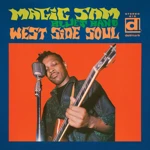
West Side Soul is the debut studio album by Chicago blues guitarist and vocalist Magic Sam (Samuel Gene Maghett), released by Delmark Records in 1968. It is widely regarded as one of the greatest electric blues albums ever recorded and a defining document of the West Side Chicago blues sound. The album was inducted into the Blues Foundation Hall of Fame in 1984, recognized as a "Classic of Blues Recording."
Recording Sessions & Production
The album was recorded at Sound Studios in Chicago across two sessions in 1967: July 12 and October 25 (with some sources indicating October 22 as well).
Producer: Robert G. Koester — founder of Delmark Records, who supervised the album production and was instrumental in capturing the raw, authentic energy of Chicago's West Side blues scene. Koester had previously produced the landmark Junior Wells album Hoodoo Man Blues (1965) and would go on to produce Magic Sam's follow-up Black Magic (1968).
Recording Engineer: Stu Black — handled the technical aspects and created the original analog stereo mixes that emphasized an intimate, club-like atmosphere.
The recording approach was deliberately raw and spontaneous, reflecting Delmark's commitment to documenting authentic Chicago blues. The limited studio time available reflected the constraints of independent label operations, while the band's on-the-fly chemistry contributed to the album's energetic, live feel.
The album was released on LP as Delmark DS-615 in 1968 (with some sources indicating it may have been available as early as May 1968, though Billboard identified it as a new release in September 1968). It was later reissued on CD as Delmark DD-615 in 1991, and a Deluxe Digipack edition was subsequently released with remastered audio and expanded liner notes.
Musicians
Magic Sam — lead vocals, lead guitar (all tracks) Mighty Joe Young — rhythm guitar (all tracks) Stockholm Slim — piano (all tracks) Earnest Johnson — bass (tracks 2, 4, 5, 6, 7, 9, 10, 11) Mac Thompson — bass (tracks 1, 3, 8) Odie Payne Jr. — drums (tracks 2, 4, 5, 6, 7, 9, 10, 11) Odie Payne III — drums (tracks 1, 3, 8)
Mighty Joe Young was a fellow Chicago blues artist who would later release his own acclaimed albums on Delmark, including Blues with a Touch of Soul (1971). Stockholm Slim (real name Mack Thompson) provided boogie-woogie piano elements that enhanced the upbeat tracks. The rhythm section alternated between two configurations, with Earnest Johnson and Odie Payne Jr. handling most tracks, while Mac Thompson and Odie Payne III substituted on three tracks.
The West Side Sound
West Side Soul captures the revolutionary "West Side" sound that Magic Sam helped pioneer alongside Otis Rush and Buddy Guy at Cobra Records in the late 1950s. This style was characterized by:
-
Tremolo-rich, staccato fingerpicking guitar work
-
Single-note solos with a piercing, stinging quality reminiscent of B.B. King
-
Soul-influenced vocal phrasing with falsetto swoops and gospel-rooted intensity
-
Echo-drenched guitar tones that gave the music a distinctive late-1960s atmosphere
-
Uptown sophistication combined with raw, club-level energy
As one reviewer noted, the album has "an uptown charge and sophistication" while remaining "more west side scruff than supper club soul."
Track-by-Track Breakdown
Side A
1. "That's All I Need" (3:18-3:40)
-
Songwriter: Magic Sam (Samuel Gene Maghett)
-
Recording: July 12 or October 25, 1967, Sound Studios, Chicago
-
Musicians: Magic Sam (vocals, guitar), Mighty Joe Young (guitar), Stockholm Slim (piano), Mac Thompson (bass), Odie Payne III (drums)
-
Notes: The album opens with a soulful, gospel-rooted melody that immediately establishes the record's blend of blues and soul. The track has a "decided Motown/Smokey Robinson bounce" with hints of Sam Cooke-style vocal phrasing, though the out-of-tune guitar chime keeps it firmly in West Side territory rather than polished soul.
2. "I Need You So Bad" (4:51-4:56)
-
Songwriter: B.B. King, Sam Ling (a.k.a. Saul Bihari)
-
Recording: July 12 or October 25, 1967, Sound Studios, Chicago
-
Musicians: Magic Sam (vocals, guitar), Mighty Joe Young (guitar), Stockholm Slim (piano), Earnest Johnson (bass), Odie Payne Jr. (drums)
-
Notes: A cover of B.B. King's 1957 RPM recording. Magic Sam's version transforms the original into a West Side blues showcase, with his tremolo-heavy guitar and soaring vocals bringing a new intensity to the material. The song demonstrates Sam's ability to absorb influences and make them his own.
3. "I Feel So Good (I Wanna Boogie)" (4:36)
-
Songwriter: Memphis Slim (Peter Chatman) / based on "Feelin' Good" by Junior Parker (1953 Sun Records recording)
-
Recording: July 12 or October 25, 1967, Sound Studios, Chicago
-
Musicians: Magic Sam (vocals, guitar), Mighty Joe Young (guitar), Stockholm Slim (piano), Mac Thompson (bass), Odie Payne III (drums)
-
Notes: Sam transforms Memphis Slim's old chestnut into a rockabilly echoplex rave-up, with heavy echo effects creating a "surf-rock" atmosphere. One reviewer described it as "like John Lee Hooker covering 'Mystery Train.'" The boogie-woogie piano of Stockholm Slim drives the track's relentless energy.
4. "All of Your Love" (3:43)
-
Songwriter: Magic Sam
-
Recording: July 12 or October 25, 1967, Sound Studios, Chicago
-
Musicians: Magic Sam (vocals, guitar), Mighty Joe Young (guitar), Stockholm Slim (piano), Earnest Johnson (bass), Odie Payne Jr. (drums)
-
Notes: A re-recording of Magic Sam's 1957 Cobra Records debut single — the song that launched his career. Originally titled "All Your Love," this version updates the arrangement with fuller production while retaining the spooky, quavering intensity of the original. The Blues Foundation notes that Sam's "soaring vocals and sparkling guitar work enliven the remake of his own Cobra classic."
5. "I Don't Want No Woman" (3:38)
-
Songwriter: Don Robey (credited on later releases)
-
Recording: July 12 or October 25, 1967, Sound Studios, Chicago
-
Musicians: Magic Sam (vocals, guitar), Mighty Joe Young (guitar), Stockholm Slim (piano), Earnest Johnson (bass), Odie Payne Jr. (drums)
-
Notes: A tough, assertive blues declaration of independence. The track showcases Sam's powerful vocal delivery and his ability to convey emotional complexity — the lyrics reject romantic entanglement while the vocal performance suggests deeper ambivalence.
Side B
6. "Sweet Home Chicago" (4:11)
-
Songwriter: Robert Johnson (1936), based on earlier blues songs including "Old Original Kokomo Blues" by Kokomo Arnold
-
Recording: July 12 or October 25, 1967, Sound Studios, Chicago
-
Musicians: Magic Sam (vocals, guitar), Mighty Joe Young (guitar), Stockholm Slim (piano), Earnest Johnson (bass), Odie Payne Jr. (drums)
-
Notes: One of the definitive versions of this blues anthem — recorded long before it became "the overdone sing-along theme of every Windy City blues band." Sam's interpretation is fresh and spirited, with sparkling guitar work and a vocal performance that captures both the song's nostalgia and its celebration of Chicago as a promised land for blues musicians. The Blues Foundation calls it "one of the best versions ever recorded."
7. "I Found a New Love" (4:03)
-
Songwriter: Little Milton (Milton Campbell), Bob Lyons
-
Recording: July 12 or October 25, 1967, Sound Studios, Chicago
-
Musicians: Magic Sam (vocals, guitar), Mighty Joe Young (guitar), Stockholm Slim (piano), Earnest Johnson (bass), Odie Payne Jr. (drums)
-
Notes: A cover of Little Milton's 1959 Bobbin Records recording. Sam's version brings a West Side grit to the soul-blues original, with his guitar taking a more prominent role than in Milton's smoother interpretation. The track demonstrates the cross-pollination between Chicago blues and the emerging Southern soul sound.
8. "Every Night and Every Day" (2:19)
-
Songwriter: Jimmy McCracklin (1963, Imperial Records)
-
Recording: July 12 or October 25, 1967, Sound Studios, Chicago
-
Musicians: Magic Sam (vocals, guitar), Mighty Joe Young (guitar), Stockholm Slim (piano), Mac Thompson (bass), Odie Payne III (drums)
-
Notes: The shortest track on the album at just over two minutes, this Jimmy McCracklin composition is a compact, high-energy blues with a driving rhythm. The brevity works to its advantage — it's a concentrated burst of West Side energy with no room for excess.
9. "Lookin' Good" (3:11) [Instrumental]
-
Songwriter: Magic Sam
-
Recording: July 12 or October 25, 1967, Sound Studios, Chicago
-
Musicians: Magic Sam (guitar), Mighty Joe Young (guitar), Stockholm Slim (piano), Earnest Johnson (bass), Odie Payne Jr. (drums)
-
Notes: A wordless instrumental that is "no throwaway but a show-stopping Delta stomp." The track features a "primal boogie break sans rhythm section" — a moment where the drums and bass drop out, leaving just the guitars to create a raw, percussive effect. This is Sam at his most inventive, using the instrumental format to showcase his rhythmic and melodic imagination without vocal constraints.
10. "My Love Will Never Die" (4:04)
-
Songwriter: Willie Dixon
-
Recording: July 12 or October 25, 1967, Sound Studios, Chicago
-
Musicians: Magic Sam (vocals, guitar), Mighty Joe Young (guitar), Stockholm Slim (piano), Earnest Johnson (bass), Odie Payne Jr. (drums)
-
Notes: A cover of Otis Rush's 1956 recording of this Willie Dixon composition. Sam's version brings a more soul-inflected approach to the material, with his falsetto swoops adding a layer of vulnerability to the declaration of eternal love. The track shows the Willie Dixon songbook's centrality to Chicago blues and Sam's ability to make standards his own.
11. "Mama Talk to Your Daughter" (2:40)
-
Songwriter: J.B. Lenoir (1954)
-
Recording: July 12 or October 25, 1967, Sound Studios, Chicago
-
Musicians: Magic Sam (vocals, guitar), Mighty Joe Young (guitar), Stockholm Slim (piano), Earnest Johnson (bass), Odie Payne Jr. (drums)
-
Notes: Sam kicks J.B. Lenoir's already-gonzo 1955 original "up a notch," quoting directly from Lenoir's own "stuttering record-skip of a rhythm solo." The track is a high-energy closer that brings the album to a frenetic, almost punk-rock level of intensity. Lenoir's original was a wild, proto-rock 'n' roll workout, and Sam's version preserves that anarchic spirit while adding West Side polish.
Buy the Album
Critical Reception & Legacy
West Side Soul was immediately recognized as a landmark. Down Beat magazine reviewed it in November 1968 (vol. 35, no. 23) with critic Harvey Pekar praising its freshness. The album was inducted into the Blues Foundation Hall of Fame in 1984, with the Foundation noting that it "ranks among many blues aficionados as one of Delmark Records' two 'desert island discs' from the 1960s along with Junior Wells' Hoodoo Man Blues."
The Blues Foundation's official induction statement reads: "Both were fresh, spirited distillations of the blues as it was being played in Chicago's ghetto clubs, capturing the phenomenon at a peak before the waves of generic albums that followed began wearing the repertoire thin."
The album has been praised for capturing a crucial moment in blues history — the point where West Side blues was still a vibrant, innovative force rather than a standardized genre. As one reviewer noted, "Magic Sam's soaring vocals and sparkling guitar work enliven" every track, creating a sound that was "simply an irresistible cocktail made up of equal parts blues, rhythm and soul."
Tragically, Magic Sam would not live to build on this masterpiece. He died of a heart attack on December 1, 1969, at age 32 — less than two years after the album's release. He had just returned from a triumphant appearance at the first Ann Arbor Blues Festival in August 1969, where his performance had established him as a major star. His follow-up album, Black Magic, was recorded in late 1968 and released in December 1968, but West Side Soul remains his most celebrated work — the document of a revolutionary artist at the absolute peak of his powers.