Duke Records was a pivotal American independent record label in the mid-20th century, particularly influential in rhythm and blues (R&B), blues, and gospel music. Founded in Memphis, Tennessee, in 1952, it became a cornerstone of Black-owned music entrepreneurship under the ownership of Don Robey, helping shape the transition from raw postwar blues to more polished R&B and early soul sounds.
Founding and Early History
Duke Records was established in 1952 by David James Mattis, a program director and DJ at WDIA radio station in Memphis, and Bill Fitzgerald, who were also involved with the Tri-State Recording Company. The label's first release was Roscoe Gordon's "Hey Fat Girl" (Duke R-1, later reissued as R-101), marking an immediate entry into the competitive R&B scene.
In the summer of 1952, Don Robey—founder of Houston's Peacock Records (established 1949)—formed a partnership with Mattis. Robey, a shrewd and controversial businessman, soon gained full control of Duke in 1953. He merged operations, relocating the combined Duke-Peacock enterprise to Houston, where it was based at his Bronze Peacock club (later converted into a studio) at 2809 Erastus Street. This partnership (and eventual full ownership by Robey) created one of the most successful Black-owned record empires of the era, focusing on R&B, blues, and gospel.
Robey, born Don Deadric Robey in 1903 in Houston's Fifth Ward, had a colorful background that included gambling, nightclub ownership (such as the Bronze Peacock Dinner Club), and talent management (notably for Clarence "Gatemouth" Brown). He was known as a pioneer Black record mogul, predating figures like Berry Gordy of Motown by a decade, though his methods were often criticized.
Ownership, Business Practices, and Expansion
Don Robey was the dominant force behind Duke. He expanded the operation with subsidiaries like Back Beat Records (started 1957, later specializing in soul) and Sure Shot Records, while Peacock focused more on gospel. He also acquired or operated other imprints, including Song Bird for gospel in the 1960s.
Robey's business style was aggressive and controversial. Artists were often tied to exclusive booking and management contracts through his Buffalo Booking Agency. He frequently claimed songwriting credits (under his real name or the pseudonym Deadric Malone) for publishing royalties, even when his involvement was minimal or nonexistent. This practice was common among label owners but drew particular ire. Some musicians praised him for opportunities provided; others, especially songwriters, felt exploited. Rumors of violence and intimidation circulated, though Robey maintained a complex legacy as both a gangster figure and a trailblazer.
In 1973, Robey sold his labels (Duke, Peacock, Back Beat, and others) to ABC-Dunhill Records on May 23. The Duke imprint was largely phased out soon after, though Bobby "Blue" Bland was retained by ABC. The catalog was later absorbed by MCA (now part of Universal Music Group) following ABC's acquisition in 1979.
Label Design and Variations
Duke Records had distinctive label designs that evolved over time:
- Early standard series (1952–1961): Gold and dark purple labels.
- Gospel series (1953–1958): White and purple.
- Later commercial releases (1961–1972): Orange and yellow labels; promotional copies used purple and white.
- Under ABC (1972–1973): Dark green labels.
These variations are of interest to collectors today.
Notable Artists and Recordings
Duke Records (and its affiliated labels Peacock, Back Beat, and others under Don Robey's umbrella) featured a powerhouse roster that helped define postwar R&B, blues, and gospel. The label's sound often blended raw Southern blues with sophisticated horn arrangements, gospel fervor, and urban polish, influencing soul, rock, and later generations of musicians. Many sessions featured top sidemen like guitarist Clarence Hollimon, Wayne Bennett, pianist Teddy Reynolds, and arranger/bandleader Joe Scott.
Bobby "Blue" Bland
Bobby "Blue" Bland was Duke's flagship artist and longest-lasting star, recording for the label from the mid-1950s until its sale in 1973. His emotive, gospel-drenched vocals and sophisticated productions created a bridge between blues and soul. Key hits include:
- "Farther Up the Road" (1957, R&B #1)
- "I Pity the Fool" (1961, R&B #1)
- "Turn On Your Love Light" (a much-covered standard)
- "That's the Way Love Is" (1963, R&B #1)
Landmark albums include Two Steps from the Blues (1961) and Ain't Nothing You Can Do (1964). Bland charted 46 R&B hits between 1957 and 1972, many crafted with Joe Scott's tight arrangements. His work remains a cornerstone of Southern soul-blues.
Junior Parker (Little Junior Parker)
A versatile harpist and smooth vocalist, Parker joined Duke after early Sun Records success and recorded there from 1953 to 1966. His style ranged from down-home blues to polished R&B. Standout releases:
- "Next Time You See Me" (1957, major hit)
- "Driving Wheel" (1961, a powerful remake of Roosevelt Sykes' classic)
- "In the Dark" and "Annie Get Your Yo-Yo"
He shared the 1958 album Blues Consolidated with Bobby Bland. Other notable tracks include "Mother-in-Law Blues," "Sweet Home Chicago," and "Barefoot Rock." Parker's seven top-twenty Billboard R&B hits highlighted Duke's strength in accessible yet rootsy material.
Johnny Ace
One of Duke's earliest breakout stars, Johnny Ace (John Alexander) delivered a string of elegant, ballad-style R&B hits in the early 1950s before his tragic death by accidental gunshot on Christmas Day 1954. His smooth crooning earned him multiple R&B #1s, including:
- "My Song"
- "The Clock"
- "Cross My Heart"
- "Pledging My Love" (a posthumous smash)
Ace had eight Top 40 R&B hits in his brief career. Compilations like The Complete Duke Recordings and the Memorial Album preserve his influential body of work.
Roscoe Gordon
Gordon's quirky, loping piano shuffle ("Rosco's Rhythm") made him a perfect fit for Duke's inaugural release. His 1952 single "Hey Fat Girl" (Duke R-1/R-101) launched the label. Other Duke sides included "T-Model Boogie," "Too Many Women," "Rosco's Mambo," and "Wise to You Baby." Gordon's offbeat style influenced rock 'n' roll and R&B shuffle rhythms.
O.V. Wright
A powerful, gospel-rooted soul singer, O.V. Wright recorded soulful deep cuts for Duke/Peacock and its Back Beat subsidiary. His emotionally charged style shone on tracks like "Ace of Spades," "A Nickel and a Nail," and medleys blending spiritual and secular intensity (e.g., "God Blessed Our Love" / "That's How Strong My Love Is"). Later reissues such as The Soul of O.V. Wright highlight his influence on Southern soul.
Other Key Artists
- Clarence "Gatemouth" Brown: Robey's early protégé and a multi-instrumental virtuoso (guitar, violin, etc.). His 1949 Peacock hits "Mary Is Fine" / "My Time Is Expensive" helped launch the empire. Brown's fiery Texas blues guitar style influenced many, with Peacock sides like "Gatemouth Boogie" showcasing his raw talent.
- Big Mama Thornton (primarily on Peacock): Her 1953 recording of "Hound Dog" (written by Leiber and Stoller) became a massive hit and was later popularized by Elvis Presley. Other strong Peacock sides include "I Smell a Rat" and "They Call Me Big Mama." Her commanding voice and blues presence were foundational.
- Roy Head (on Back Beat): Though better known for his 1965 pop/R&B crossover smash "Treat Her Right" (a #2 hit on both pop and R&B charts), Head's energetic blue-eyed soul fit the Duke family sound.
The gospel roster was equally impressive, featuring acts like the Dixie Hummingbirds, Mighty Clouds of Joy, Five Blind Boys of Mississippi, Swan Silvertones, and the Sensational Nightingales on Peacock and Song Bird imprints. These groups delivered powerful, influential recordings that paralleled the secular successes.
Duke/Peacock releases frequently crossed over into the broader cultural landscape—Big Mama Thornton's "Hound Dog" being a prime example—and were covered by rock acts ranging from Eric Clapton to Van Morrison. The catalog's enduring appeal lies in its mix of raw emotion, tight musicianship, and entrepreneurial grit, making it a vital chapter in American music history. Reissues on labels like Ace Records and MCA/Universal continue to introduce these classics to new audiences.
Suggested Listening
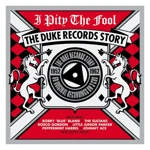 I Pity the Fool: Duke Records Story Buy from Amazon
Legacy and Impact
Duke-Peacock was one of the most successful independent Black-owned labels of its time, operating pressing plants, a print shop, and distribution networks. It played a key role in the chitlin' circuit and the development of Southern soul and blues. While Robey's practices were ethically questionable by modern standards, the label's output remains highly regarded for its artistic quality and cultural significance.
Today, the catalog is controlled by Universal Music Group. Reissues, compilations (such as those on Ace Records or in box sets), and ongoing interest in vinyl have kept the music alive for new generations of blues and soul enthusiasts. Duke Records stands as a testament to the entrepreneurial spirit and musical innovation of the 1950s–1970s independent label era.