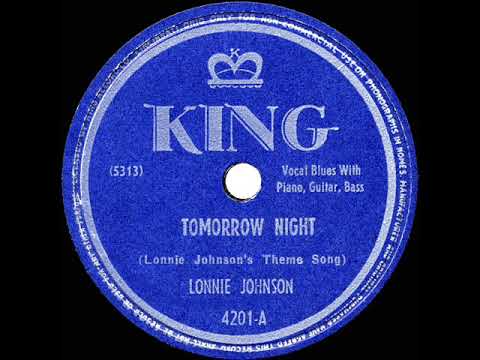
"Tomorrow Night" is a landmark smooth blues ballad by Lonnie Johnson, recorded in 1947 and released in 1948 on King Records. It became one of his biggest commercial successes and a crossover hit that highlighted his versatility beyond raw blues.
Recording Session
The song was recorded on December 10, 1947, in Cincinnati, Ohio, at the facilities associated with King Records (often using local studios like those in the King complex or nearby). This was Johnson's inaugural session for the label after he signed with them following earlier stints on OKeh, Bluebird, and others. King, under founder Syd Nathan, was a powerhouse for R&B, country, and blues, known for efficient, commercially oriented productions aimed at jukeboxes and radio.
Producer: Syd Nathan and King house staff oversaw the session. The goal was to capture a polished, accessible sound that could appeal beyond traditional blues audiences. Sessions at King were typically quick and focused, with an emphasis on strong vocal performances and tight arrangements suitable for 78 rpm singles.
Songwriters: Sam Coslow and Will Grosz (sometimes spelled Will Gross). The song originated as a 1939 pop recording by Horace Heidt and His Musical Knights. Johnson and the King team adapted it into a bluesier, more intimate ballad format. Johnson did not write it but transformed it through his personal style.
Musicians:
- Lonnie Johnson – vocals, guitar (his subtle, melodic playing is prominent but restrained).
- Likely a small rhythm section typical of King's late-1940s R&B productions: piano (providing gentle, rolling accompaniment), upright bass, drums, and possibly subtle horns or additional guitar for texture. Exact personnel for this date is not always fully documented in standard discographies, but the sound is intimate and combo-oriented rather than full big-band. The focus remains on Johnson's voice and guitar, creating a late-night, confessional atmosphere.
The master was released in 1948 as King 4201 and quickly became a major hit.
Musical Style and Analysis
"Tomorrow Night" is a tender, mid-tempo torch song/blues ballad that showcases Johnson's sophisticated, crossover appeal. Set primarily in a mellow, swinging 4/4 time, it avoids the raw Delta intensity of his earlier work in favor of urbane elegance. Johnson's warm, expressive baritone vocals convey deep longing and melancholy, with subtle phrasing and emotional nuance that elevate the lyrics about waiting for a lover.
The arrangement is intimate and restrained:
- Guitar: Johnson's playing is understated yet masterful—delicate single-note fills, gentle chord voicings, and tasteful bends that respond to the vocal lines rather than overpower them. This reflects his pioneering single-string approach while fitting the ballad format.
- Rhythm Section: Piano carries much of the harmonic foundation with rolling, supportive figures; bass and drums provide a light, walking rhythm that keeps the groove relaxed and swinging without aggression.
- Overall Structure: Simple verse-chorus form with a focus on emotional delivery. The song builds subtly through dynamic vocal variations and instrumental responses, creating a sense of intimacy and yearning. No flashy solos disrupt the mood; instead, everything serves the torch-song narrative.
Musically, it bridges traditional blues feeling with pop accessibility—smooth enough for mainstream audiences yet soulful enough for R&B charts. The production (clean for the era) and Johnson's delivery helped it transcend genre, influencing the rockabilly and early rock ballad styles that followed. Its success (seven weeks at #1 R&B, pop crossover) proved the commercial potential of sophisticated blues material in the post-war market.
Other Versions and Covers
- Johnson's version was the breakthrough hit, but the song had earlier roots.
- Elvis Presley recorded it at Sun Studio in 1954 (released posthumously on compilations)—one of his earliest recordings, paying direct homage.
- Jerry Lee Lewis also covered it.
- Other notable renditions exist in pop, R&B, and blues contexts, but Johnson's remains the definitive and most commercially successful.
Legacy
"Tomorrow Night" topped the Billboard R&B chart for seven weeks in 1948 and crossed over to pop audiences, selling millions and revitalizing Johnson's career after earlier peaks in the 1920s–1930s. It demonstrated the commercial viability of sophisticated blues ballads and helped pave the way for the rock 'n' roll era's embrace of blues material. Elvis and Jerry Lee Lewis's versions further embedded it in early rock history.
The track underscores Johnson's enduring influence as a versatile stylist whose smooth approach influenced generations. It remains a highlight in his discography and a staple in blues ballad compilations, illustrating how he successfully navigated from acoustic jazz-blues roots to post-war R&B success.
Overall, "Tomorrow Night" cements Lonnie Johnson's legacy as a bridge between eras and genres—proof of his adaptability and emotional depth as a performer.
Suggested Listening
 Buy from Amazon The Lonnie Johnson Collection: 1925-52
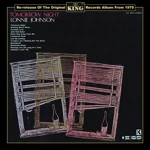 Buy from Amazon Tomorrow Night